France

If you want a lesson in how not to run an economy, take the Eurostar

From our UK edition

For the last five years, politicians of all shades have been banging on about how we should adopt this or that aspect of German economic policy. George Osborne argued in 2011: ‘We want to learn the lessons of the successful Mittelstand model, which has operated in Germany for many decades.’ Only a few weeks ago, Vince Cable argued: ‘Britain has not been as good as competitors like Germany in turning ideas into wealth creation.’ The German economy seems to be widely admired, despite lagging behind Britain’s for nearly a generation. It is true that Germany had a better post-crash period than the UK, but its financial sector was smaller and many of its problems were hidden from view.

Why a City job should be graduates’ last resort

From our UK edition

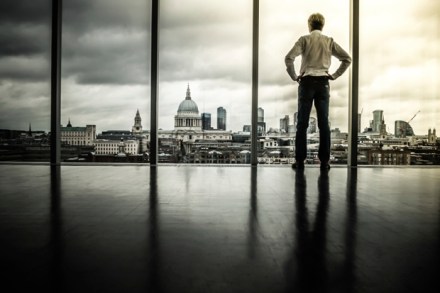
August is the season for conversation about career choices. Every holiday party seems to include new graduates or next year’s graduands in need of grown-up advice. Many yearn to be pastry chefs, having devoted their student years to watching The Great British Bake Off. Some want to be journalists, and I tell them it’s more fun than having a secure job with a decent income. Happily I’ve only met one young man this summer who wants to go into financial PR, the métier in which I believe Satan himself did his first internship.

A world crisis with no world leader

From our UK edition

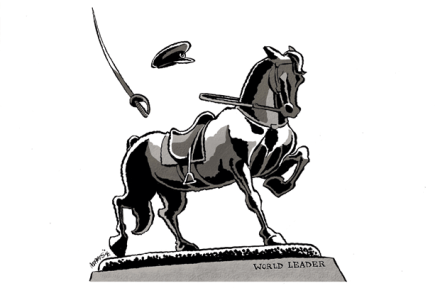
There was a time when having almost two hundred of your citizens blown out of the sky was a big deal for a western democracy. But when Malaysian Airlines flight MH17 was shot down over Ukraine last month, killing 193 Dutch citizens and a couple of dozen other Europeans, the response was conspicuous public mourning, some mild objections, a soupçon more sanctions, but otherwise nothing. Everyone knew which government might have handed powerful surface-to-air missiles to eastern Ukraine’s rebels. But nobody seemed willing or able to do anything much about it. There was also a time when whole swaths of the map being overrun by Islamic groups who make al-Qa’eda look like Quakers would have caused concern to the civilised world.

The man who could sell the British public on fracking

From our UK edition

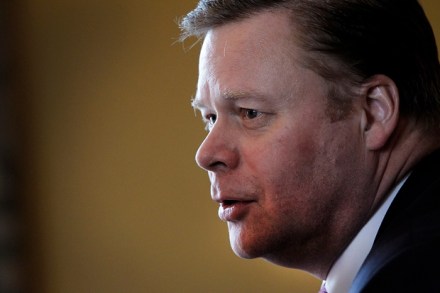
Iain Conn, who will succeed Sam Laidlaw as chief executive of Centrica, would have been a dead cert for the top job at his current employer, BP, were it not for the Deepwater Horizon oil rig disaster in the Gulf of Mexico in April 2010. The subsequent PR fiasco terminated the BP career of the then chief executive Tony Hayward — who seemed crushed by the episode, but recovered to make a double fortune at Genel Energy and Glencore. Had Hayward served a full term, Conn (BP’s head of refining and marketing) would almost certainly have followed him. As it was, BP found it more politic to appoint an American, Bob Dudley, to repair relations in Washington while simultaneously arm-wrestling with the Kremlin-connected oligarchs who were BP’s co-investors in Russia.

There are no lessons from the first world war

From our UK edition

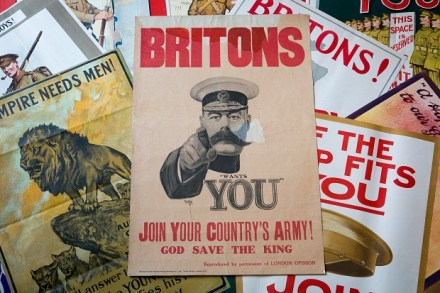
I've just been in France, where the shadow of the First World War always seems to be darker and longer than that cast over Britain; it is partly that, aesthetically, their war memorials are far more haunting than ours, but also that in sheer numbers our allies lost more men than we did, up to 1.4 million French soldiers died in the conflict. It still seems to haunt the country, and anyone travelling through empty countryside into a small town with its thick list of casualties engraved under the legend 'mort pour la patrie' can see why Frenchmen would ask 'why die for Danzig?' 20 years later; and can't quite manage even a faint smile to the weak jokes about France's supposed military failures.

It’s a bit rich for France to castigate Britain for sheltering oligarchs

From our UK edition

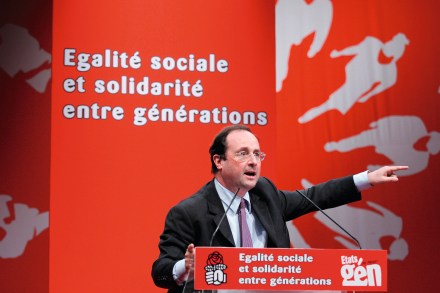
There's a big to-do between France and Britain at the moment, with France accusing Britain of protecting oligarchs' money in London. President Francois Hollande’s Socialist Party said that before lecturing France on halting its £1 billion sale of aircraft carriers to Russia, ‘David Cameron should start by cleaning up his own back yard’ and stop cosying up to Russian billionaires resident in London. The French can talk.

Can the European Union agree a sanctions regime for Russia?

From our UK edition

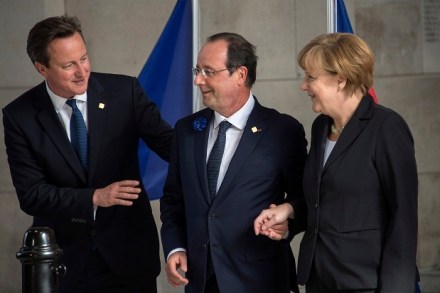
David Cameron talked tough on sanctions yesterday, suggesting that he had the German and French support. I believe he means what he says and is serious about following through with sanctions. I could even be convinced that France and Germany have hardened their positions to the point where they are genuinely willing to consider ‘stage three’ sanctions (which would hit specific firms and possibly sectors of the Russian economy). However, I remain far less convinced that the EU as a bloc can find a clear and united position – as Open Europe noted with its Dove/Hawk scale the divergences between countries are huge and the motivations for their positions is incredibly varied.

The West has drifted away from Israel — and itself

From our UK edition

Is Israel drifting away from the West? That was Hugo Rifkind’s claim in his column in the magazine last week. Hugo wrote: ‘Israel drifting away. Never mind whose fault it is; that’s a whole other point. But it’s happening. It’s off. No longer does it exist in the popular imagination as our sort of place. Once, I suppose, foes and friends alike regarded it as a North Atlantic nation, but elsewhere. Then a western European one, then, briefly, a southern European one. When was it, do you think, that Israel stopped being regarded as fundamentally a bit like Spain? Early 1990s?

How Napoleon won at Waterloo

From our UK edition

In a one-horse town called Hestrud, on the Franco-Belgian border, there’s a monument which encapsulates Europe’s enduring fascination with Napoleon. The story carved upon this plinth is more like poetry than reportage. As Napoleon passed through here, on his way to Waterloo, he struck up a conversation with a bold little boy called Cyprien Joseph Charlet. ‘You think victory will always follow you, but it always disappears,’ this audacious lad told him, apparently. ‘If I were you, I’d stay at home. Tomorrow your star will surely dim.’ Well, that’s the story, anyway. Fact or fiction, or a bit of both? In a way, it hardly matters.

The cold, remote plateau of Vichy France where good was done

From our UK edition

It is with a heavy heart that I pick up anything to do with the Holocaust. Not because it’s wearisome or too familiar, or because — in Solzhenitzyn’s memorable phrase — you need only a mouthful of seawater to know the taste of the ocean. No: my reluctance to contemplate that world, even as a distant spectator, is because it was so awful and the detail so compelling that I’ll be unable to put the book down. It will echo inside my skull for as long as I inhabit one. So it is with this vivid account by Caroline Moorehead of remote mountain villagers high up in France’s Massif Central during the second world war.

World Cup diary: The French look very good. Damn.

From our UK edition

Still going on, is it, the World Cup? There have been some fine games and some poor games with surprisingly thrilling conclusions. Ronaldo, with possibly the worst haircut I have seen on a human being ever, provided a wonderful chipped cross for Portugal to equalise against the USA; neither team, one suspects will trouble the big boys and I doubt the Portuguese will get out of the group. Good! Russia may also fail to do so and have been exactly as boring as Russia always are when it comes to the final stages of a World Cup. Belgium, meanwhile, look rather less menacing than all the experts suggested they would be.

World Cup diary: I can’t take much more of the BBC’s coverage

From our UK edition

It takes quite a lot for me to feel even mildly sympathetic towards the French, but they had my support against the semi-reformed death squad of Honduras. One should not put too much store by the character of a country’s football team – but watching the way in which the Central Americans set about France, much as they had previously set about England, it did not wholly surprise one that the benighted mosquito-ravaged country has the highest murder rate in the world. Yes, including Iraq. Its murder rate is not far off double the next contenders (all of whom come from the Caribbean, natch). I’m writing this before Argentina’s game against Bosnia and Herzegovina; I don’t think I could bear to contemplate the Argies and the French winning on the same day.

Spectator letters: The trouble with religion, alternatives to HS2, and whisky-drinking dogs

From our UK edition

A history of persecution Sir: Colin Brown (Letters, 7 June) ignores some good reasons for keeping religion out of society. Small groups of believers are fine, but not totalitarian dictatorships. The early Christians were treated as heretics until 313 ad, when Constantine made what became the Roman Catholic Church the official religion of the Roman Empire. The church promptly started persecuting all other religious groups. In the Middle Ages the Church let loose the Inquisition and decimated civilised communities such as the Albigensians. As for his statement that ‘all religions have provided society with ethical and moral rules’, how ethical were the laws and morals that subjugated women and slaves and persecuted anyone who questioned the authority and dogma of the Church?

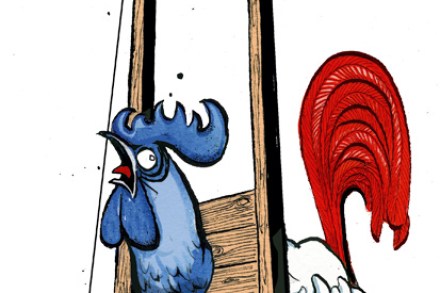
France’s political system is crumbling. What’s coming next looks scary

From our UK edition

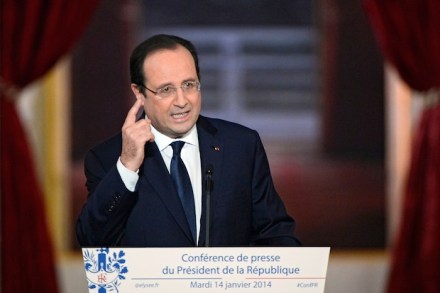
[audioplayer src="http://traffic.libsyn.com/spectator/TheViewFrom22_5_June_2014_v4.mp3" title="Freddy Gray discusses the end of the French republic" startat=1844] Listen [/audioplayer]Last week President François Hollande, following his party’s humiliation in the European parliamentary elections (his Socialists won roughly half as many seats as the National Front), decided to cheer himself up. He left Paris and travelled to Clairefontaine to mingle with France’s World Cup football squad. ‘If you do win the World Cup final on 13 July,’ he told the millionaire players (most of whom avoid Hollande’s taxes by being paid outside France), ‘you will deserve a triumphant welcome.

Reliving the most famous last stand of the French Resistance

From our UK edition

Published to mark the 70th anniversary of the Battle of Vercors, perhaps the most famous stand of the French Resistance in the second world war, there is an awful inevitability to this book. Tragedy looms like the great plateau itself, overshadowing the individual stories of the people who lived, fought and died in these mountains. The strategic and tactical failings that led to their defeat run like strata through the history: a lack of clarity in Allied communications; failure to deliver sufficient heavy weapons or reinforcements; the mistaken use of a guerrilla army as a fixed, defensive force and, above all, the tendency to let diplomacy and politics trump military common sense.

How to bug the French government

From our UK edition

Mr has news from La Belle France, where authorities have incensed several foreign tech companies by proposing to ban geo-locating software apps to protect the antediluvian local taxi service. One of the firms in question, San Francisco-based Uber, has struck back. With a jet app: ‘All lights on the 67th edition of the Cannes Film Festival. From the airport to the red carpet and onto the private parties, you can rely on Uber to take you wherever you need to be. This year Uber goes the extra mile to order your UberJET. Your app will no longer be to request a simple car ride, you’ll now be able to use the Uber app to request an UberJET and have the privilege to fly away to and from Cannes.’ This chance to irritate the French seems too good to pass up.

How France’s left-wing government learned to love austerity

From our UK edition

For years, George Osborne cut a rather lonely figure on the European stage. He was portrayed as the only major statesman who advocated austerity. But finally he has some company. Another European leader has burst away from the pack and is promising to freeze all welfare benefits for a year, cut health spending, cut taxes — and to be honest with the people by saying that ‘we cannot live beyond our means’. The Chancellor can derive much pleasure from the fact that his new ally is François Hollande. Until now, the French president has been the great hope of Keynesians the world over. He revelled in this celebrity. He was out to prove that, with just one more push from the government, the economy could be launched upwards.

Britain is sexier than France, says Jean Paul Gaultier

From our UK edition

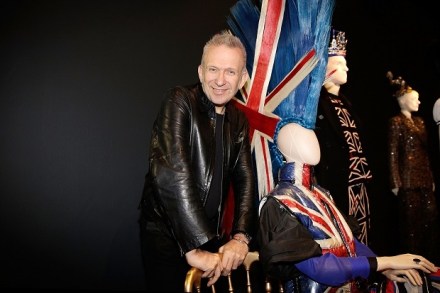
If the French are flocking to Britain, it's not just down to a 75 per cent tax hike on the super-rich. Multi-millionaire designer, Jean Paul Gaultier comes to the UK for a different reason. “The British have a lot of connection with the sexual, which is something that I appreciate. None of this ‘No sex- we are British.’ It is more like ‘A lot of sex- we are British!’” The designer, who opened a retrospective exhibition in the Barbican this month, told Mr S that the French are “snobbish” and he comes to London to “to have fun”. “Britain represents iconoclastic creativity, individuality - things that we don’t know so much in France.” Tax that President Hollande.

France – worker’s paradise or Steynian Dystopia?

From our UK edition

Un autre jour glorieux dans la lutte contre réalité économique. France’s major employers’ federation and two unions have signed an agreement whereby employees not subject to the country’s 35-hour labour restrictions will not be asked to read emails or answer phone calls outside of work hours. Part of me rather admires this attitude, being rather fond of the culture of idling that has been replaced by the ghastly ‘hardworking families’ cult of the hyperactive elite. Lots of people only work as hard as they do because of exorbitant housing costs, and there’s no doubt that digital overload is not good for the mind. But France is already strangled by a bureaucracy that is driving its most talented across the English Channel.

The minimum wage is broken – here’s how to fix it

From our UK edition

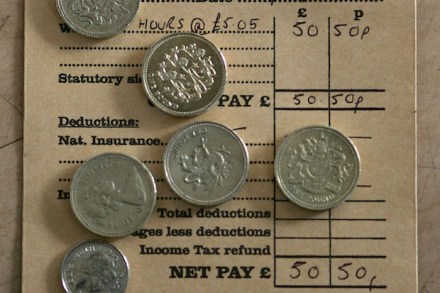
While welcoming George Osborne’s emphasis this week on raising employment, I have some caveats about his target – to have the highest employment rate in the G7. This isn’t hugely challenging. Those in employment currently amount to 71.2 per cent of the UK population of working age, well ahead of Italy (55.5 per cent), France (64.1 per cent) and even the USA (67.4 per cent). Germany, at 73.5 per cent, is the current table-topper and the one Mr Osborne aims to overtake. Aggregates like this, though, are dodgy to interpret and are affected by differences in age cohort size and other factors.