France

Gun attack on French satirical magazine Charlie Hebdo ‘kills 12’

From our UK edition

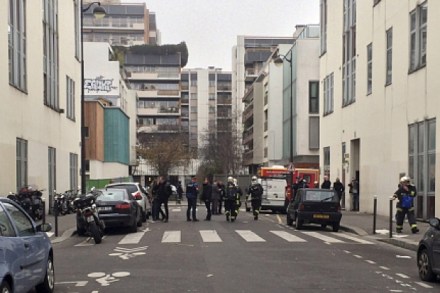
Gunmen have attacked the Paris office of the French satirical magazine Charlie Hebdo. Current reports suggest that up to 12 people have been killed. One eyewitness told French TV channel Itele: 'Two black-hooded men entered the building with Kalashnikovs. A few minutes later we heard lots of shots.' Ils ont tiré à deux reprises les balles ont traversé la porte et la fenêtre pic.twitter.com/Jhgi4MBlnp — yve cresson (@yvecresson) January 7, 2015 The magazine has courted controversy in the past by publishing cartoons of the prophet Muhammad. An hour ago the magazine's Twitter account posted a cartoon of the Islamic State militant group leader, Abu Bakr al-Baghdadi. The attackers reportedly escaped in two vehicles.
Le French bashing has spread to France. Are things really that bad?

From our UK edition

The French for French-bashing is le French bashing. This verbally costive nation is at it once again, torpidly borrowing an approximately English expression rather than coining its own. Such bashing is not an exclusively Anglo-Saxon practice. There is indigenous bashing. At least there is Éric Zemmour, whose salutary Le Suicide français was published a couple of months ago. Its very first sentence declares that France is the sick man of Europe — which prompted Manuel Valls, little Hollande’s prime minister this week and a man who is not growing into that poisoned office, to take the bait, exhibit a preposterously thin skin and denounce the book twice in a few days. This is not to suggest that M.

Cognac and the Viking connection in la France profonde

From our UK edition

The chestnut trees were still resplendent in yellow leaf along the banks of a misty autumn river on its glide through woodlands, pasture, comfortable towns — and vineyards. This was the Charente. Eighty years ago, before the lorry became dominant, it would not have been so peaceful. In those days, barges laden with barrels of Cognac made their way along this river to the coast to be shipped all over the world. Wine has been grown in Cognac for centuries and exported since the Middle Ages. But it was always inferior to the products of Bordeaux, to the south-west. Even so, its acidity and low alcohol content made it ideal for distillation once the Dutch discovered the technique. They called the result brandwejn: burnt wine, hence brandy.

Is Nicolas Sarkozy headed back to the Elysée – or to jail?

From our UK edition

In his more hyperactive moods Nicolas Sarkozy, former president of France, has been known to compare himself to Charles de Gaulle. Following defeat in the 2012 presidential elections ‘Sarko’ made a dignified exit from the national stage, stating that in future his personal commitment to the well-being of France would be in some loftier sphere. De Gaulle did the same thing in 1946; he retired to his country estate for 12 years of reflection and study, before being summoned back at a time of national crisis to found the Fifth Republic. Mr Sarkozy is clearly hoping for a similar resurrection, though there are a number of differences in the two cases.

The real French embassy is a restaurant

From our UK edition

Semper eadem. There is some basement in a Mayfair street that is forever France. It is not far from the American embassy, a strong candidate for the all-time monstrous carbuncle award. Bad enough that it should ever have been built: worse still, some ‘architects’ want to preserve it. Its menacing hideousness has made a significant contribution to the growth of anti-American sentiment in modern Britain. Only a hundred yards away, there is an unpretentious building. No disrespect to successive French ambassadors in London, who have made heroic efforts to put the best possible gloss on a failed state, but Le Gavroche has done more than diplomacy ever could to justify the ways of France to Britain and to persuade the rosbifs that they order some matters better in France.

A miracle: French hotels actually like dogs

From our UK edition

The first time I checked in to a French hotel with a golden retriever — his name was Gregory, predecessor of the incumbent Douglas — I left him, clearly unhappy, in the bedroom when I went to dinner. Then I realised that every other party already in the dining room included a dog, in some cases a lapdog enjoying morsels direct from its mistress’s plate. So I fetched Gregory, shoved him under the tablecloth and told him to keep quiet. But each time a tasty dish went past, his big hairy head emerged and sniffed the air. Eventually the maitre d’hotel approached. ‘You’re in trouble now,’ I whispered (to Gregory). ‘Ah, quel beau chien,’ said the maitre d’. ‘Would he like to order anything?

French economy minister pushes Germans on bailout money

From our UK edition

Emmanuel Macron has only been the French economy minister for a few months, but already he's attracted plenty of domestic outrage, mostly from socialists who think he's a bit too right-wing. Now the former banker seems to be aiming for a wider audience to provoke, suggesting in meetings in London yesterday that Germany should drop its opposition to using the European Stability Mechanism bailout fund as a EU-wide stimulus fund. Macron spoke to British journalists after holding meetings with Vince Cable and Chuka Umunna. He will also meet Osborne during his trip, and hopes to persuade the Chancellor of the merits of using €50bn from the ESM to spend on capital projects across Europe.

Némirovsky’s love letter to the France that spurned her and killed her

From our UK edition

By 1940 Irène Némirovsky, who had arrived in France at the age of 16 as a refugee from Kiev, had become a prominent and successful novelist. In March of that year she celebrated what was to be her final publication day. She was Jewish, and for French publishers under Nazi occupation she had ceased to exist as an author when the German army entered Paris. But she continued to write. She moved with her children to a village in Burgundy, hoping to protect her family from the Vichy government’s manhunt, and she started work on her masterpiece, Suite Française, which would lie undiscovered until 2004. She also started three other novels, two of which she finished. Both were published in France after the war. By then their author was dead.

Remembrance Sunday is marvellous; for God-free war commemoration, go to France

From our UK edition

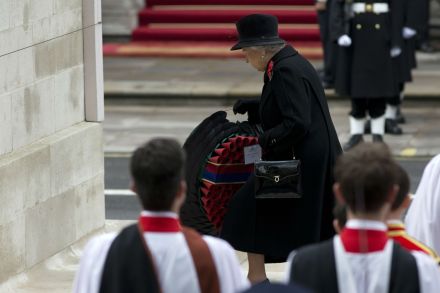
The most remarkable thing about the ceremony at the Cenotaph on Remembrance Sunday is that it just gets more popular. A ceremony that a generation ago might have been confidently predicted to appeal to a smaller and smaller bit of the population has somehow attracted the kind of benign publicity you get for the Children in Need awards. And the enormous crowds at the Tower to see the moatfull of ceramic poppies – one for each British life lost – has taken everyone by surprise. It’s got a good deal to do with the centenary of the First World War, of course, but that itself suggests that in a fractured Britain, people attach real emotional significance to wars from a lost world whose very language – such as sacrifice – is alien to our own.

Wear a veil if you like – but don’t treat women like that

From our UK edition

What sort of clothing do you wear when you go to the opera? I assume some of you do go to the opera, otherwise the Royal Opera House could be turned into a giant Wetherspoon’s pub. I have never been. Given a choice I would rather browse through a collection of photographs of Brooks Newmark MP’s penis, or indeed gnaw off my right leg. If I were somehow coerced into attending, then without question the costume of choice for me would be a niqab. Then I could sleep without being noticed. Or listen to something more interesting on headphones, such as a collection of Danny Alexander’s speeches or a greatest hits compilation from the Radio 4 programme Does He Take Sugar?

Proof that the Japanese know how to make great Bordeaux

From our UK edition

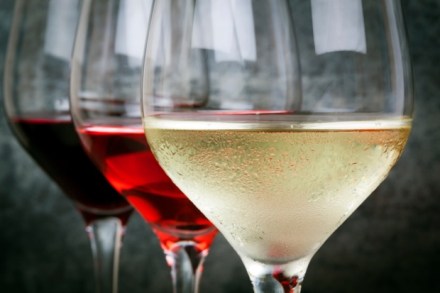
Château Lagrange, a St Julien third growth, has the largest acreage of any Bordeaux classed growth. For much of the 20th century, this was its sole claim to distinction. Under family management, it consistently failed to justify its ranking. Then the Japanese arrived. In 1983, Suntory bought Lagrange for £4 million. There were resentments. In 1987, on the floor of the stock exchange just after the Big Bang had transformed the City, a Japanese broker asked an English counterpart if he could direct him to Wedd Durlacher. This was after lunch and the Englishman was old-fashioned. ‘You lot found your way to Pearl Harbor without any help from me. You can find your own fucking way to Wedd Durlacher.

In praise of the Loire – cradle of civilisation, and wonderful wines

From our UK edition

Rivers are the cradles of civilisation and the Loire is an outstanding example. It is one of the head-waters of modern France. By the 7th century, the region had emerged from the Dark Ages and was building on Roman traditions to lay foundations that would endure. St Martin, Clovis: we are at the beginning of a recognisably French history. War is both an expression of civilisation and its curse — but also, occasionally, its saviour. In 732, that nascent French history was in danger of eradication until one of the most important battles in European history took place at Tours, near the Loire. Charles Martel defeated a powerful invading force from Muslim Spain. If he had lost, there would have been little else to impede a Muslim advance.

Countries shape character (so get ready to like Scots less)

From our UK edition

[audioplayer src="http://traffic.libsyn.com/spectator/TheViewFrom22_11_Sept_2014_v4.mp3" title="Fraser Nelson, Tom Holland and Leah McLaren discuss how we can still save the Union" startat=50] Listen [/audioplayer]As I write this, I am sitting outside a weinhaus in Kaub, a half-timbered town on the wooded slopes of the middle Rhine. If you don’t know the place, I recommend a visit: the scenery is lovely, the hiking is fine, and the Riesling is great (they have to handpick the grapes, like peasants in a Brueghel painting, because the river-ine vineyards are too steep for machines). But there is another reason to make the agreeable journey to Kaub: it’s a brilliant place to contemplate the mysteries of nationalism and national character — i.e.

Bees make magic: an inspirational case for biodiversity

From our UK edition

The importance of biodiversity, a handy concept that embraces diversity of eco-systems, species, genes and molecules, has been promoted for over three decades. Yet much life on Earth still faces unsustainable loss or extinction, perhaps because, as an otherwise upbeat Dave Goulson notes in A Buzz in the Meadow, ‘at a global level, conservation efforts so far have been a dismal failure’. A bumblebee specialist with an extensive interest in the natural world, Goulson presents an inspirational case for awareness and appreciation of the teeming diversity of living things that exists even in our gardens or the local park.

Rona Fairhead will be good for the BBC – but who was so keen to nobble her rival?

From our UK edition

Hats off to Rona Fairhead, the former Financial Times executive who will succeed Lord Patten as chairman of the BBC Trust. It requires a brave spirit to take on this poisonously politicised role — and Fairhead starts with the disadvantage that everyone thinks they know the roll call of candidates who might have been preferred but declined to apply, including her own former boss Dame Marjorie Scardino, for whose job as head of Pearson, the FT’s parent, Fairhead was passed over last year. But a mole tells me she’s ‘as steely as she’ll need to be’; and leading ladies of the non-executive circuit (she’s on the boards of HSBC and PepsiCo) are also full of praise, though one says: ‘She must like stress.

The Spectator at war: Push on to Paris?

From our UK edition

The Spectator, 5 September 1914: SEDAN Day has passed, but there has been no second Sedan, as the Germans so fondly hoped. Indeed, as far as one can yet learn, the day passed without any memorable action, for it would be absurd to count as memorable the pleasant little capture of ten German guns by the British cavalry near Compiegne. Granted reliance on Fabian tactics for the present—and we fully recognize that these are the right tactics to adopt in existing circumstances— we are well satisfied with the situation.

Spectator letters: Indian soldiers, wigs, PR and 1984

From our UK edition

We do remember them Sir: I applaud Tazi Husain’s defence of the role played by Baroness Warsi at Westminster Abbey during the first world war and his own role in driving forward the Tempsford Memorial Trust (Letters, 23 August). But he is mistaken in believing that soldiers of the Indian army (and other Imperial forces) are not commemorated. The whole point of war memorials in the UK is to remember and honour the fallen of the town, village or institution that they came from, in that place. Few if any UK residents who fell in 1914–18 would have originated from the subcontinent. The proper place for such memorials would be their home towns in India (I use the word in its imperial, not current, context).

Andrew Marr’s diary: Seeing shadows of Syria in Limousin’s ghost village

From our UK edition

No, no, no, you don’t want a house abroad — the paperwork, the taxes, the piping, the cost of the pool. What you want are good, kind, generous friends with houses abroad. That’s what we’ve enjoyed this summer, meeting scores of interesting new people and being looked after by our best friends. We pay them back with wine, little presents and London hospitality. The only downside to ‘les vacances ligging’ is having to book extra seats home on Ryanair for our vastly swollen and moaning livers. The most striking thing we did in France was to visit Oradour-sur-Glane, the Limousin village where on 10 June 1944 a Panzer division of the SS massacred 642 men, women and children as a reprisal operation against the Resistance.

Europe’s leaders worship Mario Draghi. They should listen to him instead

From our UK edition

European Central Bank President Mario Draghi secured a place in history by his demonstration, on 26 July 2012, of the power of words in a financial crisis. Not long in office, he had already shown willingness to act firmly, averting a liquidity crunch by providing three-year lending facilities for European banks. That day, he told a conference in London: ‘Within our mandate, the ECB is ready to do whatever it takes to preserve the euro. And believe me, it will be enough.’ While the rest of the speech was an opaque metaphor about the euro as a bumblebee — ‘a mystery of nature because it shouldn’t fly but instead it does’ — ‘whatever it takes’ was clear enough to steady the bond market and ease borrowing costs of eurozone governments.

It’s not just left-wingers who think the bosses’ pay boom is unhealthy

From our UK edition

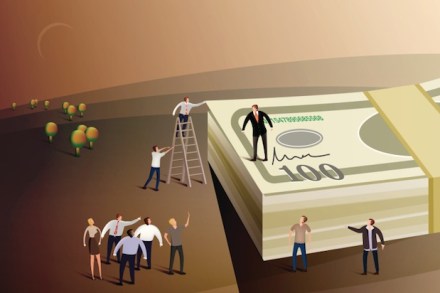
The FTSE100 index stands precisely where it did in the first week of December 1999. Whichever way you look at it, shareholders — including pension funds — have had a rotten run on the economic rollercoaster of the past 15 years. So it’s reasonable to keep asking whether the rise in executive pay over that same period is justified: a report from the High Pay Centre says remuneration of the average FTSE100 chief executive is now at a multiple of 130 times (corrected from the report's original figure of 143 times) that of the average worker in the same companies. In 1998 that multiple was 47, indicating that top pay has almost tripled relative to workforce earnings while shareholder returns have stayed flat. Of course this argument is not that simple.