Finance

Inside Trump’s brazen financial disclosures

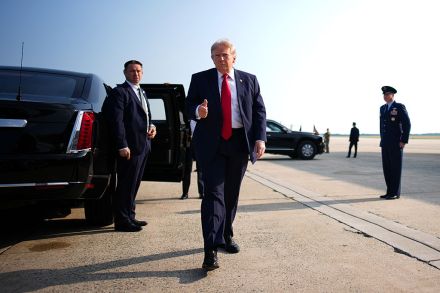
Donald Trump has exposed a weak link in American democracy. It is dependent, as the Founders would put it, on its leaders having a modicum of good character. Benjamin Franklin warned that without strict character requirements, government roles would attract "the bold and the violent," rather than the wise and peaceful. Trump’s new financial disclosure forms, released Tuesday, provide only the latest confirmation that the President and his family has gotten richer while he has served as president, stemming from a set of actions that have been brazen, if not illegal.
trump financial disclosures

Are western governments actively facilitating money laundering?

From our UK edition

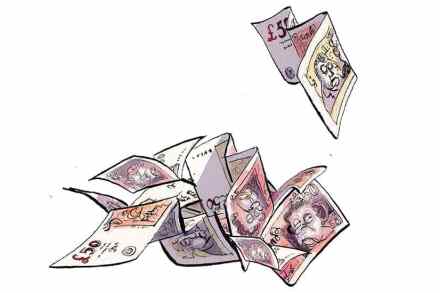
On the outskirts of Fort Worth, Texas, there is a two-storey factory churning out a vast number of dollar bills every day for the United States Federal Reserve. When Oliver Bullough visited, he counted 129 pallets in one room, collectively containing more than $4 billion. He also watched a woman use a jack to casually shift another $64 million across the concrete floor. Yet he barely used cash on his visit to the Lone Star state, relying on credit cards and smartphone apps, apart from when tipping waiters. As he points out, this is increasingly typical: many fewer Americans or Brits are bothering with cash, and when they do it is for small transactions. So why is more and more money being printed in such places, and in the biggest denominations?

How Palm Beach became Wall Street South

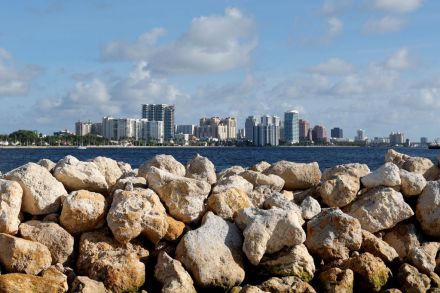
Palm Beach, Florida Palm Beach is now, officially, “Wall Street South.” So says the local Business Development Board, which adds that no fewer than 250 financial firms have relocated here in the years since the pandemic. Among the companies included are BlackRock, Citadel, Siris Capital, Goldman Sachs and Elliott Investment Management. Also, a number of medical device manufacturing firms have been attracted – these include Johnson & Johnson subsidiary DePuy Synthes, Precision Esthetics and Modernizing Medicine, along with a strong aerospace sector – Pratt & Whitney, Lockheed Martin, Sikorsky Helicopters, Northrop Grumman.

palm beach

Are you looking for a man in finance?

“Did I just write the song of the summer?” twenty-seven-year-old Megan Boni, an aspiring New York-based singer-actress known on social media as “Girl on Couch,” asked her public a few weeks ago. Days before, she suggested that her TikTok followers set to music a thirteen-word satirical musing she had improvised about her undersexed Gen Z peeresses’ lofty romantic expectations. Known simply as “Man in Finance,” the song’s lyrics easily divide into four short verses that unfold like shallow ads in the “Personals” section of an old newspaper: “I’m looking for a man in finance/Trust fund/Six-five/Blue eyes.” Adaptations have gone viral on social media, gathering more than 80 million hits and earning Boni more than $300,000 in revenue.

Will Nvidia stock keep going up?

From our UK edition

It more than doubled its sales. It unveiled a new line of microchips. It promised to keep rolling out new products for the next few years. In the end, Nvidia, the chip manufacturer, delivered the kind of blockbuster results that traders and investors had been waiting for. Yesterday’s ‘Nvidia Day’ (as the company’s quarterly results days are now known on Wall Street) turned out to be better than even the most bullish investor could have hoped for. There is just one snag. The company is now powering the bull market. If anything goes wrong with its turbo-charged expansion, it will bring equities down with it. It’s great for the moment There was no question that it was an impressive set of figures.

Can Mike Lynch make it out of jail?

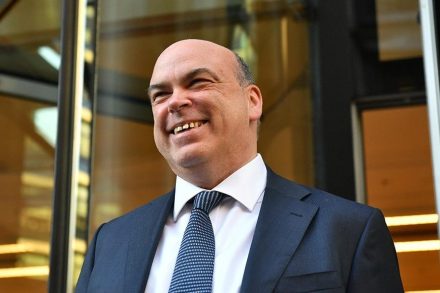
As I’ve said before, I hold no brief for Dr. Mike Lynch, the founder of the Cambridge-based software firm Autonomy, who faces fraud charges over the $11 billion takeover of his company by Hewlett-Packard (HP) in 2011. But I watched with foreboding as US marshals bagged Lynch under the lopsided 2003 US-UK extradition treaty and flew him to California — after the then home secretary Priti Patel declined to halt the process — and a judge there changed his pre-agreed bail conditions to place him under armed house arrest. Now, having comprehensively lost the argument that as a UK citizen running a UK company he should have been tried in British courts, Lynch is pleading “not guilty” to a San Francisco jury.

Lynch

ESG is a surprise boon for fossil fuel giants

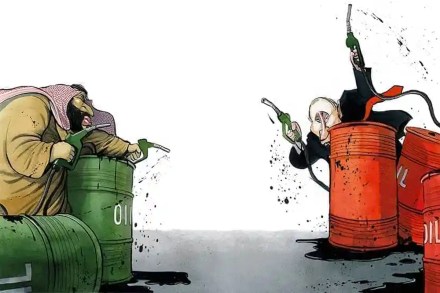
ESG, or environmental, social and corporate governance, has taken the financial world by storm. It first hit the scene in a 2004 United Nations report that argued the financial sector could rack up more profits if it focused on carbon dioxide reduction and UN-approved progressive causes and has ballooned into a big, green financial juggernaut. In 2021, ESG assets under management hit an estimated $35 trillion. Bloomberg projects that by 2025 $53 trillion will be invested in ESG vehicles — that’s over one third of global assets under management and over five times 2007’s total of $10 trillion of ESG assets.  The main thrust is to hasten the renewable energy transition to solve climate change by diverting capital from fossil projects to various green projects.

opec aramco esg

Daily life at the 18th-century Bank of England

From our UK edition

The England cricket team was once greeted at an Ashes test by an Australian banner with the immortal words ‘WOTHAM IS A BANKER’, the simple genius of the line being that you knew Wotham was being insulted before you had worked out quite who Wotham was, or what exactly he was being accused of. But, as Anne Murphy reminds us, the word ‘banker’ was not always just a word of abuse; it could also denote personal probity, sobriety, a certain nitpicking stolidity of thought, above all a preoccupation with credit and public confidence. It was not automatically oxymoronic to think of ‘virtuous bankers’.

America’s undersea lifelines

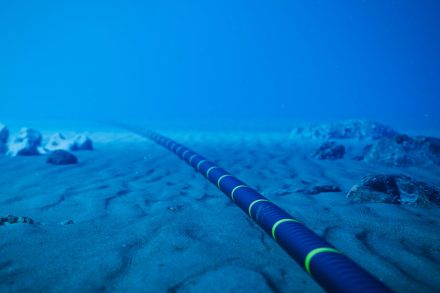
It is out of sight and usually out of mind, but recent events are forcing Americans to focus on the security of a vast network of undersea cables that the nation depends upon. In early February 2022, cables connecting Taiwan to its Matsu Islands off the coast of China were cut in what appears to be an act of sabotage that Taipei later ascribed to Chinese vessels. It took nearly two months for the internet to be up and running again, highlighting the importance of a largely ignored element of a country’s critical infrastructure.  According to TeleGeography, a telecommunications research and consulting firm, there are around 552 undersea cables, connecting almost every inhabited landmass. Most are fiberoptic, utilizing light to transmit massive quantities of data.

cables

The dollar is here to stay

Reports of the death of the US dollar as the world’s reserve currency are greatly exaggerated. Fortunately for America, while the dollar is by no means unsinkable, it will not be toppled anytime soon. Threats exist, but rather than coming from abroad, to paraphrase Lincoln, they spring up among us. How the US manages its economy will largely be the determinant factor in the dollar’s continued supremacy. Currently, the dollar makes up about 58 percent of foreign currency reserves worldwide, well ahead of its competitors. The next closest currency is the euro at 20 percent, and then the yen and pound sterling, both at about 5 percent — China’s renminbi is at a paltry 3 percent (just ahead of a real powerhouse, the Canadian dollar).

dollar debt

Credit Suisse lingers still. Why?

If G-SIBs were a gentlemen’s club rather than a category invented by the Basel-based Financial Stability Board, Credit Suisse would have been kicked down the front steps months ago. G-SIBs are the thirty "global systemically important banks" and even within that list, Credit Suisse counted among those with the lowest "required levels of addition capital buffers": in short, regulators considered it rock-solid. But that was a judgment on its end-2021 balance sheet, not its management. Credit Suisse has been so badly run for so long — so riven by tension between the dull Swiss wealth business it ought to have been and the global player it imagined itself to be — that some of us wondered how it survived.

credit suisse

Saying goodbye to the crypto nerd utopia

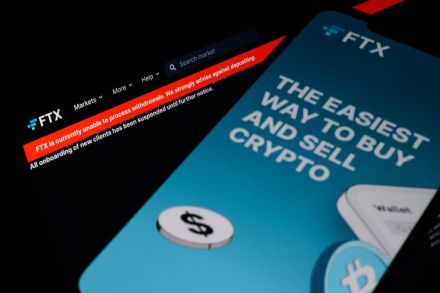
It’s been a great year for those of us who didn’t have the nerve to invest in crypto. The value of Bitcoin, Ethereum and Luna crashed in May. Now, crypto giant FTX has gone bankrupt amid serious allegations of criminal misconduct. At last! For years, we kicked ourselves for not investing in Bitcoin, ETH, et cetera, when we had the chance. We heard tales of people who went from bums to millionaires, while we grinded in our offices and fretted about debts. Suddenly, we can reframe our risk aversion as foresight! Of course we knew that this would happen! Of course we did! Really, I shouldn’t joke about this crypto craziness. A lot of people have lost a lot of money. People will lose businesses, homes, and families. Some might even commit suicide.

Levelling up is failing

From our UK edition

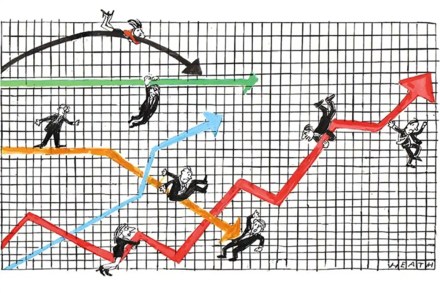
First the good news: the Office for National Statistics figures released today show that pay is rising at its fastest rate in two decades, with regular pay up by 4.2 per cent in the three months for February to April compared with a year earlier. Now the bad news: such is inflation that, in real terms, regular pay was actually down 2.2 per cent – lower than at any time in the past two decades except for a brief period in the autumn of 2011. So, yes, it isn’t just an illusion: we really are getting poorer. That is a big problem not just for households trying to make ends meet but also for the government, which at some point over the next two years will have to try to persuade voters to trust it with the economy.

Why does the City still use quotas?

From our UK edition

It sometimes feels like every regulatory body in Britain today misuses its influence to advance progressive causes. A welcome exception is the Financial Conduct Authority, which last week decided to allow firms to choose whether they use sex or gender as the definition of ‘woman’ for reporting on their representation on corporate boards. It is clearly not the role of a financial services regulator to attempt to define 'man' and 'woman'. Out of 540 responses to a consultation on the matter, all but one said they did not want trans women to be automatically included in the targets and data. As the group Sex Matters has pointed out, there is no reason to believe that the perceived advantages and disadvantages of female workers are shared by men who self-identify as women.

Inflation is here to stay

Inflation last month increased to 8.5 percent over a year ago. That’s up from 7.9 percent just last month. It’s the sixth straight month that inflation has been over 6 percent, and the highest it’s been since 1981. The Fed will almost certainly be raising the funds rate steadily for the rest of the year, perhaps by fifty basis point increments instead of the usual twenty-five basis points. The trick, of course, is to rein in the inflation without causing a severe recession. The price of gasoline rose a staggering 18.3 percent in March alone. But even if you take out the cost of fuel and food, which tend to be much more volatile than other commodities, the “core inflation” was 6.5 percent, again the highest in decades.

The TV licence is a dead duck

From our UK edition

‘Tell me we’re winning the media battle!’ I imagine Unilever boss Alan Jope barking at his team on Tuesday, following the revelation on Sunday of his rejected £50 billion bid for GlaxoSmithKline’s consumer healthcare arm. ‘Yes, sir,’ replies the flustered PR, ‘Very much so… except for top investor Richard Buxton of Jupiter telling the FT: “The idea of letting the goons at Unilever run [the GSK business] is laughable.” Then there’s an analyst in the Telegraph saying: “We can’t imagine many things that would unnerve us more about Unilever” than this deal going ahead. Oh, and our shares fell 7 per cent yesterday.

It’s time to reform the Big Four accounting firms

From our UK edition

It has been exactly 20 years since the Enron scandal upended the reputation of global accountancy firms, leading to the downfall of both the company – one of the largest in US history up to that point – and Arthur Andersen, one of the ‘Big Eight’ accounting firms. Enron’s collapse provoked an avalanche of regulation, ostensibly to reduce the chances of similar accounting fraud repeating itself. In the United States this effort was spearheaded by the 2002 Sarbanes–Oxley Act, while the European Union’s 2006 Auditing Directive followed scandals like the 2003 collapse of Italian dairy giant Parmalat.

The Liberal Democrats have a dangerous vision for the City of London

From our UK edition

Liberals have always set great store by laws and declarations. It was joked about Lord Loreburn, the liberal Lord Chancellor in the years before the First World War, that if told the Germans had landed he would immediately have taken steps to obtain an interim injunction from the Chancery Division requiring an immediate withdrawal. These days something similar seems to be happening as regards the Liberal Democrats’ approach to climate change. Last Thursday Ed Davey took aim at the City, which he has decided to add to the party’s growing list of climate change villains.

The clever radical who led the City’s transformation

From our UK edition

It’s a vivid example of unintended consequences that the swimming-pool builders of southern England should owe so much to Sir Nicholas Goodison, the former chairman of the London Stock Exchange who has died aged 87 and whose obituaries suggested little inclination to frivolity, poolside or otherwise. Head-and-shoulders the most cerebral of the Exchange’s leading members at the turn of the 1980s, he was also one of its most far-sighted and probably, as a noted connoisseur of 18th-century clocks, its most cultured. A traditionalist majority of his peers were content with the City’s clubbable old ways.

The EU’s debt bondage expansion

From our UK edition

In the global market for government debt, worth an estimated $92 trillion (£66 trillion), it amounts to little more than a drop in the ocean. The European Union this week issued the first €20 billion (£17 billion) of bonds to pay for its Coronavirus Rescue Fund. The money itself doesn’t amount to very much one way or another. And yet, the Commission’s President Ursula von der Leyen was surely right when she described it as a ‘truly historic day’. Why? Because, the Commission is already using it to seize control of fiscal policy, just as it used vaccine procurement to take control of health policy.