Filmmaking

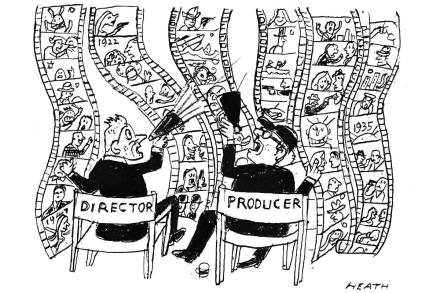
How long has Hollywood been out of ideas?

Marie-Georges-Jean Méliès made more than 500 films in his career, but 1896 was a banner year for the Frenchman. He captivated audiences with Playing Cards, his sixty-seven-second exploration of three cigar-puffing men as they are waited on by two young ladies. One man reads the paper and pours the wine as the other two play cards. It was the first reboot in film history. One year earlier, Louis Lumière released Card Game, a forty-three-second exploration of three men with cigars drinking wine and playing cards as they are waited on by a man. Méliès rightly recognized the original’s lack of representation, not to mention the absence of a news- paper.

Hollywood

The lamentable rise of VFX in horror films

The Thing is not a monster movie. Sure, John Carpenter was remaking the 1951 The Thing from Another World, itself an adaptation of the 1938 pulp-sci-fi novella Who Goes There? — but it’s not a shlocky B-movie horror. It’s too vicious, cynical and psychological for that. Rather, it’s the ultimate paranoia thriller. For the unfamiliar, the 1982 flick is about a group of researchers, stuck in an Antarctic base, who discover a strange shape-shifting alien, which consumes its victims and then mirrors their look, smell, speech and manner. They’re all marooned together, being hunted down by an unearthly terror, and any of them — friend, stranger, dog — could be it, waiting to strike.

vfx horror films

A hymn to self-loathing: Tibor Fischer’s How to Rule the World reviewed

Tibor Fischer has a track record with humour. His first novel, the Booker shortlisted Under the Frog, takes its title from a Hungarian saying that the worst possible place to be is ‘under a frog’s arse down a coal mine’. And he also has form with being a bit meta: his third novel, The Collector Collector, was narrated by an earthenware pot. Here he throws his weight behind a character who feels like he’s walked off the set of Brass Eye or Charlie Brooker’s Black Mirror. It’s not entirely clear whether we are supposed to loathe him or sympathise with him. Baxter Stone is a filmmaker whose best days are behind him and who is struggling to stay relevant in an industry that is itself dying.