Fiction

To hell in a handcart

From our UK edition

An immortal faery queen from a magical gynocratic island arrives in Los Angeles to track down her missing daughter. This is actually the entire plot of a novel entitled Only Americans Burn in Hell. Of course, as in Jarett Kobek’s previous book, I Hate the Internet, the fictional element is a foil, with most of the pages devoted to sociopolitical diatribe laced with various kinds of life writing. It’s also basically the same diatribe in both books, against a global society in which ‘everyone’s life is still dominated by the whims of the very rich and the social mores of the slightly rich’.

An outsider inside

From our UK edition

It’s not immediately obvious who the survivors in Tash Aw’s formidable new novel are, or who the narrator even is, or who has been killed. We know there has been a murder, however, or a culpable homicide not amounting to murder, as the narrator quotes the person being addressed as describing it. Details reveal themselves gradually: the narrator is a Chinese Malaysian man called Lee Hock Lye — known to his friends as Ah Hock — who is recounting the story to a local journalist of how he ended up in prison (for what part, in what crime exactly, we don’t know yet). His descriptions of the night of the killing are vivid: ‘I walked through the long grass — it was stringy and sharp and slashed my legs right up to my knees.

Cuckoo in the nest | 11 April 2019

From our UK edition

What kind of loyalty do we owe a robot we’ve paid for — one who exhibits a convincingly human kind of consciousness? Less loyalty than we owe to our own children? But what about to someone else’s child? And do we commit murder if we destroy him? These are the questions facing Charlie when he spends his inheritance on a robot called Adam. Charlie is a trained anthropologist with an enthusiasm for computers who hopes to give his life meaning by experimenting in ‘electronics and anthropology — distant cousins whom late modernity has drawn together and bound in marriage’. He and his girlfriend Miranda join forces in programming Adam with a personality, playing at parenthood as they create a new quasi-human.

Spirit of place | 4 April 2019

From our UK edition

In 1923, an earthquake with a magnitude of 9 struck Tokyo and Yokohama. A huge area of Tokyo burned. But, Ueno Park, protected by the water of Shinobazu pond, survived unscathed, as did many of the people from around Tokyo who sought refuge there. Emperor Hirohito visited the park and its new homeless residents soon after, and presented it as a gift to the people of the city, renaming it UenoImperial Gift Park. Ueno Park is central to this novel by Yu Miri, whose Family Cinema won the prestigious Akutagawa Prize in 1997. Almost a century on from the Great Kanto Earthquake, the homeless victims of a different type of disaster — the 1990 economic crash — have set up huts and tents there.

King of the Bears

From our UK edition

Jonathan Lethem’s new book is billed as ‘his first detective novel since Motherless Brooklyn’, which won America’s national book critics circle award for fiction in 1999. But if you’ve ever read his work, you’ll know not to expect a straightforward crime-solving tale — or anything like it. Throughout his career, Lethem has set out to wrong-foot his readers with a tricksy blend of realism, literary pastiche, ruminations on America and narrative elements that are deeply, even recklessly, odd. Now, in The Feral Detective, he’s at it again.

The cruise of a lifetime

From our UK edition

Near the start of Fleur Jaeggy’s extraordinary novel Proleterka, the unnamed narrator reflects: ‘Children lose interest in their parents when they are left. They are not sentimental. They are passionate and cold.’ Passionate and cold is also an apt description of Jaeggy’s writing: the fierceness of her words erupts from the seams of her tiny, frigid sentences, sometimes just a word or two long. It also fits the narrator, even though she evidently hasn’t lost as much interest in her abandoning parents as she’d like. Her ‘sudden desire’ for her father’s ashes opens the book; then we are plunged back into her recollection of a fornight’s holiday with him on a cruise to Greece on SS Proleterka when she was 15.

Goodbye to Berlin | 28 March 2019

From our UK edition

Philip Kerr’s first Bernie Gunther novel, March Violets, was published 30 years ago. From the start, the format was a winner: take a cynical, wisecracking private eye modelled on Philip Marlowe and Sam Spade and transplant him to Nazi Germany. Metropolis is the 14th in the series and unfortunately, since the untimely death of its author last year, presumably the final instalment. Thirty years is also the rough fictional timespan of Bernie’s career. Emerging from the trenches of the first world war, he has served for 11 years as a homicide detective in Kripo (Berlin’s criminal police). He’s a tough, morally ambivalent but essentially sympathetic character. Naturally — it goes with the format — women find him remarkably attractive.

Keep on rolling

From our UK edition

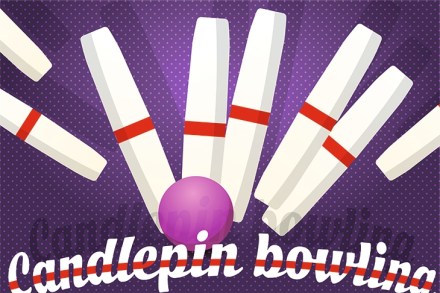
Bowlaway, Elizabeth McCracken’s first novel in 18 years, is a great American candy-colour Buddenbrooks, a multi-generational epic spanning almost 100 years and presenting the lives of a whole panoply of people. Swap the family with their grain business in Thomas Mann’s novel for the Truitts and their bowling alley in Salford, north of Boston, and you will have the stuff of McCracken’s rambunctious saga. This isn’t ten-pin bowling however. It’s candlepin. The ball is smaller, ‘a grapefruit, an operable tumour’, just four and a half inches in diameter. The pins are no bigger than a hand and are, as might be expected, candle-shaped.

If you are going to San Francisco…

From our UK edition

In his adopted city of San Francisco, the poet, publisher and painter Lawrence Ferlinghetti is venerated to levels nearing those of patron sainthood. In 1954, he co-founded the bookshop-cum-press City Lights on Columbus Avenue, which cleaves North Beach from Chinatown on the top right tip of the San Franciscan peninsula. Lauded by the Los Angeles Times as the man ‘without whom the Beat generation might not have found its voice’, Ferlinghetti is perhaps best known for having published Allen Ginsberg’s generation-defining Howl (and subsequently being arrested for, then cleared of, obscenity charges). But he also published others, such as Gregory Corso and Jack Kerouac.

Funny peculiar

From our UK edition

My ex-dentist resembled a potato wearing a Patek Phillipe. In those precious moments between the golf course and the cruise ship he would take the time to remind patients what good value our treatments were. Under the spotlights we could do little but stare, gurn and dribble, which he took, I presume, as a sign of our overwhelming gratitude. I thought that was bad enough, but it’s nothing compared to J.P. Wintergreen, the dentist villain of Nina Stibbe’s ‘dentally particular’ comedy Reasons to be Cheerful. Set in Leicester in 1980, the novel is the third in Stibbe’s Sue Townsend influenced series of (stand-alone) books tracing the life of narrator Lizzie Vogel and her dysfunctional family.

An epic quest

From our UK edition

Anyone who has issues with Tolkien (at 16, even in a suitably ‘altered state’, I could not finish The Hobbit, never mind The Lord of the Rings), anyone who falls asleep while watching a tedious Joseph Campbell-formula flick such as Star Wars, anyone saddened by the 2014 BBC poll of adult readers that included six fantasy books among its top ten British novels of all time may well approach Marlon James’s latest offering warily. With a cover puff from Neil Gaiman that invokes Tolkien (as well as Angela Carter) and comparisons elsewhere to George R.R. Martin and Charles R.

Echoes of The Tempest…

From our UK edition

‘I should not have gone back to the island but I did it all the same.’ So begins the Swedish author Steve Sem-Sandberg’s brief, dark and wonderfully atmospheric 12th novel, The Tempest. Islands play a special role in our literary imagination. They are crucibles, havens, prisons and escapes, places of magic and mysterious transformation, worlds that can be shaped and owned. There is a rich history of island-writing, from D.H. Lawrence to J.M. Barrie, Compton Mackenzie to Aldous Huxley, William Golding to John Fowles. Behind them all sits Shakespeare’s late, troublesome, self-reflexive play of creativity and destruction, forgiveness and retribution. Sem-Sandberg’s island is one of a small archipelago sitting in a fjord on the Norwegian coast.

… and The Comedy of Errors

From our UK edition

The phrase ‘Shakespeare comedy’ is an oxymoron with a long pedigree, one which perhaps stretches back to the late 16th century; and a running joke in Ben Elton’s Upstart Crow is that no one finds the comedies funny except their author, who thinks they’re hilarious. So it is a brave writer who, in a bid for laughs, bases a Shakespeare comedy on a Shakespeare comedy — in this case The Comedy of Errors. Fortunately, Marie Phillips has the wit, and sufficient wisdom, to pull it off. In Oh I Do Like to Be… Shakespeare is reborn in a grotty English seaside resort, not once but twice.

A tall story from Thanet

From our UK edition

Maggie Gee has written 14 novels including The White Family, which was shortlisted for the Orange Prize (now the Women’s Prize). Blood, her latest, is a bizarrely misfiring black comedy. The setting is Thanet, which was the only Ukip-held council in Britain until March last year, when almost half of its councillors resigned and formed a breakaway group. The choice of Thanet is not accidental, and one’s initial hope was that this might be the first great Brexit novel. Brexit is mentioned, but the narrative is dominated by 38-year-old ‘buxom bruiser’ Monica Ludd, an unconventional deputy head at a local secondary school, who we are repeatedly told is six foot.

Treacherous Old Father Thames

From our UK edition

While its shape is famous — prominent on maps of London and Oxford — the Thames is ‘unmappable’, according to Diane Setterfield, because it not only ‘flows ever onwards, but is also seeping sideways, irrigating the land to one side and the other’. In Once Upon a River, she redefines the boundaries that separate land and water. The Thames ‘finds its way into wells and is drawn up to launder petticoats and to be boiled for tea’ and ‘from teapot and soup dish, it passes into mouths’. Setterfield places the Thames all around, underneath and inside her characters — it nourishes their crops but also destroys them; it hydrates people but drowns them. It’s an understatement to say that the river is a character in this novel.

Be careful what you wish for

From our UK edition

Adam Foulds’s fourth novel, Dream Sequence, is an exquisitely concocted, riveting account of artistic ambition and unrequited love verging on obsession. In previous novels he has been interested in exploring the limits of perception and knowledge. Here he examines, with beautiful, forensic attention, the minds of a young, thrusting English actor, Henry Banks (a mix of Dan Stevens and Henry Cavill), and Kristin, an American divorcée with a stalkerish crush on him from the other side of the world. She writes letters, decorated with butterflies: ‘He was the key signature in which the music of her life was played.’ This is a novel about celebrity and its consequences, with Henry as, in his own words, a ‘permeating light’.

Water, sky, wind and cold

From our UK edition

Dystopian fiction continues to throng the bookshelves, for all the world as though we weren’t living in a dystopia already, and the latest entrant to the glum-futures category is John Lanchester’s The Wall, about which much can be divined from a glossary of the capitalised nouns that throng it from the title onwards. The Wall encircles the perimeter of a fortified Britain. The Change has caused the sea level to rise, transforming the world forever. The Defenders, a national service now demanded of all young people, protect the Wall. The Guards patrol the coastal waters in boats, the Flight in planes. The Others want to get over the wall from outside, by violence or stealth. The Breeders make babies, which most people won’t do any more.

Good and evil on an epic scale

From our UK edition

David Keenan’s debut novel, This is Memorial Device, about a small town in Lanarkshire and its post-punk scene, showed that it wasn’t easy being Iggy Pop in Airdrie. For the Good Times, his second, set in 1970s Belfast, shows that it isn’t easy being a Perry Como-loving one of the boys in the Ardoyne. In NI parlance, Sammy McMahon and his three friends are connected. This involves participation in punishment beatings, arms raids, killings, explosions and internecine feuds. But Sammy and his friends are not paramilitaries of the type you might imagine — the guerrilla ideologue or the Donegal tweed-wearing killer. This lot, travelling around in a van decorated with a painting of Mickey Mouse, tend more to a Mafioso wiseguy and Droog mutation.

A tragic fall from grace

From our UK edition

Nurture hatred in your heart and you will keep ‘an unfed tiger in a house full of children’. A man who passes on a plausible lie ‘may be offering a rattlesnake in a calabash of food’. Someone who lugs grievances around carries ‘a full pitcher of resentment from which, every step or so on its rough journey through the worn path of life, a drop or two spilled’. This second book from the young Nigerian author whose debut, The Fishermen, reached the Man Booker shortlist does not quite escape that difficult second novel syndrome. It’s overlong, raggedly structured and freighted with rambling digressions.

Everyone’s a victim

From our UK edition

From the very first pages of Among the Lost, we’re engaged, and compromised. Estela and Epitafio are our main anchors, their experiences and relationship driving the story’s developments, but these magnetic central characters are people-traffickers and kidnappers, capable of startling violence and dehumanising cruelty. And truly, they’re very much in love. For most of the novel, Estela and Epitafio are apart, having left the jungle clearing where the book opens to drive their respective consignments of human cargo to their destinations. Theirs is a single story — what happens to one has consequences for the other — told along parallel tracks.