Feminism

Why Albanese’s Kylie Minogue remarks went down so badly in Australia

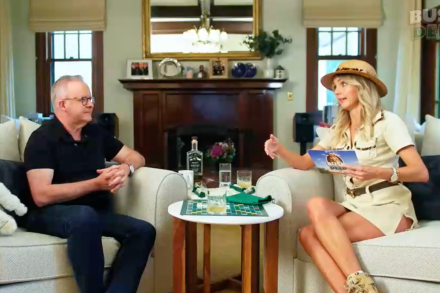
Australia’s Prime Minister Anthony Albanese is someone who wants to be liked even more than respected. He wants to be seen by Australians as one of them, a "bloke’s bloke," one of the lads. In politician-speak, authentic. Australia is different these days: it’s now a woman’s world, and an increasingly puritan and humorless society, in which many voters would not even have understood Osborne and Albanese’s humor, let alone appreciated it That’s the only explanation for Albanese choosing to invite a ribald Australian podcaster, Nikki Osborne, to his official residence for a boisterous sit-down chat that has gone globally viral, for all the wrong reasons.

anthony albanese australia kylie minogue

Did Plato invent women’s lib?

One could go on endlessly about what the ancients have done for us, but one of the most interesting things is that Plato could be said to have invented women’s lib, though it seems to have taken 2,500 years to catch on. Since most ancient states were at war much of the time, putting the male population especially at risk, women had to commit to the production line as soon as possible if the state were to survive. But Socrates, in Plato’s dialogue The Republic, portrays a utopia in which women shared the same status as men. The ruling class of this state are called Guardians and Plato likens them to dogs hunting and protecting the flock, an activity in which female dogs engage just as much as male dogs (though the males are stronger).

The global revolution sparked by a vegetarian schoolteacher in Helsinki

From our UK edition

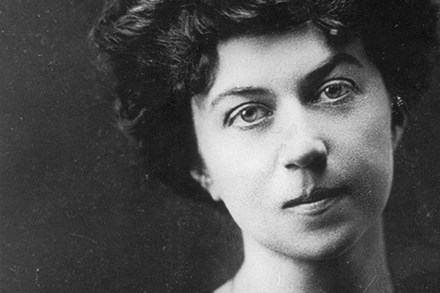
At the turn of the 20th century, no woman was in government anywhere in the world. Change began with Finland in 1907, which elected 19 women to its parliament. Hilda Kakikoski was one of those women. She was a conservative candidate – a nationalist who was also a lesbian and a vegetarian. Paula Bartley’s Trailblazers spans the century, following the story of female politicians as they emerged. From Finland we move to Russia, where the revolution provided opportunities for the likes of the socialist feminist Alexandra Kolontai, the first woman to join a government cabinet and become a global diplomat. Constance Markievicz was the first woman to be elected to the British parliament, during her imprisonment for her role in the Easter Rising, but did not take her seat.

A psychopath on the loose: Never Flinch, by Stephen King, reviewed

From our UK edition

Stephen King, 77, is a writer of towering brilliance whose fiction appeals to a reading public both popular and serious. His 60th novel, Never Flinch, unfolds in Buckeye City, Ohio, where a serial murderer is on the loose under the alias of Bill Wilson – the name of the man who co-founded Alcoholics Anonymous. Wilson has sworn to kill 14 people in revenge for the death of a friend and former alcoholic who was framed and convicted for child pornography offences. The plot is steeped in AA lore (‘Honesty in all our affairs’) and an awareness of the deleterious effects of drinking to excess. It’s no secret that King is himself a recovering alcoholic.

Why women are walking away from the New Right

Sam Adler-Bell recently published a profile in New York magazine about women who have left, or are quietly leaving, the New Right. Alex Kaschuta, an influential writer and former host of the podcast Subversive, publicly split with the movement after years of genuine intellectual engagement that included interviewing many of its architects, from Curtis Yarvin to Darryl Cooper. Another woman, a mother and former true believer who wrote for right-wing outlets and worked for conservative institutions, requested anonymity because she fears for the physical safety of herself and her children. Both describe a movement that once promised women a place at the table and now openly treats them, in the anonymous source’s words, as “subhuman: subrational, non-agentic, cattle.

new right

When women exit stage right

At the event Melania Trump hosted for Women’s History Month, the ladies in the audience had perfect blowouts and wore pastel dresses. But the speakers who took the stage were tough. They included an Olympic athlete, a single mother who worked as a waitress and Melania herself. Most of the women honored were notorious for being abrasive: among them Pam Bondi and Karoline Leavitt. The women in the crowd didn’t clap politely but cheered and hollered, as if the East Room chairs were bleachers at a football game. Rumor on the street is Leavitt, who is pregnant, will only receive three weeks of maternity leave from her role as White House press secretary.

Women have never had it so good as now

From our UK edition

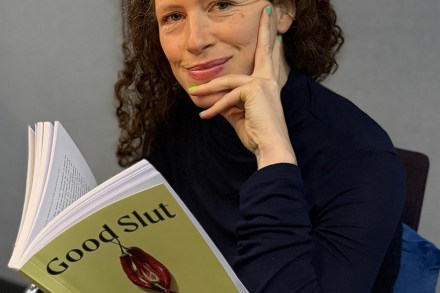
Unfortunately, Zoe Strimpel has a great point in Good Slut. Why unfortunately? Because as much as I sympathise with her basic argument, I cannot see many people being persuaded by this scattershot polemic with its myriad errors and alarming glibness. Team slut deserves a better advocate. Whether I want to count myself as one of team slut is a sensitive point. I’m 44: it feels embarrassing. I had my ‘reclaiming sexist slurs’ phase in the late 1990s when I was an aspiring Riot Grrrl and I realised pretty soon that wearing fishnets and calling myself names was not having the disruptive effect on misogyny that I’d hoped for. Strimpel is 43 and, like me, she’s noted the recent turn to conservatism in sexual politics with some alarm.

Jane Austen: Rise of a Genius is projecting

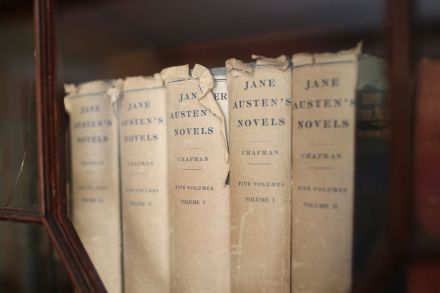
Which is your favorite Jane Austen novel? OK, maybe not a conversation prompt appropriate for every setting, but a reliable one, I find, to break the ice at DC dinner parties where I’m not well acquainted with my fellow guests but spy someone who seems likely to know her work. I also ask it of younger fiction writers who come looking for advice about plot construction. I once resorted to it with a stranger, a woman of a certain age, to distract me from my irritation, sitting on an Acela train inexplicably halted outside Wilmington, Delaware, for two hours. She chose Persuasion, Austen’s elegiac account of late-in-life love.

Liberation is a witty, genuine snapshot of second-wave feminism

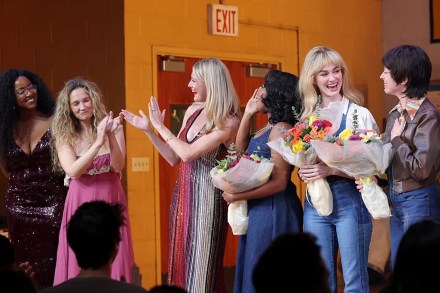
In the second act of Liberation the main cast quietly, and without fuss, starts to undress. By the time the lights go up, all six women are naked. In this masterful play by Bess Wohl, the moment does not feel shocking or gratuitous but somehow comforting. In 1970s Ohio, a group of women meet weekly to fight for equality through “consciousness-raising.” Mostly that consists of free-ranging conversation, of which the women have a lot and which is always smart, funny, vulnerable and eye-opening. But after reading an article about body positivity in Ms. magazine, they meet in the nude.

liberation

Are America’s women heading for the exit?

Life is apparently so disagreeable in Donald Trump’s America that 40 percent of women aged between 15 and 44 want to leave. That is four times higher than the 10 percent who wanted to quit the US in 2014. According to Gallup, which conducted the poll, nearly half the nation’s younger women have “lost faith in America’s institutions.” This disenchantment accelerated after the Supreme Court’s 2022 decision to overturn Roe v. Wade, which enshrined the constitutional right to abortion. Younger American men are bearing up better. Only 19 percent share women’s distaste for the Donald, a 21 percent differential which is the largest recorded by Gallup since it began asking the question in 2007.

Women
young men

Is our education system radicalizing young men?

My 11-year-old son joined the elementary school band, and so I went to the parents’ orientation night held at a local high-school. As the night went on it became obvious why young men rage against the larger social system and why they might find a character like Nick Fuentes attractive. The classrooms were inundated with DEI messages and trans pride flags. On the walls there were posters, stickers and decorations that all invoked the various totems of diversity. Black Lives Matter messaging, decolonization messaging, LGBTQ+ messaging and basically every sort of race and gender social justice messaging you can imagine was present.

What if the Emerald Fennell Wuthering Heights is good? 

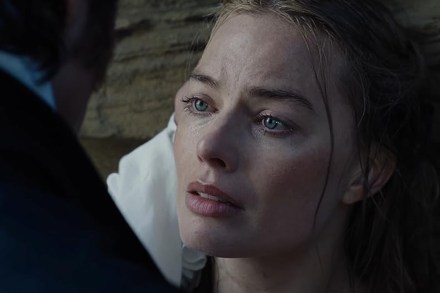
Every few months or so, a new film comes along and anyone interested in the art of cinema braces themselves, because The Discourse will inevitably accompany it. There is no clearer candidate for fevered discussion next year than Emerald Fennell’s new adaptation of Wuthering Heights, which is released, with smirking predictability, on Valentine’s Day. Ever since the film was announced, there has been controversy over everything from the casting of the Caucasian Jacob Elordi to play Heathcliff (who is referred to in Emily Brontë’s original novel as a “a dark-skinned gypsy in aspect”) to the excessively clean and stylish-looking clothes worn by Margot Robbie’s Catherine Earnshaw.

wuthering heights emerald fennell

In Putin’s Russia, feminism is an ugly word

From our UK edition

The excellent Moscow-born journalist Julia Ioffe’s first book recounts a well-known slice of Russian history from a fresh perspective – that of the mighty Russian woman who, it’s said, can ‘stop a galloping horse and run into a burning hut’. And how superhumanly brave and resilient they have had to be. Women were granted sweeping rights following the Revolution, then watched them dwindle for the rest of the century, in law but mainly in practice. What remained was the Soviet obligation to work regardless of gender, which created a country of professional women in every sphere: engineers, cosmonauts, judges, professors and 70 per cent of doctors by the 1970s.

The gay rights movement threatens to implode

From our UK edition

In the UK and elsewhere in the West, lesbian and gay rights have largely been won. Over the past two decades, rights to adoption, marriage, military service and workplace protection from discrimination have become law. Social inequality is another matter, and acceptance of same-sex relationships is now less widespread than it was ten years ago. According to Ronan McCrea, the author of The End of the Gay Rights Revolution, this can be explained – at least in part – by the political overreach of the LGBTQ+ movement. Is McCrea self-hating, riddled with internalised homophobia? Could it be that the movement has demanded too much, over and above acceptance and tolerance? As the title suggests, the book is a critique of the overreach and demands of some of the more radical campaigns.

Candace Owens: on the Macron lawsuit, anti-Semitism and Trump

Candace Owens joined Freddy Gray on the Americano show last Friday to discuss her recent lawsuit with the Macrons, Trump's intervention, the Epstein Files and accusations of anti-Semitism. Here are some highlights from their conversation. Why did Macron and his wife sue Candace Owens? Freddy Gray: Candace is being sued or threatened with legal action by the Macrons, Emmanuel and Brigitte Macron, the President and First Lady of France. Because, Candace, you believe that Brigitte Macron is a man. Why do you think the Macrons are choosing to sue you? Candace Owens: Because they were trying to stop the story. I think it was an effective PR strategy.

Freddy Gray and Candace Owens on the Macron lawsuit

‘Mankeeping’ is the secret of a successful marriage

From our UK edition

Don’t women have a bum deal? Not only do we have to bear children and make our way on the harsh plains where second-wave feminism and rampant neoliberal professionalism meet, but apparently now we must also perform ‘emotional labour’ for our husbands. Sorry: husbands and partners. This emotional labour has been christened ‘mankeeping’, the latest feminist buzzword. Dreamed up by Angelica Puzio Ferrara, a psychologist at Stanford, it describes the heavy lifting that women in heterosexual relationships do to keep ‘the family harmony alive’.  And it appears to have struck a chord. ‘Mankeeping: finally, a word to describe the emotional labour of my 38-year marriage,’ declared a recent Telegraph headline.

The sad saga of Lena Dunham

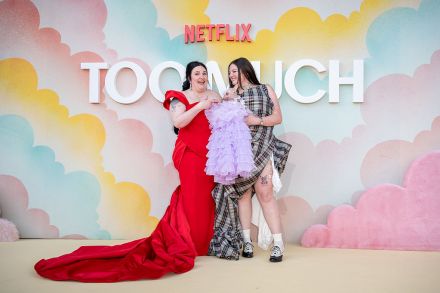
I preface this review by saying that – unless you are the greatest admirer of Lena Dunham or anyone in the (admittedly impressive) cast of her new Netflix series, Too Much – it is very easy to give this particular show a miss. It is a tedious, unfunny collection of clichés, strange American-centric perspectives on life in London, a charmless, Dunhamesque lead, a chemistry-free central pairing and guest appearances from her famous friends that seem somewhere between embarrassed and incongruous. Yet there are many worse shows on streaming services, most of which have not attracted anything like The Discourse that Too Much has thus far – and which, I am painfully aware, this article is contributing to. Why this? Why now?

Lena Dunham and Megan Stalter at "Too Much" screening in the UK (Getty)

Masculinity in crisis – portrayed by Michael Douglas

From our UK edition

There isn’t another actor alive whom I’d rather watch than Michael Douglas. Just as Pauline Kael once said that the thought of Cary Grant makes us smile, so the thought of Michael Douglas makes me grin, smirk, nod, wink, cackle, cheer – and walk a little taller, too. Even his anti-heroes are heroic in their truth to self. From the sly, ophidian sneer of his washed-up money man in A Perfect Murder to the salty, satanic leer of his trigger-happy cop in Basic Instinct, Douglas has embraced self-destruction, stared down absurdity and made plain what Nietzsche meant when he said that man is either a ‘laughing stock or a painful embarrassment’. But no matter how much Douglas means to me, he means a whole lot more to Jessa Crispin.

A triumphant show: Self Esteem, at Duke of York’s Theatre, reviewed

From our UK edition

The most compelling character in the newish documentary One to One: John & Yoko isn’t either John or Yoko. It’s one A.J. Weberman, inventor of ‘Dylanology’ and ‘garbology’. He’s shown practising both in the film, rummaging through Bob Dylan’s bins for clues to the thought process of genius.  Fifty years on, two things struck me. The first is how odd it is that Lennon and Dylan would let someone as obviously potty as Weberman anywhere near them. The second is that everyone is now Weberman. Think of the Swifties who decode every missive from Taylor; the fanatics who obsess over the sexual antics of boy bands based on convoluted readings of song lyrics; and people like me who spend wintry Saturdays driving around the Jersey shore visiting Springsteen locations.

Who should have Elon’s next child?

The Wall Street Journal has published an eye-opening exposé on Elon Musk’s “harem drama,” diving into the relationships the world’s richest man has with his baby mamas – and the labyrinthine system by which he allegedly manages them. Musk is on a mission to help “seed the earth with more human beings of high intelligence,” per the Journal’s Dana Mattioli. The White House senior advisor has at least 14 children by four different mothers – though this number is thought to be higher. Conservative influencer Ashley St. Clair, one such mother, reveals how after being impregnated by Musk, he offered her “$15 million and $100,000 a month in support,” while encouraging them a “legion-level” of children “before the apocalypse.

elon musk baby child natalie winters