Farming

How popular is Airbnb?

From our UK edition

Tall order Two naval cadets were killed and 19 injured when a Mexican sail training vessel, the Cuauhtemoc, crashed into Brooklyn Bridge. How many fully-rigged sailing vessels are there in the world? — Sail Training International lists 383 such ships which have taken part in races and regattas in recent years. — The oldest still in use, Constitution, was built in 1797. It is moored in Boston as a museum ship but still undertakes voyages. — The Australian navy trains sailors on the STS Young Endeavour, a gift from the UK government to mark the 200th anniversary of European settlement in 1988. Other countries which still train naval recruits on tall ships include India, Poland, Germany and Spain. China launched its first naval training tall ship, the Po Lang, last year.

The Ivanka Harvest

In Bentonville, Arkansas, far from the Beltway bubble, Ivanka Trump is talking about her latest venture. Her topic isn’t politics but produce – specifically, supply chain inefficiencies and supporting American farmers. “We launched Planet Harvest to reimagine how American produce moves,” she says, with her signature polished delivery. Gone are the West Wing offices and policy portfolios. Now it’s all about “reducing food waste, expanding access” and other wholesome buzzwords that perfectly capture the current moment in American food politics. This agricultural pivot isn’t just convenient timing, as Ivanka jumps on the MAHA bandwagon. It’s a masterclass in political repositioning.

The story of food in glorious technicolour

From our UK edition

Have you ever suffered from museum blindness? A complete overwhelm at the sheer amount of stuff – often quite similar stuff – that prevents you from focusing on any one item? I know I have. Two-thirds of the way around a museum, even one I have true enthusiasm for, I find my eyes sliding off exhibits, reading the captions but not taking anything in. I have discovered the antidote in Repast by Jenny Linford. Produced in conjunction with the British Museum, using its collection and curators, it explores the global history of cooking, eating and drinking. At first glance it could simply be a coffee-table book. A thing of beauty, it is heavy to hold, with gorgeous full-page illustrations. But it is far more than that. ‘Food is universal, yet particular,’ Linford begins.

Illegal rewilders are taking over the countryside

From our UK edition

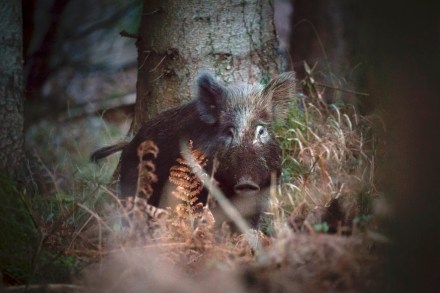
Hardly a month goes by without a report of guerrilla rewilders at work. Lynx released in the Cairngorms, wild boar on Dartmoor, beavers everywhere and, no doubt, before long, wolves and bears – if neo-Rousseauist guerrillas can find a ready supply and achieve it without being bitten.  Usually, these illegal releases of formerly indigenous-but-no-longer-native animals are in national parks, reinforcing my view that national parks give people a state-sponsored sense of entitlement to behave as they please on private land. The fact that the vast majority of farmers are against such reintroductions seems to give added incentive to the rewilding guerrillas. The extinction of family farms at the hands of Rachel from Customer Complaints is bad enough.

With Groove Armada’s Andy Cato

From our UK edition

19 min listen

Andy Cato is a musician, record producer and DJ, and is perhaps best known as one half of the Grammy Award-winning electronic music duo Groove Armada. Andy is also a farmer and now puts his energy into championing a better food system as co-founder of Wildfarmed, the UK’s leading regenerative food and farming company. Backed by Jeremy Clarkson and hundreds of farmers nationwide, regenerative farming methods place nature at the heart of food production: protecting natural landscapes, minimising pesticide use and building food security. On the podcast, he tells Lara about nutrition on world music tours, his favourite food spot at Glastonbury Festival and why he sold the rights to his music to pursue regenerative farming.

Why I’m obsessed with Farming Today

From our UK edition

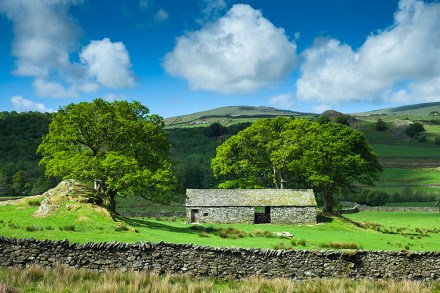
Farming Today airs at an undignified hour each morning on Radio 4. On the few occasions I’ve caught it live I have felt, first of all, relief that I am not a farmer; second, inadequacy; and finally, a surge of evangelism for the farmer’s way of life. I am now reaching the conclusion that getting up early enough to listen to Farming Today is the very least we can all do. Listening to Farming Today helps dispel the romance of living off-grid By no means will everything discussed on the programme hold relevance for your life. One feature last week was dedicated to a project to preserve ten acres of salt marsh downstream from Totnes. Another recent episode explored the Lakeland barns being saved for cultural heritage.

Letters: Labour’s attack on farmers

From our UK edition

Losing the plot Sir: Your leading article ‘Blight on the land’ (23 November) is right to call out the hypocrisy and vindictiveness of Chancellor Rachel Reeves’s Agricultural Property Relief cuts. Sadly, this is just one part of the Labour government’s multi-pronged attack on farmers, in sharp contrast to the promises they made before the general election. The 7 per cent rise in the minimum wage and the 9 per cent jump in employers’ national insurance contributions will hit all businesses, but given the 56 per cent slump in farm incomes over the past 12 months, farming is one of the sectors least able to cover such increases. The government also makes much play of the fact it is putting £5 billion into the agricultural budget over the next two years.

Rachel Reeves can still repair the damage done to farming

From our UK edition

The Chancellor of the Exchequer found time this week to edit her own page on the social media site LinkedIn. She had, it appeared, fallen into error by saying that she had worked as an economist for the Bank of Scotland. Her role had in fact been humbler. No one should be criticised for seeking to correct a mistake. There is no fault in acknowledging that your claims to economic authority were exaggerated, and no shame in embracing humility. Which is why Rachel Reeves should apologise again – without further delay – to Britain’s farmers. For the grotesque, unjust and vindictive tax assault she has launched on the nation’s food producers.

Portrait of the week: Rising inflation, electric car targets and a tax on flatulent livestock

From our UK edition

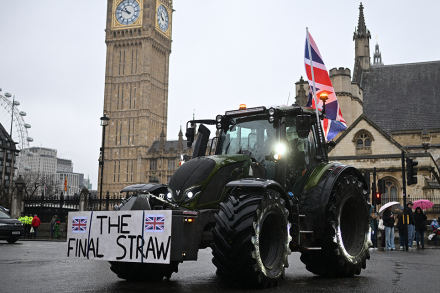
Home Thousands of farmers protested in Westminster against inheritance tax on farms. Tesco, Amazon, Greggs and 76 other chains belonging to the British Retail Consortium said that costs introduced by October’s Budget ‘will make job losses inevitable and higher prices a certainty’. The annual rate of inflation rose to 2.3 per cent from 1.7 a month earlier. The British economy grew by 0.1 per cent in the third quarter, but shrank during September; in the second quarter it had grown by 0.5 per cent. Beth, the Queen’s Jack Russell, died. An additional 50,000 pensioners will live in relative poverty next year as a result of cuts to the winter fuel allowance, the government estimated.

Could inheritance tax changes help farmers in the long run?

From our UK edition

Britain’s farmers are in a bind. Despite sitting on land worth millions, they are unable to release that wealth without selling – and many struggle to make money from what they produce. According to Defra, almost one in five farms make a loss, while a quarter made less than £25,000 last year. Yet there are parts of the Labour movement that see farmers as money-grubbing, tweed-clad elites benefiting from special tax breaks and hefty subsidies. James Buckle, a farmer from Suffolk, understands those frustrations: ‘If our farm is worth £10 million, and we’ve got these new inheritance tax rules, we’ve got to pay something like £1.6 million to pass it on. And £10 million is a ridiculous value for an asset that one person owns.

Labour’s war on the countryside

From our UK edition

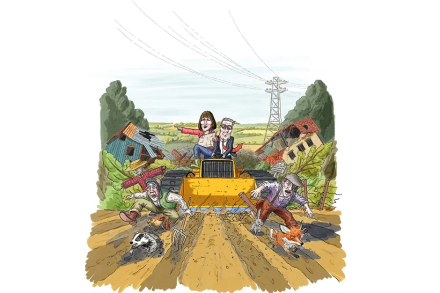
Two miles from where I am writing, the neighbouring village is plastered with posters demanding ‘Say No to Pylons’. The object of loathing is a 112-mile power line from Norwich to Tilbury that would carry wind-generated electricity from the North Sea to a supposed 1.5 million homes. As a concession to the famous landscape of Dedham Vale on the Essex-Suffolk border, the cabling will run underground for 3.3 miles. But because of John Constable’s inexplicable failure to paint the rest of the route, people living near the other 108.7 miles must have their vistas ruined by 160ft pylons. The developers claim it is twice as expensive to bury power lines than to hoist them on great metal towers. Objectors disagree and demand more consultations.

Is No. 10 coming for game shooting next?

From our UK edition

I confess I was lunching at L’Escargot in Greek Street as Rachel Reeves delivered her Budget. My excuse was that I thought I already knew what was in it – but in reality the package was even more anti-business than I feared. My punishment was a risotto too glutinous to finish, but the Chancellor’s 76-minute sermon proved just as indigestible when I tuned in later. Like the wild mushrooms in my dish, the more pungent Budget measures had to be picked out of a blander mass – and I was roused from postprandial torpor by a call from a veteran entrepreneur, regularly quoted here under a variety of disguises, in a fury at one such small-print item.

Escape into fantasy: My Heavenly Favourite, by Lucas Rijneveld, reviewed

From our UK edition

When Marieke Lucas Rijneveld won the International Booker Prize in 2020 for The Discomfort of Evening, a novel set in the Netherlands about the daughter of a dairy farmer growing up in a strict Christian household in the wake of the tragic death of her brother, the earthy, uncompromising voice was striking. The book was disturbing in its subject matter (the parents, blinded by grief, allow their remaining children to become semi-feral, experimenting with sex and death) and its visceral animal similes: bloody birth, brutal mating, culls for foot-and-mouth disease, slaughter. The ten-year-old girl protagonist had a lot in common with the author; and so it is again in My Heavenly Favourite, written under the name of Lucas Rijneveld.

Who would be a farmer’s wife?

From our UK edition

On the opening page of The Farmer’s Wife, Helen Rebanks quotes George Eliot’s famous passage from Middlemarch. Dorothea adds to ‘the growing good of the world’ through her ‘unhistoric acts’ and by having ‘lived faithfully a hidden life’. With this enchanting, funny, fearless book, Rebanks brings her own ‘unhistoric’ life unequivocally out of hiding. The blood, mud, slog, exhaustion, bureaucracy and financial angst of farming are ever-present She lives with her husband James (a bestselling writer) and their four children in the Lake District on their farm shared with six sheepdogs, two ponies, 20 chickens, 500 sheep and 50 cattle.

Spectator Out Loud: Robert Tombs, Jamie Blackett and Tanya Gold

From our UK edition

22 min listen

This episode of Spectator Out Loud features Professor Robert Tombs on Canada's willingness to believe anything bad about its own history (00:55); the farmer Jamie Blackett on the harms of wild camping (12:10); and Tanya Gold on the reopening of Claridge's Restaurant. Presented and produced by Cindy Yu.

Progress is coming to our remote corner of Kenya

From our UK edition

Laikipia The principal of the local polytechnic was waiting for me in the kitchen. Frequently in the kitchen there is a chief or a surveyor, or geese, or the cats Omar and Bernini, the dogs Jock, Sasi and Potatoes, foundling lambs or calves gambolling about hoping for milk, or stockmen with news of a sick cow, or armed askaris clumping in after a hard night to lay assault rifles down on the counter before slurping mugs of sugar-loaded tea. Bees try to swarm behind the fridge and one day Milka, the cook, primly announced there was a big snake coiled on the shelf of pots and pans. In her Cold Comfort Farm Miss Stella Gibbons talked of ‘clettering’ the dishes.

Do speeding fines work?

From our UK edition

Fine lines Would Suella Braverman be more likely to stick to the speed limit had she chosen to go on a speed awareness course instead of being fined? A government-commissioned study in 2018 looked at the reoffending rate among 1.4 million drivers who had accepted the offer of a speed awareness course and compared it with that of drivers who opted to take three points and pay a fine instead. Within two years of taking the course, around a quarter of drivers had reoffended. However, the rate was lower than it was for motorists who had chosen to pay the fine. The relative reduction of reoffending was put at 12-23% after six months, 9-17% after one year, 9-11% after two years and 6-13% after three years.

How China is trying to buy up American farmland  

China keeps buying property in the United States. Concern over this trend has been simmering for years, yet leading Democrats and left-wing media outlets dismiss it as harmless because, they say, China doesn’t own very much land in the grand scheme of things or compared to other nations. Also — racism. “No, China isn’t gobbling up America’s farms,” Bloomberg’s editorial board assured us in February as lawmakers across the country were introducing bills to prevent Chinese investors from buying more US land. (The Texas Senate passed such a bill last month, and Florida governor Ron DeSantis signed a series of such bills into law last week.

farmland

We survived the worst drought in a generation

From our UK edition

The Farm, Laikipia I realised the worst drought of this generation was at last over this morning when two Samburu gentlemen arrived on the farm, asking to buy rams. My nomadic neighbours sense very well when it’s time to put a tup in with the flock. In just this month a full moon and the alignment of Lokir Ai and Lakira Dorop – Jupiter and Venus – had brought six inches of downpours, equal to almost all of last year’s rain and half of the precipitation in 2021. As Mr Lemartile crouched behind my Dorper rams, happily dandling their testicles for size and girth, we caught up on gossip and everybody was in such a good mood there was no need to bargain over prices.

The farming year in 18th-century Sussex

From our UK edition

You may (or may not) already know this, but researching the long 18th century in 2023 is rarely a life-affirming, paradigm-shifting conversation over wine with Plato in the groves of academe. It is seldom, even, a couple of tins of warm lager on the train home after guesting on an episode of Start the Week. It is sometimes, though, sitting in an archive transcribing the traces of long-vanished lives, conscious of the passing of time, quietly excited but still wondering if any of this actually matters, whether the partial recovery of someone else’s life really is the fullest way of living your own.