Facebook

Two cheers for preppers

Really, the Facebook outage should not have been as entertaining as it was. As Jon Stokes, the founder of Ars Technica, observes, if Facebook, with its hyper-sophisticated software and security practices, is vulnerable to sudden collapse, what does that say about energy infrastructure run on 'old Windows installs'? The potential for far greater carnage is tremendous. But it was entertaining, and I think what it made so was the fact that the damage was so comprehensive that security systems in the Facebook offices crashed and its employees could not enter the building to fix the problem. Here were some of the smartest people in the world and they could not get through a door. You can imagine the coffee cooling in their paper cups.

preppers

Facebook’s empire is beginning to crumble

From our UK edition

When empires crumble they slide slowly at first, then the temple walls come crashing down. Facebook is not quite at the latter stage yet, but you can hear the creaking in the pillars and lintels. This week, the social media giant suffered two blows: an outage which took down its platform, along with Instagram and WhatsApp, and an expose by a disillusioned ex-employee who accuses the company of saying one thing about social responsibility in public – while behaving quite differently in private. Many of us might not notice if Facebook suddenly wasn’t there. But it is a different story for the many businesses which have built their model on the back of selling via Facebook or Instagram.

Blame legacy media for spreading disinformation, not Facebook

One week after the 2016 election, Hillary Clinton’s digital chief, Teddy Goff, declared Facebook the enemy of the republic and the reason why Clinton had failed to capture the presidency. His diagnosis caught on, and the media and the Democrats had found their excuse for Trump’s election. That war on Facebook continues today. Now, a whistleblower has landed on the scene, buoyed by a powerful Democratic PR firm led by former Obama alum Bill Burton. A wave of media attention has crested that's meant to once again put Facebook in the regulatory crosshairs and demand more censorship from what's deemed to be dangerous and influential 'misinformation’.

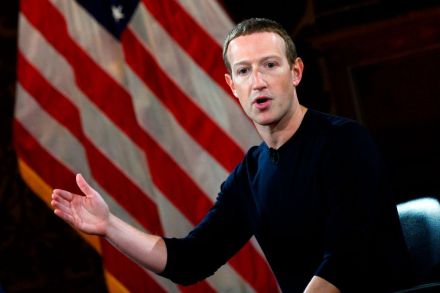
mark zuckerberg facebook

WhatsApp collapse throws Tory plots into chaos

From our UK edition

The world’s oldest democratic party has had a few problems with technology in recent years. Famously it was the 2018 Tory conference which saw a security breach where the official party app allowed anyone to access the private phone numbers of members of the Cabinet – or in the case of Boris Johnson change his profile picture to that of a pig. Once again, tech issues are plaguing Tory conference, with three of the world’s most popular apps – Facebook, Instagram and WhatsApp – all being offline since 4:30 p.m. today. The last of these is the favoured platform for disloyal backbenchers and scheming hacks to conspire mischievously to make life harder for long-suffering Tory whips.

The rise of Taliban Twitter

From our UK edition

The Taliban takeover of Afghanistan was swift, but this victory wasn't won overnight. For years, the Taliban has been waging a softer fight: one on social media. Since it was removed from power, the Taliban has dedicated enormous resources to developing its presence online.  As it successfully recaptured Afghanistan, the propaganda opportunities which it put to use on Twitter as the eyes of the world watched suggested these efforts have paid off. Images and videos of Taliban forces easily gaining ground and advancing into Afghanistan’s cities – picking up military hardware left by the Americans along the way – spread like wildfire online. Islamists around the world were delighted.

Joe Biden’s digital serfs

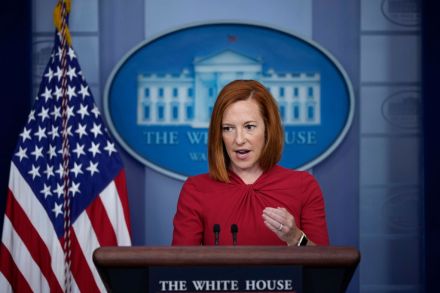
The Biden administration intends to notify Facebook about ‘problematic’ postings, such as questioning the COVID-19 vaccine. Jen Psaki, the White House spokesperson, suggests that if you’re problematic on one social-media site, you should be banned from them all. Big Tech, meet Big Sister. I suppose this is still America. If Donald Trump had said he’d use extra-legal leverage over Big Tech, most of the media would be crying ‘fascism’. Brian Stelter would decry an unprecedented assault on the First Amendment. Jeffrey Toobin would bang one out about bypassing Congress and the law. Minor academics would op-ed in the New York Times about the classically fascist ‘collusion’ between government and big business.

digital

Beware Boris’s sinister crackdown on free speech

From our UK edition

A Conservative government that boasts it is a defender of free speech against the attacks of 'the woke' is about to impose the severest censorship this country has seen in peacetime since parliament abolished press controls in the 1690s. In an extraordinary power grab – which is all the more extraordinary for the absence of opposition – ministers want to silence views that carry no criminal penalty. This is more than a much-needed crackdown on racial attacks on black footballers or incitements to violent crime or any other crime; it is an unmerited attack on free speech. The government’s draft Online Safety bill imposes a ‘duty of care’ on internet companies to remove content that may cause ‘psychological harm’.

Television, not social media, is fracturing our society

From our UK edition

All it took for the Twitter mob to descend on me was a retweet from Michael Gove. Message after message called for a resignation. Often it wasn’t entirely clear who the target was: me, the leader of a medium-sized youth charity, or him, the second best known member of the Cabinet. What on earth was in this few short sentences that had unlocked the world’s bile and aggression? Gove had committed the cardinal sin of recommending a book I have written. Ironically enough, it is a book on why our societies have become so divided and how we fix them. It is blindingly obvious to most of us why our societies have become divided. Two words is all we need: not the ridiculous 300 pages I took. Social. Media.

Facebook should never have stifled the debate about COVID’s origins

Good news everybody — you can finally post what you always thought about how the pandemic started on Facebook without being muzzled. The Silicon Valley giant, which has around 2.85 billion users, had been banning posts that claimed COVID-19 was man-made. But now, according to a company spokesperson, ‘In light of ongoing investigations into the origin of COVID-19 and in consultation with public health experts, we will no longer remove the claim that COVID-19 is man-made from our apps.’ The ‘lab-leak’ theory — that the SARS-CoV-2 virus originated from a laboratory in Wuhan, China — has gradually gained mainstream acceptance in the months since Trump lost the election. Nicholson Baker horrified New York magazine readers in January by bringing up the hypothesis.

facebook

Ron DeSantis’s Big Tech crusade

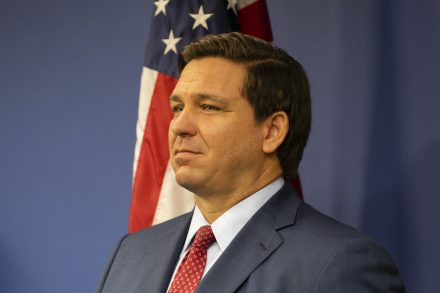
Miami  Florida governor Ron DeSantis signed legislation on Monday to penalize Big Tech for de-platforming private citizens and political candidates. The bill, which was passed last month by the Florida legislature, would allow Floridians who are banned from platforms to sue for damages and imposes hefty fines — up to $250,000 each day — on tech companies that boot political candidates. DeSantis signed the bill during an event at Florida International University that featured remarks from local citizens, political activists and elected officials, most of whom were of Latin American descent. Cubans and Venezuelans warned that Big Tech's crackdown on free speech was reminiscent of their home countries' slide into socialism and thanked DeSantis for pushing back on online censorship.

Florida Governor Ron DeSantis (Getty Images)

How politics ruined Instagram

Someday, we’ll count them like fallen soldiers: the online platforms that began by promising to be different, an escape from the grind of endless internet flame wars, and ended up like all the others, captured by memeified outrage. The trajectory is always the same. Tumblr, originally a home for cheeky fanblogs with titles like ‘fuckyeahsharks!’, was overtaken in a few short years by the ‘Your Fave Is Problematic’ brand of outrage archaeology. Facebook started as a place to collect your photos, share updates about your lunch and platonically ‘poke’ your friends, only to devolve into a wasteland abandoned by virtually everyone except a bunch of angry boomers battling over whether or not Hillary Clinton does, in fact, eat babies. Twitter...

instagram

Facebook keeps Trump on the naughty step…for now

The Facebook Oversight Board has reached a decision on Donald Trump…kind of. The tech company’s ‘Supreme Court’ is upholding the move to restrict Trump’s ‘access to posting content on his Facebook page and Instagram account’. But the board deemed it ‘not appropriate’ to indefinitely suspend Trump from Facebook’s platforms, describing that penalty as ‘indeterminate and standardless’. The FOB wants Facebook to ‘determine and justify a proportionate response that is consistent with the rules that are applied to other users of its platform’ in the next six months. In other words — they punted.

facebook

How to cancel someone

Cancel culture, I’m sure you’ve heard, is everywhere. Not a day goes by without some sorry sap being caught out for tweeting The Wrong Take, wearing The Wrong Clothes, using The Wrong Word. It’s not just a cottage industry: the entire digital media ecosystem is predicated on cancellation: pick your target, call them out, watch them burn and reap the rewards. Does it have to be this way? What if we didn’t all get mad — we got even instead? What if everyone was equipped with the same tools as the online witchfinders general who police popular discourse? Almost everyone has been on the internet long enough to have something on there that could hurt them. If everyone was canceled, perhaps no one would be? Let’s call it the Cockburn guide to mutually assured cancellation.

cancel culture

What happens when Facebook pays for news?

From our UK edition

The recently departed head of MI6, Sir Alex Younger, wants to balance China’s ideological antagonism to the West with the need for coexistence. Commenting on the government’s new ‘integrated review’, he says we must fight back with technological innovation and stronger alliances but avoid a second Cold War. He advocates ‘One Planet: Two Systems’ — a globalised echo of the Anglo-Chinese Hong Kong Agreement by which Hong Kong was handed back to China in 1997 under the principle of ‘One Country: Two Systems’. Sir Alex’s is an interesting analogy, but the important thing to note about ‘One Country: Two Systems’ is that China adhered to it only for 20 years and is now trashing it. Could the same problem take over the world?

The problem with Facebook’s ‘Supreme Court’

From our UK edition

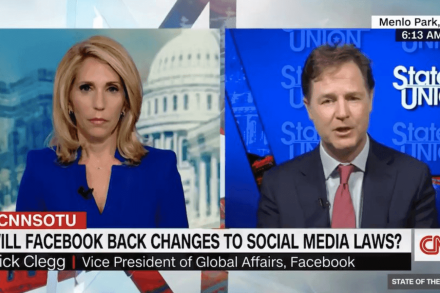
He might now be one of the most powerful men in global media, but I find whenever I see a photograph of Nick Clegg, Orwell’s quote about everyone getting the face they deserve by 50 comes to mind. Now 54, the remnants of the boyish idealist are still just about there, but the eyes to me are ledgers of too much unhappy compromise – deadened, I always assume, by the principles he felt forced by David Cameron to sacrifice for personal advancement, and by the amazing decision to see out the remaining years of a career spent failing upwards as Mark Zuckerberg’s lavishly remunerated PR lickspittle. For a decade and more, Clegg positioned himself as the good guy of British politics – radiating sixth form actor star power at every opportunity.

Facebook has called the Australian media’s bluff

From our UK edition

In 2021, it’s not uncommon to hope that everyone involved in an argument can lose, or to suspect that pretty much everyone is in the wrong. So it is with the long-running saga involving Australia’s mainstream media outlets, its government, and the tech giants, which has led this week to Facebook banning users from sharing posts from Australian media on its platform. The ban has been badly implemented: it has led to performative outrage at the apparent censorship from the outlets themselves, and has clumsily also included official government agencies and some of Facebook’s own pages. But, leaving aside the errors in the rollout, the wails from Australia’s media should be ignored. They have got exactly what they asked for.

How middle-class is your dad?

From our UK edition

Not all Facebook groups are forums for insurrection, anti-vaccine propaganda and rude remarks about Bill Gates. Some are just places where people talk about their dads. ‘Middle Class “Your Dad” Talk’ is a group where some 23,000 members share observations and witticisms that all follow the same format: ‘your dad is extremely specific about how the dishwasher is loaded’; ‘your dad judges others’ success by how big their kitchen island is’; ‘your dad was building up the courage to confront the postman about leaving the garden gate open until he saw he had a tattoo on his arm’. Mums are generally left alone.

Is a vile tweet about Captain Tom really a matter for the police?

From our UK edition

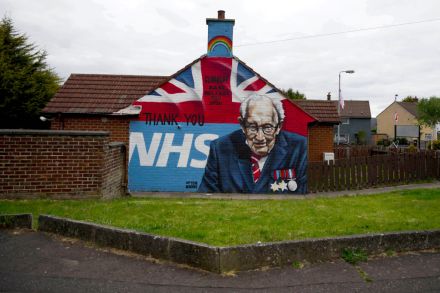
Should it be illegal to be a moron? That’s the question we really need to be asking ourselves in the wake of the arrest of a man in Scotland over a vile tweet about the death of Captain Tom Moore, the Second World War veteran who became a national treasure in 2020 for his NHS fundraising. Police Scotland has confirmed that a 35-year-old man has been charged ‘in connection with communication offences’. What it is he actually said wasn’t made clear. But a subsequent report, and much online chatter, points to this delightful post: ‘The only good Brit soldier is a deed one, burn auld fella, buuuuurn.’ That the post was offensive – and the person who posted it an idiot – goes without saying.

The big tech bullies

From our UK edition

I was in the kitchen preparing the family’s dinner when the inauguration of Joe Biden was on TV, so I caught only mysterious fragments of his speech, over the noise of the blender and stuff. ‘I want an hour — an hour — with my own teen wolf,’ Joe seemed to say at one point. And then: ‘America, America, I give to you my vest.’ I raced through to the living room when someone announced that Garth Crooks was going to sing ‘Amazing Grace’ — good choice, Joe, I thought. Garth seems to have lost a little weight and indeed colour, but he did a decent job. It all went well enough, given the circumstances, and at no point did Joe ask why all those people were there and was it his birthday or something.

How Facebook became a freedom-gobbling corporate monster

From our UK edition

Southwark Playhouse is beating the latest lockdown with a zingy new musical about social media. The performers, Francesca Forristal and Jordan Paul Clarke, remember the far-off days when Facebook was just a harmless supplement to ordinary social interactions. How did it turn into a freedom-gobbling corporate monster? We meet the Zuckerbergs, Mark and Priscilla, as they usher a TV crew into their mansion like a pair of politburo bigwigs showing tourists around a glue factory in North Korea. The down-to-earth billionaires offer bland answers to scripted questions. ‘How do you raise children when you can give them anything?’ Mark reveals that the mini-Zuckerbergs are treated like normal kids.