Facebook

The left thinks social media is reality

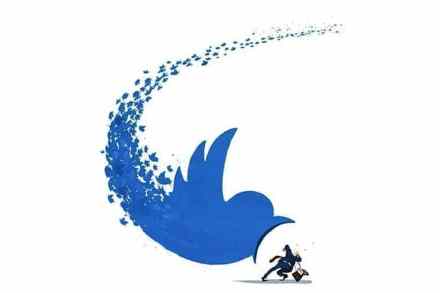
Spotify once took a run at Joe Rogan. YouTube banned Dan Bongino. Twitter permanently suspended Marjorie Taylor Greene. Twitter also famously canceled Donald Trump, and for a while, me. As with the suspension of Trump (and on a much, much lesser scale, me) progressives cheered the deplatformings the way public lynchings used to attract a picnicking crowd. The left controls social media (as well as most mainstream media) and so day by day their unreal world becomes ethically more cleansed, more free of things they do not like, and with all the bad news (Hunter Biden) made to go away. The world online is the way they want it to be, with the real world held at bay behind the screen. Like living in The Villages in Florida, or maybe in the Matrix.

Nick Clegg’s Facebook nightmare

From our UK edition

There have been many ironic fates for the lead actors in the Coalition government. For David Cameron, the premier who pledged to 'clean up' the 'culture of excessive lobbying' there was the Greensill scandal. For George Osborne, the austerity Chancellor who decimated the culture sector, there was a smorgasbord of jobs and the chairmanship of the British Museum.  Chris Huhne was jailed, Oliver Letwin lost the whip while Danny Alexander, the Chief Secretary to the Treasury, now works at the Asian Infrastructure Investment Bank – an institution used to front China's 'Belt and Road Initiative.' But none of these have been as both paradoxically high-profile and humiliating as Sir Nick Clegg's strange parliamentary after-life as vice-president of Facebook.

Zuckerberg’s curious confession

From our UK edition

Well, there you have it. Mark Zuckerberg, CEO of Meta, has confirmed that Facebook did indeed censor news of the New York Post’s 2020 Hunter Biden laptop story. But The Zuck had a rather curious tale to tell. Appearing on The Joe Rogan Experience, Zuckerberg was questioned by Rogan on Facebook’s approach to fake news and misinformation. In the discussion, the question of Hunter Biden’s laptop arose.

The golden noose around Apple’s neck

"Innovation comes from saying no to 1,000 things to make sure we don't get on the wrong track or try to do too much,” said the late Steve Jobs. “We're always thinking about new markets we could enter, but it's only by saying no that you can concentrate on the things that are really important." These days, Team Apple is all about finding new markets, no matter how removed they are from the company's core focus. Jobs once flirted with an advertising-supported operating system but ultimately gave it a pass. Now, in a strange twist, Apple is doing just that — selling ads in its services that are part of its platform. It wants to become a pooh-bah of digital advertising (it had tried before in 2010 with iAds, an effort that fizzled out).

I’ve been bitten by the TikTok bug

From our UK edition

In theory TikTok knows nothing about me. I have posted two videos: one of my grandsons kicking a football in a garden, the other of their much younger selves running through the dry desert house at Paignton zoo. They are the most unremarkable clips imaginable. The last time I looked, the football being kicked in the garden had been watched 3,700 times and ‘liked’ by 650 people. Astonishing. Apart from those two videos, I haven’t posted. My grandsons love TikTok. They are on it every day. They post videos of football cards they have collected and the ones they want to swap. Except when my grandsons post one, I never press the red heart to ‘like’ a video that appears on my daily feed.

Sheryl Sandberg leans out

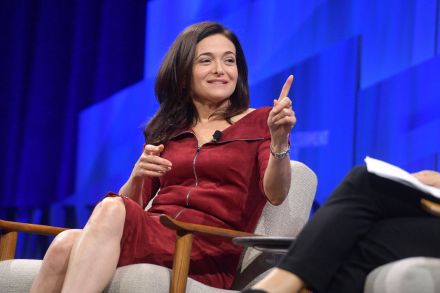
There’s a revealing moment at the very end of “Why We Have So Few Women Leaders,” a 2010 TED talk delivered by Facebook’s then-chief operating officer, Sheryl Sandberg. After expounding on her vision of a world in which 50 percent of CEOs and heads of state are women, Sandberg shares a more personal dream: “I want my daughter to have the choice not just to succeed, but to be liked for her accomplishments.” Now, as Sandberg leaves Facebook’s parent company Meta after fourteen years, she leaves behind a mixed and controversial record in her public life. Sandberg has earned success, but she hasn’t won much public admiration.

Boris is about to give Silicon Valley censors more power than ever

From our UK edition

Four years in the making, the Online Safety Bill has now been sent to senior ministers for review — a process that allows them to protest, to shout if anything obvious that has been missed. In this case, the process is invaluable because something huge has been missed. The Bill, if passed, would empower the Silicon Valley firms it’s designed to suborn. It would formalise and usher in a new era of censorship of UK news — run from San Francisco. This Bill would backfire in a way that its Tory advocates have so far proven unable to understand let alone address. That’s why it needs to be halted, and a rethink ordered. The original aim is to make Facebook, YouTube, Twitter and others liable for any genuine filth promoted online.

Big Tech covers up Biden’s crack pipe giveaway

A throwaway line item in an otherwise innocuous spending package unveiled one way the Biden administration and the Democratic party sees "racial equity." The Washington Free Beacon revealed a week ago that the Department of Health and Human Services would be distributing free crack pipes to drug users to promote hygiene and advance racial equity. The cost was around $30 million and the program is similar to what left-wing fiefdoms like Seattle and San Francisco already do. The story had all the elements of tabloid gold — even better in clickability than the last Biden crack pipe story: Hunter’s laptop.

crack pipe

Why windfall taxes are a rotten idea

From our UK edition

Annual profits of £9.5 billion at BP this week followed a £20 billion jackpot at Shell last week, thanks to soaring global wholesale energy prices that BP boss Bernard Looney recently said had turned his company into a ‘cash machine’. For the very same reason, Ofgem has announced a 54 per cent (roughly £700) increase in the energy price cap for 22 million UK customers, while the Chancellor is scrabbling to keep at least some of those households out of ‘fuel poverty’ by offsetting half the rise with a £200 energy discount, to be recouped over five years, plus a £150 council tax rebate.

Why Julian Assange is hated

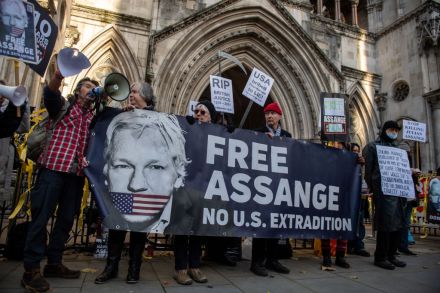
The British High Court ruled on Friday that Julian Assange can be extradited from the UK to the US. The US thus won its appeal against a January UK court ruling that he could not be extradited due to concerns over his mental health. This latest twist in the endless Assange saga is just the culmination of the long and slow well-orchestrated campaign of character assassination that reached the lowest level imaginable with unverified rumors that Ecuadorians in their London embassy wanted to get rid of him because of his bad smell and dirty clothes.

assange

The good and bad news about the Online Safety Bill

From our UK edition

If you care about free speech, the just-published report of the Joint Committee on the Online Safety Bill – a cross-party parliamentary committee composed of six MPs and six peers – is a mixed bag. This is the Bill which began life as a White Paper under Theresa May. Its aim? To make the UK the safest place in the world to go online. It will achieve this by subjecting social media platforms and internet search engines to state regulation, empowering Ofcom to impose swingeing fines on companies that fail to observe a new ‘duty of care’. Let’s start with the good news.

Both parties want to control what you say on the internet

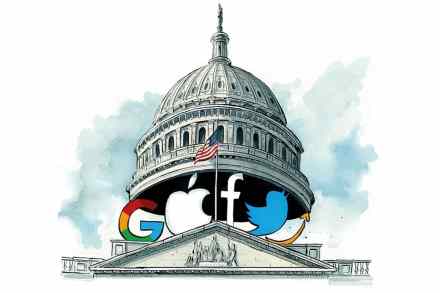
The long slog towards government regulation of social media is snaking its way towards reality. The House and Senate hold hearings this week on bills enacting rules on Facebook, Twitter, TikTok and YouTube. Many of these proposals revolve around Section 230 of the Communications Decency Act, a rather innocuous 1996 law protecting online platforms from civil liability for hosting and moderating third-party content. Section 230 includes language praising “the vibrant and competitive free market” existing for the internet and tech companies, without state or federal government rules. It’s all about to change twenty-five years later, with both major parties seeking to get their pound of ideological flesh from Big Tech.

control

The wealth explosion

Not all inventions change the world. But some do — and they do it by greatly lowering the cost of a fundamental economic input. This inevitably causes an economic revolution that brings about a new political and social order by opening previously impossible economic opportunities,  creating vast new wealth in the process. We are in the middle of such a revolution today, thanks to the microprocessor, which first came to market in 1972 and really took off with the introduction of the personal computer in the early 1980s. The microprocessor, a dirt-cheap computer on a chip, hugely reduced the cost of storing, retrieving and manipulating information. Computing power that cost $1,000 in the 1950s today costs a fraction of a cent.

microprocessor
metaverse

Reality is enough without Zuckerberg’s metaverse

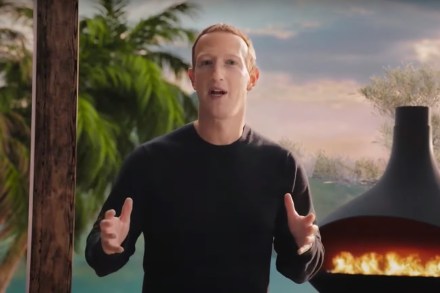
Take my hand, darling, and off we go into the metaverse. It's a whole new world...or at least it's a new world...maybe a brave new world? Enter Mark Zuckerberg, that Titanic captain of industry, who last week released a video introducing his latest plan to leave his Nike shoeprint upon reality. It's called the metaverse, and while even the savviest tech writers are grasping to explain what it is, it appears to be the fusion of our world with the virtual. Big Zuck wants what's on our screens to spill over into real life. We lived on farms, then we lived in cities, now we will live in "home spaces" with digitally rendered pterodactyls flying just outside the windows.

Don’t let China’s climate sins cloak its crushing of Hong Kong

From our UK edition

China’s failure to bring anything new to COP26 surprised no one. The world’s worst carbon emitter offered no advance on President Xi Jinping’s earlier promise to reduce coal use after 2025 and bring overall emissions to a peak in 2030 — thereby negating for at least a decade much of the rest of the world’s efforts to clean up the planet. But spotlighting China as a climate sinner should not be allowed to cloak its other villainhood, as an abuser of human rights: so let’s not forget Hong Kong. The fate of the once-British enclave and its future as an international business centre have been much on my mind lately.

Are we ready for the metaverse?

From our UK edition

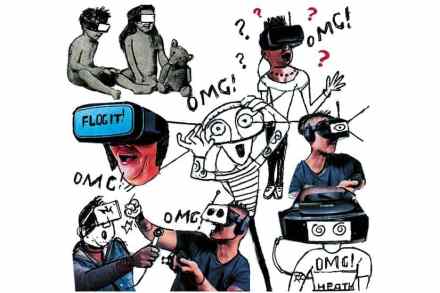
Facebook has rebranded itself as Meta and last month chief executive Mark Zuckerberg announced the creation of 10,000 jobs to help build the ‘metaverse’ — a concept so radical nobody yet knows what it really is. People in the media tend to describe it as ‘a 3D version of the internet’. Facebook describes it rather vaguely as a network of ‘virtual spaces where you can create and explore with other people who aren’t in the same physical space as you’. Some suspect it might actually be hell. The term metaverse first appeared in Neal Stephenson’s 1992 novel Snow Crash, in which future humans distract themselves from economic collapse by submerging themselves in a parallel virtual reality world.

The tragic embarrassment of Sir Nick Clegg

From our UK edition

If you thought Nick Clegg's career reached its nadir with the 'I'm sorry' video then think again. The former Deputy Prime Minister is re-enacting the stunning success of his political career out in Silicon Valley where he's paid £2.7 million a year to sell his soul to Mark Zuckerberg, Sheryl Sandberg and the rest of the Facebook – today rebranding as Meta – cabal. Whereas Sir Nick is all too familiar for us here in Britain, Americans were not au fait with the former Lib Dem leader when he was appointed as vice president of the social media behemoth back in 2018. But all that has changed in the last month, with Clegg becoming a familiar face to millions stateside thanks to his near-constant cringing appearances on American networks.

Frances Haugen: a very convenient whistleblower

From our UK edition

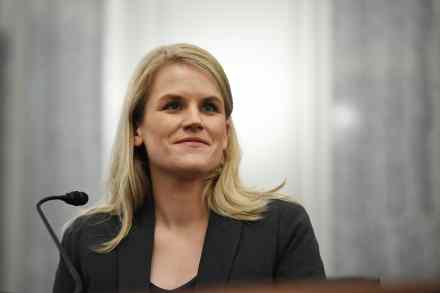
Facebook wants to move its business model towards the metaverse, that virtual future in which we will all hang out online through headsets and pretend it isn’t weird. The trouble is, we already appear to live in an alternate reality created by communications specialists with highly political agendas. Just look at the clearly PR-orchestrated Online Safety vs Facebook story which the media is playing out before our non-digital eyes. This week’s protagonist is Frances Haugen, the former Facebook employee who appeared yesterday in parliament to give evidence to MPs scrutinising the Online Harms Bill. That is the bill through which the government says it intends to regulate social media companies to stop online hate, bullying, terrorist radicalisation and so on.

A new name isn’t enough to save Facebook

From our UK edition

Mark Zuckerberg emerged from his walk-in T-shirt closet last week to make a stunning announcement: Facebook will be changing its name. And while we don't yet know what the new name will be, I think I may be able to help here. How about this: Boomerware? Or in keeping with Silicon Valley's penchant for trendy misspellings: LyfeSuck? Or instead of a name, there's just the sound of Rome burning? The reason that ‘Facebook’ is getting retired, per Zuck, is that he wants to ‘transition from people seeing us as primarily being a social media company to being a metaverse company.’ What that means is that he's trying to distance himself from Facebook and Instagram, the very brands he owns.

Social media is nothing like heroin

On Tuesday, Frances Haugen, speaking to the Senate Commerce Subcommittee on Consumer Protection, compared Facebook to tobacco and opioids while pushing for similar regulations. Haugen, a 'whistleblower' who came forward after Facebook dissolved her team and who admits she never worked on child safety during her time at Facebook, told a terrifying story about an app that harms young girls. Social media is like a drug. We hear this all the time. We’re powerless addicts in the face of its influence. We need to keep the kids safe from it. But is it? And do we? I used to call myself a Twitter addict. It’s the first thing I check each morning and the last thing I look at at night.

social media heroin