Exhibitions

The splendour of Edinburgh’s new Scottish galleries 

From our UK edition

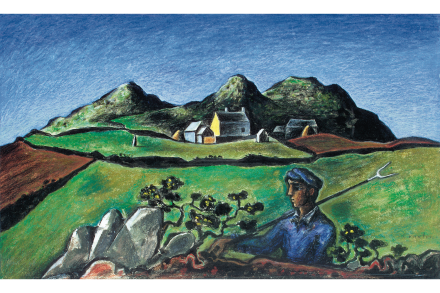
For nearly 50 years, the Scottish collection at Edinburgh’s National Galleries has been housed in a gloomy subterranean space beneath the main gallery, rarely visited, never celebrated. If you didn’t know it was there, don’t be ashamed. Just 19 per cent of visitors ventured into the bowels to find the jumble of Scottish paintings, dimly lit and hanging on colour-sucking, mucky green walls above a depressing brown carpet. Of those who did get there, lots immediately turned and fled back upstairs to the luminous comforts of Titian, Velazquez and Rubens. Safe to say, the space was not exactly showcasing Scottish art; a puzzling strategy for the country’s flagship gallery. The hang is uncluttered. Each painting has room to breathe But no more.

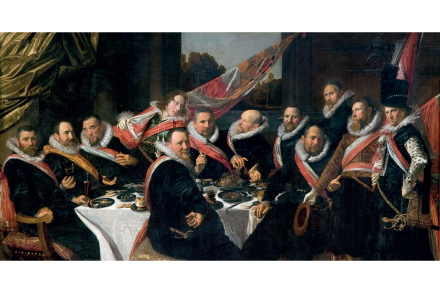
Why is Frans Hals still not considered the equal of Rembrandt?

From our UK edition

Who was Frans Hals? We know very little about him. He was baptised in either 1582 or 1583 in Antwerp. He died in 1666 at the age of 83 or 84. Approximately 220 works survive. One discredited narrative claimed Hals was a drunk – an inference probably based on his subject matter. There are several depictions of drinkers. On the other hand, there is his evident industry. Two streets in Haarlem, where he lived his entire life, have been identified, but not the actual houses. He was buried in St Bavo’s church in the Grote Markt, which was originally Catholic but became Protestant. There are two commemorative slabs next to each other in the chancel floor competing for authenticity. Which is appropriate, because there are two Frans Hals – the traditionalist and the innovator. They co-exist.

Lyrical and dreamlike: A World of Private Mystery – British Neo-Romantics, at the Fry Art Gallery, reviewed

From our UK edition

‘My daughter’s moving to Saffron Walden, away from all this,’ said the railway man at Stratford station, gesturing at the tower blocks overlooking the platform. ‘It’s like going back to the 1970s and ’80s.’ For the neo-romantics the pastoral mode was an escape from the grimness of everyday wartime reality Further back, in the case of Saffron Walden’s Fry Art Gallery. Purpose-built by a Victorian banker to house his collection, this gem of a gallery has since been devoted to collecting and showing artists who have lived and worked in north-west Essex, beginning with the group that congregated around Edward Bawden and Eric Ravilious in Great Bardfield from the 1930s.

The greatest artist chronicler of our times: Grayson Perry, at the Edinburgh Art Festival, reviewed

From our UK edition

The busiest show in Edinburgh must be Grayson Perry: Smash Hits which, a month into its run, still has people queuing at 10 a.m. His original title, National Treasure, was rejected because ‘national’ is a politically loaded term in Scotland. But Perry’s lens is resolutely fixed on England and Englishness. Seen from a Scottish perspective, this riot of rococo folkishness is familiar and exotic. Grayson Perry is the greatest artist chronicler of our times, with an omnificent style that’s all substance The exuberant exhibition, which is curated by the National Galleries of Scotland but showing at the Royal Scottish Academy and ends on 12 November, slaps the viewer around the face with its huge narrative tapestries, prints and pots.

Fast cars, minimalist design and en suite bathrooms: the real Rachmaninoff

From our UK edition

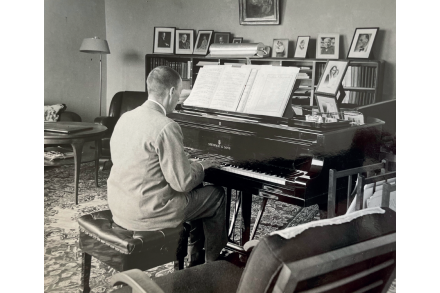
The train from Zurich to Lucerne tips you out right by the lakeside, practically on the steamboat piers. A white paddle-steamer takes you out of the city, past leafy slopes and expensive-looking mansions. Tribschen, where Wagner wrote the ‘Siegfried Idyll’, slides away to the right as you head out across the main arm of the lake. At the foot of Mount Rigi, shortly before the steamer makes its whistle-stop at the lakeside village of Hertenstein, is a promontory where – if the sun is coming from the west – a yellow-coloured cube shines among the trees. This is the house that Sergei Rachmaninoff built between 1931 and 1934: Villa Senar, his last attempt to make a home outside Russia in Europe.

At the Science Gallery I argued with a robot about love and Rilke

From our UK edition

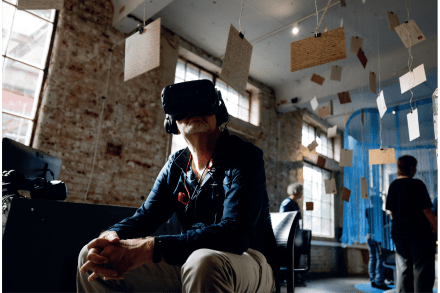
A little-known fact about the Fairlight Computer Musical Instrument, the first sampling synthesiser, introduced in 1979, is that it incorporated a psychotherapist called Liza. Stressed musicians could key in an emotional problem and Liza would begin the session with the soothing opening: ‘What is it that troubles you about x?’ She was flummoxed by a frivolous question from my husband, an early Fairlight owner, about a hole in her bucket but dealt expeditiously with my nine-year-old stepson. When he told her to get lost, she shut the system down.

An extraordinary woman: The Art of Lucy Kemp-Welch, at Russell-Cotes Art Gallery, reviewed

From our UK edition

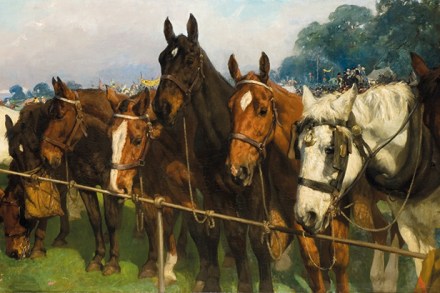
In March 1913 two horse painters met at the Lyceum Club to discuss the establishment of a Society of Animal Painters to raise the profile of their genre. Of the two, it was Alfred Munnings whose profile needed raising. Lucy Kemp-Welch had been a celebrity since her twenties when her 5x10ft canvas ‘Colt Hunting in the New Forest’ caused a sensation at the 1897 RA Summer Exhibition and was purchased by the Chantrey Bequest for the new National Gallery of British Art on Millbank. She threw herself into every activity she depicted, whether rounding up colts or hauling timber The daughter of a Bournemouth solicitor, Kemp-Welch had been riding and sketching horses since the age of five and had developed a photographic memory for catching them in action.

Move fast to snap up one of Elizabeth Blackadder’s sleek cats at the Scottish Gallery

From our UK edition

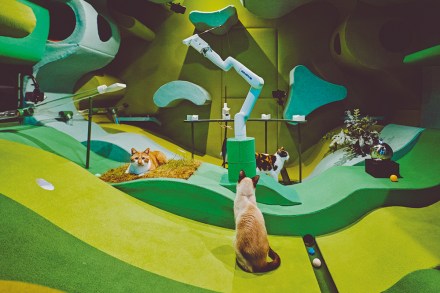
If there’s one thing the internet knows, it’s that cats sell. The Scottish painter Elizabeth Blackadder, who died in 2021 at the age of 89, knew it too. Her sinuous, characterful cat pictures, watercolours mostly but also oils and prints, helped cement her place as the nation’s favourite painter. She was an establishment favourite too, becoming the first woman to be elected to both the Royal Scottish Academy and the Royal Academy in London. In 1995, her cats adorned a set of Royal Mail stamps and, in 2001, she became the first woman to be appointed as Her Majesty’s Painter and Limner, a position unique to the Royal Household of Scotland, previously occupied by the likes of Henry Raeburn, David Wilkie and David Young Cameron.

The wonders of 18th-century automata

From our UK edition

At the Paris International Exhibition of 1867, Mark Twain was mesmerised by a life-sized silver swan with ‘a living grace about his movement and a living intelligence in his eyes… swimming about as comfortably and unconcernedly as if he had been born in a morass instead of a jeweller’s shop’. The Silver Swan has been its leading attraction, drawing spellbound visitors to its afternoon performances The jeweller’s shop this mechanical marvel had been born in 100 years earlier was Cox’s Jewelry Museum in London, but its mechanism of 700 components powered by three clockwork motors was the invention of Belgian-born horologist John Joseph Merlin (1735-1803), aka ‘the Ingenious Mechanic’.

Huge, impersonal canvases designed for the walls of billionaires: Tate Modern’s Capturing the Moment reviewed

From our UK edition

‘Photography has arrived at a point where it is capable of liberating painting from all literature, from the anecdote, and even from the subject. So shouldn’t painters profit from their newly acquired liberty, and make use of it to do other things?’ argued Picasso. The inventor of cubism took advantage of his liberty in ‘Buste de Femme’ (1938) to turn Dora Maar into a precursor of Peppa Pig, flaring her nostrils to form a snout. Perhaps he wanted to teach a photographer a lesson about paint by rubbing her nose in it. Picasso didn’t abandon the subject or the anecdote.

Fascinating forgeries: Art and Artifice – Fakes from the Collection, at the Courtauld, reviewed

From our UK edition

In 1998 curators at the Courtauld Institute received an anonymous phone call informing them that 11 drawings in their collection were fakes. The caller intimated that he was an associate of the notorious forger Eric Hebborn, who had claimed in his 1991 memoir, Drawn to Trouble, to have sold the institute a fake Rowlandson. The Sienese turned their training as restorers of Renaissance paintings to more profitable use The Courtauld had, in fact, already rumbled the Rowlandson before Hebborn boasted of putting one over on it; now it looked like it could be more than one. The other ten included three sketches by Tiepolo, three by Guardi and a drawing by Michelangelo.

Joshua Reynolds’s revival

From our UK edition

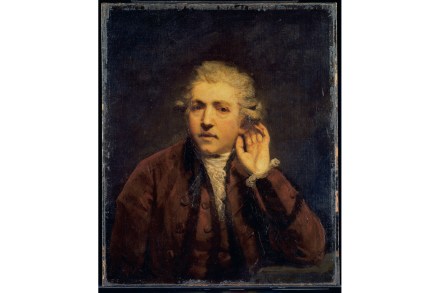
In front of the banner advertising the RA Summer Exhibition, the swagger statue of Sir Joshua Reynolds (1723-92) by Alfred Drury stands garlanded with flowers. But the Academy he founded won’t be marking his tercentenary with a retrospective, just a small display and a series of artists’ lectures. For an anniversary show, you have to travel to his native Devon. Ever since the Pre-Raphaelites dubbed him ‘Sir Sloshua’, Reynolds has been out of fashion Ever since the Pre-Raphaelites dubbed him ‘Sir Sloshua’, Joshua Reynolds has been out of fashion: blame the outmoded ideals of beauty he promoted in his Discourses and his role as portraitist to the Georgian establishment.

Birmingham barbershop meets the Folies-Bergère: Hurvin Anderson’s Salon Paintings, at the Hepworth Wakefield, reviewed

From our UK edition

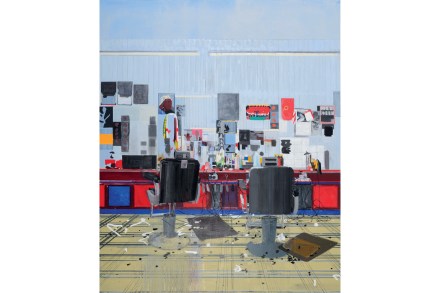
There’s a nice irony to the title Salon Paintings when the salon in question is a barbershop, an irony that won’t be lost on Hurvin Anderson. Born to Jamaican parents in Birmingham in 1965 and trained at Wimbledon and the Royal College at a time when the Euston Road School discipline of measured observation was still being taught in English art schools, Anderson is steeped in the European painting tradition. Explaining the fascination of the mirrored interior of the Birmingham barbershop that first inspired the series of paintings in his exhibition at the Hepworth Wakefield – begun in 2006 and completed this year – he compares it to Manet’s ‘Bar at the Folies-Bergère’: the barbershop as the Caribbean equivalent of the impressionist café.

The woman who pioneered colour photography

From our UK edition

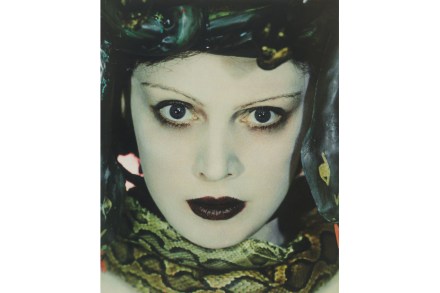
When colour photography first came in at the start of the last century, it met a surprising amount of resistance from distinguished photographers. But Madame Yevonde loved it, owned it, revelled in it. She invested in a new Vivex repeating back camera, exhorting her fellows at the Royal Photographic Society in 1932: ‘Hurrah, we are in for exciting times. Red hair, uniforms, exquisite complexions and coloured fingernails come into their own… If we are going to have colour photographs, for heaven’s sake let’s have a riot of colour.’ But what she went on to create was far better than that. In her classical series ‘Goddesses’ (1935) she controlled colour like a Renaissance master, painting with it, creating atmosphere and character.

Exceptional career woman, unexceptional painter: Lavinia Fontana, at the National Gallery of Ireland, reviewed

From our UK edition

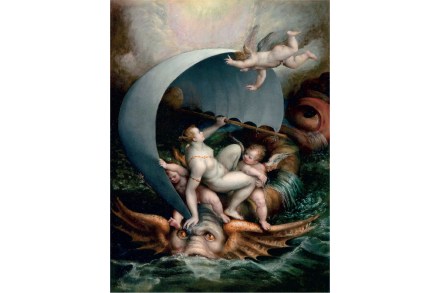
Reviewing the Prado’s joint exhibition of Sofonisba Anguissola and Lavinia Fontana in the Art Newspaper three years ago, Brian Allen pronounced it well worth seeing but predicted that each of these pioneering 16th-century women artists ‘would wither in the spotlight of her own retrospective’. Was he right? In its new monographic exhibition devoted to Fontana, the National Gallery of Ireland puts his waspish prediction to the test. Her ‘Galatea and Cherubs’ and ‘Venus and Mars’ are believed to be the first nudes painted by a woman Ireland’s National Gallery was an early investor in Fontana, acquiring her most ambitious work, ‘The Visit of the Queen of Sheba to King Solomon’ (1599), eight years after opening in 1864.

Are surgical museums such as the Hunterian doomed?

From our UK edition

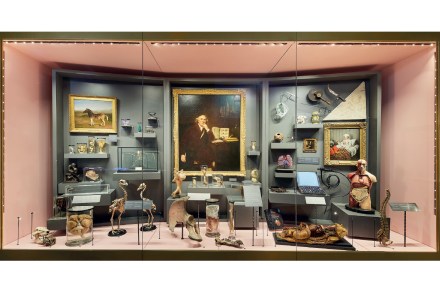
I have a soft spot for specimen jars and skeletal remains. Museums of natural history, surgical pioneering or anthropological oddities have always struck me as equally suitable for lunch breaks and first dates as for serious study and research. As far as public and casually accessible encounters with mortality go, these kinds of museums are the most straightforward way of confronting the realities of human nature. But whether we should have this kind of casual access is now increasingly being questioned. Telling history through displays of human remains presents a challenge for curators.

The Georgian fashion revolution

From our UK edition

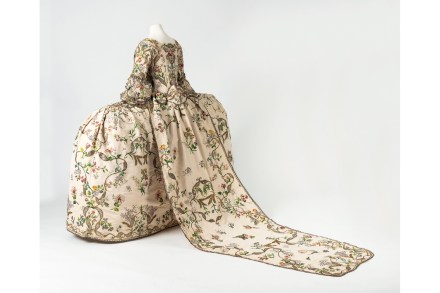
Normally, when you look at portraits you feel obliged to focus on the sitter. But quite often you’re thinking, ‘Ooh, what a lovely frock.’ Or, ‘Fabulous breeches!’ Here it’s the costumes that take centre stage. The point that this exhibition makes is that costume spoke volumes about society, particularly in the long 18th century, over the course of the reigns (and regency) of the four Georges. Compare the flounces and silk of a portrait of Queen Caroline in 1771 with the simple classical white muslin cotton of Princess Sophia in 1796 and you find nothing less than a revolution. The change resembles what happened in dress after the Great War: bye-bye Edwardian hourglass, hello flapper. Here cotton, a fabric inexorably associated with slavery, tells a larger story.

The quiet genius of Gwen John

From our UK edition

In the rush to right the historical gender balance, galleries have been corralling neglected women artists into group exhibitions: the Whitechapel Gallery rounded up 80 women abstract expressionists for its recent Action, Gesture, Paint show. But imbalances can’t be corrected retrospectively. Rather than elevating women artists who didn’t make it in a male-dominated world – not all of whose work, if we’re honest, helps the female cause – we should be celebrating the grit and talent of the few who did. And Berthe Morisot and Gwen John – currently the subjects of solo shows at Dulwich Picture Gallery and Pallant House – had both in spades.

‘I love twigs’: botanical painter Emma Tennant interviewed

From our UK edition

Hermitage, where the heel of Roxburghshire kicks into the once-lawless Debatable Lands, seems an unlikely place to find a botanical artist. It’s hard to make anything grow here, let alone an exhibition-load of rare and sometimes exotic plants. Lorded over by Hermitage Castle, a menacing hulk of medieval brutalism described by George MacDonald Fraser as ‘shouting “sod off” in stone’, this is a remote, rarely visited stretch of the border. Once the playground of reivers, and the graveyard of their victims, today it’s a land of sheep farming, forestry plantations and cruel May frosts. But there, hunkered against the wind in the foot of the Hermitage valley, is the studio of Emma Tennant, who has lived, farmed and painted here for more than 50 years.

In Claude Monet’s postmodern garden

There are few topics that rankle the art critic more than “immersive exhibitions.” They must be second only to “nonfungible tokens,” whatever those are. I speak of the immersive spectacles where images of famous artwork are flashed on the walls and floors of a large white room in which you sit. Certainly, this should be outside the remit of my union card, I might think. Until now, if you were looking for some opinion on this-or-that out-of-copyright projection venue slash tourist trap, I would simply say not my job. Maybe go see the real thing. Then we can talk. And yet, with art on the walls, real or imagined, judgment always comes calling. Suddenly we seem to be immersed in immersion. It can be a challenge just to keep your head above the digital waters.

immersive