Exhibitions

The beautiful upside-down world of Georg Baselitz

From our UK edition

The hand is one of the first images to appear in art. There are handprints on the walls of caves in southern France, Indonesia and Argentina, made up to 50,000 years ago, which, although no doubt an illusion, seem to be waving at us across a vast gulf of time. The gigantic paintings of golden hands by Georg Baselitz at White Cube Mason’s Yard don’t quite do that, but the effect is still solemn and primeval. They dangle in front of you, fingers extended downwards, cut off at the wrist, each one the size of a whole body and glittering on a background of brownish black. There are also some drawings and sculptures of hands on view, but the star turns are the big canvases. They look like altarpieces dedicated to a cult of the hand and what it can do.
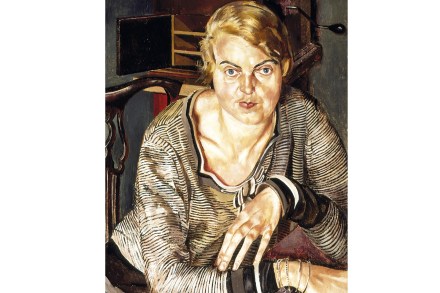
Imagine being married to Stanley Spencer

From our UK edition

It sometimes rains in Cookham. It rained all day when I visited the Stanley Spencer Gallery to see the exhibition Love, Art, Loss: The Wives of Stanley Spencer. But it rarely rained for Spencer, or at least never in his pictures of his hallowed birthplace, where even when skies are grey the red brick of the houses is warmed by the eternal summer sun of childhood. Not in the winter of 1937, though. That winter saw the 46-year-old artist rattling around his seven-bed family home, divorced from first wife Hilda Carline and separated from second wife Patricia Preece, painting pictures of grotesquely ill-matched couples who seemed unaccountably happier than him.

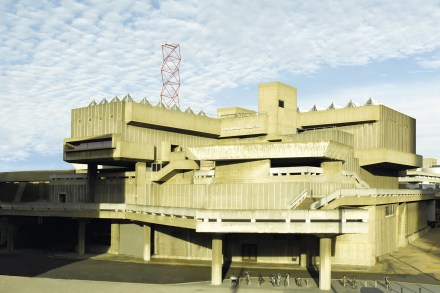
The death of the Southbank Centre

From our UK edition

The one thing everyone agrees is that the Southbank Centre is in deep trouble. In May, the institution made an unusually public plea for government help. Management predicted the best-case scenario was ending the financial year with a £5 million loss, having exhausted all reserves, used the £4 million received from the furlough scheme and having gobbled up the remainder of its Arts Council grant. All the while, with the exception of the Hayward Gallery, the 21-acre site on London’s Thameside, incorporating both the Royal Festival Hall and the Queen Elizabeth Hall, remains closed. It was pitiful news, but there was worse to come. With no concerts, performances, talks or readings, drastic staff cuts are in the offing.

We’re wrong to think the impressionists were chocolate boxy

From our UK edition

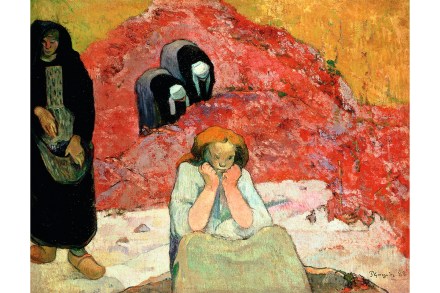
One Sunday evening in the autumn of 1888 Vincent van Gogh and Paul Gauguin went for a walk. They headed out of Arles into the countryside and when they looked back towards town they saw a sunset so splendid that each was inspired to paint a masterpiece. One of these, Gauguin’s painting bearing the timely title ‘Human Misery’, is among the star exhibits in a new exhibition at the Royal Academy. All the works in this show come from a delightful small museum in the northern suburbs of Copenhagen, housed in the early 20th-century mansion from which it takes its name, Ordrupgaard. This was the dwelling of Wilhelm Hansen (1868–1936), a mover-and-shaker in the Danish life insurance business and an avid collector of what was then modern art.

Looking at Barnett Freedman makes me weep at the government’s dismal graphics

From our UK edition

Among the spoils of a lockdown clear-out was a box of my grandmother’s books: Woolf, Austen, Mitford and The Complete Nonsense of Edward Lear with a jacket by Barnett Freedman. You only need to see a corner of the cover — a stippled trompe-l’oeil scroll — to recognise the artist. Freedman, a Stepney Cockney born to Jewish-Russian parents in 1901, delighted in paper games. Maps unfurl, book leaves fly, cut-outs and cartouches abound. His designs are a miscellany of silhouettes, decoupage, concertinas, peek-a-boos, lift-the-flaps and grubby thumbprints. Edges are ragged, endpapers torn.

Figurative painting is back – but how good is any of it?

From our UK edition

An oxymoron is a clever gambit in an exhibition title. The Whitechapel Gallery’s Radical Figures: Painting in the New Millennium is designed to trigger the reaction: ‘Radical? Figures?’ before revealing quite how radical the figure can be. But like all good marketing, it is deceptive. Figurative art may have been consigned to history by Clement Greenberg 80 years ago, but history since — neo-romanticism, school of London, neo-expressionism — has repeatedly proved him wrong. The ten painters in this exhibition aren’t a school: the only thing their work has in common is its statement-making scale.

The guileful, soulful art of Khadija Saye

From our UK edition

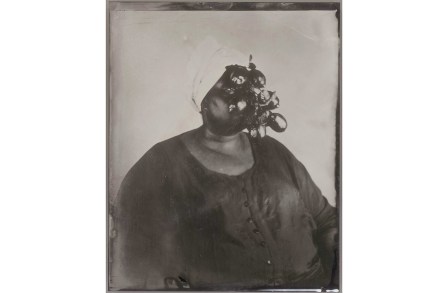
Gwyneth Paltrow has a new neighbour. On the same block in Notting Hill as Gwynie’s Goop store, with its This Smells Like My Vagina scented candles and must-have child-calming essential oil sprays, a shopfront has been taken over to display a poignant series of self-portraits by a rather different woman. Khadija Saye died three summers ago with her mother in the Grenfell Tower fire. Much of the 24-year-old artist’s work was destroyed in the blaze, including three tintype images from a series of nine called ‘in this space we breathe’. The other six were displayed that summer in the Diaspora Pavilion at the Venice Biennale in Saye’s first major international exhibition.

Culture is going underground: meet the rebel army

From our UK edition

Among the first to arrive was a Labour grandee. Then others drifted over: academics, musicians, writers, a nurse. They came from different directions, some looking shifty, others excited. The secret meeting point was an inconspicuous pub in north London. Queueing shoppers nearby assumed the growing crowd was waiting to get into the supermarket. In groups of five those gathered were led down a suburban street to a derelict leisure centre. For one night only, the gym had been turned into a makeshift theatre. The audience, of up to 30 people, had congregated to flick a collective V at the social distancing measures, and to watch A Hero of Our Time, a three-hander adapted by HUNCHtheatre from the 1840 novel by Mikhail Lermontov.

I didn’t expect to be so moved – galleries reopen

From our UK edition

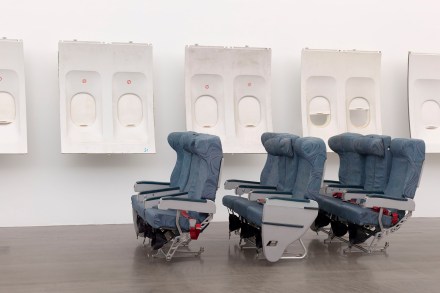
I’m in Mayfair and I’m boarding an airplane. Or rather, I’m boarding an approximation of an airplane. In the centre of Hauser & Wirth, there are airplane seats, organised into a formation that resembles a section of economy, and dislocated windows, hung on the walls where paintings might normally be. The seatbacks are stuffed, and a spring/summer 2012 edition of Sky Shop magazine is splayed across one of the seats. We are frozen in time and space. Like most of us in recent months, this plane — an installation by German artist Isa Genzken — isn’t going anywhere. It remains perpetually rooted. Its windows open on to white walls.

William Boyd on the miraculous snaps of boy genius Jacques Henri Lartigue

From our UK edition

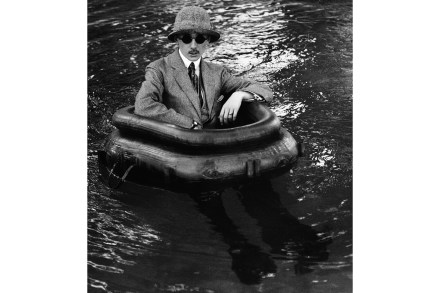
What must it be like for an artist to achieve success only at the end of a long, relatively ignored career? The word ‘bittersweet’ seems particularly apt. Yet, late recognition is better, I suppose, than dying in oblivion like Vincent van Gogh, Franz Kafka or John Kennedy Toole. One of my favourite photographers, Jacques Henri Lartigue (1894–1986), did manage to savour the sweet smell of success in his old age. Lartigue’s late flowering was down to New York’s Museum of Modern Art and its then director of photography, John Szarkowski. There’s a very good argument to be made that during Szarkowski’s tenure at MoMA (1962–91) his shows transformed 20th-century photography.

Sumptuous and saucy: Compton Verney’s Cranach show reviewed

From our UK edition

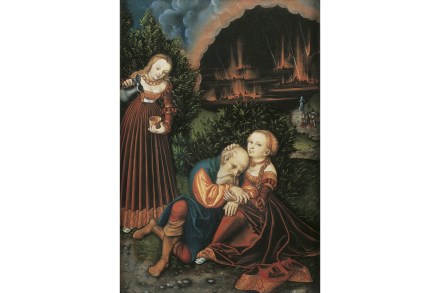
‘Naughty little nudes,’ my history of art teacher used to say of Cranach’s Eves and Venuses. Aren’t they just? Coquettish and compact. Kenneth Clark thought they had ‘chic’. Cranach’s nudes are rarely truly naked. They wear Ascot hats, golden chokers, filmy wisps of gossamer girdle. Take the goddess in the National Gallery’s ‘Cupid Complaining to Venus’ (c.1526–7). Don’t you long for her to take off her ostrich feather hat and tickle you with it? ‘Hallo, Jungs.’ See how she plays footsie with a branch of the tree. How she brushes the back of her hand against its trunk. Note the double necklace. Always accessorise.

A short history of the kimono

From our UK edition

'Fashions have changed', said the Japanese writer Ihara Saikaku in 1688. 'Certain shrewd Kyoto people have started to lavish every manner of magnificence on men’s and women’s clothes. By then, everyone in Japan was wearing a kimono. But it was the new, eye-catching, sumptuous ones wrapped around a flourishing breed of fashionistas that Saikaku was talking about. How to show off your wealth and status in Edo-era Japan? Wear the latest kimono. This was the starting point for the V&A’s exhibition Kimono: Kyoto to Catwalk, which opened, then hurriedly closed just days before the lockdown. Those of us lucky enough to catch it can tell you it would’ve been the museum’s summer blockbuster.

Welder, banjo player, comedian, actor, and now artist – Billy Connolly interviewed

From our UK edition

We are in a basement gallery in London’s West End, and Britain’s greatest comedian is doing what he does best — sharing his delight at the daft absurdities of daily life. He remembers seeing a little boy wading into the freezing waters at Aberdeen. ‘You make a certain noise when the wave comes up. It’s a noise that you can only repeat by shoving a hot potato up a donkey’s arse.’ He is making this empty gallery feel as though it’s full of people — and a bunch of strangers laugh like old friends. ‘A lot of my stuff doesn’t have punchlines’. He doesn’t need them. ‘It’s lovely just making a big picture, and saying, “I was there, and I’d like to invite you to share it with me.

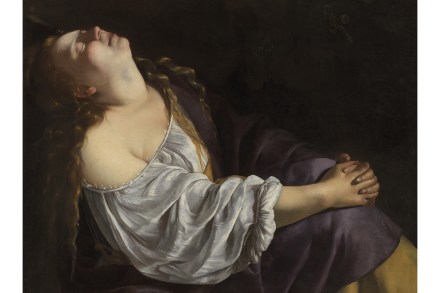
The life of Artemisia Gentileschi is made for Netflix, but it’s the art that really excites

From our UK edition

‘It’s true, it’s true, it’s true.’ Over and over she said it. ‘E vero, e vero, e vero.’ It’s true he raped me. It’s true I was a virgin. It’s true all I say. Even under judicial torture, even with cords wrapped around her fingers and pulled tight, she did not waver. ‘E vero.’ These words, spoken by the 17-year-old Artemisia Gentileschi, have come down to us in a trial transcript of 1612. This haunting document, never seen outside the state archives in Rome, will be shown for the first time in the National Gallery’s forthcoming Artemisia exhibition. Artemisia ought to have opened this month. Curator Letizia Treves has been through hell and high water. Italy in lockdown. American flights suspended.

Are there ways in which virtual exhibitions are better than real ones?

From our UK edition

Six months ago I published a book about travelling to look at works of art. One such journey involved a round trip of about 6,000 miles to contemplate minimalist sculptures in the Texan desert. But the point wasn’t so much the distance as the importance of standing physically in front of the works themselves. Seeing the actual thing, I argued, was fundamentally different from looking at it in a book or on a screen. Nowadays, of course, unless you live within walking distance of a notable sculpture, that’s really all there is. A week ago my inbox was flooded with messages announcing that the art institutions of the world were closing until further notice. A few days later there was another deluge of announcements, but this time it was online exhibitions.

The grisly art of Revolutionary France

From our UK edition

There was a basket of thick red wool and two pairs of large knitting needles at the start of University College London’s cleverly curated exhibition, Witnessing Terror: French Revolutionary Prints 1792–94. Visitors were invited to contribute their own lines of stitches before picking up a copy of A Tale of Two Cities, in which Dickens fictionalised the tricoteuses, the women who gathered around the guillotine knitting and waiting for heads to roll. The first six prints are French portraits of ‘revolutionary martyrs’ ranging from Louis XVI, wearing the bonnet rouge, or red cap of liberty, that was placed on his head when the crowd broke into the Tuileries Palace in 1792, to Robespierre, whose death in 1794 marks the formal, if not actual, end of the Terror.

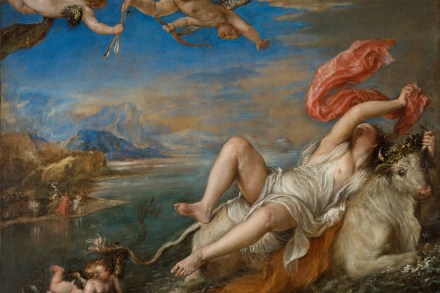
To ‘review’ such supreme paintings is slightly absurd: Titian at the National Gallery reviewed

From our UK edition

In 1576 Venice was gripped by plague. The island of the Lazzaretto Vecchio, on which the afflicted were crammed three to a bed, was compared to hell itself. In the midst of this horror Tiziano Vecellio, the greatest painter in Europe, died — apparently of something else. He was in his eighties and working, it seems, almost to the end. Titian: Love, Desire, Death, which was briefly on at the National Gallery, before it was closed down this week by our own plague, contained several of the greatest masterpieces of his old age — and also of European art. It comprises just seven canvases, all done for Philip II of Spain — a villain of English history, the man who launched the Armada, but as far as Titian was concerned his most discerning patron.

Mother nature is finally getting the art she deserves

From our UK edition

I guess that few would currently dispute that the world is in crisis. I’m not talking about Covid-19. Nor am I primarily addressing the issues arising from the 36 billion tonnes of carbon that the human project sends into our atmosphere every year. Climate chaos is a part of the issue, but I’m thinking principally of those things that most impact upon the biosphere as an ongoing live enterprise.

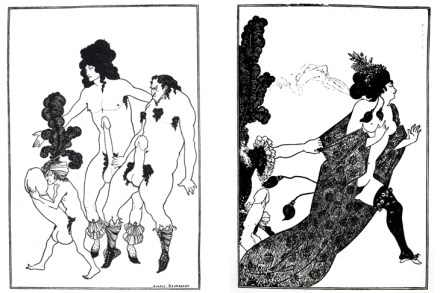
The gloriously indecent life and art of Aubrey Beardsley

From our UK edition

Picture the young aspirant with the portfolio of drawings pitching up nervously at the eminent artist’s studio, only to be turned away at the door by a servant; then the master catching up with him, inviting him in and delivering the verdict on his portfolio: ‘I seldom or never advise anyone to take up art as a profession; but in your case I can do nothing else.’ Within two short years of this fairy-tale meeting in the summer of 1891 between Edward Burne-Jones and the 18-year-old Aubrey Beardsley, the self-taught insurance clerk who had fallen under the Pre-Raphaelite spell had turned himself into the most talked-about artist in London.

Every bit as well observed as Rembrandt – and often funnier: Nicolaes Maes reviewed

From our UK edition

Nicolaes Maes (1634–93) relished the simple moments of daily life during the Dutch Golden Age. A woman peeling parsnips over a bowl; a young girl threading a needle; a peasant lugging pails of milk to sell on the doorstep. His paintings are sensitive, not showy, and, as you would expect from a pupil of Rembrandt, rendered with the most exquisite use of light. Maes was apprenticed to the Dutch master for about five years in his teens. He returned to Amsterdam later in life, but worked for two decades in his hometown of Dordrecht, 11 miles southeast of Rotterdam. Several of his paintings, including ‘The Apostle Thomas’ and ‘Christ Blessing the Children’, have wrongly been attributed to Rembrandt over the years.