Euthanasia

Will Canada soon be euthanizing babies?

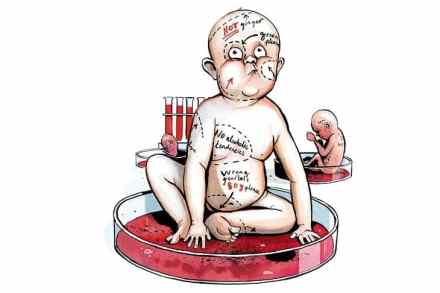
Donald Trump may or may not bomb Iran in the next few days. His cheerleaders will cite the Tehran regime’s brutal executions of Iranian protesters as justification. But if the President is in the mood for humanitarian interventions and stopping barbarism, he might also want to make good on his pledge to annex Canada. Once praised as a paragon of decency and civility, Canada is now turning into a dystopian society in which so-called "healthcare" professionals wield increasingly terrifying power of life and death. When a government grants permission to end a life, where does it stop? Canadian doctors are considering euthanizing newborns under certain circumstances as a form of "healthcare." When Dr.

authoritarian

The truth slips out about Justin Trudeau’s euthanasia regime

Two cheers for a brief hiatus in the Canadian stampede towards suicide for all. Earlier this month, David Lametti, Justin Trudeau’s justice minister, announced that legalization of euthanasia for the mentally ill will be delayed by one year. This, he said, will give the health system and regulatory bodies more time to prepare. Mentally ill adults will now become eligible for euthanasia in March 2024. Sadly, it’s a mere hiatus. Despite the international wave of horror in recent months pushing back against Canada’s sickeningly casual euthanasia regime, the government clearly has no intention of walking back its plans to make death on demand available to the most psychologically fragile.

Canada’s assisted suicide laws are out of control

Death, somehow, seems like the wrong word. So Canada’s euthanasia doctors have adopted other terms for what they offer: each lethal injection is called a “provision.” Stefanie Green, a Vancouver Island doctor who used to work in maternity services, prefers “delivery.” Canada has sleepwalked into a moral maze with no exit, where euthanasia becomes a solution for social problems Since Canada’s parliament introduced euthanasia in 2016, a new vocabulary has arisen. Those with a terminal illness, whose death is “reasonably foreseeable” are “Track 1”; those who have no such diagnosis but qualify through “grievous and irremediable” conditions are “Track 2.

Canada

Robert Munsch’s license to die

Once upon a time, there was a hugely successful children’s author named Robert Munsch. His books (more than 70!) sold in many, many copies; he became famous, and people gave him top awards like the Juno and the Order of Canada. They even named schools after him. More gloriously yet, he became the most stolen author in the Toronto Public Library. He was in high demand as a storyteller, and children from everywhere used to write him letters. And he would write back, often with personalized stories (which they loved) featuring them and their classmates. Like all of us, he had his sorrows. He and his wife lost two children, which led him to write one of his best-known works, Love You Forever. Eventually they became adoptive parents of three.

Robert Munsch

The barbarism of Canada’s euthanasia regime

“After a recent experience caring for a patient receiving medical assistance in dying, I felt distressed and uncomfortable. How should I manage these emotions?” According to the website of the College of Nurses of Ontario, that’s a frequently asked question for healthcare professionals involved in euthanasia. Perhaps Canadian health science programs ought to have some mandatory classes on Shakespeare. He wrote quite a bit about coping with the pangs of conscience, particularly after having been an accessory to the unnatural death of another.