Euthanasia

Legal organ harvesting is just a PR campaign away

Summertime, and the living isn’t as easy as it used to be. The dying, though, is getting easier, especially if you’re in France, Canada or New York. New York’s MAID law will come into effect August 5: supposedly only for those whose deaths are expected within six months, supposedly through self-administered doses only. But the details don't matter. The important part is this: in New York, the state can now authorize the taking of innocent human life. In early July, the French Senate rejected euthanasia for the fourth time in a row. But the government invoked Article 45 of the French constitution and forced the legislation through, "creating a right" to assisted suicide (as if the state were the divine origin of rights, and could create them at the snap of a finger).
Euthanasia

Will Canada soon be euthanizing babies?

Donald Trump may or may not bomb Iran in the next few days. His cheerleaders will cite the Tehran regime’s brutal executions of Iranian protesters as justification. But if the President is in the mood for humanitarian interventions and stopping barbarism, he might also want to make good on his pledge to annex Canada. Once praised as a paragon of decency and civility, Canada is now turning into a dystopian society in which so-called "healthcare" professionals wield increasingly terrifying power of life and death. When a government grants permission to end a life, where does it stop? Canadian doctors are considering euthanizing newborns under certain circumstances as a form of "healthcare." When Dr.

authoritarian

The truth slips out about Justin Trudeau’s euthanasia regime

Two cheers for a brief hiatus in the Canadian stampede towards suicide for all. Earlier this month, David Lametti, Justin Trudeau’s justice minister, announced that legalization of euthanasia for the mentally ill will be delayed by one year. This, he said, will give the health system and regulatory bodies more time to prepare. Mentally ill adults will now become eligible for euthanasia in March 2024. Sadly, it’s a mere hiatus. Despite the international wave of horror in recent months pushing back against Canada’s sickeningly casual euthanasia regime, the government clearly has no intention of walking back its plans to make death on demand available to the most psychologically fragile.

Canada’s assisted suicide laws are out of control

Death, somehow, seems like the wrong word. So Canada’s euthanasia doctors have adopted other terms for what they offer: each lethal injection is called a “provision.” Stefanie Green, a Vancouver Island doctor who used to work in maternity services, prefers “delivery.” Canada has sleepwalked into a moral maze with no exit, where euthanasia becomes a solution for social problems Since Canada’s parliament introduced euthanasia in 2016, a new vocabulary has arisen. Those with a terminal illness, whose death is “reasonably foreseeable” are “Track 1”; those who have no such diagnosis but qualify through “grievous and irremediable” conditions are “Track 2.

Canada

Robert Munsch’s license to die

Once upon a time, there was a hugely successful children’s author named Robert Munsch. His books (more than 70!) sold in many, many copies; he became famous, and people gave him top awards like the Juno and the Order of Canada. They even named schools after him. More gloriously yet, he became the most stolen author in the Toronto Public Library. He was in high demand as a storyteller, and children from everywhere used to write him letters. And he would write back, often with personalized stories (which they loved) featuring them and their classmates. Like all of us, he had his sorrows. He and his wife lost two children, which led him to write one of his best-known works, Love You Forever. Eventually they became adoptive parents of three.

Robert Munsch

Farage’s plan, the ethics of euthanasia & Xi’s football failure

From our UK edition

45 min listen

This week: Nigel’s next target. What’s Reform UK’s plan to take on Labour? Reform UK surpassed expectations at the general election to win 5 MPs. This includes James McMurdock, who Katy interviews for the magazine this week, who only decided to stand at the last moment. How much threat could Reform pose and why has Farage done so well? Katy joins the podcast to discuss, alongside Jovan Owusu-Nepaul, who fought Nigel Farage as the Labour candidate for Clacton (1:02). Next: who determines the morality of euthanasia? Matthew Hall recounts the experience of his aunt opting for the procedure in Canada, saying it ‘horrified’ him but ‘was also chillingly seductive’. Does Canada provide the model for the rest of the world? Or should we all be worried of where this could lead?

Will assisted dying become a cover for abuse?

From our UK edition

Every year, thousands of stories of abuse pour into Compassion in Care, a charity that supports whistleblowers in the care sector. Volunteers manning the charity’s helpline hear of old people dismissed as ‘end of life’, deprived of food and water, abandoned in corners with neglected bedsores, needlessly sedated to make them less time-consuming. And now, says the charity’s founder and director Eileen Chubb, a former care whistleblower herself, they are bracing for ‘a massive increase in abusive cases’. That’s if the assisted suicide bill, which begins its journey through the Lords this week, becomes law. ‘We can foresee whistleblowers contacting us,’ Chubb tells me, ‘saying people died who didn’t want to die but were pushed into it, and the system failed them.

Delightful nostalgia for political wonks: The Gang of Three, at the King’s Head Theatre, reviewed

From our UK edition

The Gang of Three gets into the nitty-gritty of Labour politics in the 1970s. It opens with the resignation of Roy Jenkins as deputy leader in 1972 in a desperate attempt to quell the party’s growing hostility to the Common Market. He holds a council of war with Anthony Crosland, his old Oxford chum, and they discuss their next moves while awaiting the arrival of Denis Healey whom they both heartily detest. The writers, Robert Khan and Tom Salinsky, capture the characters beautifully. Crosland considers himself more gifted and mature than Jenkins but he hasn’t yet made his mark by holding one of the great offices of state. He boasts about his record during the 1960s when he destroyed the grammar school system and cancelled the Channel tunnel. Both achievements make him deeply proud.

Great knits – shame about the film: Almodovar’s The Room Next Door reviewed

From our UK edition

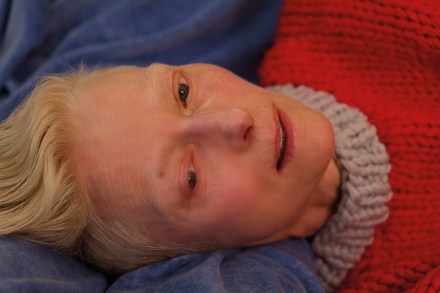
The Room Next Door is Pedro Almodovar’s first film in the English language and if it is his last we can probably live with that. The film, which is adapted from a novel by Sigrid Nunez, stars Tilda Swinton and Julianne Moore, who are terrific whatever they do, and it is aesthetically divine (the knitwear, in particular, is sensational). But dramatically it’s thin gruel. The subject matter is euthanasia, so you’d expect Almodovar to hold back on his usual flamboyant playfulness, bounciness and humour. But what is there to care about? Why do these two women matter? Where is that knitwear from? Spoiler alert: no answers are forthcoming. Take the pill, Martha! Take the pill, then we can all go home!

Reeves’s gambit, a debate on assisted dying & queer life in postwar Britain

From our UK edition

52 min listen

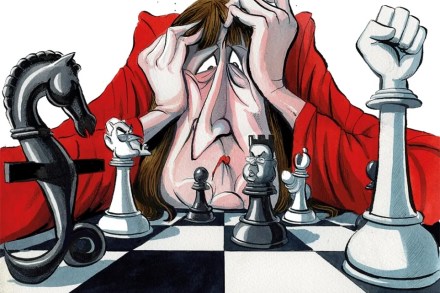
This week: the Chancellor’s Budget dilemma. ‘As a former championship chess player, Rachel Reeves must know that the first few moves can be some of the most important of the game,’ writes Rupert Harrison – former chief of staff to George Osborne – for the cover of the magazine this week. But, he says, the truth is that she has played herself into a corner ahead of this month's Budget, with her room for manoeuvre dramatically limited by a series of rash decisions. Her biggest problem is that she has repeatedly ruled out increases in income tax, national insurance and VAT. So which taxes will rise, given that the easy options have been ruled out? The answers appear to be evolving rapidly when ministers are confronted with the OBR’s harsh reality.

Why we don’t need another vote on euthanasia

From our UK edition

Ethical issues such as abortion and euthanasia are rightly considered matters of personal conscience for MPs at Westminster, so Keir Starmer’s promise of a vote on assisted dying does not automatically mean that Britain will follow Belgium, the Netherlands and Canada in legalising euthanasia, no matter how large a majority Labour might win. When the House of Commons held a similar vote in 2015, it was heavily defeated by 330 votes to 118, though Starmer himself voted in favour. Nevertheless, we should be concerned about this development. The campaign for assisted dying has recently been energised by the intervention of Esther Rantzen, who is herself terminally ill with lung cancer. She is considering ending her life by travelling to the Swiss clinic Dignitas.

Letters: ‘supercops’ won’t save us from rising crime

From our UK edition

Crime stoppers Sir: If the Tories’ reputation on crime lies in the hands of these innovative supercops, then it will be sadly doomed, no matter how enterprising they may be (‘Rise of the supercops’, 5 August). Whether we like to believe it or dismiss it as woolly liberalism, the police and courts have a limited impact upon crime. The reality is that crime is driven by powerful social and economic forces, not the effectiveness of the local constabulary. In a liberal democracy, leaving the police to deal with any complex social problem, particularly one as diverse and intractable as crime, is fraught with danger. The police do have an important role to play but so do many others.

Tales of the Midwest: The Collected Works of Jo Ann Beard, reviewed

From our UK edition

Jo Ann Beard has said that one of the stories in this collection, although she does not specify which, took her more than 20 years to write and that there was a gap of eight months – during which she was working on the piece five days a week – between two of its sentences. It is true that her writing is remarkably condensed, not least in ‘Cheri’, the story of a real woman who had a particularly hideous case of terminal cancer (exacerbated by the fact that all pain medication made her vomit). Cheri Tremble contacted Jack Kevorkian, a euthanasia expert sometimes nicknamed ‘Dr Death’, so that he could help her end her life. As she begins to die, Cheri, in Beard’s version, wryly reflects: ‘The fear of dying tonight is nothing...

Deeply moving but bleak: Plan 75 reviewed

From our UK edition

Plan 75 is a dystopian Japanese drama about a government-sponsored euthanasia programme introduced to address Japan’s ageing society. Aged 75 or over? Agree to die and we’ll give you $1,000 to spend as you like in your last days! With a collective funeral thrown in for free! Actually, it’s not sold aggressively like that, as this is an understated film. But, despite the hopeful ending, it is so sad and bleak that if you didn’t feel minded to take $1,000 before, you may feel like taking it afterwards. You could spend it on a spa break and a deluxe sushi platter, which is one of the options, if that takes your fancy. Aged 75 or over? Agree to die and we’ll give you $1,000 to spend as you like in your last days!

Assisted dying is a slippery slope

From our UK edition

What are your thoughts on assisted dying and assisted suicide? That's the question asked by a Health and Social Care Committee consultation, closing today, that could shape changes to the law on euthanasia. Having had intimate experience of what can happen when a vulnerable person feels themselves to be a burden, I'm against. My mother had Parkinson’s, and once she burst out to me that: 'You’d have so much more time and money if it weren’t for me'. It would be the easiest thing in the world to push someone in that condition towards feeling that it would be better for everyone if she were given a dignified death. Actually my mother did have a dignified death, at home, even though, by then, she had to have everything done for her.

The barbarism of Canada’s euthanasia regime

“After a recent experience caring for a patient receiving medical assistance in dying, I felt distressed and uncomfortable. How should I manage these emotions?” According to the website of the College of Nurses of Ontario, that’s a frequently asked question for healthcare professionals involved in euthanasia. Perhaps Canadian health science programs ought to have some mandatory classes on Shakespeare. He wrote quite a bit about coping with the pangs of conscience, particularly after having been an accessory to the unnatural death of another.

Michel Houellebecq may be honoured by the French establishment, but he’s no fan of Europe

From our UK edition

For many years, Michel Houellebecq was patronised by the French literary establishment as an upstart, what with his background in agronomy rather than literature, his miserable demeanour, his predilection for science fiction and his gift for unyieldingly saying the unsayable, especially about relations between the sexes. That’s all changed now. He won the Prix Goncourt in 2010 for The Map and the Territory and in 2019 was elevated to the Légion d’Honneur. The Nobel cannot be long delayed, the committee after all having honoured the equally ornery V.S. Naipaul and J.M. Coetzee.

Eugenics will never work – thankfully

From our UK edition

In his most recent book, How to Argue With a Racist, the geneticist Adam Rutherford set out a lucid account of how the basis for many widely held and apparently commonsensical ideas about race are pseudoscientific; and he lightly sketched, along the way, the historical context in which they arose and the ideological prejudices that nourished them. We might have some half-baked ideas about how evolution works — and have unthinkingly accepted racial categories invented by 18th-century imperialists — but, he assured us in perhaps the standout line of the book, the underlying genetics is ‘wickedly complicated’. Control is a companion piece to that one.

German euthanasia clinics refusing unvaccinated customers

From our UK edition

Irony has been declared many times in this pandemic but now, from Covid-riddled Germany comes the final proof: you can't kill yourself now unless you've been vaccinated. As European countries battle to limit the spread of the virus, Verein Sterbehilfe – the German Euthanasia Association – has issued a new directive, declaring it will now only help those who have been vaccinated or recovered from the disease. In a statement, the association said: Euthanasia and the preparatory examination of the voluntary responsibility of our members willing to die require human closeness. Human closeness, however, is a prerequisite and breeding ground for coronavirus transmission.

There are no safeguards when it comes to euthanasia

From our UK edition

Molly Meacher, whose Bill to allow assisted dying gets its further reading in the Lords today, gave an interesting interview on BBC radio today – there was no other speaker to counter her arguments; an exchange of views came later in the programme. She explained that her engagement with the cause had been prompted by the lonely death of an aunt who had a terminal illness; she went on to describe the unpleasant conditions that could not be dealt with by palliative care. But then the interviewer, Martha Kearney, went on to ask about the problem that old people might be made to feel a burden.