European union

Putin is making the EU great again

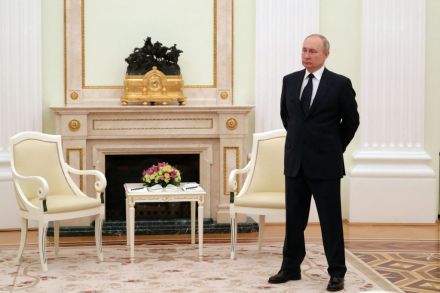
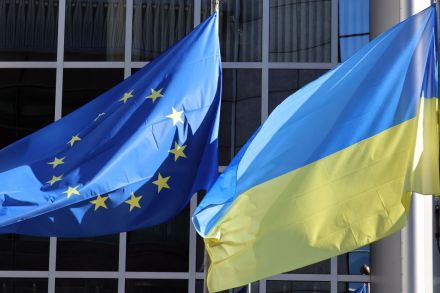
The Europeans have been jolted awake from their deep Pax Americana slumber, when the continent was largely content to eat the spoils of economic prosperity and allow the United States to do the heavy lifting on all things security. And we have Vladimir Putin to thank for it. Russia’s nearly week-long invasion of Ukraine has shocked the conscience of many who believed Europe would never return to the dark days of large-scale land warfare.

The stakes for Europe are even higher than in 1938

Any analysis of the Ukraine situation risks lagging behind the news. As of the time this article was published, Russia had conquered the former Chernobyl nuclear power plant. Its forces are only about sixty miles away from Ukraine’s capital, Kyiv, which has already experienced shelling. Russians have also attempted to capture Antonov International Airport, just fifteen minutes away from the capital’s ring road. Meanwhile, European leaders are resorting to the usual responses: “concerned,” “strongly condemning." There is even a Twitter account mocking the EU’s approach to all major crises, called “Is EU Concerned?” The response to the invasion of Ukraine is not spared from similar mockery. Here in Europe, it feels like 1938 all over again.

Europe: the little kids’ table at the Ukraine talks

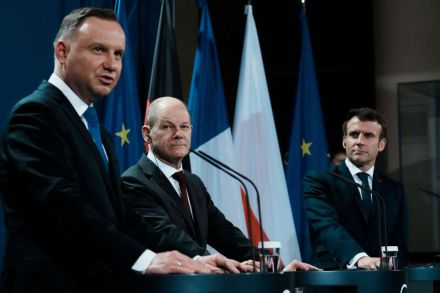
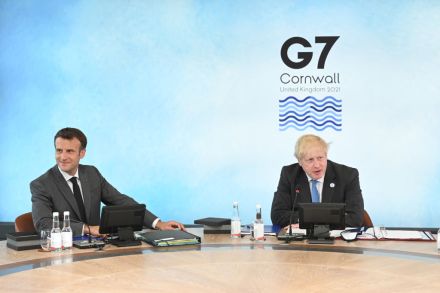
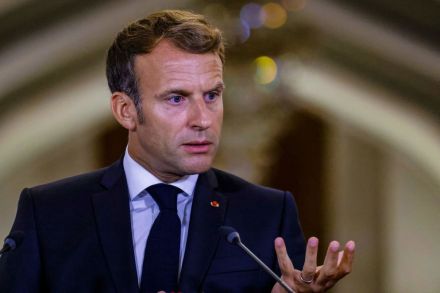
While American and Russian officials are yelling at one another in the UN Security Council chamber, another international actor has found itself at the little kids’ table: Europe. It's possible the phrase “little kids’ table” is too harsh. To be fair, French president Emmanuel Macron is at least in direct communication with Russian president Vladimir Putin and urging his European colleagues to formulate a joint European negotiating position on the Ukraine question. France is also a chief mediator of the Normandy Format, which seeks to resolve the eight-year conflict in Ukraine’s Donbas region. But Macron is largely an outlier on his own continent.

The dictator behind Europe’s next migrant crisis

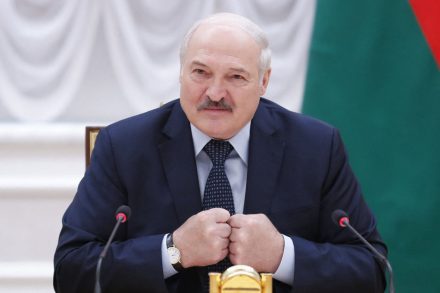
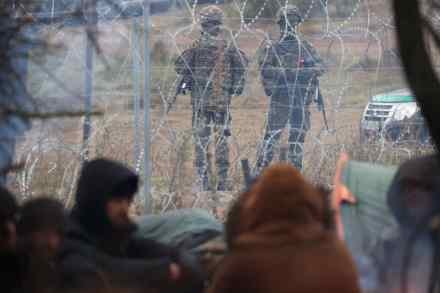
Belarus, the former Soviet satellite state, isn’t exactly a global heavyweight. Alexander Lukashenko, the country’s authoritarian president, is an international pariah who is better at concocting conspiracy theories than he is at running a country. At $60 billion, the Belarusian economy is about the size of Rhode Island’s. Other than petroleum, cheese and dump trucks, Belarus doesn’t offer much in the way of exports. A once promising information technology sector is now gutted, as Lukashenko’s crackdown on dissent forces highly educated talent to flee the country for the Baltics. Lukashenko, however, is smarter than he looks.

lukashenko

How Turkey is fuelling the Belarus-Poland migrant crisis

From our UK edition

In the cold, damp forest lining the border between Poland and Belarus, thousands of refugees flown over from the Middle East have waiting to cross into the EU for days. Belarusian riot police are shoving them away from their gates and towards Poland, where only more forces await. The Belarusian dictator Alexander Lukashenko has recently been in conflict with the EU, which has imposed sanctions on his regime after last year’s contested elections which many believe to have been rigged. Lukashenko is pushing refugees towards Poland to be pawns in a fight, with the backing of Putin. The refugees find themselves between a rock and a hard place: in front of them, a Polish government who looks good appearing tough against migration and Lukashenko.

Ripping up the Northern Ireland protocol is diplomacy in action

From our UK edition

Lord Frost’s Lisbon speech represents the most cogent argument yet for replacing the Northern Ireland protocol. So naturally it has been buried under a slurry of snark, solemn head-shaking and breathless indignation. It is worth stepping back from the noise. Switch off the shouty man on LBC, mute the ‘this is not normal’ people on Twitter, and avoid at all costs the catastrophist-analysis of the academic-activists. You will miss nothing. In fact, read Frost's speech for yourself. It was meant to send a message about the protocol and it does so directly. The Irish are our neighbours. It is in both our countries’ interests that we maintain and enhance the ties between us..

Macronism is dead

From our UK edition

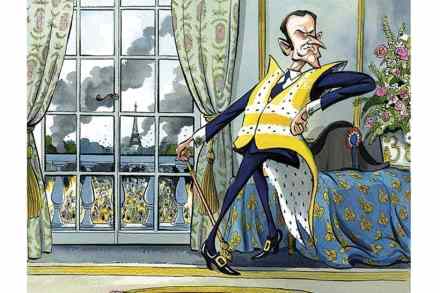
President Emmanuel Macron was in an expansive mood this week as he presented his vision for France 2030 from the Elysée palace before an audience of business leaders and students. Macron is incapable of brevity. In a slick production that must have cost a fortune, presented to a fawning hand-picked audience, he spoke for two hours. His elocution was framed by a slick, Tik-Tokish video recalling the 30 glorious years of French economic growth and grand projects after the war. Macron is nothing if not busy. He’s just been on a series of pre-election grand tours, dispensing billions of euros in promises like confetti. That includes a proposed repair of a national education system on its knees and of a criminal justice system overwhelmed by extremism and gang warfare.

Ticking off the French was strategic genius

In December 2020, in the aftermath of the presidential election, Jake Sullivan, President-elect Joe Biden’s national security adviser, urged European officials to delay a European Union vote on a proposed economic agreement with China, called the Comprehensive Agreement on Investment. Sullivan, communicating with French and German officials, explained that the incoming Biden administration wanted to have 'early consultation' with the Europeans on China, and urged them to hold off until Biden took office to devise a common approach toward Beijing. Resisting the pressure from Biden, the European Commission announced that the agreement was concluded in principle, pending approval by the European Parliament.

french

Is the EU trying to hamstring the French military?

From our UK edition

Much recent discussion has focussed on the collapse of Afghanistan and the decline of the West. The humiliating American-led Western retreat from Kabul is most poignant for the signal it sends to other ‘protected’ states, present-day and future. The Chinese Communist Party’s mouthpiece, Global Times, mockingly jibed in its editorial at the history of America abandoning its allies and warning how this might be an omen for Taiwan. But the Afghan smokescreen has obscured another aspect of Western decline: a European Court of Justice ruling of 15 July enforcing the same restrictions on ‘work time’ for member states’ military personnel as for any other worker, except on clearly specified military operations.

Why European criticism of the US Afghanistan pullout is so refreshing

You actually can spell ‘North Atlantic Treaty Organization’ without ‘America’, as it turns out. You can also, however, spell ‘North Atlantic Treaty Organization’ without, say, ‘European Union commissioner Ursula von der Leyen’. And right now, that seems like the more pressing of these two anagrammatical bombshells. Both the United States and Europe have spent the last week reprising what by now ought to be played-to-death roles. America made another clumsy move in the Middle East without cluing in our Nato allies, and the Europeans complain about it into the roar of a C-130 engine.

european

Guy Verhofstadt claims Olympic gold for the EU

From our UK edition

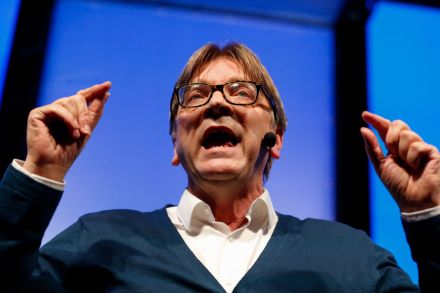
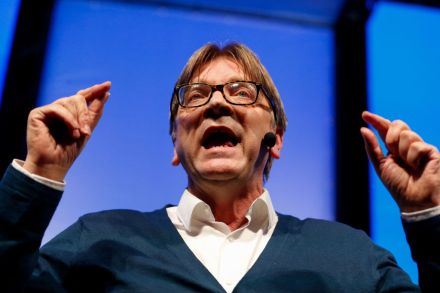
Who is on top of the gold medal table at the Tokyo Olympics? China? The United States?  According to former European parliament Brexit chief Guy Verhofstadt, it is, in fact, the European Union that is triumphing at the games. While you have to go down to seventh place in the Olympics leader board to find an EU country (Germany), Verhofstadt appears to have his own scoreboard:  'Fun fact,' he wrote on Twitter: 'EU combined has more gold medals than US or China'. Verhofstadt went on to say that he would 'love to see the EU flag next to the national on athletes’ clothes'.

guy verhofstadt

Guy Verhofstadt claims Olympic gold for the EU

Who is on top of the gold medal table at the Tokyo Olympics? China? The United States? According to former European Parliament Brexit chief Guy Verhofstadt, it is, in fact, the European Union that is triumphing at the games. While you have to go down to seventh place in the Olympics leaderboard to find an EU country (Germany), Verhofstadt appears to have his own scoreboard: 'Fun fact,' he wrote on Twitter: 'EU combined has more gold medals than US or China'. Verhofstadt went on to say that he would 'love to see the EU flag next to the national on athletes’ clothes'. Cockburn wonders whether this is all just a ploy to ensure that Verhofstadt's Belgium — which has so far won just a single gold at the Games — stands a chance of beating Great Britain, which has 16.

Viktor Orbán is winning his culture war

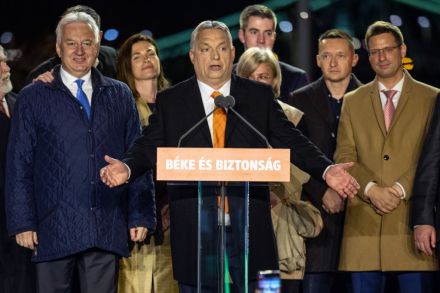
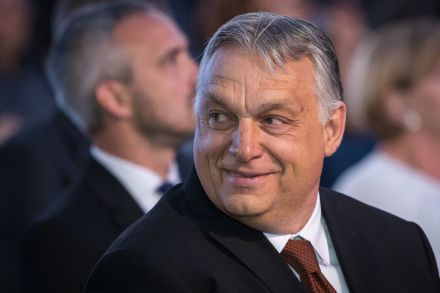
Budapest Even supporters of Hungarian prime minister Viktor Orbán acknowledge privately that the Pegasus scandal is a hard blow to the embattled leader. Last month’s news that government spies had employed Israeli software to commandeer the smartphones of journalists, activists and government opponents confirmed the worst authoritarian stereotypes of Orbán, who will be running for his fourth consecutive term in 2022. These allegations, if true — and many Orbán backers with whom I spoke assume that they are — will likely displace what was Orbán’s greatest liability heading into next year’s vote: that he and his Fidesz party oversee a vast web of public corruption.

viktor orbán

Should the EU diversify – with blockchain?

From our UK edition

The European Investment Bank has warned that the EU is not investing enough in blockchain — the technology that underpins cryptocurrencies — and artificial intelligence. In a report released Tuesday, the EIB wrote that the EU is falling behind both China and the US in these two areas, with the funding gap estimated at between €5 billion and €10 billion annually. This is problematic because, as the bank argues, AI and blockchain are two of the most significant disruptive technologies of our time, and they will have a major impact on the future economy. At present, the US and China account for more than 80 per cent of annual equity investments in AI and blockchain, compared to the EU’s 7 per cent.

The EU’s decline is self-inflicted

From our UK edition

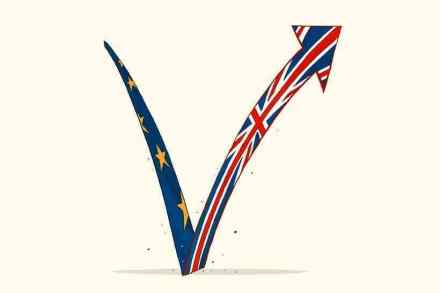
In 1991, at the height of the first Gulf War, the EU demonstrated to the world its divisions and helplessness, as Belgium infamously blocked the export of munitions to the UK, then at war in the Gulf. They quickly came to regret it. The Belgian Foreign Minister subsequently remarked tellingly: ‘Europe is an economic giant, a political dwarf and a military worm’. It seems these days that little has changed, save that even the EU’s claim to be an ‘economic giant’ is eroding with the loss of the world’s fifth largest economy, a dwindling share of world trade and a catatonic growth rate, even before the pandemic. Worse still, much of its relative economic decline is self-inflicted.

America: approve AstraZeneca

What follows the global pandemic? The global vaccine freakout. European politicians have their knickers in a twist about the Oxford-AstraZeneca shot. The source of the panic was reports from Denmark and Norway that some people who received the British-made vaccine developed blood clots — though there is no evidence yet that the shot is at fault. Over a dozen European nations, including France, Germany, Ireland and Spain have temporarily suspended their use of Oxford-AstraZeneca, in what seems to be a team effort to mistake correlation for causation. Sometimes the world cries out for American global leadership. The US is currently sitting on a stockpile of around 30 million doses of the AstraZeneca vaccine. AstraZeneca has yet to apply for FDA approval for their shot.

astrazeneca covid

The EU’s vaccine catastrophe is a crisis of its own making

From our UK edition

As news emerges that both Pfizer and AstraZeneca are cutting supplies of their Covid-19 vaccines to the EU by up to 60 per cent, EU officials are turning on the drug companies, threatening fines and lawsuits if they don’t speed up deliveries. The Italian Prime Minister Giuseppe Conte has blasted the delays as unacceptable and threatened to take the companies to court. While the European Council President Charles Michel is threatening to use ‘all the legal means at our disposal’ to make the drugs companies ‘respect the contracts’ signed with the EU. But hold on, because on closer inspection it turns out that much of the unfolding vaccine catastrophe in the EU is of its own making.

The EU is a divided house

From our UK edition

What does 2021 hold for the European Union? At the end of 2020 Brussels has gone out of its way to engage in unity-signalling, announcing that all 27 members will begin vaccination on the same day and feigning a united front in the face of the UK’s new strain of coronavirus. But in truth its 27 member states are confronted by serious structural divisions in three fundamental areas: economics, culture, defence. Deep economic divisions surfaced in the EU after the 2008 financial crash along a north-south axis. The split between the richer ‘frugal’ northern economies and the ‘profligate’ southerners was starkest in 2012-13 over Brussels’ treatment of Greece.

Britain’s bizarre Italian travel guidance

From our UK edition

Here’s a tip. When the Foreign Office advises against going somewhere, hop on the next plane. The mandarins have advised against visiting Italy because of Covid-19. It’s as bizarre as everything else that our rulers have said about the virus. Confirmed cases in the UK are currently more than twice as high per 100,000 as in Italy. Anyone with our welfare at heart should be telling us to go to Italy at once. I left the next day. The Italians could be forgiven for serving us our own medicine and quarantining all arrivals from the UK. As it is, they test you at the airport, and quarantine is only required if you test positive. It is rational and very efficient. It takes only ten minutes and costs nothing. Generally, however, the Italian government has much to answer for.

The US is coming out of COVID no worse than any European country

It has become a received wisdom in recent months that the US has failed where the EU had succeeded. On June 22, for example, CNN viewers were shown a graph of COVID cases in the US, which had seemed to flatten at around 25,000 cases a day, compared with those in the EU which had fallen away from an April peak to fewer than 5,000 cases a day. ‘Look at the EU,’ viewers were told. ‘That’s where we should be.’ Roll on four months, however, and it is looking a little different. While cases in the US fell away, then returned in what is beginning to look like a bit of a third wave, Europe has been consumed in a rapidly-growing second wave.

covid