Europe

The Europeans are complaining, again

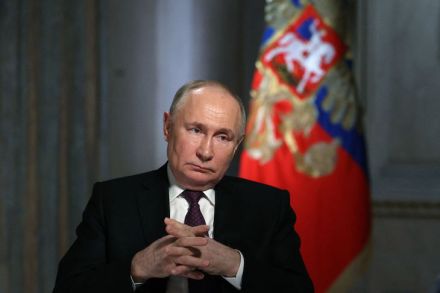
All is not well in the transatlantic relationship. This might come as a surprise given that the United States and Europe have been remarkably unified on Europe’s most urgent security crisis in the post-Cold War era. Despite Russian President Vladimir Putin’s attempt to inject division into the pro-Ukraine coalition by throttling gas supplies to Europe, the West is sticking to its guns, maintaining sanctions on Moscow until either the war ends or Russian troops are forced to withdraw. This consensus, however, has masked disputes between Washington and its European allies that are becoming more difficult to manage.

Don’t expect the midterms to change our foreign policy

President Joe Biden and his Democratic allies were expecting a romp on Tuesday. So were many of the career prognosticators surveying the election landscape. Instead, many of the close Senate races, including in all-important Georgia and Nevada, haven’t been called. Those of us who have been staring at the returns for hours on end still don’t know the full extent of the results. But what can be said with reasonable certainty is that however the balance of power stacks up, foreign policy is likely to be the same as it ever was. The status quo is an all-powerful force inside the Beltway, where conventional wisdom rules the roost and any tilt away from the mainstream is usually corrected before an honest discussion can be had on the merits. Part of this is institutional.

How long can Europe’s support for Ukraine last?

Can Ukraine sustain a war effort that is proceeding far better than most military analysts ever expected? Part of that answer, of course, depends on the extent to which the Ukrainian army can keep their troops in the field equipped, supplied, and motivated. That challenge comes as the Russian military increasingly relies on so-called “kamikaze drones” to strike deep into Ukrainian territory (on October 17, a Russian drone attack killed four people in Kyiv during the morning rush hour). But another factor that will determine success or failure is whether Europe remains onboard — or, more to the point, whether Europe’s support to Kyiv will continue as the war enters a dreary, unforgiving winter.

The right’s dangerous embrace of soft isolationism

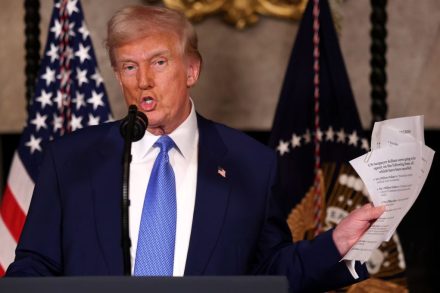
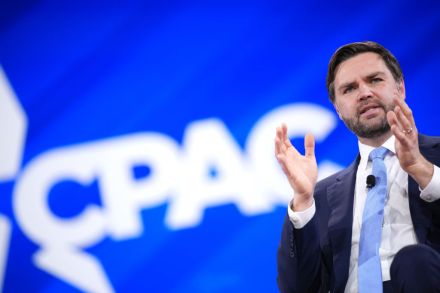
Traditionally, the GOP has been the favorite of those concerned with safety and national security. The party of Ronald Reagan emphasized the need for strong engagement abroad, a willingness to project power when necessary, and a commitment to the free world. Yet the contours of the conservative movement have begun to change in recent years, calling into question the GOP’s credibility on the issue of security. The growing support for a sort of soft isolationism is a problem. It is also fundamentally not conservative. Prominent voices from the American right have been carrying the banner of soft isolationism for years, from Tucker Carlson and J.D. Vance to Senator Josh Hawley and former president Donald Trump.

Europe is more bark than bite on Ukraine

Last Friday, President Biden signed a spending bill that will keep the government’s lights on until December 16, when lawmakers will have to cobble together a funding resolution to avert a shutdown. Tucked into that law was another tranche of security and economic assistance to Ukraine, to the tune of $12.3 billion. The signing came two days after the Defense Department announced the release of an additional $1.1 billion military package for Kyiv, which will include 18 more HIMARS systems, 150 armored vehicles, and ammunition of various calibers. The Biden administration has provided the Ukrainians with over $16 billion in security assistance since Russia’s invasion in February. Washington’s hands have been cramping up from writing so many checks.

macron europe blame

Forget trains: American car culture is worth defending

Had Amtrak come to a screeching halt this week, as it was on the verge of doing, most Americans would not have noticed. Of those workers who still commute to in-person jobs, 76 percent drive their own cars, 10 percent ride a bike, and only 11 percent use public transportation. Other countries tend to give us a bad rap for our car-loving ways. Most of us — nine in 10 Americans over the age of 16 — drive. And we drive a lot: 59 minutes and 30 miles a day, on average. We’re on the road twice as much as our friends in France, Germany, and Great Britain. So when non-American critics blame climate change on our driving habits, I can’t help but think they’re just plain jealous. Here’s the thing about America: it’s huge. That means people can spread out, and we have.

Dear America: moving to Europe won’t solve all your problems

“In Europe people wear breathable clothes made out of natural materials, in the USA people wear plastic.” “In Europe people sleep indoors, not in tents on the street like Los Angeles.” “Unfortunately people have a lot of reactions to gluten in the US and zero issues in Europe” “How can you avoid looking like an American tourist in France?” Scroll through your news feed and you’ll witness a lot of Americans, usually those who pride themselves on their progressive views, indiscriminately romanticizing “Europe.” In the wake of the endless Covid restrictions and after Roe v. Wade was overturned, there’s been endless social media chatter about how to move from the US to Europe.

europe

Defending Ukraine should be a European project

NATO gatherings at the head-of-state level are ordinarily placid, even boring affairs. But this week’s three-day NATO summit in Madrid will be quite different. For the first time in twenty-three years, the alliance is meeting as a war churns on European soil. Russian President Vladimir Putin’s invasion of Ukraine has been an electric shock to the continent’s defense establishment, at least if their rhetoric is any indication. European officials have finally come around to noticing that Europe isn’t an exceptional zone of peace and tranquility, but a region no more immune to armed conflict than any other. NATO, which was straying out of theater in a desperate attempt to stay relevant, is now back to performing the defensive mission it was meant to do.

The end of the last Arab Spring success story

Visibly, and with very little pretense, Tunisia is sliding into tyranny. In the last two years, its president, Kais Saied, has frozen and dissolved the country’s parliament and threatened its former members with prosecution. He has dismissed an errant prime minister. He has ruled by decree. He has quashed the high judicial body attempting to scrutinize his changes to the constitution and replaced it with a new organization filled with hand-picked appointees. Accusing his opponents of planning their own coup attempt, Saied has faced down months of protests over each of these individual changes with uncommon steeliness. Saied’s hold over the instruments of government and his comradery with the brass of the army appears near total.

Don’t blame the West for its Ukraine hesitance

As Ukrainian President Volodymyr Zelensky addressed the UN Security Council today with all the anguish you would expect from a wartime commander-in-chief, he could nonetheless be relatively pleased about several things. Sure, Zelensky and his advisers are constantly making the point that Ukraine needs bigger and better weapons to resist Russia’s invasion, but the West has been quite responsive to Kyiv’s requests. The Biden administration’s latest weapons shipment, announced last week, adds to the $1.6 billion in military aid the US has sent to the Ukrainian military since the war broke out on February 24.

Hungary’s Orbán remains a thorn in everyone’s side

Viktor Orbán has just won another election. The Hungarian prime minister has secured a hefty majority in his country’s legislative elections, and in his victory speech, Orbán revealed once again that he is a thorn: in the side of Europe most obviously but, if need be, in the side of all. I’ll leave for others the discussion of Hungarian democracy — whether Orbán has so manipulated national life that his continued electoral successes are unimpressive, even fraudulent. But Orbán, in his own mind, thought an “overwhelming force” ranged against him. “We never had so many opponents,” Orbán said.

The last American tourist

I was driving along a curvy English road outside a village in Gloucestershire a few weeks ago when a sign loomed on our left. It said: CATS EYES REMOVED My first thought was: What a horrible way to make a living in this day and age, even out here in the countryside. So much for All Things Bright and Beautiful... Maybe those people who said that Brexit would turn the English into depraved monsters were right. I was jumping to conclusions. It hadn’t been put up by an entrepreneur or veterinarian but by the highway authority. Cat’s eyes are what the English call those super-reflective bumps embedded in the stripes on minor highways to keep drivers from drifting across lanes. The sign was a warning that this curvy road had recently become much more dangerous.

tourist

Sanctions on Russia will shake the world economy for years

The war in Ukraine will dominate the news for the foreseeable future. But while the bombings will eventually cease, the economic consequences for the world have just begun. That’s because in an era of increasing interconnectedness, economic impacts don’t stop at borders. Most attention has been focused on the immediate impacts of sanctions on Russia, and they are significant. In the past, sanctions have proven largely ineffective at punishing foreign enemies. President Barack Obama, for example, failed to use them effectively in 2014 during the last Ukrainian-Russian dispute. But this time, the actions taken against Russia were largely unprecedented, with even traditionally neutral countries like Switzerland and Sweden calling for restrictions that are “as big as they can be.

economy

Putin the reckless gambler

Vladimir Putin’s two-week-long war in Ukraine is not going as planned. What the Russian strongman thought would be a romp of the Ukrainian army in a matter of days has turned into a slow-motion train-wreck, with thousands of Russian soldiers killed in battle, images of burned-out tank husks littering the roads and Russia’s economy circling the drain. CIA director William Burns told the House Intelligence Committee today that Putin is increasingly frustrated about the level of progress achieved thus far in the campaign. "He was confident that he had modernized his military and they were capable of quick, decisive victory at minimum cost,” Burns said during his testimony. “He’s been proven wrong on every count.

vladimir putin alexei navalny

Is Europe a continent? Does it matter? 

Nikole Hannah-Jones, who is never at a loss for a tweet, ridiculed Americans who are expressing alarm over the threat to Europe implicit in Putin’s invasion of Ukraine. She put down those spoilsports for their referring to Europe as a “continent.”  Quoth Hannah-Jones, under her nom-de-plume Ida Bae Wells: What if I told you Europe is not a continent by definition, but a geopolitical fiction to separate it from Asia and so the alarm about a European, or civilized, or First World nation being invaded is a dog whistle to tell us we should care because they are like us. The triumphant silliness of the author of the 1619 Project always comes down to her desire to find racism at the root of whatever happens.

europe nikole hannah-jones

Europe’s ‘green’ transition put it at Russia’s mercy

Germany’s “halt” on the certification of the Nord Stream 2 pipeline on Tuesday is a classic case of too little, too late — a fact made all the more painfully clear in light of Russia’s invasion of Ukraine. Oil and gas still flow through Nord Stream 1 and many other Russian pipelines to Europe, and the continent has no choice but to keep importing the fossil fuels that finance Vladimir Putin’s offensive. We all saw this coming. Europe’s supposed “green” energy transition disregarded energy security and common sense, and Ukraine is now paying the price. The world will never tackle climate change if it's in a constant state of geopolitical energy insecurity, relying on authoritarian regimes like Russia and China to meet its basic needs.

The stakes for Europe are even higher than in 1938

Any analysis of the Ukraine situation risks lagging behind the news. As of the time this article was published, Russia had conquered the former Chernobyl nuclear power plant. Its forces are only about sixty miles away from Ukraine’s capital, Kyiv, which has already experienced shelling. Russians have also attempted to capture Antonov International Airport, just fifteen minutes away from the capital’s ring road. Meanwhile, European leaders are resorting to the usual responses: “concerned,” “strongly condemning." There is even a Twitter account mocking the EU’s approach to all major crises, called “Is EU Concerned?” The response to the invasion of Ukraine is not spared from similar mockery. Here in Europe, it feels like 1938 all over again.

Kudos to Macron for going to Moscow

Landing in Moscow on February 7, French President Emmanuel Macron had a twinkle in his eye and a spring in his step. There he was, taking it upon himself to be the first European head-of-state to meet Russian President Vladimir Putin since over 130,000 Russian troops massed on Ukraine’s border from three sides. Macron's mission was to explore whether a de-escalation with Russia was possible. “I believe that our continent is today in an eminently critical situation, which requires us all to be extremely responsible,” he told reporters before his five-hour session with Putin began. The other option, what could be the largest land war in Europe since World War II, would be far worse.

Europe: the little kids’ table at the Ukraine talks

While American and Russian officials are yelling at one another in the UN Security Council chamber, another international actor has found itself at the little kids’ table: Europe. It's possible the phrase “little kids’ table” is too harsh. To be fair, French president Emmanuel Macron is at least in direct communication with Russian president Vladimir Putin and urging his European colleagues to formulate a joint European negotiating position on the Ukraine question. France is also a chief mediator of the Normandy Format, which seeks to resolve the eight-year conflict in Ukraine’s Donbas region. But Macron is largely an outlier on his own continent.

Will the old world order end in Ukraine?

As Russian troops encircling eastern Ukraine are preparing to attack, western leaders are bracing for a Russian invasion while struggling to maintain a united front. Following the fallout of peace negotiations and numerous deterrence measures that appear to be inconsequential, French President Emmanuel Macron has called on the EU to conduct its own dialogue with Russia and forge its own plan for security and stability. It’s an indication that most European nations are tired of being sidelined during negotiations and reluctant to impose harsh sanctions against Russia, especially since it could risk a gas shortage that would impact recovering European economies.

chinese meddling