Europe

European Commission does eurosceptics' dirty work, again.

Defenders of the status quo in the European Union like to argue that 3 million jobs in this country currently depend on Britain’s membership. Aside from the rather shaky maths behind that figure, it’s striking that today Chris Grayling is making a stand on a Brussels plan that will cost jobs in this country, rather than boost them. The Sunday Telegraph reports the Justice Secretary accusing the European Commission of ‘not living in the real world’, with new data protection laws threatening to cost british businesses around £360 million a year. Grayling makes it very clear in his interview with the newspaper that he views these proposals as a direct

Ed Balls: Labour will include pensions in its welfare cap

Ed Balls has just told Andrew Neil on the Sunday Politics that Labour will include pensions in their welfare cap. This opens up a major dividing line with the Tories who have been clear that George Osborne will exclude pensions from his spending cap. I suspect that Balls and Ed Miliband will now be badgered with questions about whether, if necessary, they’ll cut pensions — or not up-rate them — to meet the cap. Given the power of the grey vote in British politics (Labour estimates that one in every two voters in 2010 was over 55) they are going to come under massive pressure to rule this out. But,

What you believe has everything to do with how old you are

We’ve got bogged down, that’s the thing. Bogged down and caught up, all at once. The Prime Minister is rude about people and people mind, even if they’re the sort of people who are habitually rude about him. Europe is a mess we either need or we don’t, and the notion of chaps marrying other chaps gets everybody terribly excited, whether they’re in favour or against. And so travelled are these paths of debate, and so much fun do we all have having them, that I suspect we’ve lost sight of the biggest political fight of all. Which isn’t really about any of these things at all, but about people.

Eurovision was as hilarious as ever

Only in The Guardian could Britain’s humorous disdain for the Eurovision Song Contest be linked to the rise of UKIP and the decline of the British Empire: ‘I think Eurovision-bashing reflects a crisis of collective national identity in the UK; it’s a way of expressing feelings of unprocessed anger, frustration, and loss about the UK’s place in the rapidly changing Europe and in the world more broadly. The great British social theorist Paul Gilroy has written of the UK’s post-colonial melancholy, a failure to properly process and accept the end of the country’s status as world leader, and I think that’s what’s at play here. The UK has been suffering

UKIP, Pierre Poujade and a political class that's seen to be "out-of-touch".

Parliament is a “brothel”. The state is an enterprise of “thieves” engaged in a conspiracy against “the good little people” and the “humble housewife”. Time, then, for a party that will stand up for “the little man, the downtrodden, the trashed, the ripped off, the humiliated”. Not, as you might suspect, the most recent UKIP manifesto but, rather, the sentiments expressed by Pierre Poujade during the run-in to the 1954 elections to the French National Assembly. Poujade’s party, the Union to Defend Shopkeepers and Artisans,  shocked France’s political elite by winning 2.5 million votes and sending 55 deputies to Paris. Charles de Gaulle sniffed that “In my day, grocers voted for

Refusing to bang on about Europe has brought about even more banging on than before

The BBC loves nothing better than a narrative in which Tory anti-European eccentrics split their party, and a bewildered public votes Labour. It is certainly the case that some of the Tory sceptics are half-crazed by dislike of David Cameron. But the reason the subject keeps coming up is because it matters, and it remains unresolved. The Tory rebels understand this in straightforward electoral terms: the rise of Ukip threatens their seats, so they must do something about it. What is maddening is not so much Mr Cameron’s actual policy on Europe, but his patent longing to avoid the subject. His refusal to ‘bang on’ about Europe has brought about

Will the draft EU referendum bill calm Tory tensions?

The last few days have seen the Tory party losing its collective head. Number 10 hopes that the publication of a draft referendum bill will begin to restore order. If this bill had been published by the leadership a week ago, it would have looked like a bold move. Today, it appeared panicky. But it is now out there, and any Tory backbencher who comes high up in the private members bill ballot on Thursday has a chance of guiding it through. I suspect if a vote could be won on second reading, the parliamentary dynamics of this debate would change yet again. What’ll be intriguing is to see how

Tory leadership publishes draft EU referendum bill in a panic, and fails to convince backbenchers

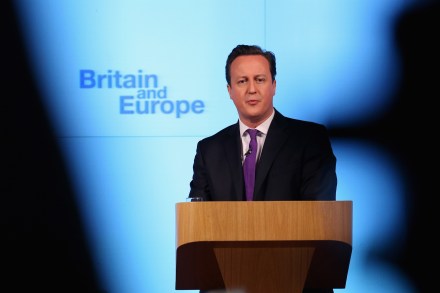
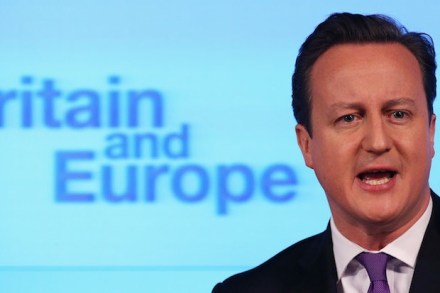
David Cameron was trying to work out how on earth to deal with the latest Europe row in his party. He heard them demanding legislation in this parliament for a referendum in the next, and this evening, after nearly a year of letter-writing and speeches, he announced that the Tory party will publish a draft bill doing just that. They still can’t get it through Parliament through the government channels, so they’ll be putting it up for any willing backbencher (of which there are many) to adopt in the Private Member’s Bill ballot. Figures close to the Prime Minister were hinting to Tory MPs this evening there would be a

David Cameron needs to become a man with a plan

‘I’m a man with a plan,’ David Cameron told the Conservative party conference in 2008. Now the Prime Minister is struggling to give the impression he does have a plan for dealing with the Europe problem in his party: and he needs one, because things are going to get a lot stickier. The furore around tomorrow’s Queen’s Speech amendment is in many ways rather amusing because however backbenchers, PPSs and ministers vote, it doesn’t change a thing outside the Commons chamber. It simply says the Tory party wishes there had been an EU referendum bill in the Queen’s Speech. For all the criticisms that he’s running behind his party on

Gove: I'd vote to leave the EU if referendum held today

In a firecracker of an interview on the Andrew Marr Show, Michael Gove confirmed that if an EU referendum was held today he would vote out. But he followed this by saying to James Landale that he backed the Prime Minister’s plans to renegotiate and hoped that a satisfactory form of membership could be agreed. Significantly, Gove indicated that David Cameron would set out the Conservative ‘negotiating platform’ before the next election. This has been a key demand of Euro-sceptic Conservatives but one that Cameron has resisted. He is reluctant to provide anything akin to a renegotiation scorecard. Gove’s intervention changes the terms of debate. It means that every Conservative

Dreams and Nightmares: Europe in the twentieth century

So much abuse has been heaped on the European Union in recent years that it is easy to forget that Europe and the EU are not the same thing. Geert Mak reminds us of this fact. He is one of the most celebrated journalists and commentators in the Netherlands. Mak – widely read, multi-lingual and endlessly curious – considers the whole of Europe to be his home. He has won awards for his books in Germany, as well as in his native Holland, and been inducted into the Legion d’Honneur in France. He is also, on the side, a bit of an anglophile. In 1999, with millennial fever rising, Mak

Dan Hannan’s spot on, again

Very good piece from Dan Hannan in yesterday’s The Daily Telegraph. The gist of it being that politicians admit to Eurosceptical tendencies only once they have left office (and therefore, by extension, when it is too late to do anything about it.) This will have been prompted by both Nigel Lawson and Michael Portillo’s recent (we suppose) Damascene conversions, which have entertained us all greatly. Dan puts this down to what Milton Friedman called ‘the tyranny of the status-quo’, and of course it is true about many more things than simply our membership of the European Union. But it is probably correct that such issues, seen from a distance, appear

EU referendum amendment is just first step in long battle

As expected, the backbench Tory campaign for an EU referendum bill started as soon as the Queen’s Speech proved not to contain one. The first battle is over an amendment expressing regret which John Baron, who is leading the charge on this, has tabled. The amendment, to the motion welcoming the Queen’s Speech, simply reads: ‘Respectfully regrets that an EU referendum bill was not included in the gracious speech.’ This means that all Tory MPs who want a referendum, but in a different form, such as the mandate referendum that Bernard Jenkin and others have pushed for, can still sign the amendment. Baron tells me that he hasn’t decided whether

Why do journalists think they’re not part of the ruling elite?

Look, we’ve known each other a while, you and I, so I think it’s time for a confession. It’s a big one, this. I haven’t even told my parents yet. But I think I might be a member of the ruling elite. Granted, it doesn’t feel that way of a morning, when I’m using my thumbnail to scratch baby vomit off my shoulder on the bus to Finsbury Park. But then, maybe it never does. Columnist for The Spectator, leader writer for the Times, the public school- and Oxbridge-educated son of a Conservative former Cabinet minister; hmm, hard to fight it. There have been five prime ministers in my lifetime,

What was Clegg’s priority in the last few hours of the coalition talks? Stopping a European renegotiation

The latest extracts of the Andrew Adonis’ book on the 2010 coalition negotiations couldn’t have been better designed to stir up Tory backbench bad feeling to Nick Clegg. Adonis claims that in the final phone calls between Clegg and Brown, the Lib Dem leader kept stressing—you’ve guessed it—Europe. Adonis reports that Clegg told Brown:  ‘Following our conversation this afternoon I’m basically finding out how far I can push the Conservatives on Europe. I genuinely take to heart what you said about that. We need some sanity on Europe. We can’t seek to renegotiate. I’m trying my best…’ I think this illustrates two things. First, how ideologically committed Clegg is to the

Why David Cameron can't copy Harold Wilson on EU renegotiation

It’s at times like this I’m glad I’m not a Europhile. I imagine that Lord Lawson’s article in today’s Times is causing Brussels-lovers up and down the land a number of headaches this afternoon, not least because it is incredibly detailed and hard to find fault with: The EU’s desire for ‘ever-closer union’ is undiminished? Accurate. British businesses are being hindered by the EU’s daft regulations? Very true. We need to start looking beyond Europe for growth opportunities? Another tick. From a purely economic perspective, Lord Lawson’s argument is spot on. However, there is a political problem with Lawson’s article which I can’t seem to get my head around –

European debate returns to Tory MP vs Tory MP

One of the inevitable consequences of Lord Lawson’s announcement that he’d vote ‘No’ in an EU referendum is that the ideological divides over Europe in the Tory party are starting to open up again. This lunchtime, two Conservative MPs debated one another on the issue, which must be confusing for the electorate, and also shows that it will be very difficult for any Tory leader to unite the party on the issue, even once the referendum has taken place. Margot James, a member of the new Number 10 policy board who also speaks for the pro-European Mainstream Conservatives on trade and investment, sparred with Bernard Jenkin, who isn’t just a

The Tory party holds its nerve - for now

The dust is settling from the County Council elections and, crucially, the Tory party seems to have stayed steady. Yes, David Davis has had a pop at the number of Old Etonians surrounding the PM and 20 MPs have called for a mandate referendum. But there is no sense of mass panic or revolt. Partly this is because David Cameron had already started doing the things he was going to be told to do after this result. As one Downing Street source remarks, ‘the shift is already well under way.’ He points to the tougher measures on immigration and welfare coming up in the Queen’s Speech and Number 10’s new

Brendan Simms: A strong, united Europe is in Britain's interest

Since the collapse of the Byzantine Empire, European history has been dominated by two themes: the centrality of Germany and the primacy of foreign policy. This is the argument of Brendan Simms’ new book, Europe: the struggle for supremacy 1453 to the present. Simms is a professor of the History of International Relations at Cambridge University and his decidedly European focus has allowed him to craft a detailed yet expansive account in the style of Paul Kennedy’s Rise and Fall of the Great Powers. One afternoon we sat down at Penguin’s offices on the Strand to discuss these issues, as well as their relevance to the current European Union debate.

Don’t believe the hype: the French still live better than Americans

In recent months I’ve read at least ten articles about French malaise — all of it apparently due to some mysterious Gallic trait that makes the world’s luckiest people unable to make the best of things. Granted, unemployment is over 10 per cent, the Germans are again running Europe, and François Hollande’s ‘socialist’ government is coming apart at its hypocritical seams. But I don’t buy the thesis that the French are generally ‘miserable’, as Paris School of Economics professor Claudia Senik argued last month in the Financial Times. Indeed, I felt almost defiant as my wife and I boarded the Eurostar in London two weeks ago and headed off to