Europe

The continent in crisis

From our UK edition

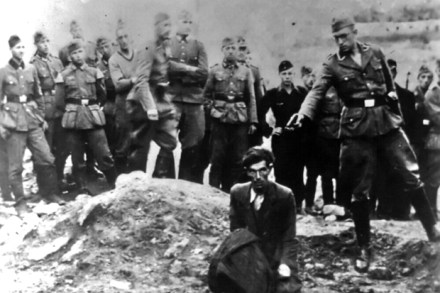
Sir Ian Kershaw won his knight’s spurs as a historian with his much acclaimed two-volume biography of Hitler, Hubris and Nemesis. He is now attempting to repeat the feat with a two-volume history of modern Europe, of which this is the opening shot.Inevitably, the figure of the Führer once again marches across Kershaw’s pages as they chronicle the years dominated by Germany’s malign master. First the Great War that gave Hitler his chance to escape obscurity, and then the greater one he launched himself. Opening with the continent’s catastrophic slide into generalised conflict in 1914, Kershaw apportions blame or the disaster more or less equally to all the combatant nations.

Now we know where the celebrated ‘Ummah’ is

From our UK edition

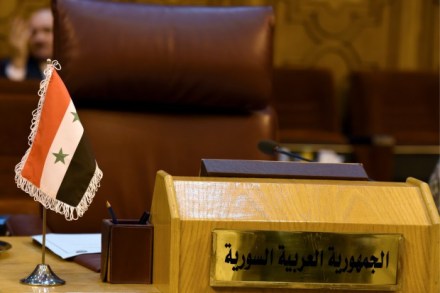
Earlier this week I asked where the celebrated ‘Ummah’ is when it comes to Muslim refugees. I think we now have an answer. Here is a video of one Kuwaiti official’s response to the question of why none of the Gulf countries seem willing to take any Syrian refugees. ‘Kuwait and the other Gulf Cooperation Council countries are too valuable to accept any refugees. Our countries are only fit for workers. It’s too costly to accept them here. Kuwait is too expensive for them anyway. As opposed to Lebanon and Turkey which are cheap. They are better suited for the Syrian refugees. ‘In the end it is not right for us to accept a people that are different from us. We don’t want people that suffer from internal stress and trauma in our country.

Cabinet Ministers happy to stay quiet on Europe

From our UK edition

The next project for eurosceptic Tory MPs is to get a free vote for government ministers on the EU referendum. They want David Cameron to tell his frontbenchers whether or not they can campaign for a different stance to the one he’ll take (even if he wants to give the impression he might advocate leaving or remaining), and they want him to do it at the Tory conference in a few weeks' time. One of the reasons the eurosceptics want this is that it will make it easier for them to add the names of senior ministers to their lists of supporters of leaving the EU, and to do so as early as possible in order to build momentum for their campaign.

The brutal mask of anarchy

From our UK edition

In September 1939 Britain went to war against Germany, ostensibly in defence of Poland. One big secret that the British government didn’t know at the time — and not until much later — was that while the Anglo-Polish alliance treaty was being negotiated during the previous months, the Poles had been actively training and arming terrorists to kill British troops in the Middle East. I don’t normally believe in convoluted conspiracy theories, but this one happens to be true. In the 1930s the anti-Semitic government in Warsaw wanted rid of 3.5 million Polish Jews. Initially they tried to pack them off to Madagascar. But then the Poles hit on the idea of helping Jews create their own state in British-occupied Palestine.

What the government’s first Commons defeat actually means in practice

From our UK edition

Following the government’s first Commons defeat of the new parliament, I understand that ministers are not going to try to reverse the primary legislation that introduces a ‘full fat’ version of the purdah restrictions on what central and local government can publish during the EU referendum campaign. But what the government can do to get its way is to use a statutory instrument to set out certain exemptions from those purdah restrictions. This was what the government amendment to new clause 10 of the legislation will allow: that changes to purdah can be introduced through secondary legislation, which must be approved by MPs. This means ministers can try again at a later date to get their way on the sort of purdah (a skimmed, rather than full fat, version).

Where is the ‘Ummah’ now?

From our UK edition

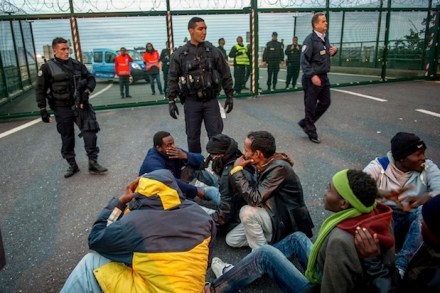
I have just returned from a trip abroad to find Britain and Europe in a state of madness. I will not reflect on any connections between these events. But perhaps a reader could enlighten me as to why in recent days Britain and Europe appear to have decided that Syria's refugees are entirely 'our' responsibility. Other than a generalised sense that we are all human beings, Europeans are about as far down the list of those responsible as it is possible to be. Neither this country nor any of our European allies have made any significant intervention in Syria's civil war. So why should Hungarians and Slovakians, Austrians and Poles be expected to bear such a significant responsibility for this?

Exclusive: Tory rebels to block snap EU referendum

From our UK edition

Tory rebels are now confident they will win a vote in the Commons this afternoon which will block the government from holding a snap referendum vote without much notice. Coffee House understands that Bernard Jenkin has tabled what is known as a ‘manuscript amendment’ - one made on the day of the debate rather than in advance - to the EU Referendum Bill which will force the government to give four months’ notice of the vote. The rebels I have spoken to say they are ‘highly confident’ this amendment will pass. But they seem less confident of winning on the original amendments on purdah. As I revealed earlier, the Electoral Commission supports the rebels on the question of purdah, and it is not yet clear whether the government or the rebels will triumph.

Westminster ‘Out’ campaign snaps up key eurosceptic MPs

From our UK edition

A cross-party group of MPs, including Ukip’s only MP, is to formally join the Westminster-based ‘Out’ campaign, Coffee House has learned. An ‘exploratory committee’ of MPs which started discussing how to advance the case for ‘Out’ in June, will become the Parliamentary Planning committee for the Matthew Elliot-led Out group, which is to move into new offices in Westminster Tower later this month. The members of the parliamentary planning committee are Steve Baker, Douglas Carswell, Bernard Jenkin, Kate Hoey, Kelvin Hopkins, Owen Paterson and Graham Stringer. More MPs will join the committee in the coming weeks.

Government could still face defeat on EU purdah row

From our UK edition

Will ministers really avoid a defeat on the question of purdah in the EU referendum bill on Monday? They hope that amendments, tabled today (and attached in full here in advance of their publication tomorrow), will stop Conservative MPs flocking to Labour’s new clause that it has tabled to add to the Bill. But Labour sources tell me that they’re still considering voting against the amendment which brings back purdah but with a substantially narrowed scope. And given it only takes a handful of grumpy eurosceptics to vote against to make a defeat, the whips can’t breathe a sigh of relief just yet.

High life | 27 August 2015

From our UK edition

According to Somerset Maugham, in material terms one must live on the razor edge between poverty and minimal subsistence in order to cultivate the life of the spirit. I’ve always respected Maugham’s wisdom and understanding of human nature, and Larry Darrell, in search of the Tao, is among my favourite fictional characters. Maugham wrote The Razor’s Edge in 1944, aged 70, an extraordinary achievement and way ahead of the times. The world was at war and here was an old closeted homosexual writing beautifully about the West’s inability to promote the good life through wealth.

Is David Aaronovitch taking the piss out of himself?

From our UK edition

This job is getting harder and harder, because it is no longer possible to parody or satirise the blithe stupidity of the liberal London middle class. It now exists in a place beyond the reach of such mocking. Take a peep at David Aaronovitch’s piece today on the problems in Calais. Just have a look, and tell me you don’t think he’s actually taking the piss out of himself. David believes we should let all the asylum seekers in. He thinks that they would make excellent ‘electrical engineers’. Yup, that’s why they’re there, Dave. Itching to get their hands on a junction box, the lot of them. Not a single penny in benefits will be expended, not a single crime committed.

Jeremy Corbyn’s extraordinary success is a coup for the Tories

From our UK edition

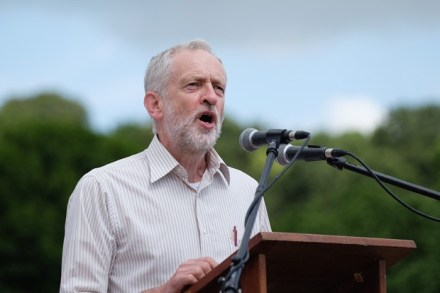
[audioplayer src="http://rss.acast.com/viewfrom22/workingwithal-qa-eda/media.mp3" title="James Forsyth and George Eaton discuss the rise of Jeremy Corbyn" startat=754] Listen [/audioplayer]It wasn’t meant to work out this way. A month ago, Westminster watched to see if Jeremy Corbyn could get the support of the 35 MPs he needed to enter the Labour leadership race. At the time, it seemed a sort of joke. After all, the people who were lending him their backing weren’t doing so for any great love of Corbyn. As a rule, they either wanted a ‘broad debate’ or thought that the ritual slaughter of the left-wing candidate would make it easier for the new leader to move the party to the centre. A month on, things look very different.

A beginner’s guide to Euroscepticism

From our UK edition

As a long-time Eurosceptic, I should be happy about the Johnny-Come-Latelys now swelling the sceptic ranks. Following Euro-institutions’ wicked treatment of Greece, many European liberals have finally realised that Brussels might not be the hotbed of liberalism, internationalism and bunny rabbits they thought it was. So, bit by bit, they’re becoming the thing they once looked down upon, the thing they once forcefielded their dinner parties against: Eurosceptics. But I’m not feeling very welcoming to these latter-day doubters, currently live-tweeting their Euro-existential angst and clogging their newspaper columns with tortured questions about whether the EU really is a ‘great achievement of enlightened internationalism’. (Answer: no, you donuts.

Have the Greeks just blinked?

From our UK edition

The Syriza-led Greek government has just submitted a new set of proposals to their creditors. It appears to shift Greece closer to the creditors on VAT and pensions reform. It is also, as many have been quick to point out, really quite similar to the proposal that the Greeks voted against in last Sunday’s referendum. Indeed, it doesn’t even appear to contain any demand for debt relief for Greece. The Greek proposal has been drawn up with French assistance, the New York Times is reporting, which suggests that Paris should be sympathetic to the proposals. The question then is how the Northern European countries, led by Germany, react to it? But before the Eurozone finance ministers examine the proposals on Saturday, they will have to get through the Greek parliament.

‘Banging on about Europe’ doesn’t seem so dumb now, does it?

From our UK edition

As we watch the Eurozone catastrophe enter its latest ‘final phase’ one phrase keeps recurring to me.  That phrase is ‘banging on about Europe’.  Does anybody else remember when those words were used (at least since Maastricht I think) to dismiss absolutely anybody who was worried about the overreach or mismanagement of the whole EU project?  Europhiles from the three main parties loved the phrase.  Whenever they wanted to portray a political opponent as a tedious, fringe obsessive the words sprung to their lips.  For instance, whenever he wanted to paint the Tory party as a right bunch of nutters, Nick Clegg would portray them as the type of bores who keep ‘banging on about Europe’.

Merkel strikes an uncompromising tone as the ECB tightens the squeeze on the Greek banks

From our UK edition

François Hollande and Angela Merkel have both given brief statements to the media ahead of their dinner this evening. Hollande was keen to stress that the door remained open to Greece for negotiations and struck a generally more emollient tone. Merkel, though, did not sound so emollient. She claimed that the deal that the Greeks rejected was ‘quite a generous one’. Meanwhile, the European Central Bank—the key actors in this drama—have kept the emergency lending assistance they are offering the Greek banks at the same level. This means that the Greek banks will not be able to re-open. The ECB has also said that it will ‘adjust the haircuts on collateral accepted by the Bank of Greece for ELA.

Time running out for a Greek deal warns Osborne

From our UK edition

Right now, Britain is sitting on the side-lines waiting to see if there is, to use George Osborne’s phrase, an ‘11th hour’ deal between Greece and the rest of the Eurozone. Britain isn’t part of the Greek bailout or the Eurozone so is peripheral to this process; David Cameron isn’t invited to the emergency Eurozone meeting on Tuesday. But Osborne has just told the House of Commons that the UK government expects the Eurogroup to discuss a new proposal from the Greek government at tomorrow’s meeting. As Osborne pointed out, the problem is that the political timetable for a deal isn’t moving as fast as the financial timetable in Greece. A deal between Athens and its creditors will take weeks not days.

Does anybody still believe that the EU is a benign institution?

From our UK edition

Ever since Margaret Thatcher U-turned in the dying days of her premiership, there has been a kind of agreement between Left and Right on what the European Union is. Most Conservatives followed the late-vintage Thatcher. They stopped regarding the EU as a free market that British business must be a part of, and started to see it as an unaccountable socialist menace that could impose left-wing labour and environmental policies on a right-wing government. As many critics have said, the Tory version of British nationalism that followed had many hypocrisies. It did not want foreigners infringing national sovereignty when they were bureaucrats in Brussels but did not seem to mind them when they were generals at Nato or economists at the WTO.

Greece says No, will Germany now try and kick it out of the Euro?

From our UK edition

Greece has voted No in the referendum and resoundingly so. With more than 90 percent of the votes counted, No is leading 61% to 39%. The result is a massive humiliation for Eurozone leaders who have spent the last few days telling the Greeks to vote Yes and warning them that this was really a referendum on whether the country should stay in the single currency or not. Tonight, Syriza have been making clear that the Greek government intends to remain within the Euro. However, the German government is making clear that it is not interested in further negotiations with Athens or a new bailout deal.

German rhetoric suggests that they are preparing to try and kick Greece out of the Euro

From our UK edition

Greece has voted No, and resoundingly so. But the reaction from Berlin tonight does not suggest that Germany is prepared to have any further negotiations with the Syriza government. The vice chancellor, and head of the SPD, Sigmar Gabriel has declared that "With the rejection of the eurozone's rules of the game, which has been expressed in this majority 'no' vote, negotiations on further multibillion euro programs are scarcely conceivable." Given that the SDP is more doveish than the CDU and the CSU on the Greek question, this sounds like Germany has given up on trying to strike a deal and now wants Greece to leave the Euro. Indeed, one influential CSU politician has already publicly suggested that Greece might be better off outside the Euro.