Eu

Dutch courage

From our UK edition

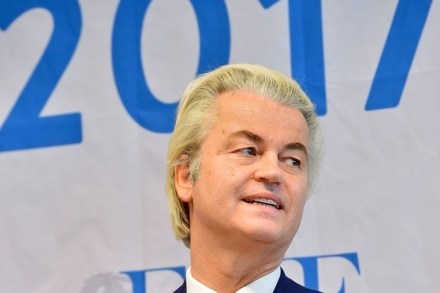
It looks like the people might do it again. After the British electorate misled themselves so badly and American voters failed to rotate the Clinton and Bush families for another presidential cycle, the latest fear is that democracy might occur in Holland. Polls currently show Geert Wilders’s Freedom party almost at level pegging with the governing VVD party, both milling around the 30-seat mark. Questions about when the Dutch became illiberal miss the point that this is a revolt in defence of liberalism rather than against it. The misinterpretation does Dutch voters a serious disservice and fails to acknowledge that the Dutch status quo of recent years — like that in the UK and US — has gone badly wrong.
Orange alert | 26 January 2017

From our UK edition

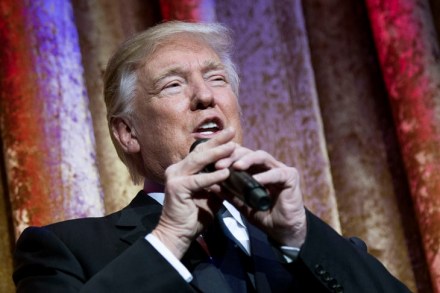
That the US should have elected as president someone like Donald Trump came as a shock. But the US is a strange country, given to periodic outbursts of political madness — though perhaps never quite as mad as this. That the Dutch, often caricatured as pragmatic, bourgeois, phlegmatic, business-minded, tolerant and perhaps a little boring, might in March pick a party led by a vulgar rabble-rouser with dyed blond hair to be the biggest in the land is more surprising. But the rise of Geert Wilders, leader (and only official member) of the Freedom party, shows how populism is sweeping across the Netherlands too. Wilders was one of the main attractions at the recent far-right jamboree in Koblenz, where he hailed Brexit, Donald Trump and what he called the Patriotic Spring in Europe.

Losing patients

From our UK edition

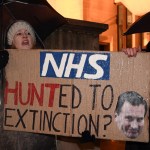
For weeks now, we have been reading about a crisis in A&E — a symptom, we’re told, of a funding crisis in the National Health Service more generally. Since I started working for the NHS almost 45 years ago, this has been a familiar theme: the system is creaking, but a bit more tax money should suffice. To many of us who have seen the system close at hand, another question presents itself: what if the NHS were to cut down on waste? And perhaps recover costs from the health tourists who turn up for treatment to which they are not entitled? I first made the case for doing so four years ago, in the pages of this magazine, when I was the senior surgeon of a rare cancers unit at the Royal Marsden Hospital in London.

Is Benoît Hamon France’s answer to Jeremy Corbyn?

From our UK edition

He was supposed to be the third man of the French Socialist primary held on Sunday. While all eyes were on Manuel Valls, the steely former Prime Minister, and Arnaud Montebourg, the charismatic former Economy Minister, the somewhat subdued former education minister Benoît Hamon was never considered a potential frontrunner. And yet only a couple of weeks after Francois Fillon’s shock victory in the conservative primary, history seems to be repeating itself. Hamon has not won yet, but with over 36 percent of the votes he has a comfortable advance after the first round. Valls, who finished second with 31.1 percent of the votes, was quick to state that 'a new campaign has started' ahead of the second round next Sunday. But the odds are definitely on Hamon’s side.

Why the Germans are so worried about the Trump administration

From our UK edition

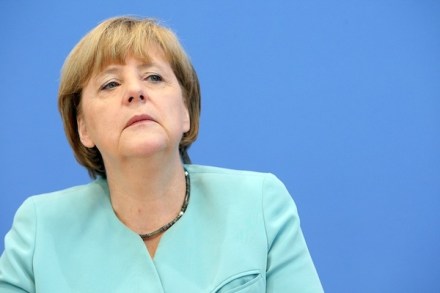
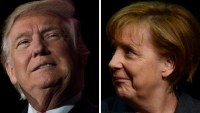
One of the advantages for Theresa May in being the first foreign leader to visit the Trump White House is that other European government are eager for information about what he actually plans to do. Both Handelsblatt and Spiegel have good pieces detailing the German government’s concerns about its lack of contact with, and information about, the new administration. Spiegel reports that an offer from Angela Merkel’s team for her to travel to the US at short notice to meet the new president has not yet received a reply. While the German Ambassador to the US’s last meeting with Jared Ksuhner, Trump’s son in law and—by general agreement—the most powerful figure in the new White House, ended with Kushner asking, ‘What can you do for us?

If the single market is so great for Wales, why is it so poor?

From our UK edition

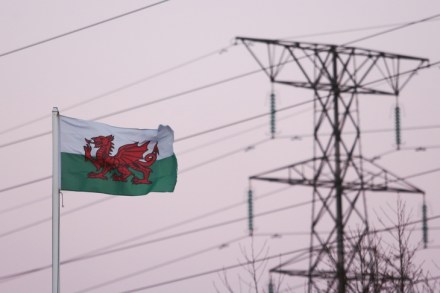
Industry will shrivel. Exports will dry up. The few remaining steel works will be closed down. And rugby will be banned. Okay, I made that last one up. But in a report today, the leaders of Welsh Labour and Plaid Cymru have laid out the case for keeping the principality in the single market - and warned that the economy will be virtually destroyed if they come out. 'Severing ties with the single market to control our borders would be an act of catastrophic self-harm,' according to the Welsh First Minister, Carwyn Jones. Like a kind of mini-me Nicola Sturgeon, it is possible to see what Jones, or certainly the Plaid leadership, might be playing it. They see membership of the single market as a way of driving a wedge between Cardiff and London, and winning more power for themselves.

What does President Trump do to Brexit?

From our UK edition

With Theresa May expected to head to Washington next week to see President Trump, I have a look at what the Trump presidency might mean for Brexit in my Sun column this morning. Despite his protectionist rhetoric, on full show again yesterday, Donald Trump is keen on a US / UK trade agreement. He has told people that he would like to get personally involved in negotiating the deal. I understand that his transition team has done more work on it than they have for any other agreement. Squaring the circle between Trump’s protectionist rhetoric and his enthusiasm for a US / UK deal isn’t as hard as it first looks. The UK is not one of the low wage economies that Trump rails against the US doing deals with.

High life | 19 January 2017

From our UK edition

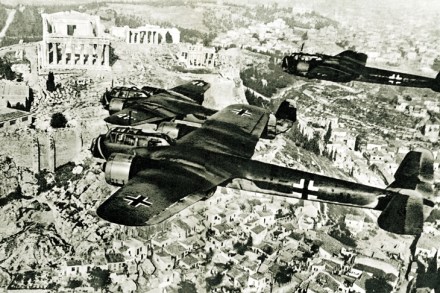
 Athens I can only ask sardonically: was it worth it? Executed after unspeakable torture without giving anything away — and for what? Fat, avaricious and very rich Davos Man? Or those ignorant, self-indulgent, cowardly little twerps who demand ‘safe spaces in universities’? Was it worth dying for the crooks of Brussels and the Angela Merkels of this world? Poor, heroic and stoic Kostas Perrikos, whose statue stands on Gladstone Street in Athens, died a hero, and for what? Let’s begin with heroes. They are very different from peacocks. They don’t strut or take selfies, and they are mostly sotto voce. They don’t create whirlwinds and are a PR huckster’s nightmare.

Letters | 19 January 2017

From our UK edition

Particle of faith Sir: Fraser Nelson draws our attention to the most worrying aspect of economists getting it wrong, which is their reluctance to recognise it (‘Don’t ask the experts’, 14 January). Some economists, seduced by sophisticated mathematical models, aspire to the status of, say, particle physicists, who can tell us they have found something called the Higgs boson. The fact that we tend to believe the particle physicists despite being more familiar with prices, jobs and buying and selling than with quantum equations comes down to physicists having a long track record of heeding the biologist E.O. Wilson’s advice: ‘Keep in mind that new ideas are commonplace, and almost always wrong.

Doing Brexit right

From our UK edition

From the start of the European Union referendum campaign, competing visions of Brexit have been advocated. To Nigel Farage, the case for leaving the European Union was all about what we did not like (the diktats, the immigration, etc). This played into the caricature cleverly presented by the Remain campaign: the shaking fist of Little England, a country that had had enough of foreigners and the tolerance that the European project represented. Then came the vision put to Britain by the Vote Leave campaign, articulated by Michael Gove and Boris Johnson. It was of a globally minded Britain, fed up with the EU’s parochialism. A country itching to go out and into the world. Theresa May has now firmly endorsed the Boris Johnson vision.

Diary – 19 January 2017

From our UK edition

Donald Trump was gushing about one European leader in his Times interview this week. But it was the wrong one. The President-elect told me that he was delighted that he’d been congratulated on his election by the ‘very fine gentleman’ who was the ‘head of the European Union’. ‘Mr Juncker?’ I ventured. ‘Ah, yes,’ he replied. Inaccurately as it turns out. For the European president who’d rung to congratulate the American president-elect was not the European Commission president, Jean-Claude Juncker, but the European Council president Donald Tusk. Many of my colleagues will, I’m sure, regard Mr Trump’s error as proof of the folly of electing an unschooled barbarian to the White House.

Ireland will have the hardest Brexit of all

From our UK edition

Irish eyes aren’t smiling - when it comes to Brexit. As one who hails from the Emerald Isle, I’ve taken plenty of 'schtick' from Irish diplomats, relatives and pundits after publicly voting to leave. For the Republic of Ireland, European Union membership carries deep political significance. Joining in 1973, along with the UK but on equal terms, was hugely symbolic. A country then less than 30 years old was finally able to represent itself on the world stage. It is this escape from British dominance, more than Brussels-funded motorways, that makes EU membership central to modern Ireland’s identity.

May has taken back control

From our UK edition

‘No negotiation without notification’ has been the EU’s mantra since 24 June last year. Its leaders have been determined that there’ll be no talks before Britain has formally submitted its Article 50 letter, starting the two-year countdown to this country leaving the union. Even now, after Theresa May has set out her Brexit plans with a decent amount of detail, the EU is sticking to this line. Why? Because it wants Britain to be negotiating against the clock. Despite this, there have been informal conversations over the past six months that have helped forge the Brexit strategy that May set out on Tuesday.

A renewed special relationship

From our UK edition

Freddy Gray, Paul Wood and Kate Andrews discuss Trump's arrival at the White House:   As president, Barack Obama was too cool for the special relationship. The romantic bond between the United States and Great Britain, which always makes Churchill fans go all soggy-eyed, left him cold. Obama was more interested in globalism, ‘pivoting’ to Asia and the European Union. Donald J. Trump is a very different creature. The new US President seems to cherish Great Britain, whereas the EU annoys him. Brexit is beautiful, he believes — and the EU is falling apart. Trump may or may not know the name of the British Prime Minister but, as he told Michael Gove this week, he is determined to strike a free trade agreement with Britain ‘very quickly’.

Theresa May prepares to play tough

From our UK edition

Theresa May’s Lancaster House speech sought to answer the question: does the Government have a plan for Brexit? Open Europe’s judgement is that she succeeded. And she also started to set out a wider vision for the UK’s relationship with the EU, linking it both to Britain’s place in the world, and to her own domestic vision – for the sort of country 'we want to be'. At first sight the Prime Minister’s 12-point plan for a global Britain seems to be a masterclass in common sense. We welcome her clarity on various points, including that – inevitably – both Houses of Parliament will vote on the UK’s final deal with the EU.  Open Europe was pleased by her position on free trade and immigration which appeared sensible and constructive.

May’s aim: take back control of the Brexit negotiation

From our UK edition

Listen to Isabel Hardman, Fraser Nelson and James Forsyth reviewing Theresa May's speech: Theresa May’s speech today was striking for how much it took off the negotiating table. Britain is, she said, leaving the single market. She isn’t going to spend anytime seeing if free movement - but only for those with a job - might be somehow compatible with single-market membership. She was also clear that the UK is quitting the EU’s common external tariff and commercial policy.  Why is May doing this? Well, staying in the single market with no say over the rules is, obviously, not a sustainable position—you couldn’t regulate the City of London by just cutting and pasting in EU rules.

Theresa May’s Brexit speech – ten main points

From our UK edition

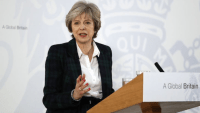
'A Global Britain' promised the slogan behind Theresa May as she delivered her big Brexit speech. It was robust and well-judged, very much in the tone of The Spectator's leading article endorsing Brexit – she even used the same 'Out, and into the world' language we put on our cover. The referendum, she said, was 'a vote to restore, as we see it, our parliamentary democracy, national self-determination and to and become even more global and internationalist in action and in spirit.' She spoke so persuasively about the case for Brexit that you almost forgot that she campaigned (or, at least, voted) against it. But after a decent period of reflection, her conversion to Brexistism is now complete.

Trump has given Merkel a new lease of life

From our UK edition

Donald Trump’s Times interview has been a big story in Britain, but the President Elect’s parallel interview with Bild Zeitung (Europe’s largest circulation newspaper) has made an even bigger splash in Germany. Why so? Because Trump’s comments about Germany were a lot more pointed – and specific - than the pro-Brexit platitudes he tossed to Michael Gove. Trump’s remarks about Merkel’s ‘catastrophic mistake’ of ‘letting all these illegals [sic] into the country’ hardly came as a surprise. After all, when Merkel won Time Magazine’s Person of the Year, Trump tweeted that ‘they picked the person who is ruining Germany.