Eu

It’s no surprise that many Brexiteers are feeling anxious

From our UK edition

Although I started it, I apologise for prolonging an intercolumnar argument. Matthew Parris (4 February) is surely right that many Brexiteers in past months have been showing signs of anxiety. He attributes this to being ‘secretly, usually unconsciously, terrified that they’ve done the wrong thing’. This may be part of it — it would be a strange person, after making such a momentous decision, who felt no qualms — but I don’t think it is the chief explanation. Our real fear is that, having come so far, we might be cheated of what we thought we had achieved.

Why the Lords won’t block Brexit

From our UK edition

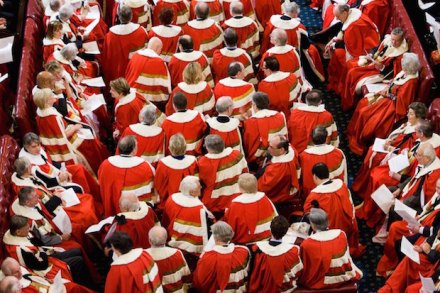
The government has no majority in the House of Lords and a majority of peers were pro-Remain. But despite this, the Article 50 Bill will get through the Lords I argue in The Sun this morning. Why, because the reason that we still have an unelected chamber in the 21st century is that the House of Lords has a strong self-preservation instinct: it knows its limits. If the Lords were to try and block something that had been backed in a referendum and had passed the Commons with a majority of 372, then it would be endangering its very existence. Indeed, I understand that the Labour front bench have already made clear through the usual channels that they won’t try and block the bill. There will, of course, be attempts to amend it.

What the papers say: Would the Lords dare block Brexit?

From our UK edition

Theresa May’s Brexit timetable is on track after MPs overwhelming backed the Government’s Article 50 bill in the Commons last night. Not everyone is happy with the role that Parliament has played so far in holding ministers’ feet to the fire over Brexit though. In its editorial this morning, the Guardian says MPs failed their first test: ‘Too many MPs genuflected’ to the referendum outcome - a result which the paper describes as one of the worst political decisions in the UK since the second world war. It seems as though the referendum took away Parliament’s power - and not even the ‘heroic efforts’ of Gina Miller in winning her case in the Supreme Court have helped get it back - the paper says. So what next?

A choice of revolutions

From our UK edition

Is France on the brink of a political revolution? Already, four established candidates for the presidency — two former presidents and two former prime ministers — have backed out or been rejected by the voters, and another, François Fillon, is on the ropes. The campaign is being taken over by outsiders, principally the Front National’s Marine Le Pen and a youthful former banker, Emmanuel Macron, while the Socialists have chosen an eccentric radical, Benoît Hamon. Should we welcome a shake-up in the cradle of European revolutions? What kind of shake-up might it be — socialist (the least likely), liberal with Macron or nationalist with Le Pen? Or can the outsiders still be beaten by an electoral system designed to keep them out of power?

The House of Commons votes for Brexit

From our UK edition

The drink will be flowing in the government whips’ office tonight. For the Brexit Bill has passed through the Commons unamended and with an absolutely thumping majority at third reading of 372. This means that a clean bill will go to the House of Lords. This will strengthen the government’s hand there as peers will be more reluctant to make changes to a clean bill and one that has passed the Commons with such a large majority. Despite all the talk of knife-edge votes, the government’s majorities tonight were pretty comfortable—30 or above on all the amendments.

Will Theresa May’s Article 50 plan emerge unscathed from its final Commons test today?

From our UK edition

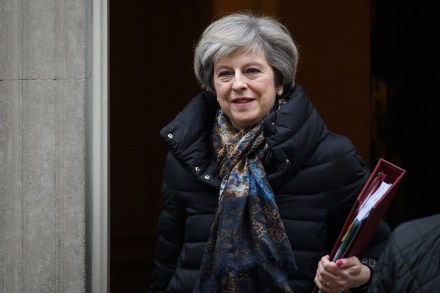
After two days of testing Commons debates, Theresa May’s Brexit timetable remains on track. Yesterday’s ‘concession’ - or non-concession, depending on how you look at it - by ministers did enough to limit the extent of the Tory rebellion (only seven Conservative MPs went against the Government, despite earlier reports that as many as 20 backbenchers were considering doing so). This meant the Government's Article 50 bill emerged unscathed. Of course all that could change this afternoon. Today’s debate will be the last opportunity for MPs hoping to tinker with the bill which will kick start Brexit. In the spirit of this week’s mammoth sessions, it’ll be another long debate, starting at 1.30pm, with a final vote expected at around 8.30pm.

What should we make of the Government’s ‘Deal or no Deal’ Brexit vote offer?

From our UK edition

Given Theresa May’s largely meaningless ‘Brexit means Brexit’ refrain, any new pronouncement on Britain’s departure from the EU is treated like gold dust. But Keir Starmer fell into the trap of thinking Brexit minister David Jones' opening remarks today had offered up a bigger morsel than they actually had. Jones confirmed, as Theresa May has already made clear, that Parliament will vote on the Brexit deal. He said, too, that the vote would cover the future trading relationship between Britain and the EU, which had not previously been known. And the Commons was also told some more details on the timing of the vote, which will come, Jones confirmed, before the European Parliament gets its say on the final Brexit plan.

Will there be fireworks on day two of the Brexit bill debate?

From our UK edition

The Government’s Article 50 bill emerged unscathed from yesterday’s first committee stage. Today won’t be so easy. As Isabel Hardman pointed out in her coverage of last night’s session, the real fireworks are expected this afternoon. The session will kick off at 1.30pm and end at around 8.30pm - giving seven hours for MPs to work their way through a series of amendments. Whether these pass or not will be the difference between Theresa May meeting or breaking her self-imposed deadline of triggering Article 50 by April Fools Day. The list of amendments which will be voted on tonight is - like yesterday’s order paper - a long one.

Tonight’s Brexit debate: What happens and when

From our UK edition

Now that the Supreme Court has ruled that Parliament must have its say on Brexit, it seems MPs are determined to make the most of it. After last week’s mammoth debate, today’s session on amendments to the Government’s White Paper will drag on until the early hours of tomorrow morning. It’s expected to finish up at around 1am – keeping Brexit aficionados, as well as MPs from all sides and the Government busy. But what will they be discussing? Here's the Spectator's guide to tonight's Brexit session: After Theresa May’s Commons statement on the European Council meeting, tonight’s Commons session will essentially split into two parts. The first, expected to last from 4.

Why don’t the EU’s pensioners in the Lords have to declare their interest?

From our UK edition

‘A Bill to confer power on the prime minister to notify, under Article 50(2)…’. When it comes to the House of Lords, some of those trying to amend or delay the bill will be paid pensioners of the European Commission. Peers are obliged to declare any interest that ‘might be thought by a reasonable member of the public’ to influence the way they discharge their parliamentary duties — unless it is an EU pension. In 2007, a Lords subcommittee said that because their contracts oblige them to support the EU, an EC pensioner who made ‘intemperate criticism of the commission’ would have contravened their obligations under the Treaty of Rome ‘and therefore could in theory damage his pension’.

Don’t bet on Trump putting a stop to the hounding of British banks

From our UK edition

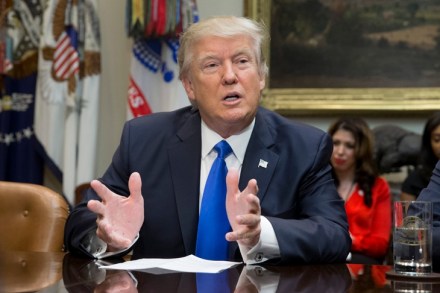
President Donald Trump is demolishing his predecessor’s legacy as fast as he can sign executive orders, but one thing for which the Obama administration will be remembered is its zest for imposing fines on UK and European banks. In a flurry of Department of Justice activity ahead of the transfer of power, Deutsche Bank agreed to pay $7.2 billion and Credit Suisse $5.3 billion for misleading investors in mortgage-backed securities before 2008, while Deutsche also copped a $630 million penalty (from UK as well as US regulators) for alleged money-laundering on behalf of Russian clients. Meanwhile, Royal Bank of Scotland set aside another $3.8 billion, making a total provision of $8.

Theresa May’s Trump card fails to impress EU leaders

From our UK edition

The last time Theresa May met with EU leaders en masse, she was caught on camera being shunned by her European counterparts. At today's Malta EU summit, the Prime Minister managed to avoid any lonesome moments. On the walkabout she was seen with Angela Merkel, but then a planned bilateral meeting between the two was cancelled on the grounds that they discussed all they need to discuss. The Prime Minister struggled when it came to selling her new friend President Trump to the 27 EU leaders. Asked if May could act as a 'bridge' between the EU and Trump’s administration, Francois Hollande rebuffed the suggestion: 'It is not about asking one particular country, be it the UK or any other, to represent Europe in its relationship with the United States.

Farewell Fillon. Can ‘establishment’ candidates ever win anywhere again?

From our UK edition

It’s hard not to feel for François Fillon, the French presidential hopeful whose career is now imploding. He looked destined for the Élysée Palace — until Le Canard Enchainé, the French equivalent of Private Eye, broke the story about him paying his British wife too much to pretend to be his assistant. Sensible,  small c conservative, Catholic France had fallen for him, and he was regarded as the perfect moderate alternative to Marine Le Pen. It’s true he had been called ‘Thatcherite’, which is quite poisonous in France, but he could have survived that. With this scandal, which seems small beer by French standards, the wolves are out to get him.

What the papers say: Brexit ‘lift off’

From our UK edition

The period of ‘phoney Brexit’ is over, says the Daily Telegraph in its editorial this morning. After MPs overwhelming backed the Government on the triggering of Article 50 in last night's historic vote, one thing is now clear: ‘there is no way back’. It’s obvious, the Telegraph says, that whatever happens next, the process is not going to be easy. Sir Ivan Rogers told a Commons committee yesterday that the Brexit negotiations will be the biggest undertaken since the Second World War - and possibly the biggest ever; he’s right, says the Telegraph.

What the papers say: Parliament’s ‘marathon of Brexit whingeing’

From our UK edition

MPs will finally vote tonight on the triggering of Article 50, and for wavering Parliamentarians, the Sun has some advice. It says that yesterday’s debate was a ‘marathon of Brexit whingeing’ which saw MPs recycle ‘reheated Project Fear doom-mongering’. Instead, they should listen to their colleague Tory MP Julian Lewis, whose contribution consisted of just nine words: 'The people have decided. I’m going to vote accordingly'. ‘That is now all it boils down to,’ the Sun says. The Daily Telegraph is more optimistic about Parliament’s contribution to the Brexit debate.

The SNP now want a ‘semi-detached’ Scotland. Could it work?

From our UK edition

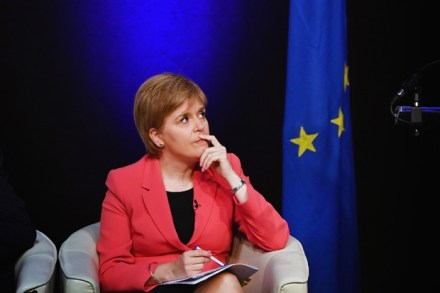
The SNP appears to be on the verge of changing one of its core beliefs – full membership of the European Union. Senior party figures have revealed, in a piece in the Times today, that there is a desire in the higher echelons of the SNP to ditch this long-standing tenet of party policy. Instead, they want the party to adopt a Norway-style model. This would see an independent Scotland outside the EU but inside the single market, after Brexit. Scotland could then join the EU at a later date, if it wished to do so but it would not immediately join the back of the queue for EU membership, as has always been assumed. It would be a policy earthquake for the party to ditch something like EU membership that has been central to its message since the 1980s.

A US / UK free trade deal is the big prize for Theresa May

From our UK edition

Theresa May’s team will be basking this morning in the write-ups of her successful visit to Washington. As I say in The Sun this morning, the big prize for her is a US / UK free trade deal. Government ministers think that, given the political will on both sides, the deal could be negotiated in just eight months. There is also confidence in Whitehall that the US will be prepared to grant an exemption for public services which would ‘protect’ the NHS. This should do much to reduce the intensity of the opposition to the deal. Trump’s protectionist rhetoric is often cited as a reason why a US / UK deal won’t happen, or will be very limited.

Theresa May is on a sticky wicket over EU nationals living in the UK

From our UK edition

On Thursday afternoon, huge numbers of ministerial Range Rovers swept into Parliament after government whips got whiff of an SNP plot to mess with the government's Brexit plans. Believing the SNP were planning to call for a last-minute vote on next week's business involving the Brexit bill, Tory MPs came back to make up the numbers. In the end, the ambush failed to materialise but the incident is a sign of the tactics to come now that Brexit has entered its parliamentary phase. The government bill, which contains just two clauses and is 137 words long, states that its aim is to 'confer power on the prime minister to notify, under article 50(2) of the treaty on European Union, the United Kingdom’s intention to withdraw from the EU'.

High life | 26 January 2017

From our UK edition

 Gstaad The snows came tumbling down just as the camel-drivers headed back to the Gulf. In fact, they never saw the white outdoor stuff. And a good thing it was, too. The outdoor stuff makes everything look so pretty that the glitzy types might have been tempted to return. God forbid. Let them stick to the indoor white stuff. The problem with Gstaad is the local council. They remind me of the EU: they’re intransigent, short-sighted and stick to a losing game. In Brussels they keep passing more and more laws and regulations. In Gstaad, they keep putting up their prices and building more and more apartments. As a gentleman with a close association to The Spectator told me, ‘My son doesn’t come here because there are no young women around.

Trading places | 26 January 2017

From our UK edition

After any other US election it would cause little comment that the new president had chosen the British Prime Minister for his first meeting with a foreign leader. Yet this time, Theresa May’s trip to Washington feels quite a coup. She has fallen out of favour with her fellow EU leaders, sent home from December’s summit in Brussels without any supper as they tried to portray her as internationally isolated. Yet here she is being invited to the White House, lured with the promise of a trade deal. How long ago it seems that Barack Obama was threatening to send Britain to the ‘back of the queue’ if the country voted for Brexit.