Eu

Full text: Boris Johnson’s Brexit deal speech

From our UK edition

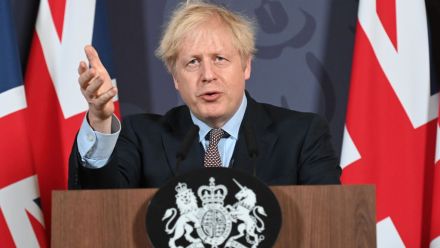
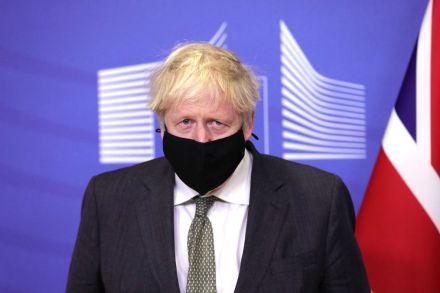
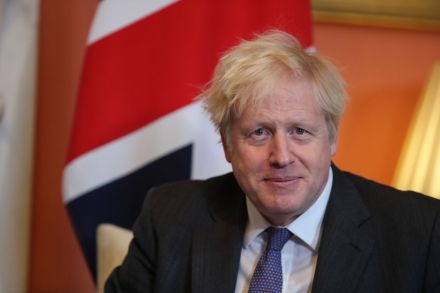
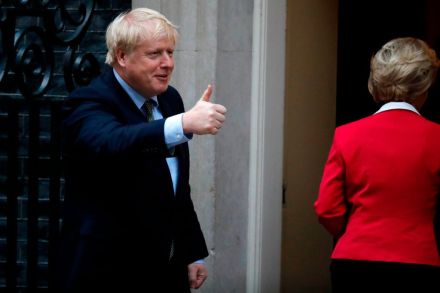
It is four and a half years since the British people voted to take back control of their money, their borders, their laws, and their waters and to leave the European Union. And earlier this year we fulfilled that promise and we left on Jan 31 with that oven-ready deal. Since that time we have been getting on with our agenda: enacting the points based immigration system that you voted for and that will come into force on Jan 1 – and doing free trade deals with 58 countries around the world and preparing the new relationship with the EU. And there have been plenty of people who have told us that the challenges of the Covid pandemic have made this work impossible and that we should extend the transition period and incur yet more delay.

Britain has won the biggest Brexit prize of all

From our UK edition

In the end, the fish were only of symbolic importance. Neither does it matter that much what happens to Scottish seed potatoes, no matter how much of a fuss Nicola Sturgeon kicks up. Farming, tariffs and quotas are of relatively little importance given that the exchange rate will simply adjust to compensate for any changes that are made. As the UK and the EU finally agree a trade deal, there was one victory that really mattered: regulatory divergence. And on that the UK appears to have secured a victory.

At last: we have a Brexit deal

From our UK edition

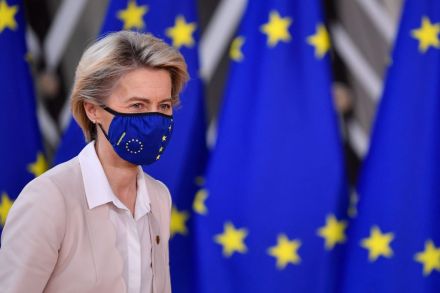
Boris Johnson and Ursula von der Leyen have both confirmed that we have a deal: one with zero tariffs, zero quotas. The details are not yet published, but several details are now being reported. What follows is a summary of those reports and rumours: we should soon have 2,000 pages of chapter and verse. The upshot: it’s Brexit. No single market, no free movement, no role for the European Court of Justice, no quotas, no tariffs. At least in goods: there won’t be much in the deal for the services sector (plus ça change) but more on co-operation over terrorism, security and preserving the cross-border energy market. From the looks of it, the UK has moved on fish in return for fewer EU ‘level playing field’ regulations.

Most-read 2020: Why didn’t the EU punish Germany when it broke international law?

From our UK edition

We're closing 2020 by republishing our ten most-read articles of the year. Here's No. 8: Steven Barrett on Germany and international law Boris Johnson's proposal to break international law 'in a specific and limited way' has sparked uproar. But do you remember when the UK broke the Geneva Convention? Oh. Well we did. The government-ratified Geneva Convention on the Sea came into effect in Britain on 10 September 1964. From then the UK was bound forever by the treaty and bound by international law. On 25 September 1964, we were not. No explanation was given. No explanation was asked.

The case Brexiteers should make for Brexit

From our UK edition

Why are Brexiteers rubbish at making the economic case for Brexit? On a whole range of things from three pin plugs to driving on the left, the UK is so often the odd man out in Europe. So why shouldn’t Britain be better off making its own laws and regulations, instead of making do, as we have done for the last 50 years, with trying to fit our sprawling messy economic life into a one-size-fits-all framework cooked up in Brussels kitchens over too much midnight oil? We have heard a lot of talk recently about the Single Market being a British invention, a way of exporting the Thatcher revolution to our nearest neighbours. That much is true.

Fishing is now the sole major obstacle to a Brexit deal

From our UK edition

Ursula von der Leyen and Boris Johnson spoke this evening to try and give the negotiations a shove. The statement that the Commission president has released after their call makes clear that fishing is now the biggest obstacle to a deal. She says ‘big differences remain to be bridged, particularly on fisheries. Bridging them will be very challenging’. The Number 10 statement is more downbeat. In a clear attempt to pile on pressure, it declares that ‘Time was very short and it now looked very likely that agreement would not be reached unless the EU position changed substantially.

Will Macron start an EU Covid chain reaction?

From our UK edition

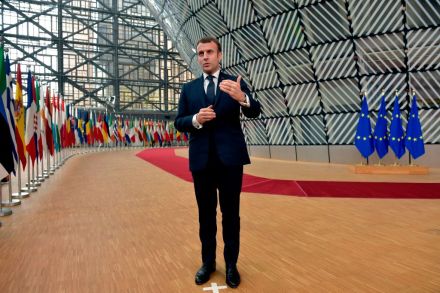
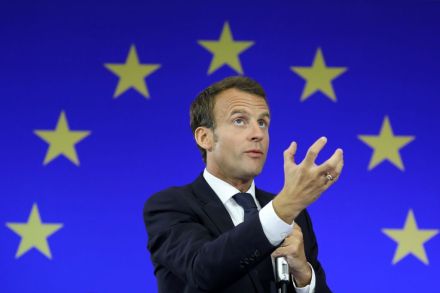
The Elysée palace has just confirmed that French President Emmanuel Macron has tested positive for Covid-19, after developing symptoms this week. In a statement, the palace said the President had been tested ‘as soon as the first symptoms appeared’ and will now be self-isolating for the next seven days. It’s not yet clear how badly Macron has been affected by the disease, nor when he was infected. One can only wish him the best of health in the coming days.

Why Britain chose Brexit

From our UK edition

None of us will easily forget the emotional response to the Leave vote in 2016, the national and international lamentation and the angry reproaches and insults, heaped on the majority: they were ignorant losers, white, old, xenophobic and stupid, ‘gammon’ who would be better dead or disfranchised. But leave aside the arrogance and snobbery; more fundamental was the basic ignorance of Europe shown by these zealous Europhiles. They mistook Brexit for a British, or English, aberration. In fact, it was the manifestation of a pan-European disillusionment with the ‘European project’. Popular support for that project peaked 40 years ago, and has been in decline ever since. The French only just voted for the Maastricht Treaty even in 1992, the heyday of integration.

Was the EU ever going to offer Britain a good deal?

From our UK edition

The announcement that Brexit negotiations are set to continue will no doubt alarm Brexiteers who fear compromise, sell-out and fudge. In fairness to Brussels however, they set out their stall early on and stuck to the script. The EU is unwilling – as they see it – to let Britain have its cake and eat it, by having large access to the EU’s market while not being a member or leaving the club and not ‘paying a price’. This might explain what could otherwise be seen as an unduly recalcitrant attitude. It also explains why any deal which the EU agrees to is likely to be on its terms. The level playing field has proved a major source of disagreement.

Emmanuel Macron’s great Brexit gamble

From our UK edition

There is an intriguing pattern in our relationship with European integration. A Frenchman vetoed our attempt to join. A Frenchman threatens to veto our attempt to leave – or at least to leave with an agreement. General de Gaulle said we were too remote from Europe to join. Emmanuel Macron says we are too close to Europe to leave. I think de Gaulle got it right. I hope Macron doesn’t turn out to be right too, so that we end up stuck half in and half out, neither ‘at the heart of Europe’ nor ‘global Britain’. How individuals and nations react to the project of European federalism is determined not just by their calculation of what’s in it for them (though this is clearly paramount for some) but also by their notions of history.

Enforcing new fisheries policy isn’t ‘gunboat diplomacy’

From our UK edition

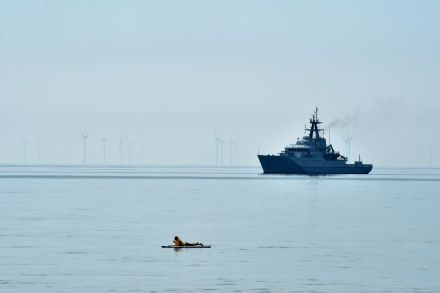
No, the Channel isn’t going to erupt into naval warfare, and neither is the Prime Minister engaging in ‘gunboat diplomacy’ by deploying Royal Naval vessels to keep French fishing boats out of UK waters in the event of Brexit transitional arrangements ending on 31 December with no trade deal. Yet that seems to be the view of Tobias Ellwood the Conservative chairman of the Defence Select Committee, who protested to the Today programme this morning: ‘This isn't Elizabethan times anymore, this is global Britain - we need to be raising the bar much higher than this.’ Actually – although it may be news to Mr Ellwood, even in his role holding the government to account over defence matters – it is not really a new deployment at all.

Why Boris Johnson can’t sign the current Brexit deal

From our UK edition

The negotiations are still underway in Brussels. But both the UK and the EU are now talking far more openly about no deal. The EU published its contingencies plans earlier and Boris Johnson has just met with the Cabinet and released a clip saying he has told them to ‘get on and make those preparations’ for leaving without a trade deal. Johnson’s argument is that he can’t sign the deal that is currently on the table because of the EU’s demands on the level playing field and fish. He complained that ‘whatever new laws they brought in we would have to follow or else face punishment, sanctions, tariffs or whatever.’ This is the problem of the so-called ratchet clause.

Does the EU understand what sovereignty really means?

From our UK edition

The UK never tried to have our constitution written in one big session. We made it up by responding to each crisis when it happened. Brexit is just the latest. The remaining sticking points on a deal are fish and something called the level playing field. Fish is very interesting, I assume, but it is politics, not law. So, as a lawyer who chooses not to speak on politics (some do), fish is none of my business. But the Level Playing Field (LPF) – which is a legal problem – is. It is the elephant in the room. And yet the EU's response to this issue is deeply unhelpful. Rightly or wrongly, the public voted for Brexit. Brexit is about sovereignty and sovereignty is a legal question.

The deal-or-no-deal debate is different this time

From our UK edition

When a deadline is missed for Brexit negotiations, it is tempting to think there will be another chance to keep talks going. Last week, the UK and the EU agreed that things needed to be wrapped up by Sunday night or Monday afternoon at the latest. The thinking was that if a deal was not done by then, the return of the Internal Market Bill to the Commons would scupper negotiations. But Monday afternoon passed with no agreement. The two sides now admit that the only real deadline is the end of the transition period on 31 December. The talks are currently in a state of suspended animation. After nine months, the sticking points are the same three issues: the so-called level playing field, fish and governance. Boris Johnson and Ursula von der Leyen each think the other wants a deal.

We should not accept Brexit in name only

From our UK edition

Given the seemingly highly technical nature of the current negotiations, members of the public who have normal lives to lead might be forgiven for thinking that the same issues are still being debated after more than four years. They might be forgiven for thinking this as much of the media, including the BBC, are happy simply to parrot the official line coming from Brussels: that this is just about compromise, both sides making necessary adjustments, and the EU simply acting in a normal and rational way. Rational it may be. Normal it is not. The EU is being rational in ruthlessly pursuing its own interests. But it is entirely abnormal to try to impose on the UK restraints that are incompatible with political autonomy.

Can Boris’s dash to Brussels secure a Brexit deal?

From our UK edition

The upshot of Boris Johnson and Ursula von der Leyen’s conversation this evening is that the pair will meet in Brussels in the ‘coming days’ to see if they can resolve the remaining ‘significant differences’ on the level playing field, governance and fish. Presumably this meeting will take place before the European Council on Thursday. Johnson and von der Leyen are being left with a lot to resolve in their summit. This isn’t going to be simply about finding a compromise on fish but on sorting the three issues that have bedevilled the negotiations from the start.

Only France would try to blow up the Brexit talks

From our UK edition

That France was the country to throw a grenade threatening to blow up the UK-EU trade talks just as they were about to pass the finish line, does not come as a surprise to seasoned euro-watchers. No other EU member would so brazenly promote its own domestic self-interest at the cost to other EU members such as Germany and Ireland. To the British it has echoes of de Gaulle saying ‘non’, when vetoing the UK’s first attempts to join the Common Market. Many of the EU’s problems and (in my view) the ultimate reason Brexit happened, is down to a fundamental cause that is little remarked on in the UK.

It’s time for Boris to walk away from Brexit talks

From our UK edition

Lorries will be backed up across Kent. The shops will run short of essential goods. Travel plans will be disrupted, and factories will start to close as British goods are shut out of their main export markets. As the UK comes to the end of its transitional deal with the EU, and as talks on a trade agreement appear to have reached an impasse, there will be plenty of high-stakes brinkmanship, and pressure on the government to give some ground on fishing and regulation to avoid the potential chaos of no deal. And yet in truth, if Boris Johnson caves into the EU’s demands at the last moment, the voters will punish him — and they will be right to do so. Right now, it is anyone’s guess whether a trade deal can be done at the last moment between the EU and the UK.

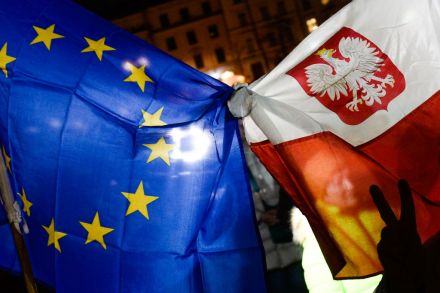
How Poland is reinventing Euroscepticism after Brexit

From our UK edition

With Britain leaving the EU, Brussels is adopting a new assertiveness – but Poland and Hungary are fighting back. The two countries are plotting a strategy of vetoing the EU's latest budget because of a mechanism attached to it allowing the bloc to withhold money if a country falls short of its standards. Poland and Hungary fear that this measure could leave them vulnerable if Brussels doesn't like their domestic legislation. But this drama is about more than just money – it also shows the direction Euroscepticism is heading in after Brexit. Without Britain's influence, Euroscepticism is now beginning to take on a new form – more cultural, and less economic.

The Visegrád bloc are threatening to tear apart the EU

From our UK edition

The bad boys of Europe are at it again. The EU has been attempting to tie budget funds to members states’ adherence to the rule of law. This has been rejected by Poland and Hungary, leading to the latest in a long line of conflicts between Brussels and the conservative Central European countries. But looking at the issue in a wider regional context, it becomes clear that this is not just another diplomatic spat, but part of a wider trend. The liberalism of the EU is now facing a serious ideological opposition from the entire ‘Visegrád Four’ bloc of Hungary, Poland, the Czech Republic, and Slovakia. The latest dispute over the rule of law mechanism could have been seen coming.