Etymology

Coinage

From our UK edition

‘How many words will you use today, first used by Thomas Browne in the 17th century?’ asked a trailer on Twitter for Radio 4’s In Our Time. A tweeter called Adam B replied that, of the examples given, ambidextrous, carnivorous and medical could all be found before Browne. He added: ‘I love Browne, will be listening.’ So do I, and I enjoyed the programme. But I agree that it is no use looking in the Oxford English Dictionary and concluding that words first cited from any author were coined by him. In the dictionary, 4,156 quotations are taken from Browne, 60 per cent from Pseudodoxia Epidemica (1646), his longest book and I think the most fun. Of these, 771 provide the first evidence of a word and 1,575 the first evidence of a particular meaning.

Artichoke

From our UK edition

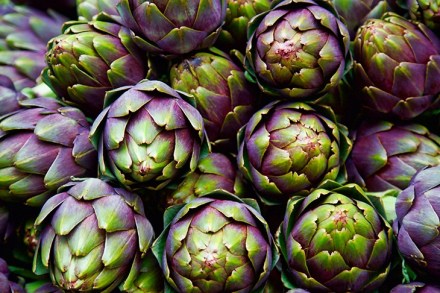
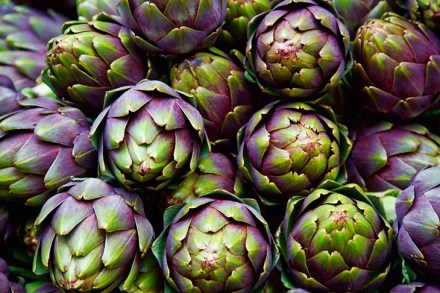
My husband has been growling: ‘You cross-legged hartichoak.’ He tries it on obstructive pedestrians hypnotised by their mobile phones. He thus hopes, optimistically, to utter insults while avoiding any ism that could get him into trouble. This imprecation hartichoak he took from the mouth of Young Tom Strowd, a Norfolk man, in The Blind-Beggar of Bednal Green, a play from 1600 by John Day (a Norfolk man) and Henry Chettle (in and out of debtors’ prison). The artichoke jokes went down so well that two sequels were performed, though their text, sadly or not, does not survive. Artichoke displays a modest degree of folk etymology. It came into English in the 16th century from words already obscure in their derivation.

Men in suits

From our UK edition

After he invented the term young fogey (in The Spectator in 1984), the much lamented journalist Alan Watkins coined the term men in suits. Of course other people before him had used the phrases young fogey and men in suits as nonce formations. Watkins identified both as what has since been denominated ‘a thing’. By his own account, even before Margaret Thatcher had been dislodged by them in 1990, the men in suits (identified as a group by the definite article) had been transformed into the men in grey suits. This, he observed, was inaccurate: ‘The typical Conservative grandee tends to wear a dark blue or black suit, with chalk- or pin-stripes, what may be called a White’s Club suit.

Book

From our UK edition

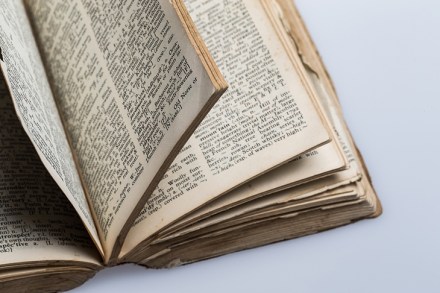
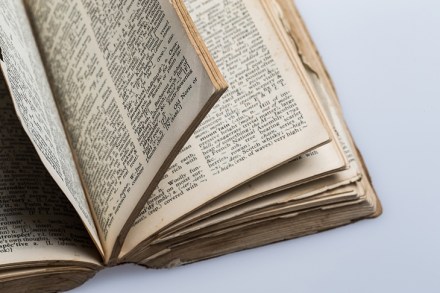
‘Is it like a packet of fags?’ asked my husband, less annoyingly than usual, but still in some confusion. I had been telling him why a book was like a sarcophagus, which I admit has the ring of a Victorian riddle. It has long been accepted that book shares the same derivation as beech. I used to be reminded of that by Beech’s bookshop in Salisbury, now no more. After all, the Latin liber, ‘book’, came from a word for a tree’s inner bark, just as codex (earlier caudex), ‘wooden tablet’ or ‘book’ in Latin, came from a word for ‘tree trunk’. People made letters or runes on wood or bark.

Bolection

From our UK edition

A pleasant menagerie of words grazes in the field of architectural mouldings (the projecting or incised bands that serve useful and aesthetic purposes): gadroon, astragal, larmier and rabbet, but none is chunkier or more mysterious than bolection. Bolection mouldings cover joints, especially between surfaces of different levels, such as round the panels of a door. Such three-dimensional things are hard to describe clearly in words. No one knows the origin of bolection and even its proper form is uncertain: balection, belection, bilection, bolexion. It sounds like the Liberal Democrat attitude to Brexit. Gadroon derives from the name of a round convex fold sewn into a piece of textile, found as goderon in 14th-century French.

Fungible

From our UK edition

‘No darling,’ I said, ‘nothing to do with mushrooms.’ My husband had responded to my exclaiming ‘What does she think that means?’ on hearing Theresa May use the word fungible. This rare word now crops up in discussion of Brexit, perhaps caught from lawyers and business types. They seem to think it means ‘porous, malleable, flexible, convertible’. Dominic Grieve told the Commons last month that he’d prefer ‘a longer and fungible extension’ to the Article 50 process. Stephen Doughty spoke of a ‘flextension, fungible extension or whatever’. Jo Johnson said on another day that he wanted train tickets to be ‘fungible between operators’.

Lapwing | 2 May 2019

From our UK edition

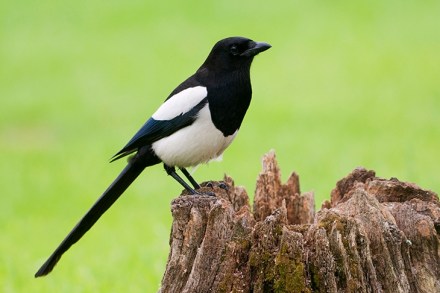
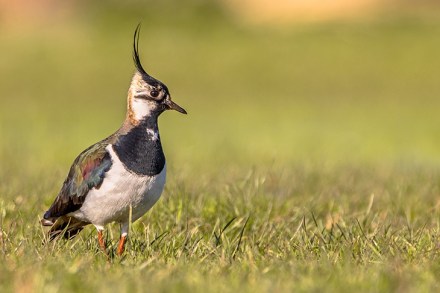
Some birds seem inherently comical. I can’t help being amused by the duck taking its name from its habit of ducking. In English it has enjoyed this name for some time — a thousand years or so. Before that it was called ened, a word related to the Latin anas, anatem. Similarly, the swift is so called because it is swift. That name seems to go back fewer than 400 years, and I’m not sure what it was called before that. Swallow, perhaps, since it has something in common with it. But there are some false friends among the feathered tribes. The lapwing was itself friendless last week, when Natural England stopped farmers shooting its predators. Its alternative name, peewit, comes from its cry, and it is also known as the peeweep, peesweep or tewhit.

Haggis

From our UK edition

Someone on The Kitchen Cabinet remarked that sambusa, as samosa is known in Somalia, came from Arabic. Perhaps it does, for the Hindi samosa, which we have borrowed for the fried triangles, comes from Persian sambose. Loan words weave in and out of the routes of trade and cultural conquest between the Near East and the East Indies. Far more mysterious is haggis. Before the 18th century, this dish was not regarded as particularly Scottish. Thomas Hobbes did not think it ridiculous to use it in a translation of the Odyssey: ‘Antinous a haggas brought, fill’d up / With fat and blood’, to be enjoyed with bread and wine. But where did haggis come from? The Oxford English Dictionary stoutly declares: ‘Derivation unknown.

Epic

From our UK edition

Spoiler alert: in Henry Fielding’s play Tom Thumb, the hero is swallowed by a cow ‘of larger than the usual size’. Before this tragic end comes a scene between Princess Huncamunca and Lord Grizzle, who declares: ‘Oh, Huncamunca, Huncamunca, oh! / Thy pouting Breasts, like Kettle-Drums of Brass, / Beat everlasting loud Alarms of Joy.’ At this the Haymarket Theatre roared, for Fielding was parodying a line widely mocked two months earlier, in February 1730, during the ten-day run of the tragedy Sophonisba by James Thomson, where Masinissa (King of Numidia) exclaims: ‘Oh! Sophonisba, Sophonisba, oh!’ It might not sound worth mocking now, but in 1730 theatre-goers, had to bear quite a lot of cod classicism.

Shame on you

From our UK edition

In 1663, just before Samuel Pepys visited the stables of the elegant Thomas Povey, where he found the walls were covered with Dutch tiles, like his own fireplaces, he was worrying about Navy pay. People who were owed money by the Navy had to apply for it at a goldsmith’s shop, where they would have to forgo 15 or 20 per cent to secure it. Pepys called this ‘a most horrid shame’. Pepys also used the phrase horrid shame about a case of mistreatment of a watchman by the Lord Chief Justice, and of the King climbing over the garden wall of Somerset House to visit the Duchess of Richmond. It was what we might call a scandal.

Interrogate

From our UK edition

My husband sat in his usual chair, interrogating the contents of his whisky glass with his old, tired nose. In 20 years’ time that sentence may seem normal. To me it seems at best whimsical, perhaps arch. There’s a lot of interrogating at the moment, quite apart from the traditional kind by unpleasant policemen. Jay Rayner, in the Observer, said that he saw some people in a restaurant interrogate their plates. In the Guardian someone suggested we should ‘interrogate the things that make us want to drink too much’. In the Guardian again someone else declared: ‘It’s important to challenge and interrogate sexist beauty ideals, of course.’ Of course.

Illeism

From our UK edition

Someone has been putting about reports that Sajid Javid, the Home Secretary, refers to himself in the third person as ‘the Sajid’ or ‘the Saj’. This habit has a long history. Xenophon entered his own Anabasis 2,400 years ago with the words: ‘There was in that host a certain man, an Athenian, Xenophon.’ Caesar played the same game, as Shakespeare must have noticed at grammar school, later making him die with his own name on his lips: ‘Then fall, Caesar.’ In The Lord of the Rings, Tom Bombadil (who, like Henry James, but in rather a different way, is the Master) does it: ‘Tom was here before the river and the trees; Tom remembers the first raindrop.

Granular

From our UK edition

‘Just two sugars,’ said my husband as I passed him his tea. He is cutting down. I doubt he would have a better understanding of the effects of sugar on him, or the effects of his character on his sugar intake, if he took a granular view of the granulated sugar he shovels into his cup. I can see why granular has become such a successful vogue term, since it opposes the unspecific or even creatively ambiguous language that plagues us, from Human Resources departments and, ahem, Brexit, that cursed sinkhole of sense. The hope is to tether inflated dirigibles of verbiage to fixed points. Normally now, granular simply means ‘detailed’. ‘Maps on smartphones still have big gaps,’ someone wrote in the Times.

Gammon

From our UK edition

In the annual dictionary wars to nominate words of the year, in the hope of attracting publicity, Collins has made single-use its first choice for 2018. But of more interest is its second choice: gammon. It is used by Twitter trolls and other supporters of Momentum to signify ‘a male, middle-aged and white, with reactionary views, especially one who supports Brexit’. His face resembles ham. Collins said that in Nicholas Nickleby (1838), ‘Dickens used the word gammon to describe a large, self-satisfied, middle-aged man who professes an extreme patriotism in large part to disguise his essential selfishness and corruption’. I’m afraid the people at the dictionary have completely misunderstood what they read.

Seven and six

From our UK edition

Someone on the wireless was talking about marrying in the Liberty of Newgate before the Marriage Act of 1753, and she said it would cost ‘Seven shillings, sixpence’. It made me realise that knowing of pounds, shillings and pence is not to recapture the language of the world in which the units were used. I would have said (not in 1753, granted): ‘Seven shillings and sixpence’, or simply ‘Seven and six’. If there were pounds before the shillings, I’d have said: ‘Nineteen pounds, seven and six’. I’ve just looked up Mr Micawber’s famous dictum in David Copperfield, and this is how he put it: ‘Annual income twenty pounds, annual expenditure nineteen nineteen and six, result happiness.

On the wagon

From our UK edition

Radio 3 tries to distract listeners from music by posing little quizzes and hearing quirky details of history from a ‘time traveller’. Last Wednesday we were assured that on the wagon, meaning ‘abstaining from alcohol’, derived somehow from condemned prisoners being taken from Newgate to Tyburn and having a last drink at St Giles’s. This is definitely not the origin of the phrase. That reliable philologist Michael Quinion gave the true version in his blog World Wide Words in 1998. The journey to Tyburn was a staple of popular miscellanies such as Hone’s Year Book and Chambers Book of Days, and earlier of fictionalised histories like Jonathan Wild (1725) and The Beggar’s Opera (1728).

Istanbul Polis

From our UK edition

My husband, who fancies himself as something of a classicist, was delighted to see the Turkish investigators of the Khashoggi horror in Istanbul with ‘Polis’ on their T-shirts. Against the odds of Ottoman rule and the Turkish cultural initiatives of Ataturk, this Greek word for a city society, polis, still designates the guardians of civic peace. The borrowed word was all the more striking as the police were acting in Istanbul, the name of which derived from the Greek phrase eis ten polin, to the city. Where are you going? Eis ten polin, which by the 16th century had become Istanbul. A Turkish folk etymology derives the name from Islam bol, ‘plenty of Islam’, but this has no more basis than the popular version of asparagus in English being sparrow-grass.

Womxn

From our UK edition

When I say that it has given comfort to my husband, you can judge how foolish the Wellcome Institute was in using the word womxn and then apologising for it. It had wanted to be more inclusive with a workshop on ‘how womxn can challenge existing archives’. There, womxn serves as a plural, but it can be a singular too. Wellcome did not invent the word. The BBC quoted Dr Clara Bradbury-Rance, of King’s College London, saying that it ‘stems from a longstanding objection to the word woman as it comes from man’. Dr Bradbury-Rance is not a philologist, preferring the ‘intersectional study of sexuality and gender in film and popular culture’. Some people assume that woman is derived from womb-man. This is not the case.

Empathy

From our UK edition

My husband is enjoying Do No Harm, the arresting memoir of the brain surgeon Henry Marsh who was on Desert Island Discs last week. Having confronted the terrible consequences of human error in this alarming speciality, the author mentions the bathetic absurdity of an NHS training presentation by ‘a young man with a background in catering telling me I should develop empathy, keep focused and stay calm’. Empathy is the great thing, it seems. Without it you’re a psychopath; with it you’re the carer we all want. Yet the word has only been in use in English since 1909. Was everybody a pitiless solipsist before that? Empathy translates the German Einfühlung (‘in-feeling’), a term used by Robert Vischer in 1873 with regard to aesthetics.

Optics

From our UK edition

If you’d like to buy a copy of Newton’s Opticks: or, A Treatise of the Reflexions, Refractions, Inflexions and Colours of Light, published in 1704, there’s one on AbeBooks for £131,245.03, plus £12 P&P. Do people just click on such items, I wonder, and wait for the book to plop through the letterbox a few days later? Anyway, there is a meaning of optics now being heavily used that Newton wouldn’t have understood. It is not the first time this has happened, because, for pub-going folk, optics are the measures attached to upside-down bottle of spirits to dispense reliably mean doses. Optic in this sense began as a trade name and has been in use only since 1926. Newton did not invent the term optics for the science of visible light.