Etymology

The strange language of this year

From our UK edition

‘Forget coronavirus,’ said my husband, ‘the word of the year is strange.’ The strange thing is he’s right. This wasn’t determined by online polls or fixed by dictionaries. It emerged spontaneously and distinctly when the lockdowns got going. About lockdown I am still not quite happy. The word seems a little extreme for the episodes so far. But friends kept mentioning these strange times. The word fitted in more than one sense. When politicians’ repetition of unprecedented had become tiresome, strange still applied in the sense of ‘unfamiliar; not known or experienced before’. It also described the feeling of life as ‘abnormal’. Both meanings have been present in English since Chaucer’s time.

Do civil servants need to be ‘robust’ or ‘resilient’?

From our UK edition

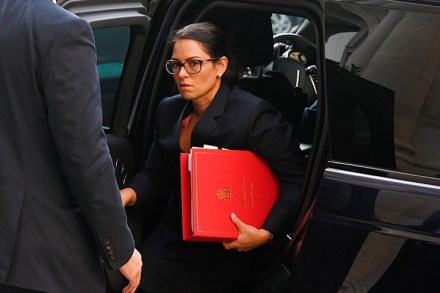
‘Why do they keep saying they need Brazilians?’ asked my husband, coming up for air from a hazy mixture of Radio 4 and whisky. ‘No, darling,’ I tried to explain, ‘not Brazilians. Resilience.’ They had been talking about civil servants sworn at by politicians, or at least being in the same room as swearing. Resilience seems the counterpart to robustness. Sir Alex Allan (who resigned after his report into the conduct of Priti Patel was not taken up wholeheartedly by Boris Johnson) had said that ‘senior civil servants should be expected to handle robust criticism but should not have to face behaviour that goes beyond that’.

The language of lounging around

From our UK edition

At the Austrian embassy in Naples, a German diplomatist asked the great beauty Madame de Ventadour if she had been in the Strada Nuova that morning. ‘What else have we to do with our mornings, we women?’ replied Madame de Ventadour. ‘Our life is a lounge from the cradle to the grave.’ How true. The observation comes in Bulwer Lytton’s novel Ernest Maltravers (1837). I was put in mind of lounging by remarks that Anne McElvoy made on the wireless about the use of video-conferencing and broadcasting allowing people to attend to their visible top half while wearing lounge pants below. I wasn’t too sure what lounge pants were. I don’t wear them and my husband certainly doesn’t.

The dark art of playing world-class Scrabble

From our UK edition

When the top players gathered in Torquay last year for the World Scrabble Tournament (this year’s contest should have been this week, but has been cancelled thanks to you-know-what), it was to use ‘words’ like these in their games: dzo, ch, foyned, ghi… Yep, that’s right; a whole lot of words that, let’s be frank about this, are not words. That’s why my spell-checker underlines them in red. The top players, you see, don’t win tournaments by being cleverer than the rest of us. They do it by memorising a long list of non-words so they can avoid the problems ordinary players encounter. With O I I I I U U on the rack, most of us would forfeit our turn while muttering something rude.

Is Billie Eilish really in shock over James Bond?

Billie Eilish, who recently won five Grammys, is also singing the theme song for the new Bond film. ‘James Bond is the coolest film franchise ever to exist,’ she said. ‘I’m still in shock.’ My husband tells me that the symptoms of shock include pale, clammy skin and bluish fingernails. Since Miss Eilish’s fingernails were painted green at January’s Grammy ceremony, it was not easy to tell. But a life-threatening drop in blood pressure was clearly not present. The phrase in shock is now used where we used to say shocked, or even overjoyed. Perhaps people have been watching too many medical dramas on Netflix. Shock, from the French choque, began as the word for a collision of armies.

in shock

What’s the difference between ‘gifting’ and ‘giving’?

From our UK edition

Boris Johnson, the Telegraph suggested last week, is understood to have a personal interest in rewilding, ‘recently gifting his father beavers to release on his own Exmoor estate’. I started at the word gifting like a horse shying at a carrier bag caught in the hedge. Why didn’t I like it? My first thought was that there was a perfectly good word, giving. My second was that gifting is an obtrusive case of verbing a noun. Thirdly, it seemed like an Americanism. Fourthly, it belongs to a kind of speech adopted by copywriters for luxury cruises and retirement homes. In 1996, Robert Burchfield in The New Fowler’s Modern English Usage said that gift as a verb was ‘best avoided’, as it had fallen out of favour with speakers of standard English.

Alas, ‘alas’ is losing its irony

From our UK edition

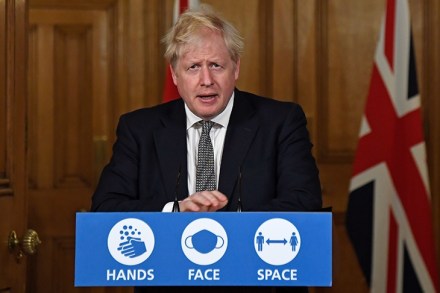
Boris Johnson looked unhappy, as well he might, standing at his indoor lectern last Saturday to announce the new lockdown: ‘In this country, alas, as across much of Europe, the virus is spreading.’ He said alas a couple more times during the conference. Normally such a word belongs to the sprinkling of slightly absurd phrases that garnish his speech like particularly curly parsley. But, Ichabod, the fun has departed. Alas, there is less and less irony in saying alas. The Prime Minister is doubtless aware of the classical origin of alas in lassitudo, Latin for weariness. Lassitude came into English in the 16th century. Francis Bacon, the Jacobean Lord Chancellor, not the masochistic painter, wrote: ‘Lassitude is remedied by bathing or anointing with oil and warm water.

The real problem with the Fatima advert

From our UK edition

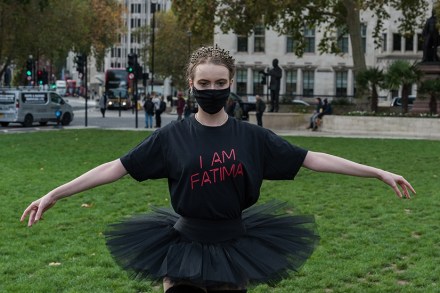
An advertisement from GCHQ provoked angry comment because it seemed to suggest that some ballet dancers would be better working with computers, or as it put it: ‘Fatima’s next job could be in cyber.’ The angry brigade said that ballet dancers should not have to give up their art. I suspect too an element of hatred of the state’s security apparatus. No doubt the advert gave the dancer the name ‘Fatima’ hoping to attract people of a Muslim background (Fatima being Mohammed’s daughter). The man who took the original photograph expressed outrage. The woman depicted, from Atlanta, Georgia, is called Desire’e Kelley, who apparently uses an apostrophe in her first name rather than the conventional acute accent.

The truth about Adrenochrome

From our UK edition

QAnon, the conspiracy theorist’s conspiracy theory, teaches that President Donald Trump is in secret warfare with a worldwide network of paedophiles. As an explanatory model it reminds me of the voices that Gilbert Pinfold hears in Evelyn Waugh’s novel bravely describing his own delusions brought on by too much chloral and crème de menthe. In the QAnon dark world, kidnapped children are, I think, made use of to produce a psychotropic drug and elixir of immortality called adrenochrome. They are no doubt tortured and killed in the process. QAnon did not invent adrenochrome. Aldous Huxley mentions it in The Doors of Perception (1954), which largely explores his experience of mescaline.

Are you guilty of ‘genteelism’?

From our UK edition

‘Everyone’s been very kind to my husband and I,’ said someone behind me in a (spaced) queue. That is the classic genteelism. We are taught when young not to say ‘Me and my friend went swimming’ and end up talking nonsense. We’d never say ‘very kind to I’, but the genteel yoking cannot be shaken off. I’ve been entertained by looking up ‘Genteelism’ in the first edition of Henry Fowler’s Modern English Usage (1926).

Let’s talk about sex: the brilliance of ‘bonk’

From our UK edition

I take it personally that a word I practically saw being born is now unrecognised by people almost old enough to be the Chancellor. I am in any case suspicious of the recent survey that found a good proportion of people aged 18 to 30 do not know the meaning of sozzled, cad, henceforth, swot or disco. Do these people live in silos? Some research company surveyed 2,000 young adults and fed the results to newspapers, which reported them last week, giving it publicity. Sozzled was unknown to 40 per cent of respondents and even disco to 17 per cent. But the one that shocked me was bonk. As I mentioned here a couple of years ago, the minting of the word in the late 1980s delighted Peregrine Worsthorne, once editor of the Sunday Telegraph, who died this week.

Ask Jeeves: who first came out with ‘What ho’?

From our UK edition

In the First Act of Othello, just as things are getting interesting, the audience hears someone calling from offstage: ‘What ho, what ho, what ho!’ It is not Bertie Wooster but a sailor with news about the Turks (or Ottomites, as they are sometimes referred to). Yet Bertie made ‘what ho’ his own. In Jeeves and the Unbidden Guest, Lord Pershore, known as Motty, has been billetted on Bertie, who goes to see how he is the morning, after returning spifflicated from a night out. He is sitting up in bed. ‘What ho!’ I said.‘What ho!’ said Motty.‘What ho! What ho!’‘What ho! What ho! What ho!After that it seemed rather difficult to go on with the conversation.

Where did ‘herd immunity’ come from?

From our UK edition

‘It was the pyres,’ said my husband. He meant the effect of television pictures of cattle, hooves silhouetted against the sky, burnt during the foot-and-mouth outbreak of 2001. It was eradicated by culling six million beasts, not by vaccination producing herd immunity. In Shropshire, stone memorials survive to the outbreak of rinderpest (like Covid-19 a viral disease) of 1865-67. One outbreak ‘swept 54 head off this farm’ near Market Drayton. ‘They died without remedy and here lie. “Shall we receive good from God and not evil?” Job 2:10.’ Nationally, 289,581 died. Britain had met the three big 18th-century cattle plagues by paying farmers to slaughter sick animals quickly, a policy pursued from 1714 by Dr Thomas Bates.

From Covid to football, the rise in ‘upticks’

From our UK edition

Political commentators love talking about the optics — the way something looks to voters. Just at the moment, though, everyone seems to be talking about upticks. Usually it is to do with local increases in coronavirus cases. But my husband, not above reading the sports pages, found that Juventus was wondering whether Cristiano Ronaldo had brought ‘a big enough uptick in their revenues’. It is an increase, then. But where does the figure of speech come from? Is it from a graph showing a blip like a V-shaped recovery, which resembles the sort of tick that goes in a box (for those with a tick-box mentality)? I think this idea is reinforced by that of sums ticking up like the meter in a taxi.

The hijacking of the Scots language

From our UK edition

A teenager in North Carolina has been revealed as the creator of a fifth or even a half of the 60,000 entries in the Scots Wikipedia. This online resource is like Wikipedia in English, except that it is in the Scottish tongue — not Gaelic, but the Lowland Scots dialect of English, a Germanic language. Robert Burns was familiar with it, but unfortunately the energetic Wikipedia compiler was not. Even his American English seems shaky. He has been at it since the age of 12. ‘The Roman Catholic Kirk is the lairgest Christian denomination in aw the warld,’ begins one entry. ‘Ane oot o ilka sax humans belangs this kirk. It is lead bi the Pape an it haes ower ae billion follaers.

What’s the difference between ‘reticent’ and ‘reluctant’?

From our UK edition

Anna Massey had no dramatic training before appearing on stage in 1955 aged 17 in The Reluctant Debutante by William Douglas-Home. She took the part to Broadway, but then in the film it was taken by poor Sandra Dee, who, if she was born in 1942, was still only 16 when it was released in 1958, the last year debutantes were presented at court. If it had been called The Reticent Debutante, the juvenile lead might have had fewer lines. I have noticed, with annoyance naturally, that reticent is now often used to mean ‘reluctant’. An article in the Telegraph about TikTok said that the businessman Zhang Yiming had been ‘reticent to give up control’. One can see how ambiguity crept in.

Why ‘The’ Queen should not be capitalised

From our UK edition

I complained mildly seven years ago that the Court Circular, the official source for the doings of the British monarchy, referred to the Queen as ‘The Queen’. It made her look like a work of fiction. The Royal Household is at it still, referring to ‘The Princess Royal’, ‘The Royal Navy’ and even ‘The Royal Arms of Canada’. The result looks like the late Betty Kenward’s ‘Jennifer’s Diary’ in Harpers & Queen: the triumph of deference over grammar. No one, I hope, would write ‘The Tower of London’, even though it is Her Majesty’s Royal Palace and Fortress of the Tower of London. By its nature, the definite article does not partake in the capitalisation of proper names.

Did Taylor Swift really ‘overthink’ her album release?

From our UK edition

Sometimes when I ask my stertorous husband in his armchair whether he is asleep, he replies with a start: ‘Just thinking.’ If so, he seems recently to have been overthinking. Overthinking is a pretty annoying word, often used by people not noted as great thinkers. Taylor Swift, the belle of West Reading, contrasts it with honest gut feeling. ‘Before this year I probably would’ve overthought when to release this music,’ she said when suddenly bringing out a new album to coincide with one due from Kanye West. ‘My gut is telling me that if you make something you love, you should just put it out into the world.’ That is not how I regard a cup of coffee, but people differ.

Why must we ‘live with’ coronavirus?

From our UK edition

T.S. Eliot adopted a method of criticism that I am not aware of any other writer using: he imagined what it would be like to live with the bust of a poet. A bust of Byron on one’s desk would be impossible, with ‘that pudgy face suggesting a tendency to corpulence, that weakly sensual mouth, that restless triviality of expression’. Sir Walter Scott presented a different prospect: ‘Were one a person who liked to have busts about, a bust of Scott would be something one could live with.’ These days we are urged by some to learn to live with the coronavirus. It’s not quite a bust of Byron, but nor is it a spouse or ‘partner’. Living with is a phrasal verb first applied, in the 17th century, to spouses.

Might ‘may’ kill ‘might’?

From our UK edition

‘I’m with the King,’ said my husband. The king in question was Kingsley Amis, whose choleric The King’s English was published posthumously in 1997. The joke in the title depended on knowing two things: that there was an earlier book on English usage of that name (by the brothers H.W. and F.G. Fowler, 1906) and that a nickname of Amis’s was the King. Among those who bought the book, more, I’d think, might have been aware of the former. The point on which my husband was with the King is this: ‘Not many people used to reading could fail to spot that something is wrong in the sentence “If Napoleon had been at his best on the day of Waterloo, the result of the battle may have been different”.