Ethiopia

Rebellion and repression: Oromay, by Baalu Girma, reviewed

From our UK edition

‘We don’t want a James Bond adventure here,’ warns a jumpy spymaster as he grapples with an anti-state conspiracy in Oromay. Among other strands, that’s precisely what this fabled Ethiopian novel of 1983 delivers. Which is remarkable, given that Baalu Girma’s semi-autobiographical thriller of rebellion and repression, love and war, has been translated from Amharic. The ancient Semitic tongue of Ethiopia served as that nation’s official language long before English came to rule at court, and in courts. Girma was both a journalist and a novelist, educated in the US and an editor of English-language magazines in Addis Ababa. He evidently relished the various genres adroitly mined in Oromay.
The endless fascination of volcanoes

From our UK edition

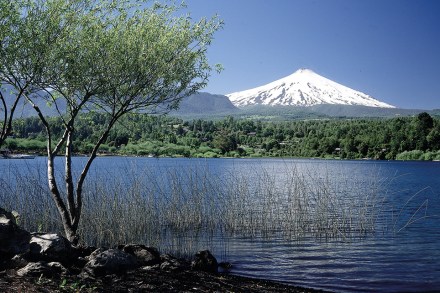
Volcanoes, volcanoes, volcanoes. You wait years for a good book or a film about volcanoes to come along and then they blow up all at once. In 2022, Sara Dosa’s incredible, unmissable – incroyable! incontournable! – documentary about the eccentric French filmmakers and volcanologists Katia and Maurice Krafft, Fire of Love, was nominated for an Oscar. It should have won. Then, last year, volcanology’s own Brian Cox, Clive Oppenheimer – professor of volcanology at the University of Cambridge and Werner Herzog’s companion and guide in his documentary film about volcanoes, Into the Inferno (2016) – published Mountains of Fire: The Secret Lives of Volcanoes. Now erupting on to the scene is Tamsin Mather with Adventures in Volcanoland.

Nixing BRICS: how to counter the China-led alliance

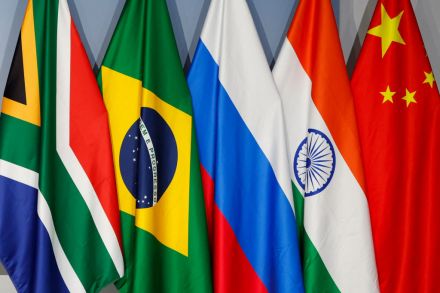
Americans are used to exercising influence through international entities such as NATO, the World Trade Organization or the World Bank. Each of these groups was set up with American leadership or at its instigation; all have been used to advance Washington’s vision of global liberal-democratic capitalism. No comparable international organization or collection of nations has been influential since the Soviet Union’s collapse. That may be changing. The so-called BRICS alliance (its founding countries were Brazil, Russia, India, China and South Africa) recently added new members Iran, Ethiopia, Egypt and the United Arab Emirates.

BRICS

Why don’t more tourists visit Ethiopia?

From our UK edition

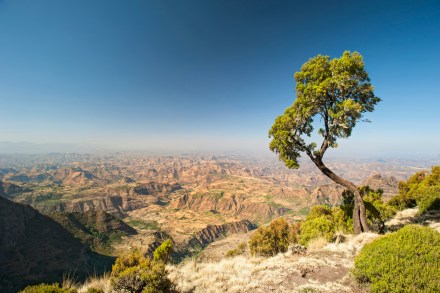
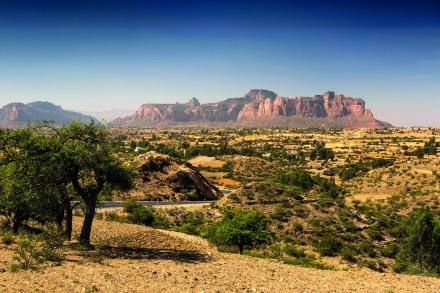
Standing on a cliff edge looking at where the Blue Nile is just a trickle, watched by a gelada baboon on a distant rock and staring over miles upon miles of some of the most beautiful countryside I’d ever seen, one thought struck me: why is there hardly anyone else here? Ethiopia is stunning to look at, once you get out of the capital, Addis Ababa. It offers history, culture, architecture, religion and everything in between. Yet when you tell anyone you’re going there the most common response is: ‘Really? Why?

The African exception to the population bust

Earlier this year, New York Times columnist Ross Douthat wrote a provocative piece making the case that there are two kinds of people in the world: “Those who believe the defining challenge of the twenty-first century will be climate change, and those who know it will be the birth dearth, the population bust, the old age of the world.” Douthat made this bold claim not just because he believes the population bust is the more important of the two challenges, but because, in his view, it is being comparatively neglected due to all the attention paid to irrepressible climate doomsayers.

african population

The sin of neutrality

From our UK edition

Yet again, millions of civilians across the Horn of Africa are starving. The world blames the crisis on drought and climate change, which nowadays is the way we excuse these countries for environmental mismanagement. But as ever, war is really the single greatest reason why people are killed year after year in this region. And while western countries pour billions of dollars of food aid into Ethiopia, Somalia and South Sudan, the weapons flooding those states originate mainly from Russia, China, Belarus – and Ukraine. In response to an article I recently wrote in The Spectator about why I think so few African governments condemn Russia’s invasion of Ukraine, I have had the usual deluge of ad hominem attacks so familiar to anybody who dares to criticise African governments.

Tough times for tenacious Tigray

Tigray, Ethiopia’s most northerly region, makes its presence felt all the way down in Addis Ababa, about 430 miles to the south. Even before the current fighting, the prettiest beggars in the rambunctious and strangely endearing Ethiopian capital tended to be the Tigrayan single mothers. They made that daunting journey to escape a rural existence that struck me, during my trips around Tigray, as not dissimilar to European life during the Middle Ages. When I lived in Ethiopia, I reported from all over Tigray on humanitarian projects, tensions with Eritrea and the influx of Eritrean refugees, even on a brave British expat who was trying to establish a milk farm.

tigray

The Nobel truth

From our UK edition

I suspect that there are no people in the world quite so right-on as the Nobel prize committee members. A bunch of affirmative-action hand-wringing Scandies, desperate to prove that they are woker than thou. This mindset brought the Nobel peace prize to Barack Obama before he had actually done anything, if you remember. He later brought peace to nowhere. The scarcely less risible award of the literature prize to Bob Dylan followed shortly after, presumably for lines such as: ‘Twas in another lifetime, one of toil and blood / When blackness was a virtue and the road was full of mud.’ Bob’s award reminded me of the BBC turning paroxysms in an effort to be ‘hip’ when Lou Reed shuffled off his mortal coil.

Thirty years ago, I saw the rebels take Addis Ababa

From our UK edition

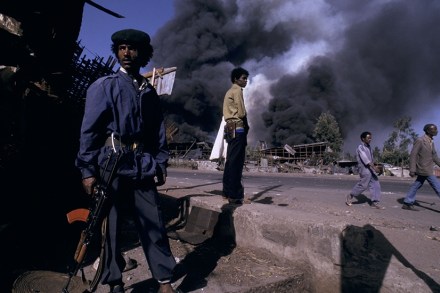
Kenya The evening before the assault on Addis Ababa, my guide Girmay and I ventured into a complex stuffed with bombs, bullets and missiles that must have been booby-trapped. A few minutes into taking photos, I heard detonations, and a bunker on the hill above us exploded. We dashed away as the rumbles and bangs behind us gathered in fury and then the earth burst in an eruption of fire, sending a mushroom cloud into the sky. As we ran, rockets and shells rained down on all sides, shrapnel and earth bursting in plumes. We took cover in a dry riverbed and I worked my way through a packet of cigarettes while the ground shook under the relentless explosions until dusk, when we raced madly across ploughed fields until we reached safety.

Black African lives should matter too

From our UK edition

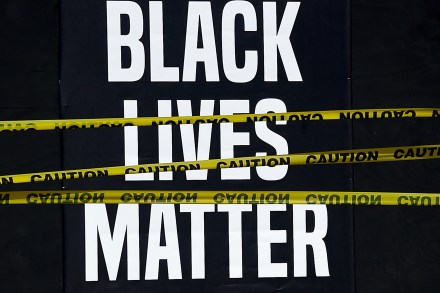
The treatment of black people, particularly by law enforcement, has become a principal point of protest in the western world. But little it said about the millions of black Africans mistreated by the ruthless security forces of authoritarian African regimes. If black lives matter regardless of where they are in the world, then it’s time to challenge the immensely privileged black African ruling elite that clings to power by persecuting its often-voiceless Black African citizens. The numbers tell the story. An estimated 5.4 million people or 8 per cent of the Democratic Republic of Congo’s population died in the 1997-2003 conflict at the hands of government security forces and non-state armed militia.

When a Nobel Peace Prize-winner goes to war

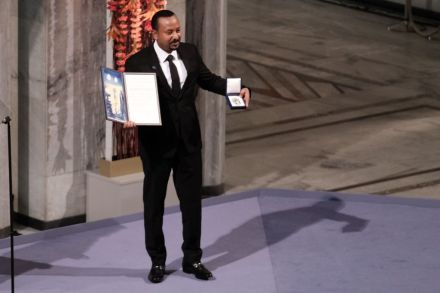
Maryam Dengelat is a church cut into the mountainside near Adigrat in Tigray, Ethiopia. Tigrayans are largely Orthodox Christians and according to local legend the church was built in the sixth century. In 2019, priests, aided by Italian mountaineers, ascended the mountain and held Mass in the church for the first time in 400 years. Elsewhere in 2019, the Ethiopian prime minister Abiy Ahmed won the Nobel Peace Prize for his work in ending the long conflict between Ethiopia and Eritrea. 'Blessed are the peacemakers,' said Ahmed, quoting scripture, 'For they shall be called the children of God.' Sadly, peace was short-lived. Instead of fighting one another the Ethiopians and Eritreans have been focused on someone else: the Tigray People’s Liberation Front (TPLF).

tigray

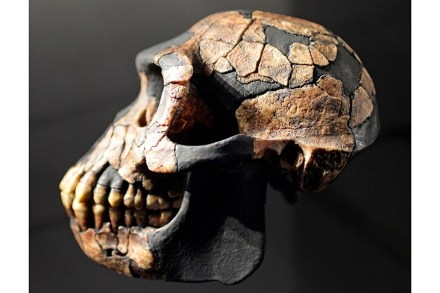
The roots of humanity remain obscure

From our UK edition

To comprehend ourselves and the future of humankind we have to understand where we came from. Unlike the approximately 350,000 known species of beetles on Earth, there is just one existing species of human. It is hard to imagine how our bodies and minds might have been constructed along different design principles or generated even a fraction of such diversity. With our growing ability to manipulate human genomes using gene editing, and the emergence of technologies that may enable human genomes to be rewritten in their entirety, the question of what we might become is no longer theoretical. Should humankind decide to redesign itself, the crapshoot of design by Darwinian evolution may become as redundant as taxi drivers in an age of driverless cars.

Things fall apart: Ethiopia’s terrifying descent into civil war

From our UK edition

The world’s first conflict triggered by Covid-19 exploded on 4 November in Ethiopia’s northern region of Tigray. Before your eyes glaze over at news of fresh African horrors — hundreds dead in battles and air strikes, ethnic massacres, civilians fleeing, charities calling for food aid — consider this frightening new reality. For the first time in modern history, wars and insecurity now ravage a continuous line of African states from Mauretania’s Atlantic shores to the Red Sea — a 6,000km Sahelian suicide belt of jihadis, state failure and starvation. Intervene too hard in this mess and you get David Cameron’s ill-conceived 2011 Libyan bombing raids. Gaddafi gets butchered in a storm drain, the arsenals are pillaged and weapons flood the Sahara.

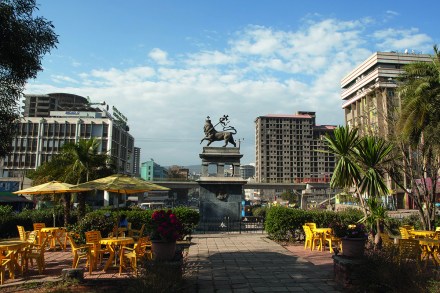
Addicted to Addis

This article is in The Spectator’s March 2020 US edition. Subscribe here. In the Entoto hills high above Addis Ababa, the lights of incoming Ethiopian Airlines planes are evenly spaced in the night sky. Behind me in an abandoned restaurant, the DJ cranks it up and the dance floor goes nuts. EDM (Electronic Dance Music), a style popularized at American festivals and raves, has landed in Ethiopia. I’ve been a dance music devotee since college. But when I first visited Ethiopia in 2000, I lost my heart to a different scene: mesinko-playing troubadours who mask political satire in witty innuendo, the hypnotic melodies of Ethio-jazz bands and the traditional shoulder-shaking of iskista dancers.

addis ababa ethiopia