Esther Rantzen

Jeffery Archer’s guide to interviewing Jeffery Archer

Just back in London from Israel, I give breakfast to Oleksandra Matviichuk. She, with her Centre for Civil Liberties, is the only Ukrainian ever to have won the Nobel Peace Prize. In Kyiv, now bombed day and night, the winter will soon set in and some of her friends, as last winter, will have to erect a tent inside their flats to preserve all possible warmth. ‘Cold becomes a factor in all your decisions,’ she says, including when to wash her lustrous long hair. Since Donald Trump began his ‘28-point peace plan’, Russian attacks have risen by nearly a third, with havoc wrought by jet drones which cannot be stopped now that American help is withheld.
TV has forgotten the little guy

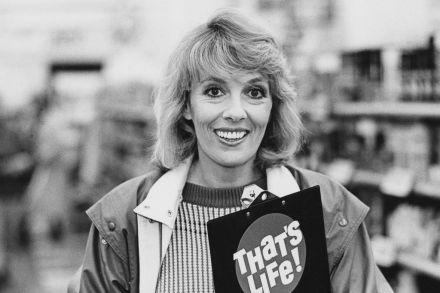
The late broadcaster and campaigner Esther Rantzen leaves behind a formidable legacy, from establishing Childline to fighting for better end-of-life care. But to many, Rantzen will always be associated with That’s Life!, the long-running magazine programme she hosted for 21 years and which remains the gold standard of the much-missed consumer-rights genre. We haven’t run out of scams, rip-offs or miserable customer-service experiences Regularly attracting audiences of up to 20 million, That’s Life! was a veritable smorgasbord of this, that and the other. Any given episode might feature phallic vegetables, saucy old ladies, performing pets and humorous typos, capped off with a heartrending piece about alpaca trafficking.

Disability is becoming the new normal

Before I became confined to a wheelchair two years ago after an operation for a spinal abscess, I’d never read a book about disability. More remarkably, considering the tiny amount of time it would have taken, I’d never read a newspaper article about it either. The only media stories about disabled people I’d bothered with concerned famous sufferers, such as Christopher Reeve and Robert Wyatt. I’d also followed with voyeuristic revulsion the 2021 story of Giles Coren celebrating the death of the young, working-class, disabled journalist Dawn Foster after she’d had the temerity to cross him. So there you go. My concern with disability was confined to where it overlapped with showbiz and media.