Espionage

A master of spy fiction to the end — John Le Carré’s Silverview reviewed

From our UK edition

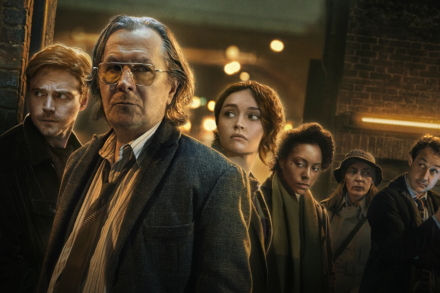
Literary estates work to preserve a writer’s reputation — and sometimes milk it too. The appearance of this novel by John le Carré less than a year after his death seems almost suspiciously opportune, but whatever the publishing expediency involved, it is a very fine finale. Julian Lawndsley is the 33-year-old owner of a bookshop in an East Anglian seaside town, having fled the City, where he has made both his fortune and his name asa canny trader. Any echoes of The Bookshop by Penelope Fitzgerald soon fade as we discover that Lawndsley knows virtually nothing about books and even less about the customers he sells them to — until Edward Avon, an exotic foreigner, enters his shop one evening.

Under deep suspicion in Beirut, Kim Philby still carried on regardless

From our UK edition

The story of the Cambridge spies has been served up so often that it has become stale — too detailed, too predictable, too firmly etched in Cold War monochrome. So it’s a good idea to seek another angle, through the warmer lens of a love affair involving its main protagonist Kim Philby and his wife Eleanor. It humanises the tale, particularly as it draws on a vivid and neglected personal source — The Spy I Loved— Eleanor’s own book centred on their romance in the Lebanese capital, Beirut. That was where Philby was despatched in 1956 to play out the penultimate act in a drama stretching back to the 1930s, when he and his fellow Cambridge students were recruited to spy for the Soviet Union.

The disappearing man: who was the real John Stonehouse?

From our UK edition

November 1974 was the month to disappear. On the 7th, Lord Lucan went missing, and a fortnight later John Stonehouse MP dis-appeared from a beach in Miami. Lucan was never found, so remains prominent in our national mythology. Nothing endures like a mystery. Stonehouse, on the other hand, was discovered in Melbourne six weeks later, living under an assumed name. His vanishing trick, so carefully rehearsed, had unravelled — partly due to Lucan, as it happened. Having been alerted to a suspicious Briton by a beady bank clerk, the Australian police thought he might be Lucan. Their first act after arresting their suspect was to lift his trouser leg to look for the missing earl’s telltale scar. Stonehouse had long had a tendency to vanish.

The FBI has lost the plot

Whom the gods would destroy, they first make ridiculous. Consider the Federal Bureau of Investigation. That once-respected institution has been busy wiping (or, more to the point, not wiping) egg off its face at least since the moist tenure of James ‘higher loyalty’ Comey. For those wondering why it is that Comey is cashing fat royalty checks instead of stamping out license plates at Club Fed, the answer is part of my story. There is the Elect, of whom James Comey numbers himself, and there are the Serfs, among whose number, Dear Reader, you probably belong. But I am getting ahead of myself. James Comey was plenty ridiculous, as were his jesters and factota, the love birds Lisa Page and Peter ‘Dracula’ Strzok, Andrew McCabe and the rest of that unlovely Brady Bunch.

FBI

The great betrayal of Ethel Rosenberg

From our UK edition

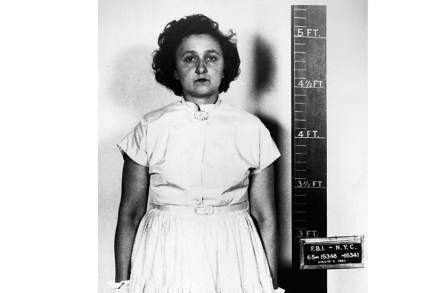
Ethel Rosenberg was an exceptional woman. Born with a painful curvature of the spine to a poor family of Jewish immigrants and a mother who never loved her, she was determined to make her life matter. A talented singer, she won a place at New York’s prestigious Schola Cantorum and performed at Carnegie Hall. Having found clerical work, she helped organise strike action and then won a court vindication. Seeing the rise of fascism, she came to embrace the concept of communism, and when war arrived she campaigned for America’s entry. Ethel’s exceptionalism did her no favours, however, in paranoid post-war America. Although she focused on her children, she was still far too close to her husband’s work.

Ron DeSantis targets ‘nefarious’ China

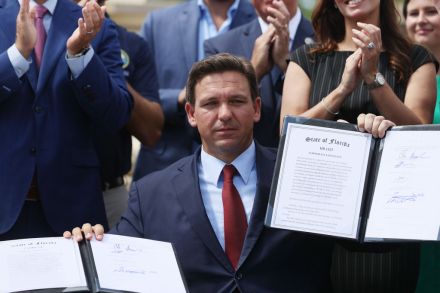
Florida governor Ron DeSantis signed two more pieces of major legislation on Monday, this time targeting Chinese Communist party influence in the United States. HB 1523 criminalizes 'trafficking in trade secrets', while HB 7017 aims to prevent foreign influence in America's higher education system. The latter implements strict vetting of foreign researchers to avoid espionage and requires state agencies to disclose certain donations from 'countries of concern', which consist of China, Cuba, Russia, North Korea, Iran, Syria, and Venezuela. 'There is no single entity that exercises a more pervasive, nefarious influence across a wide range of American industries and institutions than the Communist party of China,' DeSantis said during a signing event in Miami, Florida.

desantis

The first Cambridge spy: A Fine Madness, by Alan Judd, reviewed

From our UK edition

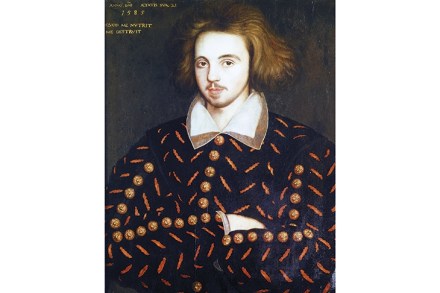
For his 15th novel, the espionage writer Alan Judd turns his hand to the mystery of Christopher Marlowe’s death. The result is never less than engrossing, with Judd putting the scanty known facts about the great playwright to ingenious use. The story is narrated from the King’s Bench prison by Thomas Phelipps 30 years after Marlowe’s fatal stabbing in a Deptford rooming-house brawl. Phelipps is good company, a master cryptographer and key employee of the spy-master Francis Walsingham, yet a self-proclaimed ‘simple man’ who yearns to marry and settle down. These contradictions help make him as fascinating as the mercurial Marlowe, who he’s sent to recruit at Cambridge. Phelipps immediately senses that Marlowe needs ‘protection from himself...

REVEALED: the Pentagon’s amazingly silly anti-Russia meme

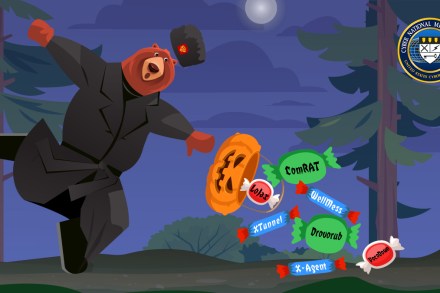
After 20 years, a peak of 100,000 troops and trillions spent, the American military was unable to defeat the Taliban or even stop them from running half of Afghanistan. But that isn’t the only war America has been losing. We’re also losing the Meme Wars. That’s the lesson from a truly ghastly discovery by the intrepid reporters at VICE, who obtained 23 pages of internal documents from the Pentagon about an anti-Russia meme it deployed last October. The meme (see above) in question was created by US Cyber Command’s Cyber National Mission Force, as part of its invisible war against Russian hackers. Their goal: expose the fact that Russia has hackers (gasp!) and make them look dumb in the process.

meme

The spies who cancel us

A regular column by an anonymous whistleblower operating deep within the heart of the Social Justice Movement. To protect their identity, they will go under the code-name ‘They/Them’. Wokeyleaks is a confidential news-leak organization for anyone who wishes to divulge classified information (and hilarious anecdotes) about woke culture without fear of getting canceled. Eat your heart out Edward Snowden — Wokeyleaks has a mole inside the British security establishment. It turns out that the people whose job it is to protect the UK are spending most of their time protecting employees from ‘harmful language’.

spies

CIA spies lose faith

From our UK edition

With its grim John le Carré atmosphere, communist Eastern Europe in the late 1980s was a melancholy, out-at-elbow place. The Estonian capital of Tallinn crawled with Russian money-changers (‘Comrade, we do deal?’). The television in my hotel room was detuned from capitalist Finnish to Soviet channels, but I was able to pick up Miami Vice from across the Gulf of Finland. Guests were not allowed to visit the 21st floor, which officially did not exist. The KGB apparently had an office up there where they monitored Helsinki radio waves and the hotel’s 60-odd bugged rooms. Perhaps it is no coincidence that the wallet-thin Minox camera had been invented in Tallinn (by one Walter Zapp, in 1936). It was a favourite with Cold War spooks.

Demystifying the world of espionage

From our UK edition

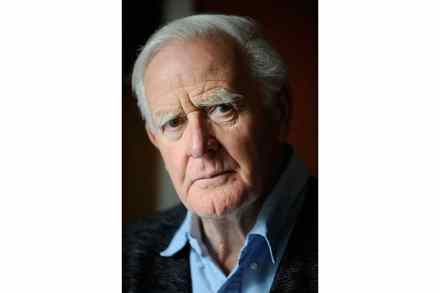
John le Carré once wrote sadly that he felt ‘shifty’ about his contribution to the glamorisation of the spying business. David Omand doesn’t deal in glamour. He was at the top of the Ministry of Defence and the Home Office, director of the code-braking Government Communications Headquarters, chairman of the Joint Intelligence Committee, and responsible for structuring the government’s current anti-terrorist organisation. He thinks and writes deeply about the intellectual and moral problems thrown up by a business that depends on stealing other people’s secrets. He knows what he is talking about. How Spies Think is engagingly readable, even though the arguments are complex.

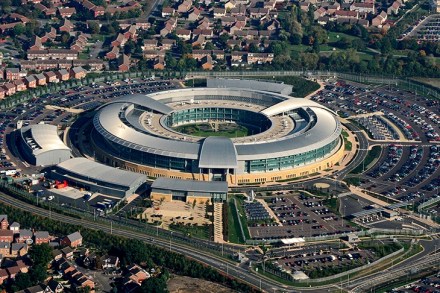
Behind the veil of secrecy: GCHQ emerges from the shadows

From our UK edition

Is it ever possible to truly see inside the heart of another? To divine hidden intentions and the darkest of thoughts? For a long time — before we all became sourly aware of our own computers spying on us like HAL 9000, and flashing ads for haemorrhoid ointments — this godlike omniscience was ascribed to the secret listeners at GCHQ. Above all other intelligence agencies it held a special place in the imaginations of urban paranoiacs. The organisation itself nurtured this sinister reputation by its insistence upon remaining deep in the shadows, even as its siblings MI5 and MI6 boldly came out. Not all that many years ago, simply publishing the initials GCHQ could invite grief.

The pram in the hall was one spy’s best friend

From our UK edition

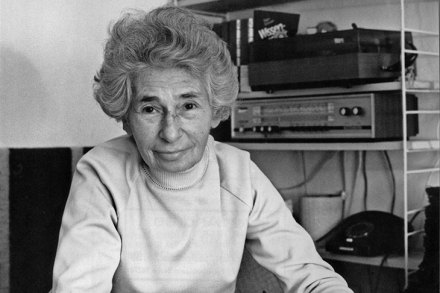
‘If you had visited the quaint English village of Great Rollright in 1945, you might have spotted a thin, dark-haired and unusually elegant woman... climbing on to her bicycle,’ Ben Macintyre opens his latest book, like the start of a gentle Ealing comedy. It will come as no surprise to his fans that the elegant Mrs Burton, Cotswolds housewife, baker of excellent cakes, mother of three and wife of a chap called Len who works in the local aluminium factory, is in fact Colonel Ursula Kuczynski of the Red Army, aka Agent Sonya, whose clandestine mission is to help the Soviets build the atomic bomb.

Office romance: I’m loving The Bureau

One of the many things I love about the horribly addictive French spy series The Bureau is that it never attempts to improve you with pious little homilies about how foreigners are just the same as us, with values just as worthy as our own, so they should be treated with the same amount of respect, for are we not all children of God? If The Bureau — about the DGSE, France’s equivalent of the CIA — had been made in the US, there would be a specially created nice, upstanding, Americanized Muslim character like the agent in The Looming Tower or the implausible black Muslim character in Jack Ryan.

bureau

The spy’s spy

Sitting beneath the pergola of the historic Roycroft Inn, J.R. Seeger looks the part of a successful thriller writer. He is wearing an immaculate white shirt, blue jeans and boat shoes, his blue-green eyes peering over a camouflage-style face mask. The western New York hotel, some 20 miles from the city of Buffalo and the Peace Bridge crossing into Canada, was a centerpiece of the American Arts and Crafts movement when it opened in 1905. It is also the setting for one of the most gripping scenes in Seeger’s debut novel, Mike 4, in which a Russian double agent tries to lure an American protégé into a life of treason. The rendezvous involves a splintered oak door, a Colt Python .

seeger

The great betrayer

From our UK edition

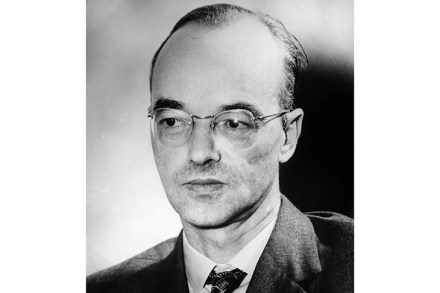
When Klaus Fuchs started passing atomic secrets to the KGB, he changed the course of world events. Forget about Philby and the Cambridge Five, that preening group of loudmouths that still dominate our national history of Soviet treachery. In his own quiet, devastating way, Fuchs proved more significant than all of them put together. A brilliant but unassuming German refugee who found sanctuary in Britain, Fuchs rose to become one of the leading theoretical physicists of the Allied nuclear bomb project. As Frank Close, himself an Oxford nuclear physicist, writes: ‘By 1946, Fuchs knew more about the construction of the atomic bomb and the conception of the hydrogen bomb than anyone in the UK and all but a handful in the world.

Has China infiltrated America’s universities?

As President Trump ponders restrictions on Chinese tech company Huawei, the FBI is warning American universities about espionage by Chinese researchers and academics. The FBI now advises research universities to track and observe Chinese students and faculty for signs of intellectual property theft. In the last year, the federal government has voided or re-evaluated the visas of 30 Chinese academics for this crime. In April, FBI Director Christopher Wray commented on China’s intelligence operation. China, Wray said, has 'pioneered a societal approach to stealing innovation any way it can, from a wide array of businesses, universities, and organizations'.

universities chinese

Trump’s bad Huawei deal with Xi

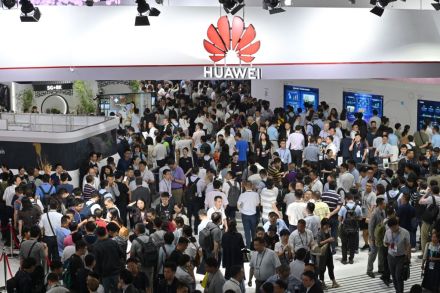
Trump’s decision to lift the ban on US companies doing business with Huawei, the Chinese telecommunications company, is a stunning defeat for him. It’s also a major reversal for the US intelligence community, which has been concerned for years about what it considers to be Huawei’s wholesale theft of American technology.Lifting of the ban reinstates Huawei at the leading edge of China’s global spying. It undercuts months of private attempts to encourage America's allies to join in what the US hoped would be something close to a worldwide ban. And, over the long term, it also threatens America’s strategic advantage as a leader in new technologies.

huawei

Is Barr really helping Trump by slowing the release of the Mueller report?

Poor Donald Trump. Even Mar-a-Lago may not provide much of a refuge from his cares now that it has been exposed as a nest of Chinese spies. Trump, who campaigned against Hillary Clinton for jeopardizing national security with her private email server, makes her look like a piker when it comes to keep state secrets. Come one, come all. Mar-a-Lago is open to the highest bidder with access to the president as the highest prize. And to think that Americans were once scandalized that Bill Clinton was renting out the Lincoln bedroom for campaign contributions. Trump’s pocketing the proceeds personally. For him it’s always and only about the bottom line.

US Attorney General William Barr

Sun, sea and spooks

From our UK edition

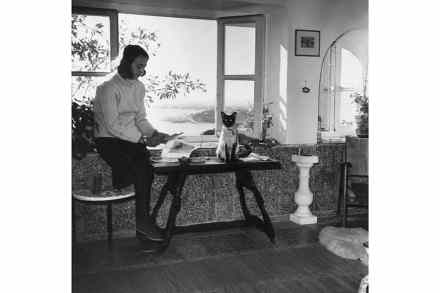
Cuba meant a lot to Graham Greene. Behind his writing desk in his flat in Antibes he had a painting by the Cuban artist René Portocarrero, presented to him by Fidel Castro, who had signed his name on the back, so that Greene didn’t know which way to hang it. Another prize possession was a tatty Penguin copy of Our Man in Havana, kept together by Sellotape, which the Russian cosmonaut Georgy Grechko had read in outer space, and in which, while circumnavigating our planet, Grechko had underlined the places in Havana that he had visited. ‘I’ve been reading it all my life, both on earth and in space,’ he wrote in his inscription when presenting the paperback to Greene in 1985. ‘I’ve learned it by heart.