Environment

Nature is healing

Ignoring the padlocked gate, my six-year-old son Nicholas and I climbed through a break in the metal fence and pushed into the mesh of undergrowth. This was the site of Ducker, the open-air swimming pool that once belonged to Harrow School in London. Here the young Winston Churchill romped (naked, since trunks were for prefects), as, in his own day, did my dad. When I arrived at Harrow in the 1980s, the pool — far bigger than Tooting Bec Lido, which is now the UK’s largest — had just been abandoned. It was covered with graffiti, the haunt of skateboarders. Returning in 2021, I looked for changes wrought by three decades of neglect. Google Maps showed a J-shaped artificial lake, 98ft by 492ft.
nature

The strange truth about Japan’s climate change target

From our UK edition

Japan has just raised its target for reducing carbon emissions from 26 per cent to 46 per cent (by 2030 from 2013 levels). But how was this figure arrived at, environment minister Shinjiro Koizumi was asked? Through a careful analysis of the threat and a realistic assessment of what could be achieved, taking all relevant factors into consideration? Well, er no, according to Koizumi, the number 46 just appeared to him in ‘silhouette’ in a sort of vision. Shinjiro Koizumi, son of former prime minister Junichiro Koizumi, made the comments in an interview with the TV station TBS last weekend. The interviewer, despite her face mask, was clearly stunned by the revelation that the country’s emission target did not appear to have any scientific basis.

Letters: The veiled elitism of social mobility

From our UK edition

Levelling up Sir: In making the case for social mobility, Lee Cain unwittingly endorses the classism he hopes to fight (‘Left behind’, 24 April). As the historian Christopher Lasch has argued, the canard of social mobility merely replaces ‘an aristocracy of wealth with an aristocracy of talent’. Far from being egalitarian, the concept is inherently elitist: it implies moving up, out or away from a class, town or profession condemned as undesirable. And by paying lip service to ‘meritocracy’ it becomes a self-serving justification for elites’ power and privilege — if they had the ‘ability and ambition’ to rise to the top, it must only be indolent dullards who are left behind.

Letters: The true cost of the green dream

From our UK edition

Zero possibility Sir: Katy Balls is right to conclude that the government is ‘not being upfront’ on the bill for net zero and who will pay (‘The green games’, 17 April). As the Covid pandemic has revealed, expectations need managing, and without an urgent agreement on a consistent set of policy guidelines which embrace fairness, energy security and affordability, the whole net-zero project could backfire. Whichever way you approach the problem, the costs of transitioning to net zero by 2050 are massive, with estimates ranging from £50 billion p.a. (Climate Change Committee) to £100 billion p.a. (National Grid), and the burden falling most heavily on those who cannot afford it.

The green games: the Prime Minister’s big plan to rebrand Britain

From our UK edition

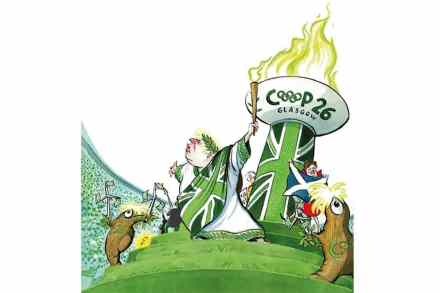
It is not unusual for governments to focus on a big event after a period of crisis. In 1951, the Festival of Britain was meant to rejuvenate the country after years of post-war austerity and rationing. The 2012 London Olympics, presided over by Mayor Boris Johnson, supposedly announced the UK’s recovery from recession with a £27 million opening ceremony. But games are intended to be boosterish. A 12-day summit on the environment is not an obvious crowd pleaser. Yet this government is determined to turn COP26, the United Nations Climate Change Conference scheduled to be held in Glasgow in the first two weeks of November, into a great event to put Britain on the map.

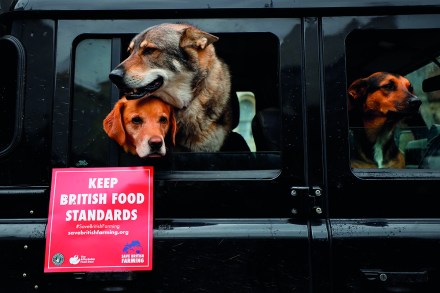
Britain’s battle to prevent ‘green protectionism’

From our UK edition

The UK’s commitment to get to net zero by 2050 is going to require some difficult political choices. But it will be impossible to maintain public support for the policy if people think that climate action at home is simply leading to work moving abroad and no great reduction in the amount of carbon emitted globally. This, as I say in the Times today, is going to become an increasingly big problem in years to come. There is mounting concern about it at the top of government. If you can’t address ‘carbon leakage’, to use the rather grim technical term, you can’t deal with climate change. For Britain, the situation represents both a threat and an opportunity.

The elitism lurking at the heart of the green movement

From our UK edition

There’s a movement in the UK that is trying to block the building of essential new council housing. It is also agitating to stop the opening of a new coal mine, which would deprive working men and women of a good, honest way to make a living. What is this movement? A neo-Thatcherite organisation, perhaps, hell-bent on finishing Maggie’s task of putting coal miners out of work and shrinking social housing? A bunch of aristocrats and toffs, maybe, who are sick of their leafy living areas being swarmed by council-house residents and the precious countryside being blighted by such ghastly things as mines and factories? Nope, it’s environmentalists. It’s greens. It’s those eco-warriors who pose as super-progressive and claim to care about people.

Carrie Symonds and the cult of rewilding

From our UK edition

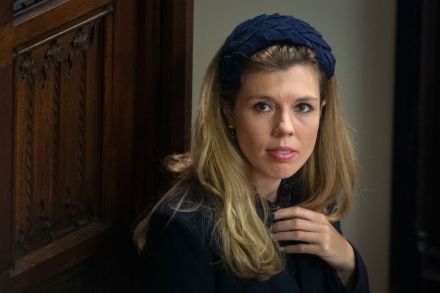
Carrie Symonds is to join the Aspinall Foundation as its new head of communications, in a move very much on-brand for the Prime Minister’s squeeze. Symonds has been credited with Boris Johnson's metamorphosis from pro-liberty, free market Brexiteer to environmentalist — a strategy that she may have spotted as working rather well for disgraced former Italian PM Silvio Berlusconi, who changed his image from that of a love rat to rat lover, frequently sharing snaps of himself with adorable animals on Instagram.  So what will Carrie's call to the wild entail?

What’s the truth about the farmer who fell victim to a media hate-fest?

From our UK edition

Have you heard about John Price destroying a stretch of the river Lugg? If not, you have led a sheltered existence.  This month, Mr Price, who lives in the Luggside farm he was born in 66 years ago, in Kingsland, Herefordshire, has been attacked by the BBC (who ran denunciations of him unnamed), the Wildlife Trust (‘extreme vandalism’), Monty Don (‘it breaks my heart’), the Daily Mirror etc. He is said to have destroyed habitats by dredging, and by laying waste the bank on one side.  Something about the media unanimity aroused my suspicions, so I followed up. Mr Price, clearly a determined man, has spoken out in the Herefordshire Times.

Donald Trump has made showers great again

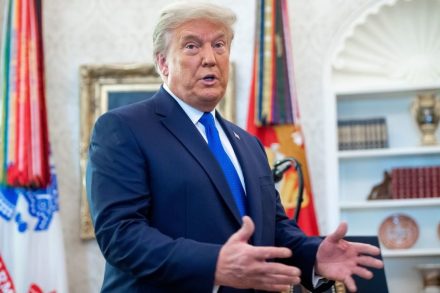
President Donald Trump is the best. I already thought he was great, but I became even more convinced of his genius when I saw the updated rules on clothes washers, dryers, and showerheads issued by the Department of Energy on December 15, 2020 (new rules on dishwashers came out recently as well). The new regulations relax stringent regulations on the amount of water and energy consumption permitted in household fixtures and appliances, which save energy but impair functionality.I hear you thinking: do minor regulations on laundry, dishes and showers belong on the measuring stick of presidential greatness? It’s a fair point: the gallons of water per minute issuing from the average Joe’s showerhead aren’t on a par with peace in the Middle East.

showers

Hate in a damp climate

When Ross Clark was writing this excellent novel about climate change, he couldn’t have known that by the time we read it the world would be paralyzed by a pandemic. Now that’s happened, it adds a whole new layer to The Denial’s themes of hysteria, self-righteousness and dodgy statistics. Bryan Geavis is a retired meteorologist living in the south of England in ‘the near future’. He used to work for a large oil company, though has to keep this quiet as there are prison terms for anyone who worked in the industry. A storm blows up in the North Sea which causes flooding in London.

denial

Trump’s barber paradox

For 30 years, Donald Trump regularly visited the Paul Molé Barber Shop in Manhattan’s Upper East Side. Adrian Wood, the barber who owns the shop, remembers that Trump would instruct barbers precisely where to snip his mane, and would never allow them to expose his bald spot, as revealed by a report in the New York Post: ‘He’s a complete control freak. He dictates exactly how you cut every hair on his head. “Cut here, cut there. That’s enough.” And you just do what he says.

pardon

Boris’s green industrial revolution is doomed to fail

From our UK edition

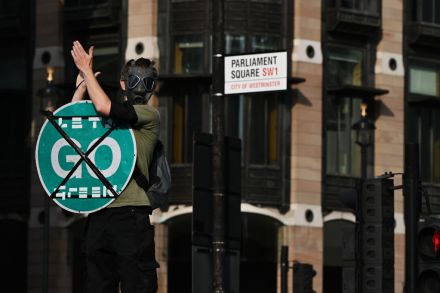
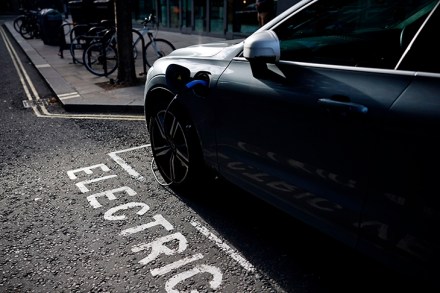
Boris Johnson's ‘green industrial revolution’, which was announced this week, looks doomed from the outset. From our heating to how we transport food, the proposals would mean a complete overhaul in the way we live. Yet barely a word has been said about the immense practical difficulties involved in Johnson’s ten-point plan for Britain to go carbon neutral by 2050. Make no mistake, it will be close to impossible to achieve – and even trying could prove catastrophic. Nowhere is the flaw in the government’s plan more clearly exposed than in the announcement that sales of new petrol, diesel and hybrid cars will be banned by 2030. There are more than 38.9 million cars, vans and lorries on our roads today.

Denial is not a strategy, Prime Minister

From our UK edition

The psychodrama in No. 10 is badly timed. The government has used emergency powers to ban meetings, church services and even family visits. A million jobs have gone since the first lockdown, with at least a million more to follow when the furlough money runs out. Children’s education was so badly set back by school closures that there are calls to cancel summer exams because pupils won’t be ready. Millions are facing financial ruin. A country looks to its Prime Minister for leadership. Yet the big announcement, made on the eve of the Brexit deal Boris Johnson was elected to deliver, is that he will ban the sale of new petrol cars by the end of the decade and hybrids five years later.

What is the Great Reset?

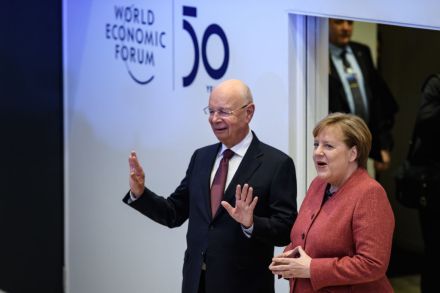
The phrase has shot throughout the fringes of Right-Wing Twitter like a virus through a karaoke bar. According to Pauline Hanson of the Australian party One Nation it is an attempt to establish a 'socialist left Marxist view of the world’. James Delingpole describes it as a 'global communist takeover plan’. This might sound like something cooked up in the lizard-stalked imagination of a nut but it refers to a real phenomenon. The World Economic Forum, which organizes the annual conference Davos, has launched an initiative called, yes, 'the Great Reset’. It has its own website. So, it is not just a feature of hot-headed conspiratorial fantasies. It exists. But as what?

great reset

The Trumpist agenda going forward

While Donald Trump appears to have lost the 2020 presidential election, Trump’s agenda of populism focused on the working class and putting America first won, well, bigly. Contrary to the Democrats’ claim that Joe Biden’s razor-thin win gave them a mandate, the only mandate America’s voters gave this year is that they want more Trumpism. To wit, the swing of roughly the same number of voters in a handful of states by which Trump won in 2016 is the gap of Biden’s win. Going forward, Republicans must focus on maintaining that sentiment and fight off attempts by NeverTrumpers and Establishment Republicans to throw Trumpism out with Trump.

trumpist agenda

The ancients knew the value of the natural world

From our UK edition

The ancients knew nothing about global warming, but they still reflected on the relationship between man and nature. In the absence of modern technology and with few sources of power (men, animals, wind and water), the ancients were limited in the use they could make of natural resources. Fire brought about the most radical change to nature’s offerings (cooking, pottery, smelting), with weaving, wood- and stone-working a close second. This could provide the farmer with all he needed, as Cato the Elder tells us: tunics, togas, blankets, shoes, iron tools, scythes, spades, mattocks, axes, carts, sledges, storage jars, pots, tiles, oil-mills, nails, buckets, oil-vessels, water-carriers, wine-urns, bronze vessels, etc.

Why fracking matters

Sigmund Freud famously noted that sometimes a cigar is just a cigar. In the case of fracking, even Freud would have acknowledged that fracking is about so much more than just fracking. That is why the issue is so important to voters beyond those in Ohio, Pennsylvania, and Texas where so much oil and natural gas is produced. That is also why Joe Biden and Kamala Harris have tried to walk back their positions on fracking from the Democratic primary, when they said they’d ban fracking and cease the use of carbon-based energy sources, as well as push for the budget-busting and progressive utopian Green New Deal. Of course, it’s about jobs.

fracking

How to stop trawling from trashing the North Sea

From our UK edition

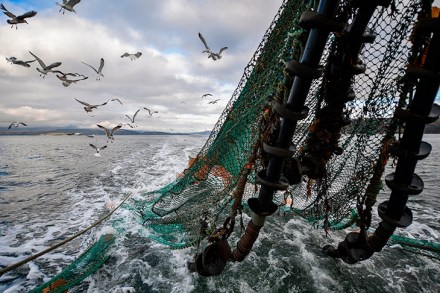
Recently Greenpeace dropped a boatload of granite boulders on to Dogger Bank, a permanent threat to any boat that attempts to drag a trawl net across the sandy sea-bottom. One of the biggest boulders had my name painted on it, because Greenpeace asked and I said yes. And in saying yes, I crossed a line that I have never crossed before in 40 years of writing about the environment. I joined the activists, in I hope a measured way, because it’s so very important to give the North Sea a chance to revive itself. Dogger Bank is the ecological heart of the North Sea and it played a large part in the growth of civilisation in northern Europe.

California won’t let a good crisis go to waste

Oakland, California In April, when spring fever ran high and California saw protests against the unending lockdowns, Gov. Gavin Newsom promised that ‘politics and protests will not drive our decision making. Science, data, and public health will drive our decision making. #StayHomeSaveLives.’ As it turns out, the anti-lockdown movement was right to be suspicious of tyranny. Not only are the decisions about opening up — or, more accurately, not opening up — political, but local and state governments are intent on taking the crisis as an opportunity to alter our way of life forever. Newsom has now tied reopening to ‘racial equity’, through reduction of COVID rates in black, Hispanic and Pacific Islander communities.

california