Environment

Join: The Spectator’s online COP26 summit

From our UK edition

The two-week COP26 climate change summit starts this weekend, with 100,000 expected on a protest march in Glasgow. And tomorrow, we at The Spectator will hold our own (virtual) summit looking at what lies ahead — and asking if history is about to be made, and how much of this is likely to be political theatre. The morning will open at 9.30am with a keynote speech from Dieter Helm, professor of energy policy at New College, Oxford: I'll be in discussion with him afterwards. His book, Net Zero, is perhaps the best primer you'll read on the topic: he supports the objective but is sceptical about the "jaw-jaw" of climate summits as a means of pushing through meaningful change. Then Kate Andrews will discuss the elephant in the room: nuclear power.

Modern cars reek of liberalism

My twin brother, who is much cooler than I am and lives in Washington, D.C., rolled into the Pennsylvania Wilds, our native land, for a visit recently. There, he offered me the chance to drive his brand-new BMW X1 — a luxury, subcompact, crossover “Sport Activity Vehicle.” The little thing was quick and responsive, so much so that forceful habits formed from driving less state-of-the-art vehicles (read: old) made my driving jerky at first. The front cabin felt wide open with barely-there window pillars. The seats were roomy and comfortable. And once I got used to the light-touch steering and ultra grippy brakes, driving the X1 was pleasant. But man, was this car annoying. For starters, I felt like a caveman trying to get the thing going.

cars

Leftist tree-huggers and backwoods conservatives unite!

There is paradox among 'outdoorsy' people that manifested itself to me in an indelible way over the weekend. Being something of a 'crunchy con,' I took part in the Pennsylvania Environmental Council’s Public Lands Ride — a group bicycling event that tours riders through Moshannon State Forest — that happened to take place on opening day of archery deer season this year. I was biking beside Six Mile Run, admiring the picturesque outline of a lone fly-fisherman standing in the glittering stream, when I glimpsed a tired-looking Subaru Outback parked along the side of the gravel forestry road. 'A support vehicle,' I thought, wondering why the volunteer would choose to set up her station so close to the one I’d just passed.

nature

Greta Thunberg didn’t win the German elections

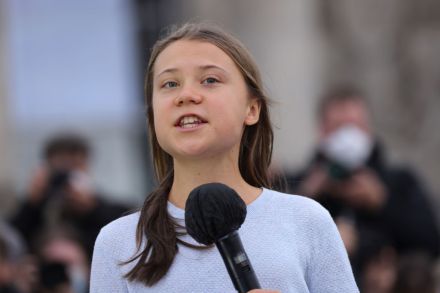
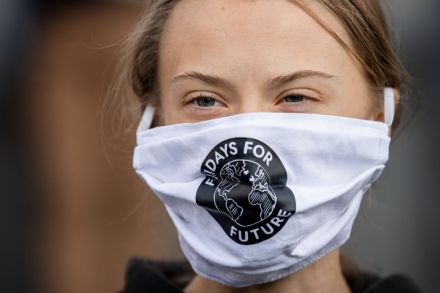
Greta Thunberg is back in business. Previously slowed down by European pandemic restrictions, the Fridays For Future movement has now hit the streets, starting in Berlin. 'We must not give up, there is no going back now,' Thunberg told thousands of local protesters. The appeals and influence of her movement have translated, at least somewhat, into a stronger climate-focused youth vote in last month's German elections. The Green party has made significant advances in Parliament, becoming one of the kingmakers in upcoming coalition talks. Yet Germany’s environmentalists aren’t the only ones who outperformed their previous results. The liberal-democrat FDP scored 23 percent of Germany’s first-time voters, the same amount as the Greens.

greta

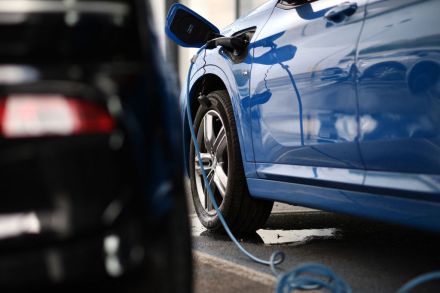
No, Zac Goldsmith, Teslas are not the solution to the fuel crisis

From our UK edition

I am not generally given to conspiracy theories, but I have to say there was a point last week where I started asking myself whether there are people in government saying to each other 'these queues at petrol stations – they are exactly what we need if we are going to persuade people to buy electric cars and phase out petrol and diesel by 2030'. It seems I wasn’t wrong. Except, that is, Zac Goldsmith, a foreign office minister, isn’t saying it quietly. He said in an interview with the Independent of the petrol crisis: “It's a pretty good lesson on the need to unhook ourselves from dependence on fossil fuels. You're not seeing the same problems with people who have electric vehicles.

The green movement flirts with violent sabotage

'What actions are you recommending for the pro-life movement?' the New Yorker Radio Hour host asks his guest, a tenured university professor and author of How to Blow Up an Abortion Clinic. 'Well,' the guest replies, 'I am recommending that the movement continue with the March for Life and crisis pregnancy centers but also open up for property destruction. We need to step up because so little has changed and so many babies are still being killed. So, I am in favor of destroying machines and property, not harming people. I think property can be destroyed in all manner of ways. It can be neutralized in a very gentle fashion, or in a more spectacular fashion as in potentially blowing up an abortion clinic.' 'Do you yourself plan to be involved in such actions?

law climate

Joe Biden’s history tour from hell

Breaking news from off the wires this morning. Apparently the guy who almost punched out a Detroit factory worker on the campaign trail may not be our most adept of presidents. That Joe Biden's administration is flailing has suddenly dawned on our establishment as though a miraculous epiphany. Think a kind of political Fatima, only instead of the sun moving across the sky it's just that TikTok influencer with the long nails prancing about the clear blue. How bad has it gotten for the White House? Even Chuck Todd thinks Biden has a 'pretty big credibility crisis on his hands.' And Chuck Todd once let Dr Fauci interview him. The abruptness of this realization does seem weird.

biden

The gas crisis shows how important net zero is

From our UK edition

This gas crisis has hit Britain because we rely too much on gas. That’s not a reason to abandon net zero. It’s a reason to do it. Gas prices are soaring, energy companies are failing. A few people are blaming government environmental policies for that. Their apparent hope is that Boris Johnson proves wobbly on green causes and backs away from net zero. I think they’re wrong, both about the policy and about the politics. Start with the policy. The net zero decarbonisation of the UK economy isn’t the cause of the gas price crisis. It’s the solution.

How the Tories have fuelled Britain’s energy crisis

From our UK edition

Britain is caught in an energy crisis of the government’s own making. It is true that gas prices have spiked all over the world — but Britain is suffering more than most. Energy suppliers are going out of business, thanks to the government’s price cap. Even fertiliser companies are going bust, with serious knock-on effects for the food industry: the British Meat Processors Association says shortages could hit within a fortnight. The trigger for this crisis has been the sudden surge in demand for gas as the global economy recovers from the Covid lockdowns. Gas prices have doubled in the United States, for example. In Britain, however, prices are five times higher. Why? Because America exploited fracking technology and capitalised on its huge inland gas reserves.

Afghanistan and climate change: the West’s twin failures

The West’s humiliation in Afghanistan has an older brother: climate change. As siblings, the two share characteristics, most obviously an inability to confront unwelcome facts. In Afghanistan, there was a large constituency led by the Pentagon invested in the mantra of proclaiming progress in the fight against the Taliban. Climate has its own industrial complex of NGOs, climate scientists, renewable energy lobbyists profiting from the energy transition, eager helpers in the media, and politicians posing as world saviors. Energy experts tell us renewable energy is cheaper than building new fossil fuel power stations. If they’re right, why did China build the equivalent of more than one large coal plant a week last year?

climate change

The truth about Extinction Rebellion’s ‘climate warfare’

From our UK edition

What have environmentalists got against commuters? Not for the first time a group of bedraggled climate nuts have taken their argument for ‘radical’ action on global warming not to Downing Street or to Parliament Square, but to ordinary people just trying to go about their business. Junctions have been blocked along the M25 near Kings Langley, Heathrow, Swanley, Godstone and Lakeside. This is the work of Insulate Britain, a single-issue Extinction Rebellion offshoot demanding action on home insulation. So far 42 have been arrested. The protesters tweeted that they were ‘disrupting the M25’ to ‘demand the government insulate Britain’.

Is the world we value falling apart?

From our UK edition

From time to time, people get worried and ask one another: ‘Is the world falling apart?’ I imagine this is a universal phenomenon, but my experience of it is largely confined to the West (here meant more as a cultural than a geographical expression). It happened in the 1930s, when the broadly correct answer to the question was ‘Yes’, and in the 1970s, of which more later. It happened more recently, after 11 September 2001 and during the financial crash of 2008/09. Some asked the question after Brexit. I have heard it asked again by many highly disparate people in the few days since the American-led Nato scuttle from Afghanistan. What is the answer? My own first encounter with these gloomy discussions was in the 1970s.

Revealed: the BBC guide for covering climate change

From our UK edition

Climate change is once again dominating the news agenda. A report from the Intergovernmental Panel on Climate Change warned that even if emissions are cut rapidly, the effects of global warming will be felt across the world. The report – which Boris Johnson has declared sobering reading – leads the news today, with the BBC dedicating seven stories on its homepage today to climate change. So just as well then that BBC staffers were recently treated to an internal audience research briefing telling them how best to convey messages about climate change to different audiences.

climate racism

Climate racism isn’t real

How many headlines have you seen about climate and environmental racism? So many you think of it as a real problem? Now, how many articles have you actually read about climate racism? If you’ve read one, just one, then you already know it doesn’t exist. Once you get past the fear-mongering click bait and the SEO-friendly headlines, almost all reportage of climate racism dances around the real issue: wealth inequality. Journalists are quick to note that poverty perpetuates climatological and environmental issues against inner-city working-class Americans, many of whom are non-white, but no less American. They don't seem quite so bothered about rural Americans with cancers and lung disease caused by pesticides and pollutants, almost all of whom are Caucasian.

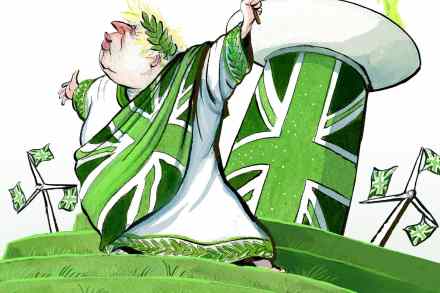
Boris Johnson’s dangerous eco-obsession

From our UK edition

It is a notable feather in Nigel Farage’s cap that his new evening show on GB News has already become essential viewing for Tory high-ups. Last week brought a series of reports by well-connected commentators suggesting that Boris Johnson was worried about Farage highlighting the government’s chaotic failure to stem the cross-Channel flow of migrant boats. The issue has suddenly shot up the list of issues mentioned by Tory voters, with new polling from Redfield & Wilton Strategies now identifying immigration as their top concern. This week the former Ukip leader has touched another nerve with some Tory MPs by wondering aloud whether their party’s green obsession is reaching a pitch that is going to put off many of its core voters.

The constant Democratic existential crises

The Democratic party boasts so many heroes, it’s sometimes hard to keep up. Recently, Rep. Andy Kim revealed that he will be donating his J. Crew wool suit to the Smithsonian Institute. An AP photographer captured the congressman in the Rotunda picking up some trash after the January 6 riots. ‘So I found a roll of trash bags, got down on my knees, and just started trying to clean up a place I love.’ This kind of courage begs the question — can an Emmy award be far behind? After all, not all heroes wear capes, but one definitely wore a cobalt blue suit. Such acts of valor above and beyond the call of duty are nothing new in the modern Democratic party. Where were you on that snowy day in 2019 when you first saw that photo of Rep. Eric Swalwell?

existential crises

Is the shrinking global population good news?

The New York Times recently published a lengthy piece on the long- term ‘slide’ in world population with ‘plunging fertility levels’ and ‘sweeping ramifications’. How will the lower projected levels of world population affect climate change? Surely, if humanity is a blight on earth, as leading environmentalists assert — from the great naturalist David Attenborough who famously said that ‘humans are intruders’ to UN secretary general António Guterres who declared that ‘humanity is waging a war on nature’ — then surely the projected decline in world population by the end of the century should be welcome news.

population

The fraudulent business of recycling

From our UK edition

I am a litter picker. No, not one of those high-minded volunteers who have proliferated of late with litter-picking sticks and black bags, but a professional: I am paid to empty the bins and collect the debris left by the public in a small park in Middle England. And I’m angry, not with the great British public who leave the stuff but with the real litter louts who are the root cause of the problem. As summer approaches and people who have been stuck indoors crowd into the beauty spots and on to the beaches, litter becomes a hot topic and it is important to be clear where the blame lies. When I became a bin man, I thought I was contributing to a cleaner, healthier planet.

Greta Thunberg doesn’t like you

From our UK edition

Dorian Lynskey recently wrote a piece celebrating Bob Dylan’s 80th birthday entitled 'Bob Dylan doesn’t like you'. The article highlighted the disdain Dylan has for fans, critics, journalists, and even the Nobel Prize Committee. Feted as the voice of a generation, and often acting like it, he still has nothing but scorn for those who acclaim him as such. Another 'voice of a generation', some three generations removed, Greta Thunberg has been acclaimed by many politicians for her climate activism. But there is little sign that Thunberg has anything but scorn for them in return. It would be fair to say to most world leaders 'Greta Thunberg doesn’t like you'.

Nature is healing

Ignoring the padlocked gate, my six-year-old son Nicholas and I climbed through a break in the metal fence and pushed into the mesh of undergrowth. This was the site of Ducker, the open-air swimming pool that once belonged to Harrow School in London. Here the young Winston Churchill romped (naked, since trunks were for prefects), as, in his own day, did my dad. When I arrived at Harrow in the 1980s, the pool — far bigger than Tooting Bec Lido, which is now the UK’s largest — had just been abandoned. It was covered with graffiti, the haunt of skateboarders. Returning in 2021, I looked for changes wrought by three decades of neglect. Google Maps showed a J-shaped artificial lake, 98ft by 492ft.

nature