Environment

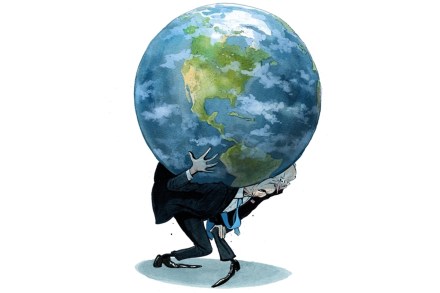
Biden must decide the environment’s price tag

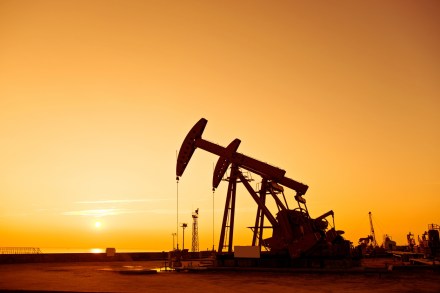
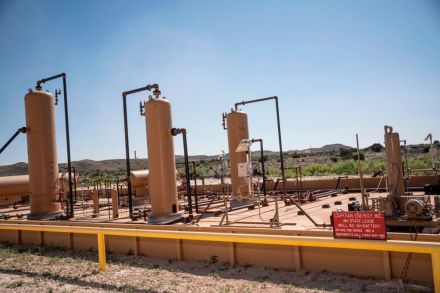
Boris Johnson is considering doing something that should be a duty for every leader. In the wake of sanctions poised to disrupt the 8 percent of domestic oil and 18 percent of diesel the UK imports from Russia, Johnson is reportedly toying with the idea of putting his country first and on the road to self-sufficiency by lifting the UK’s moratorium on fracking. The British government banned hydraulic fracturing, or “fracking,” in 2019. Fracking is a method of extracting oil and natural gas by drilling deep underground and fracturing shale rock with a fluid mixture (99 percent water and sand) that allows fossil fuels to flow out, be captured, processed and used to myriad ends (including gasoline).

Britain is paying the price for its fracking panic

From our UK edition

Between 1980 and 2005, the UK produced more energy than it needed. Today, we import more than a third of our energy and over half of our natural gas. Households are facing an increase in their annual tax bills from £1,500 to an eye-watering £3,000. While the Business Secretary may have tweeted this week that the current situation is a matter of high prices rather than security of supply, families already struggling to heat their homes are unlikely to tell the difference as they decide whether to heat their homes or pay for food. This was never a foregone conclusion. A decade ago, the US shale gas revolution was well underway, with fracking creating hundreds of thousands of jobs and driving down gas prices.

Our present bewilderment

Bewilderment, a novel by Richard Powers issued last September, has been praised to high heavens by Oprah Winfrey, Barack Obama, Naomi Klein, and reviewers at NPR, the New York Times, the Washington Post, and The New Republic, among others. This ought to be enough to warn any sensible reader to stay far away from its pages and to resign promptly from any reading group that nominates it for collective perusal. But I am not always sensible. The title lured me, for what better word to describe our Zeitgeist?

bewilderment

Liberalism and existential insecurity

After 1789, conservatism was the party of insecurity, pessimism and fear, liberalism the party of confidence, optimism and eager anticipation, down to the early years of the twenty-first century when the mood of hubristic triumph that followed the collapse of the Soviet Union deflated almost overnight, in the United States especially, where liberal democrats have come to resemble the “normal American of the pure-blooded type” whom Mencken described as going “to rest every night with an uneasy feeling that there is a burglar under the bed, and... [getting] up with a sickening fear that his underwear has been stolen.

liberalism

E.O. Wilson and the climate cult

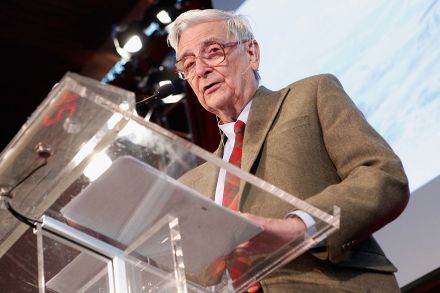
Famed ant specialist and sociobiologist E.O. Wilson passed away on December 26, age ninety-two. He came to national attention in 1975 with the publication Sociobiology: The New Synthesis, which is one of those books that steamrolled into public consciousness. It may not have been as revolutionary as Darwin’s On the Origin of Species by Means of Natural Selection, but not for want of trying. Wilson had something new to say about how evolution works and it provoked responses every bit as harsh as those Darwin encountered a century earlier. He was especially reviled by his Harvard colleague Richard Lewontin, one of the founders of molecular evolutionary theory, who saw no validity at all in Wilson’s interpretation of social structures as embodying evolutionary strategies.

wilson

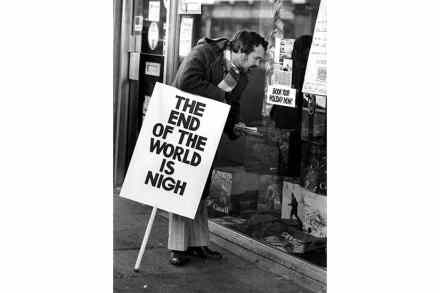
The end is always nigh

From our UK edition

Typically for my generation, I woke repeatedly as a kid with my pyjamas soaked in sweat because I’d had yet another nightmare about nuclear war. While I rarely dream about mushroom clouds any more, a dark cloud of one shape or another has dogged me like a sooty, vaporous stray for my entire life. For my conservative classmates in the mid-1960s, American democracy was on the cusp of being overtaken by communism, even if they weren’t sure what that bogeyman was. Yet don’t imagine liberals like my parents were by contrast keeping sensibly calm and carrying on. The left has manfully merchandised the end of the world since I can remember.

Don’t blame the pandemic on deforestation

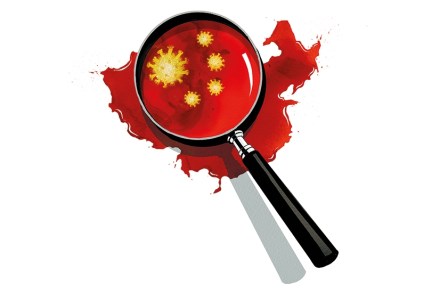
With a laboratory leak in Wuhan looking more and more likely as the source of the Covid pandemic, the Chinese authorities are not the only ones dismayed. Western environmentalists had been hoping to turn the pandemic into a fable about humankind’s brutal rape of Gaia. Even if “wet” wildlife markets and smuggled pangolins were exonerated in this case, they argued, and the outbreak came from some direct contact with bats, the moral lesson was ecological. Deforestation and climate change had left infected bats stressed and with nowhere to go but towns. Or had driven desperate people into bat-infested caves in search of food or profit. Green grandees were in no doubt of this moral lesson. “Nature is sending us a message.

deforestation lab leak covid

Build Back Better was doomed from the start

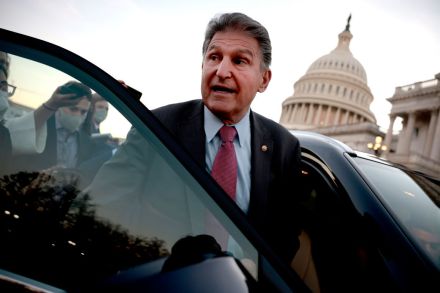
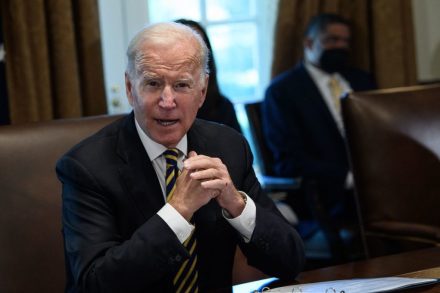
Joe Manchin was never going to vote for Build Back Better. Now that he's declared himself a "no" and all but killed President Biden's titanic spending package, it's time for Democrats to admit as much. To be sure, Manchin has played well the role of centrist negotiator. He's furrowed his brow and raised pragmatic concerns over renewable energy and inflation. He's huddled with his fellow Joe at the White House and won plenty of concessions. He's provided chum for bored (and boring) political analysts, as analyzing him and his fellow holdout Kyrsten Sinema became a kind of Kremlinology for the Twitter-addicted. But such breathless parsing forgets one simple fact: all politics is local.

joe manchin build back better

We aren’t serious about fighting climate change

“UN Global Climate Poll: ‘The People’s Voice Is Clear – They Want Action.’” So ran a typical headline in the British newspaper the Guardian in January. Yet this month, a poll released as world leaders met at the Glasgow Climate Change Conference prompted a very different Guardian headline: “Few Willing To Change Lifestyle To Save The Planet, Climate Survey Finds.” Huh? Yes, surveys are essentially universal in showing people worldwide are terribly concerned about Global Climate Change (GCC) and support efforts to mitigate it, often no matter how drastic. But those polls may reflect a false perception.

Joe Biden’s sacrificial presidency

The worst kept secret in Washington, DC is that Joe Biden is a one-term president — whether he knows it or not. This weekend, palace intrigue stories from Politico and CNN pitted Vice President Kamala Harris against Transportation Secretary Pete Buttigieg. The kids are fighting over Grandpa Joe’s inheritance before he’s even cold. Biden doesn’t acknowledge this. He’s signaled multiple times that he intends to run for a second term in 2024. He has been trying to capture the White House for over thirty years. He’s not just going to give that up willingly as he managed to go from party punchline to party patriarch in the span of one election. But to believe the choice is up to him is to believe that his staggering fall in poll numbers is imaginary.

bucket list

The cynical brilliance of Boris Johnson’s green conversion

From our UK edition

Does Boris Johnson really believe, as he told COP26 a few days ago, we’re at 'one minute to midnight' on the man-made climate change doomsday clock, and that 'if we don’t get serious about climate change today, it will be too late for our children to do so tomorrow'? I ask only because in 2013 he used his Daily Telegraph column to write:  As a species, we human beings have become so blind with conceit and self-love that we genuinely believe that the fate of the planet is in our hands – when the reality is that everything, or almost everything, depends on the behaviour and caprice of the gigantic thermonuclear fireball around which we revolve.

Where is the climate plan B?

From our UK edition

The COP26 summit is unlikely to be an outright flop. There has been no shortage of drama, with speakers seeming to compete with each other to see who could use the most histrionic language. Justin Welby, the Archbishop of Canterbury, went so far as to compare the attending leaders to Nazi appeasers. He later apologised.  Some progress, albeit small, is being made. A hundred countries have been persuaded, some on the promise of sweeteners worth £14 billion, to sign a pledge to end deforestation by 2030. Brazil, the most important of all, is among them. India has agreed, for the first time, to set itself a date for achieving net-zero greenhouse gas emissions — although its target, 2070, is two decades beyond what the United Nations would have liked.

America isn’t leading the fight against climate change

President Joe Biden is set for his rendezvous with climate destiny at the Scottish Event Campus in Glasgow on Monday. The president left Washington on Thursday empty-handed after congressional Democrats abandoned an attempt to put his infrastructure and climate package to a vote. “I need you to help me. I need your votes,” Biden implored them. “I don’t think it’s hyperbole to say that the House and Senate majorities and my presidency will be determined by what happens in the next week.” At least he wasn’t invoking anything as serious as the future of the planet to get their backing. Nancy Pelosi weighed in, according to Politico’s Laura Barrón-López, telling her colleagues that overseas parliamentary leaders had asked whether American democracy can survive.

climate change

Why paying more dividends could save the planet

From our UK edition

Climate emergency demands action, not rhetoric. So, on the eve of COP26, which UK news item promises to deliver the most positive impact for the future of the planet? Not, I suggest, Sadiq Khan’s extension of the Ultra Low Emissions Zone to the North and South Circulars, imposing stinging costs on owners of older diesels who can’t afford newer ones; nor Rishi Sunak’s £7 billion pledge for sustainable transport in cities outside London — only £1.5 billion of which turns out to be new money. No, the headline that matters more is the one that says dividend payments by UK companies are returning to normal.

Cop out: Boris’s battle to save the climate summit

From our UK edition

As so often, the Queen put it best. While opening the Welsh parliament a couple of weeks ago, she was caught on microphone discussing the COP26 summit and its frustrations. ‘Still don’t know who is coming,’ she told the Duchess of Cornwall. ‘It’s really irritating when they talk, but don’t do.’ In just a few words, she perfectly summed up the challenges facing Boris Johnson in Glasgow. The PM wants to get countries to commit to net-zero carbon emissions by 2050. But how to get a deal, if the main players aren’t at the table? Xi Jinping hasn’t left China since the Covid outbreak and will stay put now. Vladimir Putin is weeks away from opening a new pipeline supplying gas to Germany and continues to be quite the energy power broker.

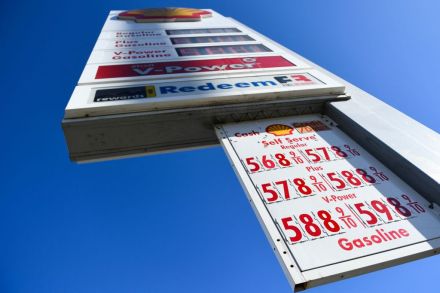
What’s more expensive – petrol or fizzy drinks?

From our UK edition

Filming fatalities The actor Alec Baldwin accidentally shot a cinematographer on set when mistakenly given a gun loaded with real bullets. Others who have died on set: — Martha Mansfield was resting in her car during the filming of a romance set in the US civil war in 1923 when someone flung a match which set her dress alight. — John Jordan fell out of a plane while filming Catch-22 in 1969. — Vic Morrow was decapitated by a low-flying helicopter while filming Twilight Zone: the Movie in 1982. — Jon-Erik Hexum shot himself while fooling around with a gun on the set of the CBS series Cover Up in 1984. — Roy Kinnear succumbed to injuries after he fell from a horse during the filming of The Return of the Three Musketeers in 1988.

What’s really behind the net-zero zealotry of big businesses?

From our UK edition

Boris Johnson’s biggest challenge at COP26 doesn’t lie in avoiding a finger-wagging from Greta Thunberg, who won’t be going. Neither will it be in preventing the party being spoiled by Insulate Britain holding up the limousines of the great and good. Nor will Johnson have to struggle too hard to persuade his fellow world leaders to sign some kind of declaration strong enough to be spun as a triumph but anodyne enough to allow China, Russia and others to ignore it. No, the PM’s biggest challenge lies in fending off the demands of big businesses, who have latched themselves to the cause of net zero with great gusto, aware of its value to their brands.

The cold hard truth about heat pumps

From our UK edition

When I went to Poland not long before Covid, I found a country more bitterly divided by a culture war even than we are. So I would not rule out EU leaders being right that the current government there has intruded on the independence of the judiciary for its own political ends. This is the background to recent Brussels fury that the Polish Constitutional Tribunal (supreme court) asserted the primacy of Polish law over that of the EU earlier this month. The problem never arises in the EU, of course, because there the European Court of Justice has never had an independent judiciary to be tampered with. It has aways been the purpose of the ECJ to make sure that its judges use European law to advance the European Union, which democracy tends not to. In that sense, all its judges are political.

Letters: How to feed the world

From our UK edition

Doom and gloom Sir: The depressing article by Tom Woodman (‘You must be kidding’, 16 October) confirms my growing fears about the damage being wrought by the promoters of apocalyptic climate change, which has become a dangerous cult with alarming echoes of millenarian doom which has stretched through many previous centuries. While sensible care for the environment is a good thing, the descriptions of a frightening future of the imminent end of the world through drought, flood and fire now imbues every aspect of education and politics. Constantly bombarding young people with the news that the end of the world is nigh has led many of them into completely unnecessary visions of death and disaster.

The government’s net zero strategy doesn’t add up

From our UK edition

The commitment to reach ‘net zero’ emissions by 2050 is the most expensive government proposal in modern history. Yet it was rushed through parliament with minimal debate or scrutiny, thanks to a last-minute pledge by Theresa May in 2019, weeks before she left office. She had no credible plan, just a lofty ambition without costings. It has taken the government two-and-a-half years to come up with a proposal — and it is not convincing. The Net Zero Strategy document published this week opens with the Prime Minister’s trademark optimism. ‘We can build back greener, without so much as a hair shirt in sight,’ he writes.