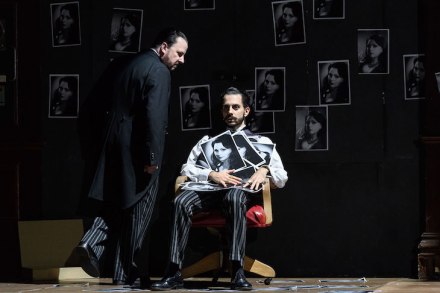
Eno

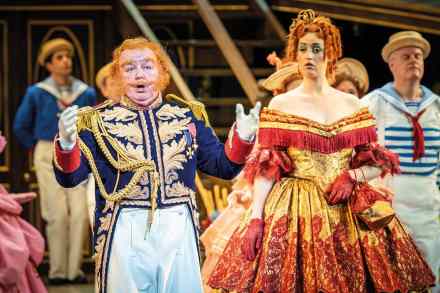
This is how G&S should be staged: ENO’s HMS Pinafore reviewed

From our UK edition

Until 1881, HMS Pinafore was the second-longest-running show in West End history. Within a year of its première it had broken America too; at one point there were eight competing productions on Broadway alone. The single most wrongheaded notion that still clings to Gilbert and Sullivan’s operas is that they’re somehow low-rent or parochial. They were blockbuster international hits, superbly written, lavishly staged and exported far beyond the Anglosphere. Pinafore was performed in Denmark as Frigate Jutland and in Vienna, Johann Strauss was driven off stage by the runaway success of The Mikado. In the words of the operetta historian Richard Traubner, Gilbert and Sullivan’s collaborations were ‘simply the best musical productions of the Victorian age’.
The promoter the critics love to hate: an interview with Raymond Gubbay

From our UK edition

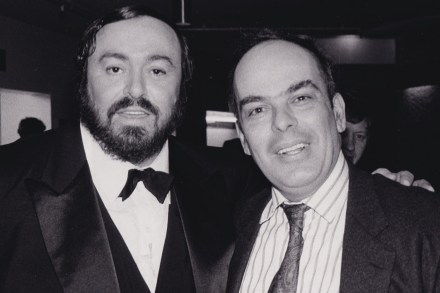
When Raymond Gubbay left school, he was articled to an accountant’s firm. Fascinated by opera and depressed at the prospect of life as a Golders Green beancounter, he wriggled out of it in a matter of months, and into an assistant’s job at Pathé Newsreels. Sensing that newsreels had a looming expiry date, he asked Arnold Wesker (a family friend) to wangle him an interview with Victor Hochhauser, Britain’s leading promoter of mass-market classical concerts. Hochhauser sat behind a desk in his office above a fridge shop in Kensington and asked the 17-year-old Raymond three questions. Where did you go to school? Are you a Jewish boy? And can you start on Monday? Six decades later, even three questions feel unnecessary.

British opera companies and orchestras must start investing in native talent

From our UK edition

Early in 1946, two men boarded a train at Euston and went trawling for talent. Audition notices were posted at town halls up and down the land: singers wanted, no experience required. Two thousand applied. One town after another, they lined up for Karl Rankl, Covent Garden’s music director, and David Webster, its general manager. Those who sang in tune were hired, £8 a week for chorus, £40 for soloists. An organist in a Harrogate church was appointed chorusmaster. ‘At Carmen rehearsals,’ recalled Constance Shacklock, a farm girl from Nottinghamshire and future star, ‘none of us had ever seen a Carmen before, let alone sung one.’ By mid-year, Covent Garden had a credible opera company.

The grotesque unevenness of Mozart’s Requiem

From our UK edition

It is amazing what fine performances you can get beamed to your computer these days. Slightly less amazing is the packaging these events come in, when they do. ENO relayed free a concert of Mozart’s Requiem, but it was preceded by a snatch of Strictly, with a row of muscular young guys ripping off their shirts, before we entered the Coliseum for a heavily pregnant Danielle de Niese hyping the event we were about to see and hear. She is delightful, but I wish she hadn’t been compelled to tell us that, despite his hard life, Mozart was sending us a message of hope that everyone, however ignorant of classical music, can be moved by. It’s just not true.

I pounded my car horn like a Neapolitan cabbie: ENO’s drive-in Bohème reviewed

From our UK edition

The email from English National Opera was blunt: ‘Your arrival time is 18.25. If you arrive outside your allocated time slot, you may not be allowed entry.’ Perhaps, to habitual London drivers — if such people exist — negotiating the residential streets of Muswell Hill during a Saturday rush hour is all good clean urban fun. I couldn’t say. I just know that by the time I’d been marshalled into a parking space at Alexandra Palace, my no-claims bonus miraculously still intact, I was in no mood for an evening of updated and interval-free Puccini. Three hours later I was pounding my car horn like a Neapolitan cabbie.

Ravishing and poignant: ENO’s Orphée reviewed

From our UK edition

Billy Wilder, asked for his opinion of Andrew Lloyd Webber’s musical version of his movie Sunset Boulevard, famously replied: ‘Those boys hit on a great idea. They didn’t change a thing.’ I don’t think you could say exactly that about Netia Jones’s new staging of Philip Glass’s Orphée, a piece that takes the script of Jean Cocteau’s 1950 film and turns it into — well, into an opera by Philip Glass. Cocteau’s shimmering cinematic imagery (think Man Ray come to life) defies physical realisation, so Jones and her designers Lizzie Clachan (sets) and Lucy Carter (lighting) have found poetic, often blindingly beautiful theatrical equivalents.

A triumph: ENO’s Mask of Orpheus reviewed

From our UK edition

ENO’s Mask of Orpheus is a triumph. It’s also unintelligible. Even David Pountney, who produced the original ENO staging in 1986, admitted to me in the interval that he didn’t have a clue what Harrison Birtwistle’s opera was about. But who cares when, visually and musically, you’re being socked between the eyes? Mask makes sense in the same way an earthquake makes sense. Fittingly we begin with total nonsense: Orpheus, in the bath, attempting to reform language. This is Orpheus the Man, in red velour and gelled-up hair, looking like Rod Stewart. An unlikely charmer of fishes and trees, it has to be said. But soon enough another Orpheus pops up: Orpheus the Myth, looking even worse, like Rod Stewart’s drunk dad.

More misogynistic than the original: ENO’s Orpheus in the Underworld reviewed

From our UK edition

It’s Act Three of Emma Rice’s new production of Offenbach’s Orpheus in the Underworld, and Eurydice (Mary Bevan) is trapped in the backroom of a Soho peep show. But that doesn’t really matter because Jupiter (Willard White), a cigar-toking love walrus in a silk bathrobe, has transformed himself into a fly and is about to ravish her, once he’s worked out the practicalities of doing so while three millimetres long. Eurydice’s more than game. ‘Zzzz, zzz,’ she sings, draping herself lasciviously over the mattress. ‘Zzzz, zzz,’ buzzes Jupiter, wings popping erect. Rice’s puppeteer darts about with a toy fly on a string, dressed in a black catsuit and (the killer detail) a beatnik beret.

Chilling out | 11 July 2019

From our UK edition

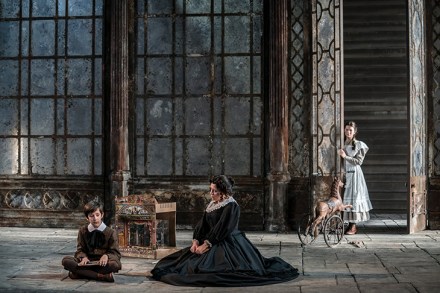
Think of the children in opera. Not knowing sopranos and mezzos, pigtailed and pinafored or tightly trousered-up to look child-like, but actual children. There are Mozart’s Three Boys, Menotti’s Amahl, possibly Debussy’s Yniold and Handel’s Oberto and, if you stretch a point, Marie’s little son in Wozzeck. But that’s about it. Until, that is, you come to Benjamin Britten. It’s a rare Britten opera that doesn’t include a child. Whether it’s Grimes’s doomed apprentice, the chattering powder monkeys of HMS Indomitable, teenage vision Tadzio in Death in Venice, Tytania’s fairies or the watchful Miles and Flora, they are ever-present, but why?

Call of duty

From our UK edition

Is it possible to write a feminist opera about Jack the Ripper? Composer Iain Bell thinks it is, and his Jack the Ripper: The Women of Whitechapel tries very, very hard to prove it. But while the result is respectful, topical and agonisingly, paralysingly sincere, it’s also a sheep in wolf’s clothing. You can’t have your victims and kill them too. You have only to look at the opera’s title, bent awkwardly round its central colon, to see the conflict. Front and centre you have Jack the Ripper — a marketing department’s darling, promising Gothic horror and lashings of gore. Following behind (in slightly smaller type) you have his victims, the drab, downtrodden women whose lives and voices the piece hopes, laudably, to restore.

Sinking the unsinkable

From our UK edition

Garrick Ohlsson is one of the finest pianists of his generation. Why, then, was the Wigmore Hall not much more than half full for his recital last week? Brahms. Ohlsson is at present touring with four programmes, all Brahms’s solo piano music. He treated us mainly to solid chunks, though he ended with the enchanting and almost light-hearted Paganini Variations, fiendish for Ohlsson but enlivening for us. Actually, he played an encore by Chopin, the solitary Op. 45 Prelude, preceding it with a charming lecturette about how Brahmsian, avant la lettre, Chopin could be. Ohlsson was a student of the great Claudio Arrau, whose attitude to Brahms verged on the frosty.

Voices of doom

From our UK edition

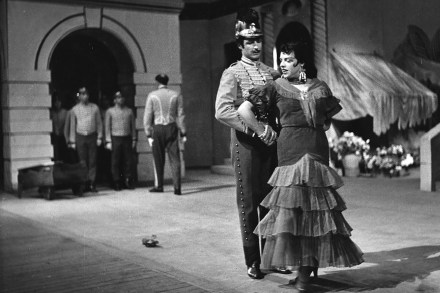
It’s December, and while musical theatre is busy celebrating ‘warm woollen mittens’, opera, as usual, is far more interested in the tiny frozen hands inside them. Because nothing says Christmas quite like consumption, and I’m not talking turkey and mince pies. London’s opera companies are serving up a heaped sleighful of heartbreak this year. English National Opera is going traditional with La bohème, while the Royal Opera is thinking outside the snow-covered coffin with Carmen. There’s something for everybody, so long as it’s tragedy. ENO’s Bohème is the safe option, the show you take your granny to.

Chills and thrills

From our UK edition

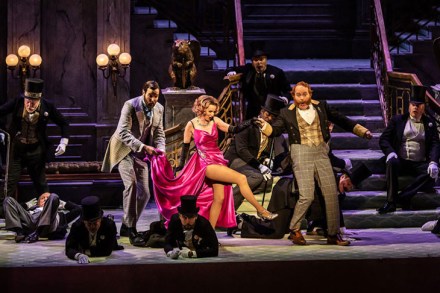
How do you solve a problem like Lucia? Murder, madness, abuse, possibly even incest, all set to a soundtrack of rollicking, rum-ti-tum tunes. Add to that a Scottish setting (nothing sabotages dramatic seriousness quite like a kilt, just ask Mel Gibson) and you have Gilbert & Sullivan in an Italian accent, Ruddigore with a cigarette and a suntan. Recently at the Royal Opera House Katie Mitchell tried to naturalise Donizetti’s opera into submission, but ended up tussling with a score she clearly didn’t trust and a cast who didn’t seem to trust her, giving her audience what she wanted Lucia to be, rather than what’s actually there.

Top scorer

From our UK edition

Gershwin’s Porgy and Bess springs to life fully formed, and pulls you in before a word has been sung. A whirlwind flourish; the hectic bustle of violins and xylophone, and then a quick fade into an image of a woman cradling a child and ‘Summertime’, the very first number we hear sung. The aria’s fame actually serves the drama. The thrill of musical recognition as the curtain rises on an unfamiliar world is replaced by astonishment at the dramatic instinct that allows Gershwin to expend a melody like that before his story has even started, in the certain knowledge that what follows can, and absolutely will, live up to what for any composer other than Gershwin would be a once-in-a-lifetime inspiration.

The naked and the dead

From our UK edition

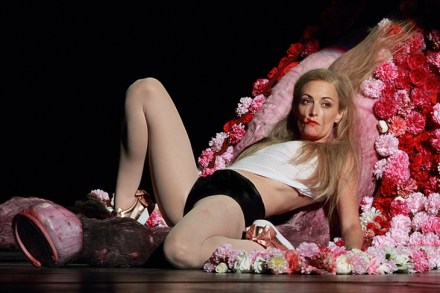
Yes, Oscar Wilde never wrote it. No, Strauss didn’t intend it. In fact, the composer famously demanded the Dance of the Seven Veils be ‘thoroughly decent, as if it were being done on a prayer mat’. But that doesn’t stop this striptease and musical money shot being the look-but-don’t-touchstone of any Salome. A blonde, blank-faced Barbie doll in gym knickers, vest and shiny trainers stands in a spotlight, a baseball bat in her hands. Strauss’s oboe begins its suggestive arabesques but Salome remains quite still, her eyes fixed impassive, unblinking on the audience. Eventually her hips begin to twitch, her back arches and she goes sullenly through the motions of sensuality, never breaking her gaze, defying us to find her desirable.

Britten at war

From our UK edition

‘I feel I have learned lots about what not to write for the theatre…’ There’s a prevailing idea that the ever-precocious Benjamin Britten was an operatic natural — a composer whose gift sprang fully formed with the première of Peter Grimes in 1945. But that’s not strictly true. Go back just a few years to 1941 and you’ll find Paul Bunyan — the oversized skeleton in Britten’s musical closet. Rewind those few years and Britten, darling of post-war England, was all but a national pariah. A pacifist who had escaped conscription by travelling to America, he was forced to take work wherever he could find it.

Scent and sensibility

From our UK edition

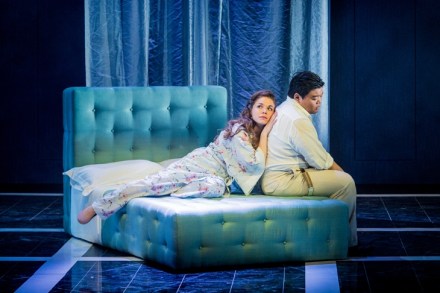
Patrick Mason’s new production of Gounod’s Roméo et Juliette reminded me of something, but it took a while to work out what. We saw shiny black walls with chrome Bauhaus details, and a swirl of mist through which beautiful people moved in black formal wear. Then Olena Tokar made her entrance as Juliette, and as she pirouetted about the stage, evening dress sparkling, it clicked. It’s a perfume advert. The artificiality, the chic, the sexy little hint of affluence with top notes of fascism: you half-expected billowing curtains to reveal a giant bottle of Chanel No. 5. It fitted right in at West Horsley, where the programme book contains adverts for private equity firms and first nights begin with an onstage shout-out to Laurent-Perrier.

Handel for hipsters

From our UK edition

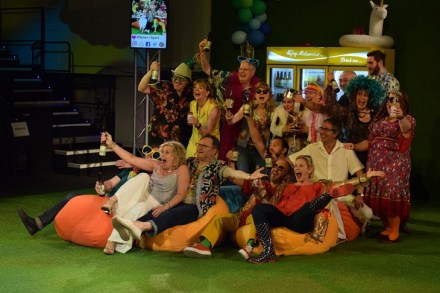
On a sward of AstroTurf somewhere off Silicon Roundabout, Mountain Media is hosting its summer party and, well, it’s the sort of bash you’d pluck your own eyes out to avoid. Hipsters sprawl on dayglo beanbags. Lads wearing fairy wings strike aftershave-advert attitudes as they swig bottled lager, while girls in vintage dresses pout into smart phones through cardboard Instagram frames. Naturally, it’s got its own hashtags: everything is flashed up on digital screens. The only thing that jars — though perhaps it’s some new straight-outta-Hoxton trend — is that instead of a DJ there’s a live band, and the music’s by Handel. Handel’s English-language tragedy Acis and Galatea was once one of his most bankable properties.

It’s the music, stupid

From our UK edition

‘Welcome to our hearts again, Iolanthe!’ sings the fairy chorus in Gilbert and Sullivan’s fantasy-satire, and during this exuberant new production by Cal McCrystal you could almost hear the assembled G&S fans sighing in agreement. Iolanthe is our trump card against the sceptics, and not merely because Gilbert’s digs at parliamentary politics are still so startlingly acute. No, we insist, it’s the music, stupid: just listen to it! Sullivan’s score gleefully assimilates Handel, Mendelssohn and Wagner (Tannhäuser, Rheingold; even Tristan und Isolde), and to fly that close to the magic flame of Bayreuth without getting frazzled is something that very few composers have achieved with such freshness and melodic grace.

Unclear Handeling

From our UK edition

ENO has revived Richard Jones’s production of Handel’s Rodelinda. It was warmly greeted on its first outing in 2014, though Jones was, as he remains, inveterately controversial. The opera itself seems to command universal admiration among Handelians, and widespread approval among those of us who have never quite managed to call ourselves that. The most unequivocally positive response I’ve had to it was at Glyndebourne in 1998, where it was produced as if it were an early black-and-white film, and superbly conducted by William Christie. Viewing the DVD has confirmed my warm feelings about it.