England

Why Anthony Bourdain’s shows leave a bitter taste

The Unabomber, Ted Kaczynski, never knew of Anthony Bourdain, I’d guess, but he understood his type well. Bourdain, who died in 2018, was an oversocialized leftist. A man who, to avoid a deep sense of guilt and worthlessness, overidentified with the system and presented conformity with its values as a kind of rebellion. That might sound complicated, but it’s really not. “Generally speaking,” Kaczynski once wrote, “the goals of today’s leftists are NOT in conflict with the accepted morality. On the contrary, the left takes an accepted moral principle, adopts it as its own and then accuses mainstream society of violating that principle.

bourdain

Will my French guests get revenge for Agincourt?

From our UK edition

The French couple did not speak much English so I rattled on in my best French, thinking I was doing a fine job. She asked the usual question, how long had we lived in this lovely house? And I assumed she was assuming we were Irish and it had been in our family for generations. Guests always like to think this and I don’t like to completely disabuse them of it. They’ve come to West Cork for an authentic experience so I massage the Englishness out of the BB and me as best I can, on a customer service basis. My usual shtick poured forth, therefore, in my best French. And my best French ought not to be too bad. I once lived in France, in a village near Orléans. I was 18 and had fled home at the first opportunity, as young people used to do in those days.

Don’t cry for Argentina

From our UK edition

It keeps on happening, the passing of sporting titans. First Garfield Sobers and now Kevin Keegan, a couple of the best, who charmed everyone on and off the pitch. Enough has been said about Keegan, his skill as a footballer, his drive, his hard work, his easy kindness to his countless fans. Not forgetting his perm, his Brut and his permanent presence on TV. He wrote a column for the Liverpool Echo when I was a trainee there in the 1970s. KK – then the sporting superstar at Bill Shankly’s Liverpool – would often come into the office to work on his piece with the sports editor, Vincent Kelly. He wasn’t happy to let it be ghosted while he did something else. He cared. And to us young whippersnappers, gawping at our hero, he was always polite and funny.

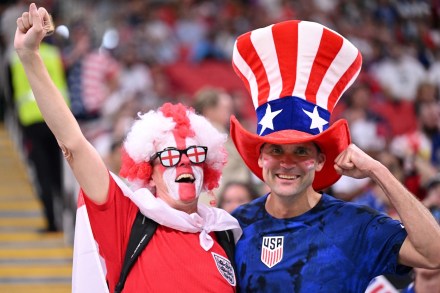
Americans, do your duty: support England

Soccer is not a quintessentially American sport. Just as Brazil is forever the country of tomorrow, soccer is always the American sport of the the future. It is always coming but never quite arrives, or at least not to the extent that its most-fervent advocates would wish. Wearied British or European readers may be bracing for American anti-soccer invective. This is not that: soccer is a glorious game that deserves to be a major American sport, and though it will never eclipse football or baseball, it is possible to envision it as a second tier American sports.

England and Norway should unite

From our UK edition

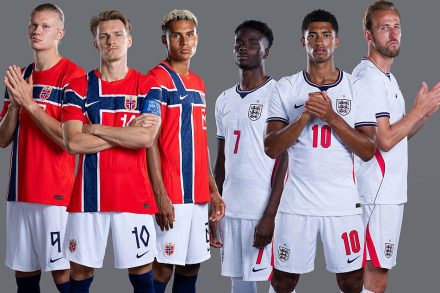
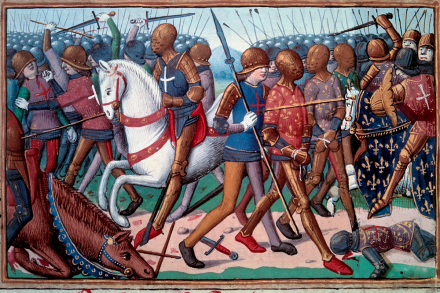
Tonight, Erling Haaland and Harry Kane should be playing together, not against each other. Partially because Haaland is a Yorkshireman, born in Leeds, and this Nordic stuff is just an affectation, but also because England and Norway should not be different countries. With our combined control over the North Sea, we’d have fish and oil beyond our wildest dreams Back in 1066, as one is reminded by the big French cloth now sojourning at the British Museum, history took a wrong turning. Harald Hardrada should have bested Harold Godwinson at Stamford Bridge. Had he then stuffed Billie the Conqueror down in Hastings, a millennium of Anglo-Norwegian unity could and should have beckoned.

Thank God for Thomas Tuchel

From our UK edition

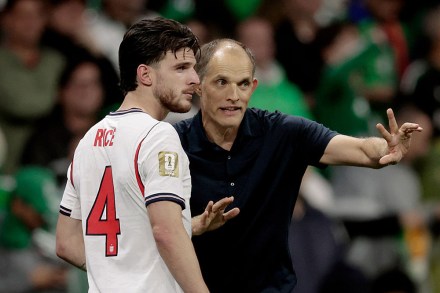
Here’s an interesting question: had Thomas Tuchel been Portugal’s manager rather than England’s, would he have picked Cristiano Ronaldo to go to the World Cup finals? I am pretty sure not. The reason England are better under Tuchel than they were under Gareth Southgate is that the German chose a squad equipped to go the full five weeks. In the epic win over Mexico last weekend, what England needed in those nerve-shredding closing minutes was not for a Cole Palmer or a Phil Foden to tiptoe into the fray but for a battle-scarred old soldier like Dan Burn to take his place and start banging out the 40-yard headed clearances that kept his goalkeeper safe.

America is still an English country

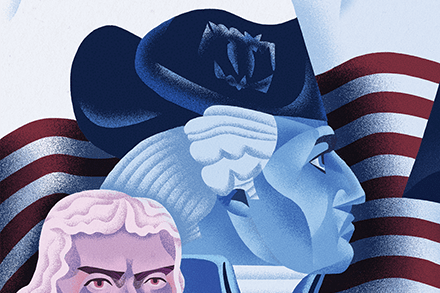
Americans have been enjoined, as we approach our country’s 250th anniversary, to be a bit more grateful. Good advice. It is not just the freedom of speech and the purple mountains’ majesties we should be taking stock of. It is also our knack, in recent decades, for miseducating ourselves, failing to read the signs of the times, making wrong choices – and then profiting from the fallout. In the global financial crisis that ran for a decade after 2008, blunders in American financial engineering, from complex derivatives to mortgage-backed securities, bankrupted debtor countries and cost several others their sovereignty, most notoriously Greece.

england

The World Cup’s a glorious time warp

From our UK edition

There is something luxurious about the group stage of a World Cup. Gone is the waiting. Gone the fill-inch columns about arcane details of squad selection. Gone the faux-humanitarian pearl-clutching about global sport events being a massive waste of time and money. Gone the moaning about the scheduling. Just stay up late; it’s actually quite fun. For now, here we are, with the glorious, technicolour feast. Goals left, right and centre. None of the quotidian misery of a goalless draw on a rainy Tuesday night in Stoke. Now it is the sun-soaked rush of national anthems, heroes, villains and  – most of all – a goal fest aided by defences that barely know each other from Adam. Matches that you’d never before think twice about – Uzbekistan vs Colombia at 3 a.m.

The Arts Council’s awful vision for the future of opera

English National Opera’s first production created in Manchester is Angel’s Bone, a one-act opera by Du Yun and the librettist Royce Vavrek. It was premiered in 2016 in New York and subsequently won the Pulitzer Prize, but we shouldn’t hold that against it. Musically, at least, it’s certainly more interesting than recent US imports like Jeanine Tesori’s Blue – worthy, subminimalist Yankslop addressing the fashionable issues of the day. (It’s funny how the classical music world imagines that the way to reach British audiences in 2026 is to program stuff that was relevant to Americans in 2016.) It was a pretty horrible experience nonetheless. Daytime TV-fixated suburbanites Mr. and Mrs. X.E.

opera

The citizens of nowhere adrift in the West

From our UK edition

We all know that an Englishman’s home is his castle, or at least it was. Looking back, it is easy to see how the castle walls were breached – first by mobile phones and wifi, then by the smart speakers and other gadgets that help and also harvest us. The idea that our homes are inviolate seems quaint nowadays. We know there are many other ways in which we are being uncastled, not least by government agents acting with impunity. And if you think that’s a problem, wait till you read the other home truths delivered by Ece Temelkuran in a book you’ll ignore at your peril. Temelkuran is a writer of rare gifts with an urgent message. Her first books, including the award-winning Women who Blow on Knots, appeared in her native Turkish.

The historic value of English churches – with Daniel Wilson

From our UK edition

22 min listen

When was the last time you visited your local parish church? Historian and social media influencer Daniel Wilson joins Damian Thompson to encourage more people to visit their local churches – not just as a centre of worship but as a historical treasure trove. Daniel takes us through some of his favourite examples of medieval architecture, as he emphasises the importance of being a 'tourist in your own neighbourhood'. For more from Daniel, you can find him on Instagram and TikTok: @greatbritisharchitecture Produced by Patrick Gibbons.

Jung Chang: what the West gets wrong about China

No writer has done more than Jung Chang to bring the horrors of Maoist China to the attention of western readers. In her monumental memoir Wild Swans (1991), she recounted the Chinese Communist Revolution, the Great Famine and the Cultural Revolution through the stories of her grandmother, her mother and herself. Its influence was enormous: Wild Swans sold more than 15 million copies, making it one of the best-selling nonfiction books of all time. In Mao: The Unknown Story (2005), co-written with her husband, the historian Jon Halliday, she blew apart decades of Chinese Communist party propaganda to reevaluate Mao as one of history’s greatest monsters, as bad, if not worse, than Hitler or Stalin.

How I won over a Scrooge-like New Yorker

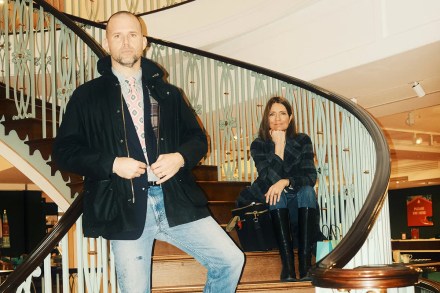
Like all men, my dear friend Chris Black is an absolutely terrible person to shop with. He behaves only marginally better than a boy toddler. As we stood on the street outside Fortnum’s, this New Yorker’s greeting to me was, “I’m not really a Christmassy kind of person.” How anyone could say this when they are about to enter the Father Christmas of department stores is beyond me. Fortnum & Mason, with its crimson carpets and twirling mahogany doors, counters groaning with marzipan and chocolate and its gracious staircases and red-coated butlers transport even the most jaded shopper to a gentler time when Christmas shopping was an “outing,” one that you dressed up for, before people had even imagined scroll-and-click retail.

What makes money ‘short?’

I heard on the wireless a reference to the growing number of small political parties getting funds from short money. I’m afraid I let it slide past me as one of the many things about money that I don’t understand. Short is an extremely productive element in English vocabulary. Short-haul journeys preceded by decades the invention of airplanes. The unlikely sounding shorthorn carrots have been with us since the 1830s. The Americans favor short hundredweights, which are only 100lb instead of the Imperial 112lb; worse, the standard ton is consequently a short ton of 2,000lb, a long way off the metric tonne, to which British tons approximate.

The conservatism of Tom Stoppard

From our UK edition

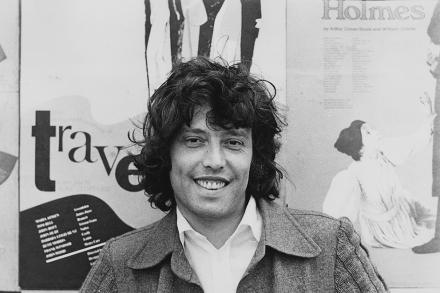
Sir Tom Stoppard, who died last week, never wrote a memoir, but he did sort of speak one. Just over ten years ago, he told me that he and his new wife, Sabrina Guinness, had become tenants of an old rectory in Dorset. I asked him if he would therefore speak as guest of honour at the AGM of the Rectory Society, a fan club for existing and former clergy houses which I invented in 2005. The AGM always takes place in a central London church, and in 2015, the year I invited Tom, it was held in the Queen’s Chapel beside St James’s Palace. Beyond expressing a tepid wish that speakers make some small reference to the society and its purposes, I never specify their subject.

The strange death of England

Whatever happened to Britain, or the UK, or England, or whatever they're calling it? We can't even agree on what it's called. But what happened to England, the England that, if you're over 50, you grew up learning about, the England that controlled the world, the England that ran the largest empire in human history at the end of World War One?  Britain, which is an island in a pretty inhospitable climate, controlled literally a quarter of the Earth's surface – and not controlled in the way the United States controls the rest of the world with an implied threat or with economic ties through trade, but with administrators and people sitting at desks with eyeshades, counting things.

Do Jews have a future in Britain? 

I was on my way to synagogue yesterday when I got news that was surprising and unsurprising at the same time. That there had been an attack at a Manchester synagogue on Yom Kippur was a shock, but only the location and the timing. The fact that terror had struck our community felt like the confirmation of our worst fears – and something that was grimly predictable.  For as long as I can remember, Jewish life in the UK has been closely guarded and protected. My childhood synagogue in the leafy London suburb of Surbiton was behind locked gates with security guards posted outside when anyone was in the building. My Jewish newspaper office today has similar protections and an address we’re told must never be made public.

How to raise a patriot

From our UK edition

‘Good news for patriots,’ said one of our most celebrated national newspapers this week: ‘Your numbers are likely to swell.’ This was on the editorial page, where the opinions of the paper are laid out, and it referred to a poll conducted by ‘More in Common’ which had found, to everyone’s surprise, that British teenagers are pretty patriotic. About half of all 16- and 17-year-olds feel proud of their country, it found, which is more than their parents. It was an interesting poll for anyone considering the rise of Reform and how that might interact with the incoming slew of teenage voters. Interesting too for those of us in liberal London, trying to keep the flickering pilot light of patriotism alive in our children’s tiny, K-pop-infested minds. (What’s K-pop?

What it means to be English

From our UK edition

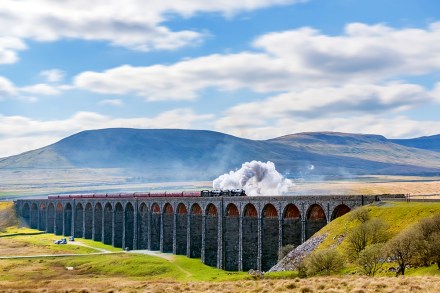
How can you ever put your finger on the comfort, the joy, the absurdity, of being English? Not, perhaps, through some attempt at definition: but in a hundred moments linked by that invisible thread, Englishness. Such a moment occurred for me last Friday. The place was Kidderminster in Worcestershire, the occasion the re-opening of the heritage Severn Valley Railway to Bridgnorth in Shropshire, at the lovely station from which the line, formerly Great Western Railway (GWR) and closed by British Rail in the 1960s, runs. If scripture doesn’t specifically mention steam engines, they are implicit in the psalmist’s rapture Let’s not be sentimental about Kidderminster.

The force of Typhoon Tyson, Sydney, 1954

From our UK edition

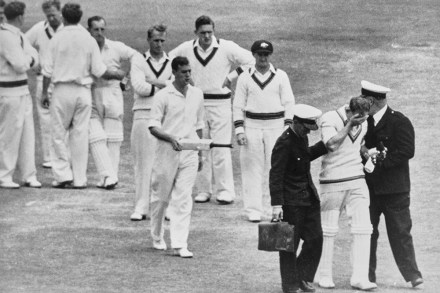
Lord Hawke, the grand old man of Yorkshire cricket and stalwart of the MCC, was not one to mince words. A century ago, the administrator rejected calls for the national XI to be led by Jack Hobbs. ‘Pray God no professional shall ever captain England,’ Hawke said. ‘We have always had an amateur skipper and when the day comes when we shall have no more amateurs captaining England it will be a thousand pities.’ It took 27 years. Elizabeth II would be less picky about commoners. She knighted Hobbs in her Coronation honours in 1953, the same year that Len Hutton, England’s first professional captain, led the side to regain the Ashes after 20 years. To defend the urn Down Under, however, as he hoped to do in 1954-55, was a hard task.