Emmanuel macron

Is a Brexit deal within reach?

From our UK edition

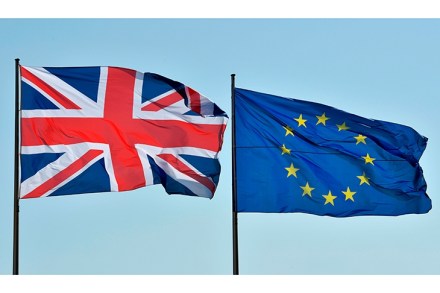
Trade talks between the UK and the EU are in a better place than they have been at any point since they started back in March. Now, in one way this is not impressive — the diplomatic equivalent of being the tallest mountain in Holland. For the first three months of these negotiation both sides were bullish, restating their maximalist positions, and coronavirus forced the negotiations online, making diplomacy and quiet compromise trickier. But now an intensive series of talks have been agreed, some of which will be face to face. Both sides appear to be in earnest about trying to break the deadlock. The British side is, privately, far more optimistic than it has been at any previous point in the negotiation.

How do you like US now?

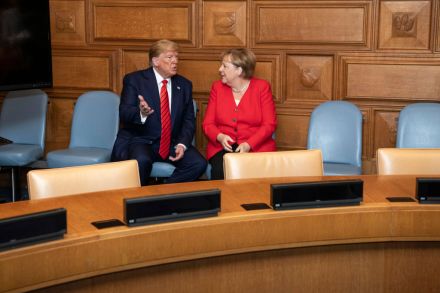
It’s that time again when newspapers tell us that America’s standing in the world has substantially declined under Donald Trump. It’s no coincidence that we’re always told this when a Republican resides in the White House. You must wonder why it is that 'the world' (i.e., elite European leaders and media) oscillates in its view of American leadership directly in tune with America’s presidential election outcomes. Since 1980, the message has boiled down to this: Republican presidents are narrow-minded and dimwitted warmongers (Ronald Reagan and George W. Bush) or isolationist (Trump), whereas Democratic presidents are nuanced and deep-thinking internationalists (Bill Clinton and Barack Obama).

standing

Don’t bank on a V-shaped recovery

From our UK edition

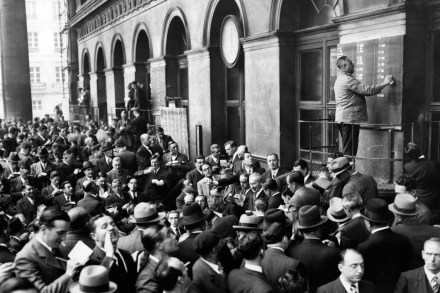
Last week, Britain and France were treated to an avalanche of financial statistics jostling with the macabre daily litany of Covid casualty numbers. All are premised on a V-shaped recovery in which the severity and rapidity of the Covid recession is matched by a rapid bounce back. But the French above all should be aware of a historical parallel that suggests caution regarding the V-shaped recovery. But first the size of the problem. In Britain, the Office for Budget Responsibility produced the most pessimistic scenario for the British economy compared to those of KPMG, Morgan Stanley and the OECD. Based on a three-month lockdown it projects a 2020/21 budget deficit of 14 per cent falling back to a 2.

Will coronavirus kill the eurozone?

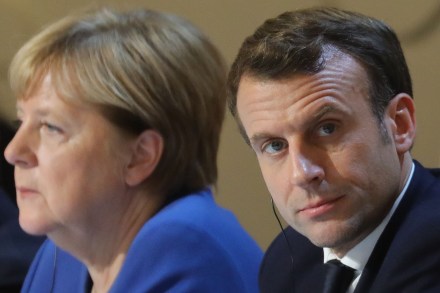
The familiar should be a consolation amid the terrible novelties of COVID-19, but the pandemic’s effects on the European Union threaten to turn familiar fiasco into dangerous novelty. As a weakened Angela Merkel faces Germany’s crisis of economic responsibility, and France floats the idea of issuing its own ‘corona bond’, the EU and its currency face what Emmanuel Macron would probably not want to call its Waterloo.Henry Kissinger’s remark — ‘Who do I call if I want to speak to Europe?’ — has never seemed more true. Britain is leaving.

eurozone

The arrogance of France’s coronavirus rhetoric

From our UK edition

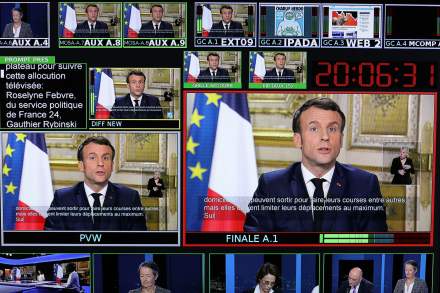
‘At the beginning of a pestilence and when it ends, there’s always a propensity for rhetoric. In the first case, habits have not yet been lost; in the second, they’re returning. It is in the thick of a calamity that one gets hardened to the truth – in other words to silence.’ Albert Camus, The Plague. Faced with Covid-19, France has not yet reached that moment of silence when one gets hardened to the truth. Rhetoric still has the upper hand as President Macron’s address to the nation on Monday night revealed.

Can Macron halt the rise of Islamic extremism?

From our UK edition

Emmanuel Macron has unveiled his plan to combat the rise of Islamic extremism in France. Stressing that his fight was not against the religion but political Islam, 'which has no place' in the Republic, the president outlined a series of measures in a speech last week. Notably, his plans involve an end to the hosting of imams from countries such as Turkey and Algeria, and more rigorous control on foreign financing of mosques from the likes of Qatar. Macron stopped short of introducing an 'Islam of France', which had been mooted two years ago, but his intention is to eliminate the malevolent influence of outsiders.

French disconnection: how Emmanuel Macron went from savior to failure

This article is in The Spectator’s February 2020 US edition. Subscribe here.Montpellier, France As the new year dawned, it was business as usual in France, with transportation paralyzed, hundreds of cars burning in the suburbs, violent demonstrations in the cities, a whiff of tear gas in the Métro, police beating protesters. Train drivers, air-traffic controllers, nurses, garbage collectors, ballet dancers, opera singers were all on strike — and so, even, were lawyers. If the country is not wholly immobilized, it’s because the French are pretty adaptable and, to be honest, some only pretend to strike. My garbage was picked up in the normal way. Making the French swallow bitter medicine is hard, even in a nation of hypochondriacs.

emmanuel macron

Trump is saving Nato

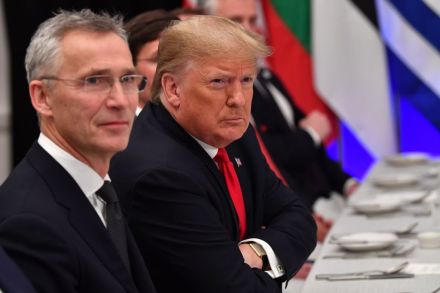
It’s almost Nato as usual when Emmanuel Macron calls Nato ‘brain dead’. It’s Nato as usual, and Donald Trump as usual, when Trump, who not long ago called Nato ‘obsolete’, chastises his bromantic partner Macron for being ‘insulting’ and ‘disrespectful’. It is unusual for Nato when Trump calls off a press conference and calls blackface artist Justin Trudeau ‘two-faced’.

nato

Expect fireworks at this week’s Nato summit

From our UK edition

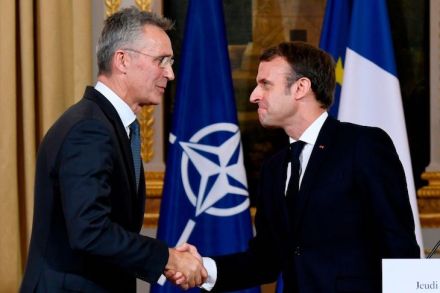
This week is seminal for Boris Johnson and Emmanuel Macron. Boris, in Watford, is hosting one of the most important Nato summits for years. Its significance is not because it marks the Alliance’s 70th anniversary, but because of President Macron’s ‘disruptive’ and trenchant criticism of the Atlantic Alliance as close to ‘brain dead’, which has touched a nerve. The French President went on to reiterate his remarks at an Elysée press conference, with a visibly uncomfortable Nato Secretary General, three weeks later.

Yellow Vests are copying the French left’s worst traditions

From our UK edition

On Saturday, I visited Chartres and stood in awe inside its cathedral. I was as stunned by its splendour as I was by the knowledge that men once wanted to blow the cathedral sky high. The Revolutionary Committee was only prevented from carrying out its wish in 1793 by a local architect who warned that removing all the rubble would be a complicated task. So instead they stripped the cathedral of its metal and burned the peat wood sculpture of the black Madonna. The cultural sacrilege of the late-eighteenth century has returned to France in the shape of the Yellow Vest mob, many of whom share the Revolutionaries' hatred of their country and its traditions. The real Yellow Vests, the ones who last winter staged peaceful protests throughout France, have deserted the movement this year.

Could this self-made billionaire become France’s first Muslim president?

From our UK edition

The French writer Michel Houellebecq has a disconcerting habit of correctly predicting unsettling events. In 2001 in Plateforme he predicted a terrorist attack on tourists that duly occurred in Bali a year later. Sérotonine, written last year, foretold the gilet jaunes. In Soumission (2015), he famously predicted that France would elect a Muslim president by 2022. This remains improbable, with the three-year timescale. Yet the odds have improved slightly thanks to the businessman Mohed Altrad, a Syrian exile turned building tycoon who employs 30,000 people worldwide and is due to run for mayor of Montpellier next year, in a country where the mairie is a well-trodden stepping stone to higher office.

Emmanuel Macron could be the big loser from the Saudi drone attack

From our UK edition

Saudis woke up last Saturday to find the crown jewel of their oil industry in smoke. The attack on the al-Abqaiq oil processing facility, allegedly conducted by cruise missiles and launched from a staging area inside Iran, resulted in the sharpest single-day increase in crude prices since the 1991 Gulf War. Saudi Arabia’s largest oil installation, however, wasn’t the only thing that went up in smoke last weekend. The volley of missiles screeching into Saudi airspace may have also ruined French president Emmanuel Macron’s attempt to deescalate tensions in the Persian Gulf and save the 2015 Iran nuclear deal from a slow and agonising death.

Is this film saying relationships between teachers and kids are OK? Scarborough reviewed

From our UK edition

Scarborough is a small British film but it will give you a very big headache. Its subject is teachers who have relationships with pupils and it’s well directed and well performed — Jodhi May is always worth the price of a ticket whatever — but I’m still trying to work out what it has to say. That these relationships are sometimes OK? That they never are? That we shouldn’t judge? God, I hate cinema when it makes you think. And gives you these big headaches. The film is based on the play by Fiona Evans, first staged at the Edinburgh festival and then at the Royal Court in London.

The G7’s doomed effort to preserve the hegemony of white power

From our UK edition

When the G7 was first convened in 1976 it made sense for those countries to gather. In a world divided between democratic capitalism and authoritarian socialism, as well as between industrialised countries in the West and an almost universally poor ‘developing world’, the US, Japan, UK, Germany, France, Italy and Canada were the wealthy nations who could best solve problems. After the age of imperialism, a summit of the powerful seemed to symbolise a more enlightened way of doing things. More than four decades later, a meeting of the same seven countries is an anachronism. What right have Italy and Canada (respectively the world’s eighth and tenth largest economies) to be at the top table when China (second), India (seventh) and Brazil (ninth) are excluded?

Trump’s bold defiance of Macron’s hate speech charter

In Arthur Miller’s superb examination of the nature of fanaticism, The Crucible, the key moment comes not with the initiation of the Salem witch trials which form the subject of the play, but in the leading character finally and fully rejecting them. The point of crisis comes when John Proctor refuses to sign his name to the condemnation of supposed witches which would justify their horrific punishment. 'How may I live without my name? I have given you my soul, leave me my name.' It is the moment when a man finally finds the courage that is essential to any meaningful masculinity, the courage to defy the absolute consensus of opinion that harms the innocent and taints those who accept it with complicity in evil.

hate speech

Emmanuel Macron’s climate change virtue signaling

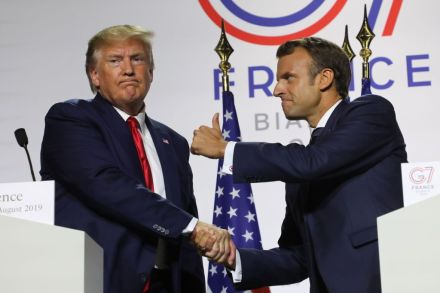
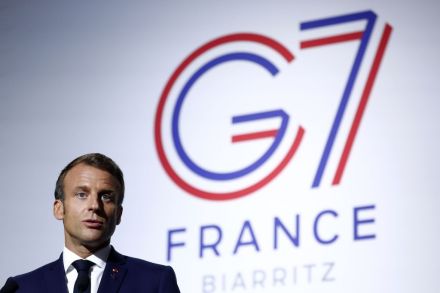
The French president Emmanuel Macron is as flighty as the movie character he most resembles, Harold Chasen, the eponymous sillyboy boy in Harold and Maude. As the world’s economies shudder under a variety of eco-angst initiatives, uncertainty over Brexit, the disruptions of Trump’s steely tariff initiatives, and the truculence of a surprised China, the blinking boy wonder jettisoned all the careful laid plans for the G7 meeting in Biarritz and announced without warning that the summit should focus on the 'emergency’, the 'international crisis’ of (as one news report put it) 'the record number of fires ravaging the Amazon jungle.’ 'Our house is burning.

emmanuel macron

Macron’s no-deal Brexit gamble could backfire

From our UK edition

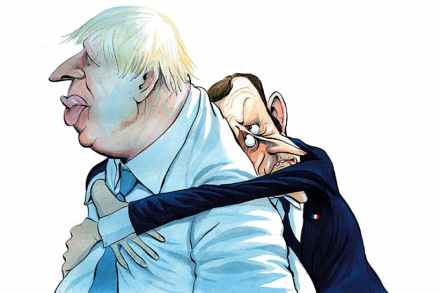
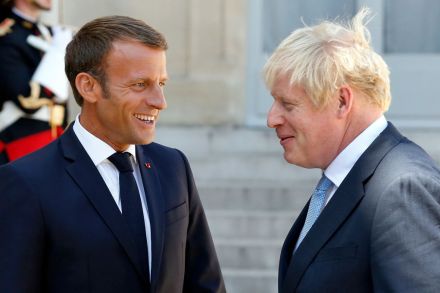
The ‘Non’ was not quite as frosty as it might have been. When Boris Johnson met up with France’s president Emmanuel Macron there were at least some pictures of the two men talking amicably. Even so, while Germany’s chancellor Angela Merkel and some of the EU’s other leaders have at least left the door a tiny bit open to renegotiating the UK’s departure from the EU, Macron made it clear it was almost completely shut. In fact, Macron is making almost as big a bet as Johnson. His calculation is that a no-deal Brexit will work to France’s advantage. Yet he may well have mis-calculated – and it could easily drive his own economy into recession.

Could the Yellow Vests spoil Macron’s Biarritz G7 summit?

From our UK edition

Who was the bright spark who thought it would be a good idea to hold this weekend's G7 summit in Biarritz? At the height of summer? Normally in August the population of this Atlantic coastal resort in France's Basque country balloons from 25,000 to more than 110,000. But not this year. Admittedly the arrival in Biarritz in the last fortnight of 13,200 law enforcement personnel has swelled the numbers, but they're unlikely to be buying beach towels and taking surfing lessons. Biarritz is in lockdown and the airport is closed until Sunday, along with the main train station and those of four neighbouring resorts. Tourists and commuters will have to make other arrangements, although roads are also shut or re-routed to avoid the centre of Biarritz.

Emmanuel Macron could be Boris Johnson’s Brexit saviour

From our UK edition

One thing on which Remainers and Brexiteers can agree is that Brexit delayed is Brexit denied. The government continues to proclaim that the UK will leave the EU on 31 October with or without a deal. But No. 10 is acutely sensitive to the possibility of a parliamentary manoeuvre designed to compel the executive, through legislation, to seek a further extension of Article 50 to delay Brexit yet again. But Boris Johnson should keep calm about this prospect, for an unlikely saviour – the president of France, Emmanuel Macron – could come to his rescue. Whatever Brexit extension legislation Parliament might push through, any further extension of Article 50 requires unanimous EU Council of Ministers’ support.

The secret of Il Capitano’s success

From our UK edition

Last summer, when Italy became the first major European country to get a populist government, Steve Bannon was cock-a-hoop. The former White House chief strategist had spent much of his time in Europe last year aiding and abetting populists. He called Italy ‘the centre of the political universe right now’. He was full of praise for what he described as the altruism of the alt-left Five Star movement led by Luigi Di Maio and the radical right Lega led by Matteo Salvini. The two populist parties had buried their differences for the sake of the nation, Bannon believed, as they formed a coalition government. But for all his excitement, this anti-establishment honeymoon couldn’t last.