Emmanuel macron

Diary – 6 July 2017

From our UK edition

A trip to the supermarché at the beginning of our French month yielded many of the necessary things one also buys at home, but even washing powder acquires romance when sporting a French label, and the fresh fish, meat, veg and wine sections are far bigger than ours, with mountains of lettuce and seven different varieties of tomato. The Carrefour bookshelves also yielded Tintin books which are, like Asterix, best read in French. I bought Tintin et L’Ile Noir, Tintin et La Crabe au Pinces D’or, and my favourite, Tintin et Les Bijoux de Castefiore. The French is simple, the drawings are masterpieces, subtle, witty, full of style and character.

Portrait of the week | 6 July 2017

From our UK edition

Home Philip Hammond, the Chancellor of the Exchequer, urged colleagues to make the case for ‘sound money’; he said, ‘We must hold our nerve,’ as he came under pressure to end the public-sector pay cap of a 1 per cent rise a year. Boris Johnson, the Foreign Secretary, thought that pay rises could be awarded in ‘a responsible way’; Michael Gove, the Environment Secretary, did not think that taxes would need to increase to accommodate pay rises. Firemen boasted of a 2 per cent pay rise. The government won the vote on the Queen’s Speech by 323 to 309 after heading off an amendment by the Labour MP Stella Creasy, by suddenly announcing that women in Northern Ireland (where abortion is illegal) would be able to have free abortions on the NHS in England.

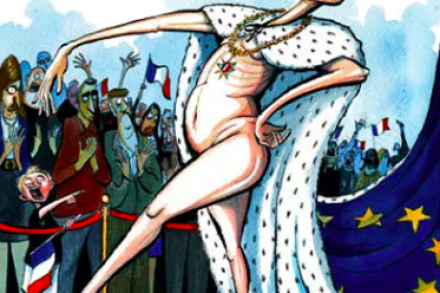
The preposterous pomp of Emmanuel Macron

From our UK edition

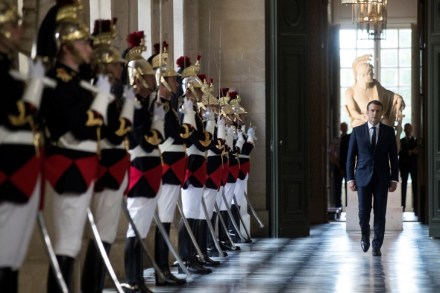
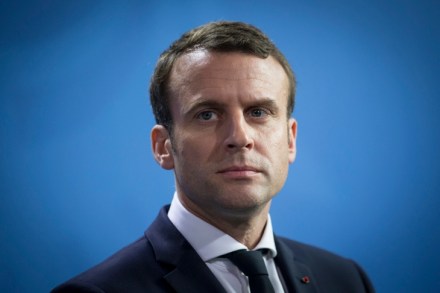
President Macron’s speech on Monday to the combined houses of parliament in the Palace of Versailles proved how stunningly different are the French from the British. Imagine our head of state promising to cut the size of parliament by a third. Imagine her, or even her prime minister, promising to renew the nation with ‘the spirit of conquest’, as M. Macron did. We are often accused of nostalgia for empire, but we would never say such a thing, or even think it. Imagine the ribaldry which would descend upon M. Macron’s equivalent — if our constitution could have such a phenomenon — for striding though the marble halls past a guard of honour holding their swords erect, and then dumping more than an hour of grandiloquence upon the assembly.

The migrant crisis could prove to be Macron’s undoing

From our UK edition

What a forty eight hours it has been for Emmanuel Macron. On Monday, he gave his regal address to the National Assembly at the Palace of Versailles, a grandiose occasion during which the French president rivalled Tony Blair and Barack Obama for swaggering self-confidence. As Jonathan Miller said in the Spectator, it's hard not to be 'cowed by the absolute bravado of the young president'. Then, on Tuesday, Macron's prime minister, Édouard Philippe, presented to the Assembly his government's programme for the next five years. As is the tradition, the MPs were asked at the end of the general policy speech to give the PM their backing.

Emmanuel Macron and the restoration of French monarchy

From our UK edition

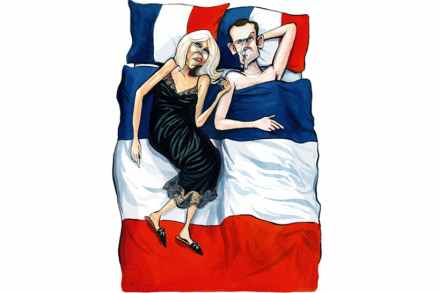
Have the French belatedly realised the error of their regicide and decided to restore the monarchy?  If so, will the regime of Emmanuel Macron, whose seizure of power must certainly be inspiring politicians around the globe with its brutal efficacy, end the same way?  Macron’s glittering and symbolic appearance yesterday at the Palace of Versailles to address a joint session of the National Assembly – over which he currently exercises complete domination – and the Senate, will give historians, semioticians and journalists plenty to mull (although Macron has said that his thoughts are too complex to be explained to the media). But Macron played a blinder. Many French deeply regret not having a king.

France is finally looking forward to some Brit-bashing

From our UK edition

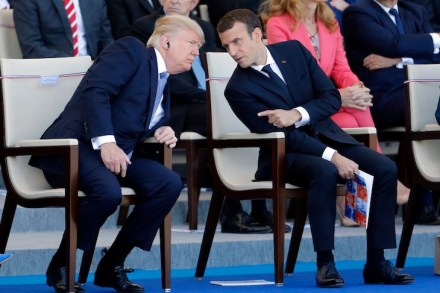
Was that a touch of gloating I detected last night as I watched the news on French television? The lead item was Donald Trump's acceptance of President Macron's invitation to attend the Bastille Day commemoration in Paris next month. It's always a prestigious occasion and this year marks the centenary of America's entry into WW1. Hence the invitation to the American president which came in a telephone conversation where the pair also agreed on a joint military response against the Syrian regime should Bashar al-Assad launch another chemical attack.

Europe’s imploding right

From our UK edition

If the British Conservative party is feeling stunned, having calamitously misread the public mood in a general election, then it is in good company. Across Europe, right-wing parties are struggling to find messages that resonate. It’s not that voters have turned away from conservative ideas: polls show a huge number interested in individual liberty, lower taxes and the nation state. The problem is that conservative parties have given up on those ideas — and, as a result, voters are giving up on them. Take Fredrik Reinfeldt, prime minister of my native Sweden between 2006 and 2014. He started off well, reforming welfare and cutting taxes. But then it all went downhill. He lost his taste for economic freedom and, with it, his edge.

Islamists have failed to divide France. Will they succeed in Britain?

From our UK edition

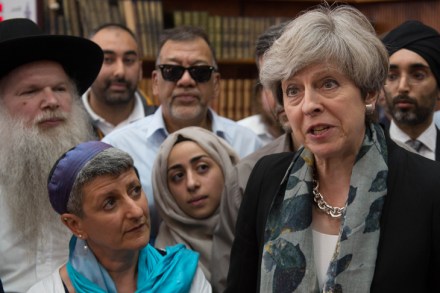
Islamic State will be delighted by what happened outside Finsbury Park mosque in the early hours of Monday morning. In the space of three months they've achieved in Britain what they failed to pull off in France during five years, and provoked a retaliatory act. This is what they want. When the Syrian intellectual, Abu Moussab al-Souri, published his 1600-page manifesto in 2005, 'The Global Islamic Resistance Call', his stated goal was to plunge Europe into a war of religion.

The Euro’s badly-needed reform could finally be on the cards

From our UK edition

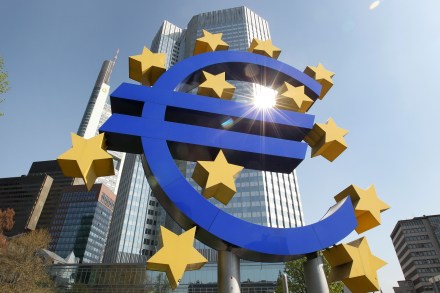
Has Germany finally started to shift its position on the future of the Eurozone? Speaking today, at a conference for the German equivalent of the CBI, Chancellor Angela Merkel appeared to open the door to a new form of governance for the 19-country bloc. Since the financial crisis, the common currency zone has bounced from crisis to crisis, surviving by kicking the can down the road at each critical moment. It has long been obvious that major institutional changes were required to ensure the currency’s long-term viability.

How long can Macron’s message of hope survive?

From our UK edition

It says much about the extraordinary rise of Emmanuel Macron that some commentators are describing the outcome of Sunday's second round of voting in the parliamentary elections as something of a disappointment for the new president. His La République en Marche [LREM] party won an estimated 359 of the 577 seats in the National Assembly, some way short of predictions last week that forecast his fledging party could finish with as many as 450. Then again, it's the biggest majority in the Assembly since the 1968 elections and the result also confirms the destruction of the Socialist party and the disarray of the Republicians. The former picked up only 46 seats - down from 295 in the 2012 elections - while the centre-right party and their coalition partners finished with 126.

Portrait of the week | 15 June 2017

From our UK edition

Home Theresa May, the Prime Minister, spent the week confronting the consequences of the general election that she had called to bring ‘stability and certainty for the future’. It had instead surprisingly left the Conservatives with no overall majority. They won 318 seats (a loss of 13) and Labour 262 (a gain of 30). The Scottish National Party won 35 (a loss of 21), with the Conservatives gaining 12 extra seats in Scotland, even capturing Stirling. Labour won an extra five seats in Scotland. Angus Robertson, the SNP leader at Westminster, lost his seat, as did Alex Salmond. Nick Clegg, the former Lib-Dem leader, lost his seat, but Sir Vince Cable won back Twickenham.

The Macron miracle

From our UK edition

 Paris While Theresa May flounders in a mess of her own making, Emmanuel Macron is striding out on to the sunlit uplands of French politics. Six decades after Charles de Gaulle set up the Fifth Republic, his seventh successor is charging ahead with his attempt to restore a quasi-monarchical authority to the occupant of the Elysée Palace. After three hollow presidencies, the 39-year-old hope of the European reformist centre is bent on turning the clock back in terms of presidential power with a broad-based electoral appeal, positioning himself above the sclerotic political world that has alienated most voters and blocked structural change in France since the 1980s.

Macron’s landslide

From our UK edition

En Marche, a party created 14 months ago by Emmanuel Macron, is on course for a clear majority in the French elections - after the collapse of the socialist party. His party looks on course to win 70pc of the seats in the National Assembly - an astonishing outcome, one of the many election results that would have been dismissed out of hand by political experts a few months before it happened. It offers further proof that ‘Macronmania’ is taking hold of the French. https://twitter.

Macron mania is still sweeping across France

From our UK edition

It's in the little gestures one learns much about a man, and such is the case with Emmanuel Macron. Since his anointment as president of France last month, the 39-year-old has held talks with Angela Merkel, Recep Erdogan, Donald Trump and Vladimir Putin. Those tête-à-têtes have made the headlines but it's what happened in Paris at the end of last month that demonstrated the steeliness of the youngest French president since Napoleon. As is customary for the head of state, Macron attended the final of the French Cup at the national stadium in Paris. There once was a time when the president of France was introduced to the two teams on the pitch before kick-off, but Nicolas Sarkozy dispensed with that tradition when he came to power a decade ago.

France has woken up to the danger of Islamism. Has Britain?

From our UK edition

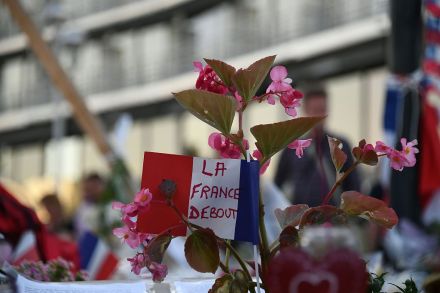
If there's one country that knows how Britain feels in the wake of last week's suicide bombing in Manchester, it's France. Similar horror has been visited on the French several times in the past five years with nearly 250 slaughtered at the hands of Islamic extremists, so the French are all too familiar with the grief, the rage and the shock still being felt across the Channel. But not Britain's incomprehension. At first, maybe, when Mohammed Merah shot dead three Jewish schoolchildren in a Toulouse playground five years ago, but since the Charlie Hebdo cartoonists were slaughtered in January 2015 the French have understood what is going on.

The Spectator Podcast: The Islamist worldview

From our UK edition

On this week’s episode, we reflect on the tragic events in Manchester and what can be done to prevent similar attacks in the future. We also look at the emergence of political courts in America, Russia, France and beyond, and tip which constituencies to have a flutter on in next month’s election. First, we took a moment to consider the terrorist attack that struck Manchester on Monday evening. With scores dead and injured, including children as young as 8, what can be done to stop another atrocity like this taking place? Douglas Murray says, in this week's Spectator cover piece, that we have long understood the Islamist worldview, but failed to tackle its ideology.

Emmanuel Macron’s new third way

From our UK edition

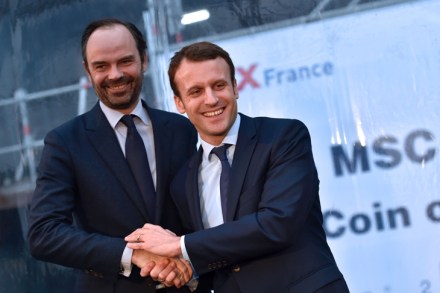
Édouard Philippe is the perfect fit to be Emmanuel Macron's Premier Minister. A one-time Socialist who then switched to the centre-right Les Républicains, the 46-year-old mirrors the ambiguity of his president. Philippe has been the mayor of the northern port town of Le Havre since 2010 and the region's MP for the last five years. Since his accession to the presidency last week, Macron has rechristened his party, La République en Marche [LRM], and in nominating Philippe as his PM he's hoping to send a message to the country that he really is a centrist president who 'is neither left, nor right'.

High life | 11 May 2017

From our UK edition

Much like the poor, the charity ball has always been with us, but lately it’s turned into a freak. Something is rotten in the state of New York, and the name of it is the Met Gala. Once upon a time, the Metropolitan Museum’s gala ball was fun. Serious social-climbing multimillionaires competed openly for the best tables and for proximity to blue-blooded socialites such as C.Z. Guest and her ilk. Pat Buckley, wife of William F., ran the show with military precision, allotting the best seats to those who had paid a fortune for them, but also to those who were young and handsome and whose pockets were not as deep. I used to be a regular. Then something happened.

Portrait of the week | 11 May 2017

From our UK edition

Home After spectacular local election results, Theresa May, the Prime Minister, said: ‘I’m taking nothing for granted over the next five weeks. I need support from across the United Kingdom to strengthen my hand, and only a vote for me and my team will ensure that Britain has the strong and stable leadership we need.’ The Conservatives increased their number of council seats by 563. Labour lost 382 and Ukip lost all 145 it held, but gained a single one, Padiham and Burnley West, Lancashire, from Labour. In Scotland, the Conservatives became the second party to the Scottish National Party and gained seven seats in Glasgow (where Labour lost control of the city) and Paisley’s Ferguslie Park, Scotland’s poorest community.

François Hollande has handed his acolyte Emmanuel Macron a poisoned chalice

From our UK edition

Every politician in France is on manoeuvres. Vast chasms have opened up in the anti-Le Pen coalition and the country faces another two-round election for the National Assembly in June. It's likely that a fractured and dysfunctional legislature will emerge, complicating or even making impossible the program proposed by president-elect Emmanuel Macron. Nonetheless, Macron will still be hoping that amidst this electoral entropy he can push his own slate to the forefront. This is a big ask. Possibly only about 20 per cent of voters supported him for the presidency for any reason other than he was not Marine Le Pen. His program is either not understood or not supported by the vast majority of voters. His ambition to secure a majority in the assembly looks impossible to me.