Emissions

How California’s new trucking regulations threaten standards of living

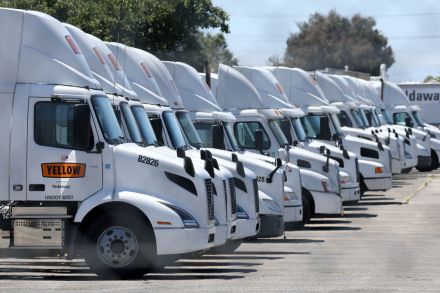
It’s chic to look down on big trucks and their drivers. Former president Donald Trump’s photo op with truckers in 2017 was immediately lampooned on social media and by liberal journalists. It would be fitting, then, if the trucking industry provides the example that kills the push to rapidly move developed economies to “net zero” greenhouse gas emissions. The fact is that any serious attempt to make Western economies “net zero” will be costly, technologically difficult and extremely disruptive to our way of life. Nothing captures these inconvenient truths better than the effort to force the electrification of the trucking industry. Trucks are to the modern economy what the circulatory system is to the body.

trucking

How builders plan to get round the Ulez charge

From our UK edition

‘What a worry the Ulez must be for you both,’ said a friend with a nod to the pick-up truck parked outside our house. It was kind of him to wonder. The builder boyfriend drives an old Mitsubishi L200 to work in London every day and like almost every other working man he cannot afford to buy a new vehicle that is Ulez compliant so you would presume he has to pay the charge. But that’s not quite how it’s turning out. There is no Ulez problem for any Khan supporter who can find an old granny to put in his old car once a week If I might speak for the working man for a second, because not many seem to be doing that, let me explain with an anecdote from the life of the builder boyfriend, who came home the other day in a buoyant mood to tell me this.

Democrats pick a bad time to punish the energy industry

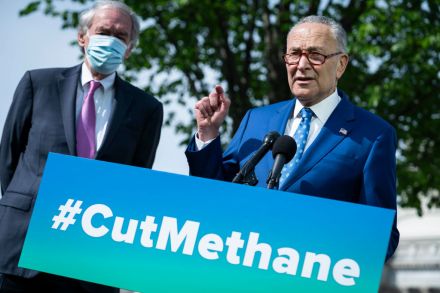
With its new Inflation Reduction Act (IRA), the government is pulling one of those infomercial tricks where they throw in a third bottle of OxiClean ABSOLUTELY FREE! Acting as if the cost of everything hasn’t already been calculated and passed onto the consumer. The IRA, you see, contains a “Methane Emissions Charge” that will impose a $900-a-ton tax on oil and gas producers that will increase to $1,500 after two years. The left is patting itself on the back for their valiant work to cut greenhouse gas emissions drastically by 2030. But here’s the thing: the energy industry is already working hard to cut emissions; it’s in their interest to do so. And when the government fines them for not capturing enough methane, guess who gets to foot the bill?

Who’s cashing in on the climate emergency?

From our UK edition

'The climate transition presents a historic investment opportunity,' says BlackRock CEO Larry Fink. 'What the financiers, the big banks, the asset managers, private investors, venture capital are all discovering is: There’s a lot of money to be made in the creation of these new [green] jobs,' chimes in presidential climate envoy John Kerry.  Fink concedes that the economy remains 'highly dependent' on fossil fuels. He also asserts that BlackRock is 'carbon neutral today in our own operations'. It’s a claim open to challenge. 'If a company or individual says to me they are net-zero, I know it is complete crap,' tweeted Glen Peters, research director of the Oslo-based Centre for International Climate Research.

The ECJ’s air pollution ruling against Britain is hard to swallow

From our UK edition

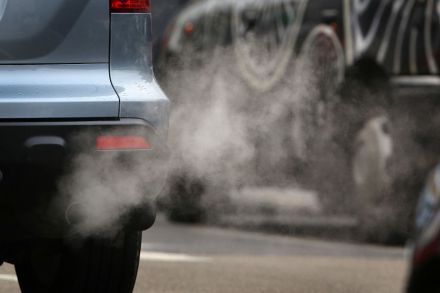
The European Court of Justice (ECJ) has ruled that the UK ‘systematically and persistently' breached EU limits for nitrogen dioxide (NOx) emissions in 16 areas including London, Manchester and Glasgow between 2010 and 2017. It's a judgement that means, despite Brexit, that a multi-million euro fine may be on its way. The UK is leaving the ECJ behind us; but as part of the withdrawal deal, we have agreed to respect its rulings on cases already in progress – and this one started in 2018. I’d be wholly in favour of the UK being fined gazillions for our historically appalling emissions – with one important caveat, which I’ll come to. After all, NOx emissions are estimated to have caused 23,500 deaths in one year in the UK.

The fatal flaw in Boris’s ten point carbon plan

From our UK edition

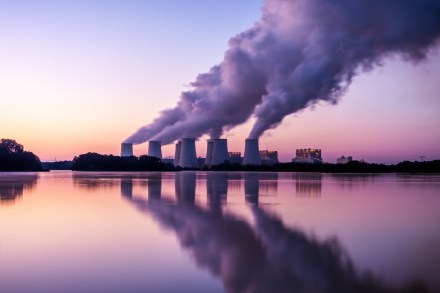
There is nothing wrong with the general direction of policy contained within the government’s ten point plan to cut carbon emissions, announced today. Who doesn’t want clean energy and more energy-efficient homes and vehicles? The problem is the perverse target which lies at its heart: the legally-binding demand, laid down in the Climate Change Act, to cut carbon emissions to net zero by 2050. This is so badly defined that the government’s ten point plan becomes really little more than a manifesto to export much of British industry, food production and power generation. The UK's definition of carbon emissions, as used in the Climate Change Act, covers only ‘territorial’ emissions – i.e. those spewed out physically within the confines of Britain.