Egypt

Obama to Mubarak: Your Time Is Up

From our UK edition

The Americans have made their move and it's not good news for Hosni Mubarak's friends and defenders. This is the statement released by President Obama tonight: The Egyptian people have been told that there was a transition of authority, but it is not yet clear that this transition is immediate, meaningful or sufficient. Too many Egyptians remain unconvinced that the government is serious about a genuine transition to democracy, and it is the responsibility of the government to speak clearly to the Egyptian people and the world. The Egyptian government must put forward a credible, concrete and unequivocal path toward genuine democracy, and they have not yet seized that opportunity.

Mubarak to Egypt: Drop Dead

From our UK edition

Seventeen Days that Shook the World? Not so fast, my friend! Hosni Mubarak's speech this evening was many things but it wasn't much of a resignation statement. Mostly, it was a nationalist plea for Middle Egypt's sympathy vote. Presenting himself as father of the nation - including his "children" gathered in Tahrir Square and in cities across the country - Mubarak's pitch seemed more likely to appeal to that generation's parents. How many Egyptian youths are really preoccupied with the moment the Egyptian flag was hoisted over the Sinai? How many, surveying their gloomy economic prospects and the lack of political opportunity, care about the past? Precious few. Nor, for that matter, can they buy the notion that the outside world has been interfering in Egypt's domestic affairs.

17 Days That Shook the World

From our UK edition

The extraordinary scenes in Cairo today should not blind us to the fact that Hosni Mubarak's apparent departure is not the beginning of the end but merely the end of the beginning. The army may have assured the protestors - whose gallantry, courage and peaceful presence on the streets of Egypt's cities has been as startling as it has been wondrous - that their demands will be met but those demands cannot be satisfied just by Hosni Mubarak's departure. It's not just personal, you might say, it's business too. And that business is real and verifiable reform. Like Brother Korski I remain optimistic that momentum now lies with the reform movement. Omar Suleiman is no kind of acceptable replacement. Nor, in anything other than the short-term, is the army.

A military coup in Egypt?

From our UK edition

Reports from Tahrir Square are very confused. There is a firm body of opinion who doubt the ‘tough cookie’ Mubarak would have stood aside. Many suspect that today’s announcements are a ruse designed to strengthen his position. As Richard Ottaway put it, ‘Ill believe it when I see it.’ Meanwhile, others report the Mubarak has been pushed or ‘been resigned’. The Foreign Office is understood to be preparing a contingency plan for what is being described as "a soft military coup". For the first time ever, the senior council of the military is meeting in open session without the President or his representatives: a very provocative or very risky move depending on your persuasion. For its part, the ruling party is holding the line.

Egypt becomes freer

From our UK edition

The world does really end with a whimper, not a bang, as T.S. Eliot said. After 31 years in power, seventeen days of protests, more than 300 dead and a shouting match between the US administration and its one-time Egyptian ally, it looks as if Hosni Mubarak will be leaving office tonight. Twitter is atwitter with news that the Egyptian strongman will soon make a TV appearance during which he is expected to hand power to newly-anointed Vice-President Omar Suleiman. Expect Tahrir Square to erupt in a festival of freedom, as the heroic, web-enabled protesters savour their unlikely but amazing victory. But while Egypt’s revolution has been more successful than many in the US and British believed it could be, it is not yet the time to celebrate.

Hague joins Middle East protests…well, as good as

From our UK edition

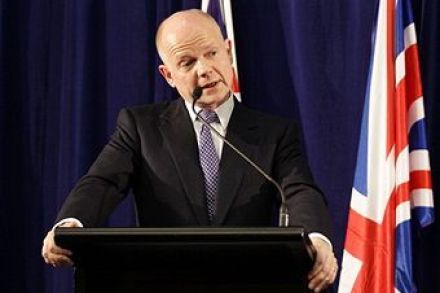
Foreign Secretary William Hague has arrived in Tunisia in order to support to the pro-democracy movement. Unlike his previous visit to Syria, which I think was poorly timed, this one is perfectly-timed. It could even end up looking like George Bush Snr’s visit to Poland in July 1989 when the US president publicly backed the revolutions sweeping across the European continent at the time and gave succour to the pro-democracy movements. Visits like this are so important to help the direction of travel. What people forget now is that in the Eastern Europe of 1989, the history of democracy was as limited as it is today in the Middle East. None of Poland, Romania, Bulgaria or Hungary had any experience of democracy.

Hope on the Nile: Islam Does Not Have All the Answers

From our UK edition

Not to grant him guru status or anything but I'm glad that Reuel Marc Gerecht has at last weighed-in on the Egypt Question. I've mentioned his writing before and think him one of the most interesting, and in some ways provocative, middle-east analysts. Even if you disagree with him, his ideas are worth serious consideration. His view that President Obama could usefully say "We are not scared of muslims voting" seems persuasive to me. So too his conclusion that it is time to "put an end to the West’s deleterious habit of treating the Middle East’s potentates respectfully and the Muslim citizenry like children." He writes: Mr. Bush’s distastefulness helped to blind Westerners to the momentous marriage of Islamism and democratic ideas.

Democracy is now Halal

From our UK edition

The popular uprisings in Egypt and Tunisia have exposed as nonsense the notion, held in many quarters, that Middle Easterners - be they Arabs, Persians, Muslims and Christians - are uncommonly uninterested in democracy. But as former CIA agent and Middle East expert Reuel Marc Gerecht writes in the New York Times: 'A revulsion against the Iraq war and a distaste for President Bush helped to blind people to the spread of democratic sentiments in the region. It blinded them to the fact that among Middle Easterners, democracy, not dictatorship, was now seen as a better vehicle for economic growth and social justice. Most important, Mr. Bush's distastefulness helped to blind Westerners to the momentous marriage of Islamism and democratic ideas.

Ancient and modern: The emperor of Egypt

From our UK edition

Romans would have regarded Hosni Mubarak as effectively the emperor of Egypt. But they would not have thought he had played a very intelligent hand. The Roman emperor held supreme authority. As head of state (princeps), he ruled the Treasury, controlled all the top political appointments, passed all laws, was final arbiter in all legal cases and selected provincial governors. As pontifex maximus, he led all the major state rituals in honour of the gods. As commander-in-chief (imperator), he ruled over the armed forces, chose all generals and determined military policy, often leading the army himself. To help him he had a circle of hand-picked, trusted advisers and a remarkably small civil service. But life was far too busy to spend his days indulging in orgies.

Talk like an Egyptian | 5 February 2011

From our UK edition

As Fraser promised, here is Quentin Letts' article from the latest Spectator, for CoffeeHousers' delectation: Few of us understand what is going on at the dusty end of the Med. There may be a few chinstrokers who cup, in their wizened palms, a concise comprehension of the Cairo crisis — see pages 14 to 18 — but the rest of us struggle for something to say. Vivid reporting has been sparse. The Today programme produced an English-speaking dentist in Cairo but he let the side down by saying, before Thought for the Day, how ‘pissed off’ the protesters were. Use some of your mouthwash, mister! The Times resorted to a photograph of Omar Sharif.

An orderly transition in Egypt requires Mubarak’s departure

From our UK edition

It appears almost certain that the protests in Egypt are not going to stop until Mubarak leaves office. For that reason, Mubarak’s departure seems a necessary step to an orderly transition. The New York Times ‘ latest report reveals that the Egyptian military and US officials are discussing how Mubarak could visibly leave while remaining as the titular president: “The country’s newly named vice president, Omar Suleiman, and other top military leaders were discussing steps to limit Mr. Mubarak’s decision-making authority and possibly remove him from the presidential palace in Cairo — though not to strip him of his presidency immediately, Egyptian and American officials said. A transitional government headed by Mr.

The world after Mubarak

From our UK edition

Experts debate what happens next in Egypt and the countries around it In his retirement, Dwight Eisenhower admitted that the biggest foreign policy mistake of his presidency had been not supporting Anthony Eden over the Suez crisis. How right he was. If Arab nationalism had been strangled in its cradle in 1956 by the vigorous action that Eden, and also initially Hugh Gaitskell, prescribed, then the oil-price hikes of the early 1970s and all the economic woes that flowed from them would never have happened. I doubt there would have been a 9/11, either. Today, instead, we face a situation whereby, since half of Israel’s natural gas consumption comes from Egypt and because of Gaza’s geographical situation, regional catastrophe looms.

From the archives: the fall of President Sadat

From our UK edition

With protesters in Egypt trying to force President Mubarak to resign, here is the piece that Roger Cooper wrote for The Spectator on the event that propelled him to power: the assassination of Anwar Sadat in 1981: The legacy of Sadat, Roger Cooper, The Spectator, 10 Oct 1981   Rarely has a political assassination set off such divergent reactions as that of Egyptian President Anwar Sadat on Tuesday.  President Reagan called it ‘outrageous and tragic’, the Pope praised him for ‘his noble vision of reconciliation’, and the Israeli prime minister, Menachem Begin, expressed deep regret at the death of ‘a great leader’.

In this week’s Spectator | 4 February 2011

From our UK edition

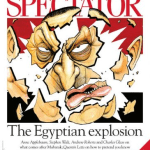
What to think about Egypt? Pick up most newspapers and you see a flood of words, but a trickle of information. Not so with this week’s Spectator, which has everything you need to know - and nothing more. Here are some pieces that I thought may interest CoffeeHousers. 1.  What you need to know. Our lead feature is an interview with a dozen people who know their onions. Anne Applebaum on whether it can be compared to Poland, Charles Glass on fifty years of Egyptian dictators, Douglas Murray on neo-conservatism and Islamism, Professor Stephen Walt on the geopolitical fallout and Andrew Roberts on the alarming power of the Cairo mob. 2. What to make of the Muslim Brotherhood. John R Bradley didn’t just predict the Egyptian uprising but wrote a book on it.

Labour’s gravest military blunder

From our UK edition

Labour is often seen as having presided over the erosion of the British military, squandering money on Cold War equipment and sending under-equipped soldiers to far-away battlefields. But away from the public's scrutiny an even greater lapse occurred - the nation's cyberdefences were left undermanned while the threat grew daily. As William Hague will tell the Munich Security Conference: "Along with its numerous benefits, cyberspace has created new means of repression, enabling undemocratic governments to violate the human rights of their citizens. It has opened up new channels for hostile governments to probe our defences and attempt to steal our confidential information or intellectual property. It has promoted fears of future ‘cyber war’.

Neoconservatism’s Mini-Revival

From our UK edition

The great thing about neoconservatism is the way it's become a universal bogeyman. On the one hand neoconservatives - by which I mean actual neoconservatives - are criticised by the right for their utopian dreams of a better, more liberal, more democratic Arab world; on the other neoconservatives - by which I mean people who generally aren't neoconservatives at all - are criticised by the left for urging caution in this present Egyptian crisis. Look at these dastardly neocon hypocrites backing Mubarak! It's a lose-lose moment for neoconservatism. So much so, in fact, that the term has been stripped of almost all meaning and now simply stands for Stuff I Don't Like. Nevertheless, neconservatism is neither as monolithic, nor as widespread as often imagined.

What’s Politically Correct About Opposing Hosni Mubarak?

From our UK edition

I don't have much sympathy for a regime that unleashes its own goons against peaceful protestors in an attempt to foment chaos as part of a strategy designed, one imagines, to leave the "silent majority" craving something, anything that restores order and "stability" to Egyptian society. But it seems that's just another example of political correctness run amok. According to some, anyway. Such as our old friend Con Coughlin. Con, typically, takes a robust view of the Egyptian uprising: At the risk of provoking the wrath of the politically correct lobby that wants to see wholesale reform of the Middle East, I am starting to feel rather sorry for Hosni Mubarak.

Al-Jazeera is not a new BBC World Service

From our UK edition

Egypt has made al-Jazeera English. The Qatari satellite channel has been the “go-to” channel; it has had more reporters on the ground than the BBC and CNN; and it has used technology in ways that make Western media look like they belong to a different era. Newspapers from the New York Times to the Wall Street Journal have talked about the channel's role in the protests. And all this despite its broadcasts being banned in Ben Ali's Tunisia and blocked in Egypt. Facing these constraints, the TV channel switched to social media like Facebook, Twitter, and YouTube. Its website posted Live Messages — audio messages recorded from phone calls placed by correspondents — on the ground, and used a facility called Scribble Live to get these updates online fast.

As the oldest parliament yawned, the oldest civilisation erupted

From our UK edition

One yawn every minute. That’s how PMQs felt today. Foreign affairs dominated the session as Ed Miliband and the Prime Minister exchanged lofty words about the Cairo demonstrations and the spread of democracy around the world. Doubtless they felt they struck a suitably elevated tone but to the viewers they came across as a pair of prep school smart-alecs trying to sound like great statesmen disposing of liberated peoples after the fall of empires. Egypt and Afghanistan were both treated to a torrent of high-minded vacuities. David Cameron found the demonstrations ‘incredibly moving.’ Ed Miliband was impressed by the sight of ‘hundreds of thousands of people facing overwhelming odds to ask for their democratic rights.

Consensus reigns over PMQs

From our UK edition

A very different PMQs this week: six questions on foreign affairs and almost total consensus between Cameron and Miliband. Miliband’s office had given No 10 advance warning of the topics they wanted to raise and the two agreed on pretty much everything. Miliband argued that ‘the best route to stability is through democracy.’ Cameron agreed but stressed that democracy means more than just elections. You get the picture. At the risk of disagreeing with Pete, I must say that the exchanges were a reminder of just how dull PMQs would be if it was not confrontational.