Egypt

This will Occupy Boris

From our UK edition

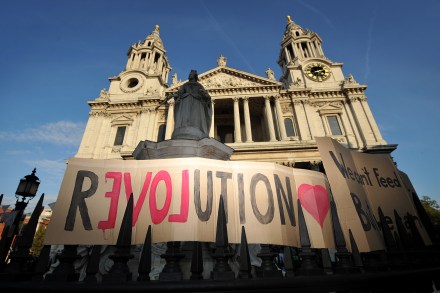
A few months ago I hosted a debate at my think tank with one of the key Tahrir Square leaders. After his talk about Egypt, he warned the audience: the protests that toppled Hosni Mubarak were not just an Egyptian or Middle Eastern phenomena; it could – and, he said, would – spread to the West. For the youth of today, he argued, feel disempowered, empoverished and betrayed. As protests spread from New York to London and other European capitals, it seems that Egyptian protester may have been right. Today's efforts to occupy the London stock exchange failed but protesters remain on the grounds of St Paul's Cathedral. Whatever happens in the next days, protests like these are likely to appear, disappear and appear again.

Where does the Arab Spring leave Israel?

From our UK edition

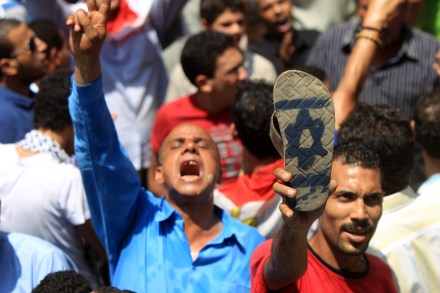
After decades where Arab politicians kept the truth of their constructive relations with Israel hidden from their publics and stoked anti-Semitism and anti-Israel sentiment for domestic purposes, it is no wonder that Israel remains the focus of anger across the Middle East, even after the Arab spring turned attention elsewhere. Last night in Cairo anti-Israeli protests went further than anything seen before, as frustrations with the slowness of the democratic transition and misperceptions about the Egypt-Israeli relationship led demonstrators to attack and torch the Israeli embassy. There will be those who see in Cairo proof that the Arab Spring will unleash nothing but turmoil and conflict. I think it is too early to tell.

Middle East round-up

From our UK edition

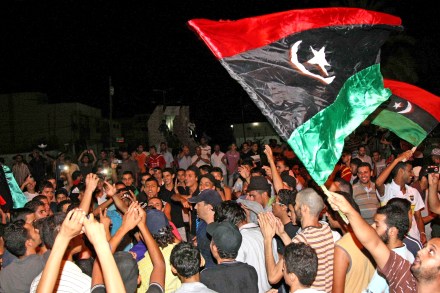
Reuters is reporting that Libyan rebels have taken control of Libyan state TV – one of the last organs to remain in Gaddafi’s hands. It’s another indication that the dictator’s position is increasingly hopeless; although it appears that one of his sons may have been ‘liberated’ by resurgent loyalist forces. So there’s a glimmer of life in the Mad Dog yet and, plainly, the fanatics will fight to the last bullet, as they promised to do at the outset of NATO’s campaign.  The sudden fixation with Libya has marginalised some other stories in the region.

Tensions rise in the Middle East

From our UK edition

The escalating crisis in Gaza and Sinai is worrying. Egypt is to recall its ambassador to Israel after 3 security personnel were killed in confused scuffles after an Israeli bus was bombed near the Sinai border; the Israeli embassy in Cairo has also been the scene of ill-tempered demonstrations and vandalism. Israel denies responsibility for the three deaths. Meanwhile, the Egyptian army is also conducting operations against Islamist militants in the increasingly lawless Sinai desert. Finally, the Arab League has called an emergency meeting after Israel retaliated to 30 rocket attacks by launching stiff operations in Gaza.

Sickly Mubarak in court

From our UK edition

As an accompaniment to the unique photo-history of the Egyptian revolution currently being shown on the Books Blog, here is Channel 4's latest footage of the invalid Hosni Mubarak being brought to trial. This is a momentous moment in Egypt's rebirth as a nation, but one denuded of dignity if these images are anything to go by.

The revolution remains on track

From our UK edition

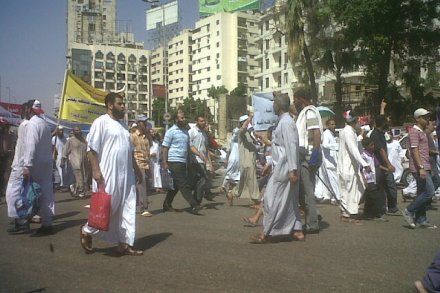
The Egyptian revolution has pulled itself back from the brink in a quite an extraordinary way. Everyone feared a clash in Tahrir Square today but, so far, a deal struck between the Muslim Brotherhood, the Salafists, the pro-democracy activists and the military is holding. Tahrir Square is teeming with white-clad Hajis. But everything is calm. The military gave into to a number of key demands from the protesters, including making some changes in the newly-promulgated electoral law. The Muslim Brotherhood feared being blamed by the military for a confrontation and being seen as too close to the Salafists. And the Facebook liberals wanted to keep the revolution united for now.

The threat to the Egyptian revolution

From our UK edition

The Egyptian revolution may be in for its greatest challenge yet. Last weekend saw clashes between different groups of protesters, as one group sought to march on the Supreme Military Council. Now Salafists have promised to occupy Tahrir Square on Friday, seeking to turf out the broad-based group of revolutionaries that have occupied the square for a number of weeks. Many people fear a bloodbath. The military, meanwhile, is benefitting from a fracturing of the revolution. Some even see an explicit (if short-term) agreement between the military and the Muslim Brotherhood and the Salafists which will allow the military to push against the liberal Tahrir Square activists.

Egypt votes – on Facebook

From our UK edition

While analysts and diplomats are wondering who will win the forthcoming Egyptian presidential election, the military junta (the Supreme Council for the Armed Forces, or SCAF) that runs the country has organised a poll on their Facebook page. More than 200,000 people seem to have taken part. And even accounting for the obvious deficiencies (e.g. the bias towards an unrepresentative, internet-savvy, and liberal electorate) and bearing in mind the near-certainty of fraud given that the SCAF’s FB site is run by military intelligence, the results are interesting nonetheless. Topping the poll is, not unexpectedly, Mohammed El Baradei, the former head of the IAEA, whose internet-connected supporters have put him on 31 percent.

Egypt’s revolution – six months on

From our UK edition

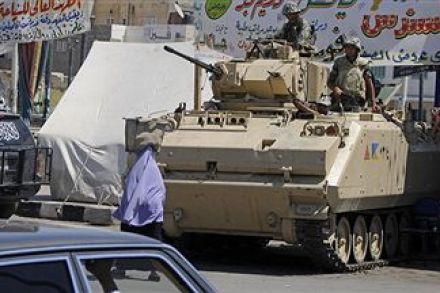
I'm back in Cairo to find out where the revolution of 25 January has got to. Nearly six months after Hosni Mubarak's downfall, the transition from authoritarianism is well under way. There is one immediate difference from my last visit: the absence of army check-points. Police officers in new white suits stand on street corners but the heavy military presence from before has gone. The Cairo police, who were absent after the revolution, have returned in new white uniforms. However, the military – or SCAF, as it styles itself – is very much still in charge, dictating how the democratic process will continue.

The Arab Spring stalls in Syria

From our UK edition

With more than 800 people thought to have died in Syria, the situation is getting more and more serious. President Bashar al-Assad has clearly decided he cannot allow any challenge to his regime and has rejected even the advice of friends like Turkey and Qatar to step back from the brink. The military — principally the loyalist 4th and 5th divisions — has now perfected their anti-protest tactics. People in Hama and Homs are fearing that what was visited upon Deera — where the regime cut off water, electricity and telephones before assaulting the city — will happen to them. Yet, for all this, it would be wrong to think that Syria is on the edge of an all-out uprising against the regime, for a number of reasons.

Obama Men & Bush Measures?

From our UK edition

Ross Douthat and Andrew Sullivan have been debating the extent, if any, to which Barack Obama's foreign policy has broken with his predecessor's. Ross's point in his column this week is that Obama's approach is more consistent with Bush's than is generally supposed. I think that's true, though some of Andrew's criticisms of that view are plausible too. Ross responds here and Andrew has another go here during which post he writes: As for the impact of Obama on the Iranian revolution and the Arab Spring, I agree it's too facile to draw a direct linkage. History and perspective will again help. But the Cairo speech - defending democracy in the heart of the Arab world - was a breakthrough. Bush could never have done it.

Bin Laden died in Cairo<br />

From our UK edition

The world’s most wanted terrorist, Osama Bin Laden, was shot Sunday morning in Pakistan by US special forces. But in reality he had died months ago. On the 25 of January 2011 to be exact. Or that is at least when Bin Laden’s power ended. For on that day millions of protesters — predominantly young Muslims — took to the streets of Cairo and demanded the overthrow of the regime of Egyptian President Hosni Mubarak, and succeeded. With this act, they gave, for the first time since 9/1 and arguably for three decades, the Muslim world a more easily-understood and persuasive narrative than the one of anti-US resistance Al Qaeda had so successfully provided. After that, Bin Laden could carry out more attacks. He could kill more people.

Obama’s Love of Cake

From our UK edition

Ryan Lizza's New Yorker article on the development of Barack Obama's approach to foreign policy is, as always, full of interestig stuff even if, perhaps unavoidably, I suspect it depends a little too heavily upon the Slaughter-Power approach. Nevertheless, Ryan gets to the heart of Obama's presidency - or at least the style of it - here: Obama’s instinct was to try to have it both ways. He wanted to position the United States on the side of the protesters: it’s always a good idea, politically, to support brave young men and women risking their lives for freedom, especially when their opponent is an eighty-two-year-old dictator with Swiss bank accounts.

Reasons for optimism in the Middle East | 22 April 2011

From our UK edition

As the Libya crisis drags out, and Bashar al-Assad orders a crackdown in Syria, many have begun to doubt whether the changes seen in Tunisia and Egypt will actually spread to the rest of the Middle East. One former British ambassador recently suggested that perhaps the peoples of the Middle East preferred a mixture of authoritarianism and democracy — and that Britain should accept this; not impose its values and views.   But there is plenty of reason for optimism. The first is to look at the countries that have transformed themselves over the course of the last fifty years. Powerhouses like India and Brazil, but also smaller countries such as Vietnam, were mired in poverty, maladministration and the consequences of war.

Is Syria next?

From our UK edition

I used to think that Syria was some way off a revolution. The protests were geographically limited; Bashar al-Assad was willing to use Libyan-style violence against them and the West seemed uncharacteristically mute. What's more, demands for the Syrian president to go were limited. And then there's the real fear that Syria, made up of so many different sectarian groups, would collapse into a vortex of internecine violence akin to the Lebanese civil war. But these arguments may be losing their weight. The current unrest is the most serious challenge facing Bashar al-Assad and his Alawite regime. And nothing the Syrian dictator has done so far has made a difference. Not lifting the emergency laws. Not shooting protesters.

Cairo Diary: The Brotherhood

From our UK edition

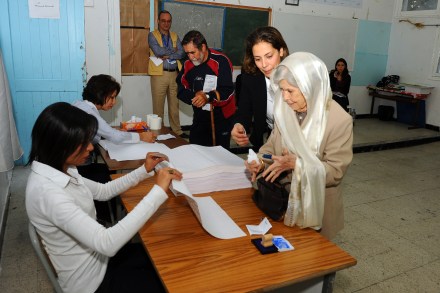
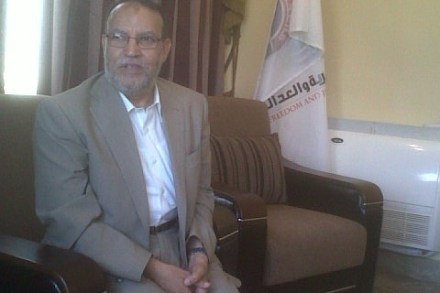
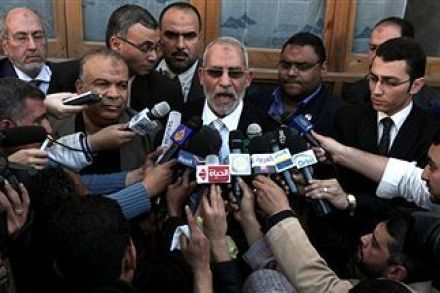
Back in Cairo, I try to find answers to what everyone wants to know. Who are the Muslim Brotherhood? What role will the Muslim Brotherhood play in the future? Even to seasoned observers it seems hard to divine. Their support in the country has never been tested and the constitutional referendum, where the brotherhood was on the winning side, is a poor proxy. What is clear, however, is that they have the organisational muscle the post-Tahrir Square parties lack. And that they are willing to play a long game, rejecting a shot at the presidency for example for fear of a backlash against them. Though some members talk of Turkey's AKP as a model for the brotherhood, they are desperate to avoid the fate of Algeria's Islamists who won an election in the 1990s that was annulled.

Libya diary: Tobruk

From our UK edition

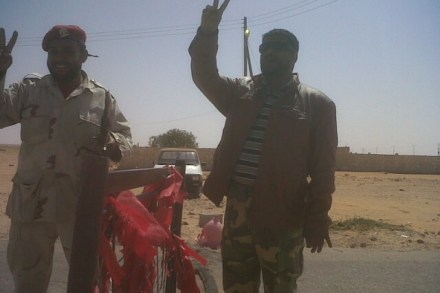
Twelve different checks later and I'm in Free Libya, hurling down the road to Tobruk at 100 mph, with Arabic music blasting away. This place is firmly held rebel territory and most journalists have moved towards the battlefields further west. A pair of beautiful American relief workers tell me just to keep going "to see real action". They've just from Benghazi and are headed back to Egypt. They grab my driver. Tobruk, though, has plenty of action for me; and I need to get back to my programme in Cairo. After all, I'm a think-tanker, not a war correspondent. I stop by the oil refinery which is beginning to run again, as is the pipeline. Next week exports will begin.

Cairo Diary: Libyan transit

From our UK edition

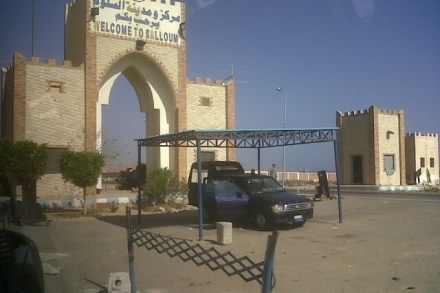
The road from Cairo to Salloum, Egypt's Wild West town on the border with Libya, stretches out into the desert until the patched-up, grey and black cement blurs into the yellow dunes. Throughout the journey, well-kept electricity pylons line the road, while the occasional shepherd looks out from a desolate shed-like house. Otherwise there is nothing to see.  This is the road to war, or away from it. I expected to see more people fleeing the conflict; but at the last roadside café, life seems to be following its normal routine. Bedouin waiters mingle quietly with smugglers, relief workers and the occasional journalist. In the background, President Obama's speech is on TV but only one person is watching. Fava beans with fried liver is the best choice for breakfast.

Cairo Diary: it’s the economy, stupid

From our UK edition

Whether revolutions devour their own children often depends on the ability of a post-revolutionary government to deliver political freedom, jobs and services. Egypt is no different. If the economy opens up, then the country's transition to democracy is likely to continue. If not, then anything can happen. So, which will it be? The stock exchange has reopened and is doing better than many expected. The government is bullish about growth, but it is hard to see where it will come from. Tourists, who account for a major part of the economy, are staying at home. Hotels are empty and BA is cancelling flights due to lack of passengers. The uncertainty about Egypt's future economic path is also deterring investors.

Cairo Diary: will Egypt help in Libya?

From our UK edition

Nothing would help the international campaign against Colonel Gaddafi as much as the Egyptian military — and therefore Egypt — swinging in behind the UN-authorised effort. It would be one of the few things that would make the Libyan dictator worry and could push fence-sitting loyalists towards the rebel cause. Materially, it could also be important; with the Libyan resistance reluctant to receive Nato help, Egypt could be very helpful as a conduit for weapons, intelligence and even on-the-ground military support. A post-combat mission would also be greatly aided by Egyptian involvement or leadership.