Education

Labour’s education dilemma

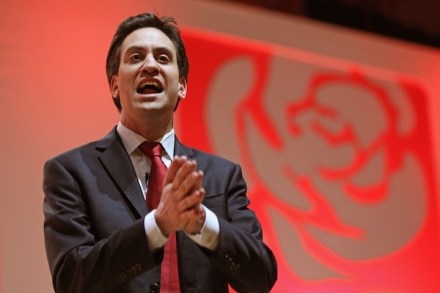
The Labour Party has a problem with education. On the one hand, it recognises that the academies programme which it inaugurated is very popular with parents. But on the other hand, it knows that the unions, upon which it depends financially, are opposed to reform. This creates tension where policy is concerned: how can the party satisfy voters and the unions? This tension is embodied by the reform-minded shadow education secretary Stephen Twigg (a driving force behind the original adoption of academies), who appeared on Andrew Neil’s Sunday Politics earlier this morning. His words (and there were a lot of them) speak volumes about the party’s difficulty with the word
The plot against public schools

Matthew Parris has launched a critique on the charitable status of public schools in this morning’s Times. Matthew is not opposed to private education, just to the arrogance of the bastions of privilege that sell a lifestyle and connections as well as an education. Echoing the government’s social mobility Tsar, Alan Milburn, Matthew argues that these schools should earn their breaks by doing more for the communities that surround them, the vast darkness outside their hallowed walls.   He then urges the government to take the fight to the public schools, and, by extension, the legal system that protects their special position. He also backs publicly funded scholarships, a proposal

Social mobility — more than a political battle over universities

Nick Clegg wants to make social mobility his big theme in office. This is an ambitious target and one unlikely to be motivated by electoral consideration given that visible progress on this front is unlike to be achieved by 2015. The publication of the former Labour minister Alan Milburn’s report, commissioned by the coalition, into the professions and social mobility takes us to the heart of the debate: when can most be done to aid social mobility. Personally, I think the emphasis should be on education reform and family policy. Others, argue that more can — and should — be done later. Politically, as the row over the appointment of

What to make of Gove’s remark about for-profit free schools?

Garlands from all quarters for Michael Gove’s performance at the Leveson Inquiry this afternoon (well, not quite all quarters) — but the most significant thing that the Education Secretary said wasn’t actually related to the media, but to his ministerial brief. When asked about the prospect of profit-making free schools, he replied that they ‘could’ happen ‘when we come to that bridge’. It’s probably the clearest statement that Gove has made, on record, to demonstrate that he’s not averse to introducing the sort of profit arrangements that could give his agenda an almighty boost. The question is: when will he get to that bridge, then? My understanding is that it’s

Why are London Schools so Good?

Or, rather, why do children from poorer backgrounds do so much better in London than they do in other parts of England? That’s a question Chris Cook asks, almost as an afterthought, at the conclusion of a post that, to my untrained eye, makes a good case for ignoring much of the attractive* nostalgia for grammar schools. That is, grammar schools are grand for some of those who get in but, looking at a wider picture, they do much less (these days anyway) to promote social mobility than their advocates claim they do. Or, simply, poorer pupils do worse in Kent (a representative grammar school county) than they do in

The unions versus the Department for Education — continued

Oh dear, seems that the one of the union officials behind that presentation I posted earlier isn’t happy that it made its way on to Coffee House. Here’s an email exchange — leaked to me by a different Department for Education source — that starts off with one from that union official, Brian Lightman, to various union and departmental types. Names and email addresses have been omitted to protect the innocent: From: Brian Lightman Sent: 18 May 2012 15:40 To: Numerous union officials and Department for Education staff Subject: RE: Education forum Sorry – the first half of this message was sent before it was complete.   To all members

The unions' lazy opposition to schools reform

ATL ASCL Presentation to Edu Forum 16May12 Now here’s a peek behind the Westminster curtain that you’ll find either amusing or dispiriting, depending on your mood. It’s a presentation delivered by a union delegation at the Department for Education this week, which Coffee House has got its hands on. You can read the whole thing above. We’ll get onto why it’s amusing (or dispiriting) shortly, but first a bit of background. Various school unions are invited into the DfE each month to meet with a minister or two, as well as with their advisers and civil servants. The idea is that they’ll talk policy; presenting problems and solutions in a

Choice matters more than tuck shops

Does it matter that academy schools are defying Jamie Oliver’s fatwa against sweets? An organisation called the School Food Trust has found 89 of 100 academies guilty of harbouring tuck shops. Selling crisps, chocolate and even cereal bars. The Guardian is shocked and has made the story its page two lead. Schools with tuck shops, says the Trust’s director, ‘should be named and shamed for profiteering at the expense of pupils’ health… Mr Gove is putting ideology above children’s wellbeing’.   I plead guilty to having once been behind the counter at the tuck shop of Rosebank Primary in Nairn, blissfully unaware that I was poisoning Highland children with this

Clegg goes mobile

Just as David Cameron is trying to move on from a tough few weeks by returning to themes that worked for him earlier in his leadership, Nick Clegg is also focusing on familiar territory. He’s given a speech this morning on the pupil premium — which he made a key component of his Lib Dem leadership bid back in 2007. And today’s speech marks the start of a two-week push on a key Clegg concern: social mobility. It’s not as if Clegg’s been silent on the topic recently, but this is the first time it’s been at the top of his agenda since he launched the government’s social mobility strategy

Another voice: How ministers are gaming the net migration target

International students are currently the largest single category of immigrants who count in the net migration figures, which cover all those intending to stay more than a year. In the most recent figures (the year to June 2011) there were 242,000 such students — making up 40 per cent of so-called ‘long term’ immigration. However, as a new report by IPPR sets out, international students are not really ‘long term’ immigrants at all. They are far more likely to return home after a few years than the other main immigration categories of work and family: the evidence suggests only around 15 per cent stay permanently. Clearly, it would be wrong

Gove takes on private school dominance and trade union opposition

The Education Secretary gave a very pugnacious speech this morning on the need to improve the country’s state schools. ‘It is remarkable,’ Michael Gove said at independent school Brighton College, ‘how many of the positions of wealth, influence, celebrity and power in our society are held by individuals who were privately educated’. He cited the various professions — politics, law, medicine — where private schools are ‘handsomely represented’. That’s certainly not a new observation. Gove could have, if he’d wanted to, cited the Sutton Trust’s statistics (below) showing the proportion of judges, Lords and CEOs who come from independent schools. Instead, he chose a more novel — and effective — way

Gove gets covering fire

Good teaching matters; that’s something we don’t need to be taught. But how much does it matter? What are its measurable benefits? Today’s education select committee report collects some striking, if pre-existing, research into just those very questions, and it is worth reading for that reason. There is, for example, the IPPR’s suggestion that ‘having an “excellent” teacher compared with a “bad” one can mean an increase of more than one GCSE grade per pupil per subject.’ Or there’s the American study which found that the best teachers can ‘generate about $250,000 or more of additional earnings for their students over their lives in a single classroom of about 28

Ash Green's academy success story

I was a panellist on Radio Four’s Any Questions last night, in Bedworth outside Coventry. At the reception afterwards, I got talking to the pupils, teachers and even the local vicar of the school where the show was recorded. With so much gloom (and shambles) in Westminster, it was a heartening reminder of what is going right in Britain, aided by David Cameron’s government. I thought I’d share it with CoffeeHousers. Not so long ago, Ash Green School was seeing a pathetic 3 per cent of its pupils achieve what is now called ‘Five Good GCSEs’ (5 GCSEs at A-Cs, including English & Maths). Now it’s 65 per cent. Success has

Gove’s historical conundrum

Is it possible to set schools free while demanding a beefed up teaching of our nation’s history? Both are topics close to the heart of the Education Secretary but eventually, he’s going to have to choose one over the other. Top-down orders on the History curriculum will undermine attempts to give schools and teachers more control over what they do. Tristram Hunt threw this curveball in this weeks magazine, where he states it is a example of the classic Tory struggle between liberalism and conservatism: ‘The self-inflicted challenge comes with delivering this national narrative of Britishness. Because at the crux of Gove’s schools revolution is the dismantling of national provision.

The coming schools crisis

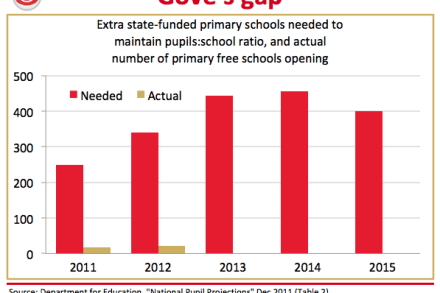
Michael Gove’s school reform is being overwhelmed by the surging demand for school places, I argue in my Telegraph column today. When the Education Secretary first draw up his ‘free school’ programme, he said in a Spectator interview that his aim — while radical — was simple.  ‘In your neighbourhood, there will be a new school going out of its way to persuade you to send your children there. It will market itself on being able to generate better results, and it won’t cost you an extra penny’ Choice is only possible when supply outstrips demand. But the latter is growing faster than anyone envisaged a few years ago. The

Another blow against the something for nothing culture

In the aftermath of the riots, the idea of withholding child benefit from mothers whose kids played truant was floated by Number 10. The aim was to link child benefit payments to getting your child to attend schools. This was meant to be part of a broader effort to end the something for nothing culture. Now, 8 months on from the riots — and after months of coalition wrangling — we have some flesh on the bones of this idea. Charlie Taylor, the government’s impressive adviser on behaviour, has proposed (£) that fines for children being persistently truant should be deducted from child benefit payments. At the moment, head teachers

The teachers' unions take on Ofsted, Osborne and Gove

I counted five issues which the NUT conference suggested that teachers might strike over. But in a conference full of the usual bluster, the most noteworthy threat was not to cooperate with Ofsted inspections. Ever since the new chief inspector Sir Michael Wilshaw — who was hugely successful as the head of Mossbourne academy — announced that a merely satisfactory grade would no longer be regarded as good enough, the teaching unions have taken agin him. But not cooperating with Oftsed would be unlawful. Anyone who tried to block an inspection would be liable to prosecution and a fine. Another issue exercising the unions is George Osborne’s proposals for regional

The importance of sacking bad teachers

The opposition of the National Union of Teachers to the government’s plans to make it easier to fire bad teachers is entirely predictable. The NUT has long placed the interests of the worst of its members above those of the children being educated in the state system. Given what we know about just how crucial good teaching is to a child’s educational achievement then it is absolutely vital that the coalition does push these changes through. One of the most important parts of these changes is ending the process by which bad teachers are simply shuffled around the system. Academy schools already have the power to vary pay. But, sadly,

Gove calls on universities to improve A-levels

It may be a sleepy day in Westminster, but Michael Gove and his school reforms have lost none of their brilliant urgency. The schools secretary has today written to Ofqual — the body in charge of regulating the exams system — to ask that universities be allowed to involve themselves, much more closely than ever before, in designing and implementing A-levels. In the letter he sums up his plans thus: ‘I want to see new arrangements that allow Awarding Organisations to work with universities to develop qualifications in a way that is unconstrained — as far as possible — by centrally determined criterion.’ And he adds that this process should

Riots report undermines the Tory diagnosis, but spreads itself too thin

After last August’s riots the debate became quickly polarised. Were socio-economic factors like unemployment to blame, or was it all down to the individual choices of the rioters? David Cameron and other Conservative ministers knew which side of this debate they wanted to be on. They had been taken by surprise by the riots, initially failing to realise how serious things were, but when they got back from their holidays they set out a clear and confident line, brushing off most questions about links to the state of the economy or youth attitudes, and condemning the riots as ‘criminality pure and simple’. The soundbite was deliberately simplistic; Conservative ministers’ actual