Education

The catastrophic dumbing down of German education

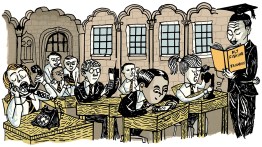
German teachers are a privileged species. Most of us enjoy the status of a Beamter, a tenured civil servant. We can be dismissed only after a serious criminal conviction, we are exempt from social insurance contributions, and even our mortgage rates are lower. Such comfort discourages dissent. Yet, after more than 25 years as a pampered Beamter, I find myself overwhelmed, not by the teaching load or the students, but by the accelerating erosion of academic standards. Having taught English, history and Latin at four different Gymnasien, the equivalent of a grammar school, I have learned that challenging students is frowned upon by both bureaucrats and politicians. Nearly all my colleagues agree that standards have plummeted.

The pedant’s progress through history

From our UK edition

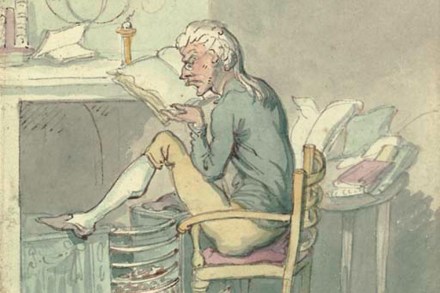
No one likes a pedant. But over the past few millennia, people have shunned pedants, bores and know-it-alls for a wide range of different, often conflicting, reasons. They have been accused of obscuring the path to true philosophical knowledge and of putting learning on too high a pedestal; they’ve been regarded as unfit to be democratic leaders; too unskilled in the aristocratic virtues; too keen to rise above their natural class; and as stubborn impediments to a true comprehension of the divine. At times they’ve been deemed too unmanly and too feeble; at others, far too boorish, charmless, unable to think for themselves and probably horrible at parties. Arnoud S.Q.

How to make universities appeal to the working class

From our UK edition

‘Long Eaton is dying a death. I was born and bred here, so I've seen it go downhill quite quickly. There’s not a lot here. We've got two supermarkets, bad road infrastructure, it’s dying.’ Listening to a mum from the outskirts of Nottingham describe her frustrations with her community in a recent focus group, the other participants, all local to the area, nodded along in agreement. The mood was one of resignation. All the members of this group had cast their vote for Labour in 2024 hoping to arrest the pervasive feeling of decline and decay this woman described. But barely a year into Labour’s term, and with things seeming even worse than they did before, all of these participants told us that they would switch to voting Reform if there were a general election tomorrow.

BBC bias & Bridget ‘Philistine’s’ war on education

From our UK edition

50 min listen

This week: a crisis at the BBC – and a crisis of standards in our schools. Following the shock resignations of Tim Davie and Deborah Turness, Michael and Maddie ask whether the corporation has finally been undone by its own bias, and discuss how it can correct the leftward lurch in its editorial line. Then: Labour’s new education reforms come under the microscope. As Ofsted scraps single-word judgements in favour of ‘report cards’, could this ‘definitive backward step’ result in a ‘dumbing down’ that will rob the next generation of rigour and ambition? And will ‘Bridget Philistine’s’ war on education undo the positive legacy of the Conservatives on education?

The tyranny of the mass-intellectual

In the classical world the question of whether virtue can be taught, or is rather acquired by interior inclination and moral development, was the subject of intense debate by the best Grecian and Roman philosophers. None ever succeeded, however, in agreeing an answer. Progressive education along narrow lines is, for liberals, the source of all legitimate moral authority Since the second half of the 20th century, academics and intellectuals have seemed to believe that they have answered the question definitively and to their own satisfaction. Virtue, they have decided, can indeed be taught, and liberal democratic education is doing it, in public and private schools and universities alike throughout the western world.

education

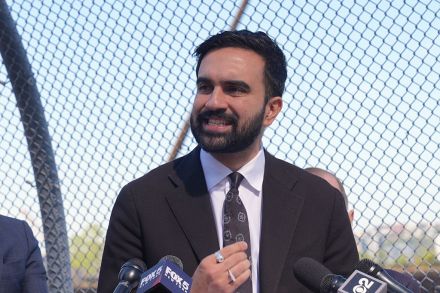
Mamdani declares war on excellence

New York Assemblyman Zohran Mamdani has a bold plan for the city’s schools: phase out the Gifted and Talented program in elementary education. His rationale is that these programs create disparities and feed inequality. It’s a familiar progressive argument. If some students are excelling, others must be suffering. If a child is recognized as gifted, it’s unfair to those who aren’t. The logic is as simple as it is destructive: equality means sameness, even if sameness means mediocrity. There is nothing wrong with recognizing giftedness. In fact, it’s common sense. If a child demonstrates unusual ability in math, science, writing, or the arts, you nurture it. You don’t bury it under a misguided notion of “equity.” Excellence, like athletic talent, must be cultivated.

Zohran Mamdani

Des Moines school superintendent is not a victim of ICE

When the superintendent of Iowa’s largest school district was detained by ICE on Friday, the story startled parents, educators and anyone paying attention to the integrity of our institutions. Dr. Ian Roberts, a man with a final deportation order, allegedly fled law enforcement, leaving behind a vehicle containing a loaded handgun, a fixed-blade knife and thousands in cash. Yet for months, he led thousands of children, set policy for an entire district and enjoyed the prestige and authority that comes with public office. The question society must ask is unavoidable: How did someone with an outstanding removal order rise to the top of a school district? How did a man technically in violation of federal law gain the trust of an entire community?

Ian Roberts

The folly of psychology

From our UK edition

A young Chinese girl, at school in an English-speaking country, approached me after I gave a talk at a conference and asked for my advice about what she should study. I knew nothing of her, except that she was pretty, with beautiful dark eyes, and was almost certainly of high intelligence. I was touched by her naive assumption that I would answer benevolently and in her best interests. It suggested that she had not yet encountered much of human malignity. ‘What are you interested in?’ I asked. ‘I was thinking of history and psychology.’ ‘Ah,’ I said, ‘definitely not psychology, at all costs not psychology.’ My answer emerged spontaneously, without any reflection – too spontaneously, in fact.

The failure of Britain’s elite universities

From our UK edition

Politicians, authors, priests and the occasional Spectator editor have all served as the Oxford Union’s president over its 200-year history. Few among them would know what to make of George Abaraonye. The debating society’s president-elect faces disciplinary proceedings for celebrating the killing of Charlie Kirk. Upon hearing of the conservative activist’s assassination – some four months after the pair had debated in person – Abaraonye posted ‘Charlie Kirk got shot loool’ on social media, along with other excited expletives in a WhatsApp group chat. He deleted the remarks but defended making them. Something is rotten in the state of Oxford when its chief debater celebrates the murder of a free speech advocate on another university campus.

Why America’s schools are failing

It seems that every few years America rediscovers that its children can’t read. In 2024, only 30-31 percent of eighth graders were deemed proficient in reading, and our numbers in history and math are even worse. Since 2020, no state has reported improvement across subject areas.It’s tempting to blame “the pandemic” for these declines, but in reality, Covid only accelerated trends that were already underway. For decades before 2020, US students were struggling to reach proficiency, and the truth is that the problem isn’t today’s culture-war skirmishes over pronouns, politics and school closures. It’s the more mundane question of how children are taught to read, to count and to remember.Let’s take phonics, for example.

Schools

The false economy of cutting the Combined Cadet Force

From our UK edition

What could be more fun for a 14-year-old boy than messing about in the woods with a gun? My school’s Combined Cadet Force offered precisely that, marching us through the Brecon Beacons and organising mock skirmishes with SA80 rifles (albeit using blanks). When we weren’t trying to shoot each other, we were fighting over OS maps and compasses, trying to find which bit of woodland we were supposed to be sleeping in. One group found a dead body on the side of a Welsh mountain. Another spent an evening drinking vodka and smoking cigarettes with a strange man in a caravan. At some point in the small hours, he got a little too handsy and they all ran back to their bivvies. I was hugely envious when they told us this as we ate powdered eggs, cooked in a mess tin over burning hexamine tablets.

Should boarding schools be phone-free?

From our UK edition

No development has shaken up the cloistered and carefully controlled world of English boarding school life quite as much as the invention of the smartphone. Traditionally, schoolboys might write home once a week. Perhaps they might be able to smuggle in a dirty magazine or other contraband, but for the most part boarders on school grounds were safely tucked away. Today, thanks to smartphones, children are sent to school with access to pornography, internet chatrooms and easy contact with their parents. What horrors might a group of 13-year-olds get up to in a dorm if left unattended with internet access? Should boarding school children be permitted to phone home each night? What horrors might a group of 13-year-olds get up to in a dorm if left unattended with internet access?

The independent schools crisis is only just beginning

From our UK edition

Ever since the sudden and cruel imposition of VAT on independent school fees at the start of the year, much of the media focus has been on the number of school closures. The first to go have been prep schools and schools in rural areas far from London and the south-east. Trust me, this is really only the beginning. Savvy parents have always known a reduction in those shiny buildings won’t matter that much in the end Only a very small number of independent schools will be completely immune from the current financial pressures and – in the next couple of years – that will start to become increasingly obvious. While many might not close, there will be more mergers and acquisitions, and a scramble for schools to enjoy the benefits and protections of being part of a larger group.

Vivat the Latin motto

From our UK edition

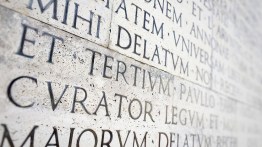
In the strange, arcane world of school mottoes, it’s fitting that the most famous one of all belongs to a fictional school. Draco dormiens nunquam titillandus – ‘Never tickle a sleeping dragon’ – is the motto of the Hogwarts School of Witchcraft and Wizardry. J.K. Rowling brilliantly realised that children aren’t put off by boarding schools and the ancient rituals that go with them. They’re gripped by these peculiar places, their roots twisting back through the mists of time. And no school custom is as ancient or beguiling as the Latin motto. My motto, at Westminster School, was Dat deus incrementum – ‘God gives the increase’.

Long live eccentric school traditions

From our UK edition

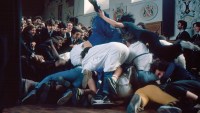
On every Shrove Tuesday since at least 1753, boys at Westminster School have gathered in the hall for a mad scramble over a pancake. The Pancake Greaze (pictured) is a cherished tradition that sees one pupil crowned the winner for grabbing the biggest portion, which the cook tosses into the centre of the hall from a height of 15ft, as the rest of the school cheers on. The champion is awarded a golden coin by the Dean of Westminster, accompanied by the headmaster and sometimes royal visitors. The more unsavoury part of the tradition – nominally beating the cook with Latin primers if he fails to get the pancake over the iron bar three times – has been abandoned. There have been other modern updates.

School portraits: snapshots of four notable schools

From our UK edition

Lancing College, West Sussex Lancing is a public boarding school for children aged 13 to 18 in West Sussex. Set within the South Downs National Park, it offers an open-air theatre, a state-of-the-art music school, an equestrian centre and even the tallest school chapel in the world. As impressive as its facilities, though, are its alumni: Evelyn Waugh, Sir David Hare and Lord (Stephen) Green to name but a few. Nowadays, many students at the college – where fees start from £12,602 – come from its sister preparatory schools in Hove and Worthing. Also arriving this month is a new headteacher, Dr Scott Crawford, who will replace Dominic Oliver after 11 years.

Why do people feel sorry for me for going to boarding school aged nine?

From our UK edition

Sometimes, when I’m chatting about childhood, at some point it will become clear I went to a boarding school from the age of nine. Reactions can be comical. ‘You poor thing!’ an interlocutor might gasp, gripping my forearm, no doubt picturing cold showers and cruelty. I’ve always responded with bemusement, since my experience largely featured comfort and crumpets. I loved my prep school – Dorset House in West Sussex. It was a world in itself, enclosed and beguiling. In some ways it was unchanging, such as the graffitied Latin primers which were the same our grandparents had used. Yet it could be surprisingly forward-looking, as when it made a satellite link-up to a school in America, many years before the internet.

Elites keep making education about themselves

This month, Congress put school-choice funding on offer to the states as part of the Big Beautiful Bill. Progressives have bashed the provision for the harm they claim school choice will do to under-resourced school districts. But the program saps not a dollar from public schools, which shows the protest for what it is: elitist bluster. The same progressives who fumbled their schools’ Covid responses, instituted woke curriculum and pushed adolescent gender transitioning should not decree to parents which school is best for their children. Public schools have not earned Americans’ trust over these past few years; many private schools have. Under the new measure, families can receive a tax credit for donations to an approved scholarship-granting nonprofit organization.

Elementary school

In the age of AI, humans must keep learning

This year, colleges stopped teaching students to write. As artificial intelligence chatbots allow students to generate unique essays that can’t easily be vetted for plagiarism, professors have felt the need to replace essay assignments with written examinations in closed rooms. It’s a considerably shrunken version of the kind of university education that was on offer 75 years ago. In June, a study from MIT showed steadily waning brain engagement and originality as student essayists used AI more. The college business model is in trouble: $75,000 for a year’s worth of diversity, equity and inclusion nonsense already struck parents as a bit steep. But at least the kids were being taught something. The new limitations AI places on instruction may do a lot of colleges in.