Economy

Rochdale, revisited

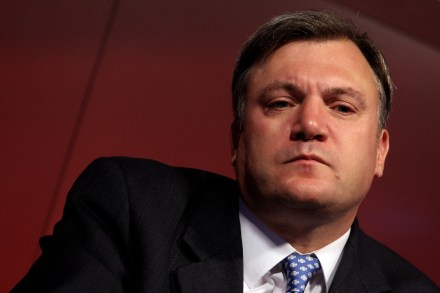
Putting Ed Balls into Home Affairs is like trapping a bee in a jar: he’ll come out furious, and anxious to sting. In his new brief, he has immigration. And he’ll know Cameron’s vulnerabilities. The greatest threat facing the coalition doesn’t come from Ed Miliband. It comes from a deep dysfunction in Britain’s economy: that when it grows, we just suck in more workers from overseas. Balls knows this, and the resentment it causes in affected communities – which is why he was talking tough on immigration during the leadership contest. He knows where the economic bodies are buried: he dug the graves. He also knows that unless Cameron manages
From the archives: Entering the ERM

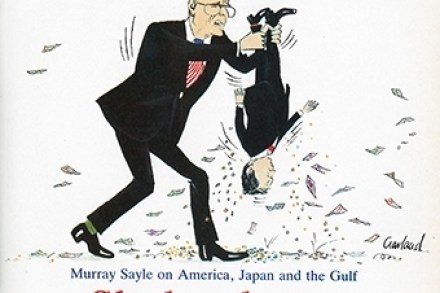
It’s twenty years, to the day, since the UK joined the European Exchange Rate Mechanism – a decision that would, of course, culminate in our withdrawal on Black Wednesday, 16 September, 1992. Subsequent years of strong growth placed those events in a fresh context, but here’s The Spectator’s take from 1990: The dangers of stageism, The Spectator, 13 October 1990 Give the European federalists and inch, and they will take a kilometre. Commenting on Britain’s entry into the Exchange Rate Mechanism of the EMS, Sir Leon Brittan claimed that ‘Britain has begun an inevitable move towards joining a full European Monetary System, including a single currency’. And the Guardian, which

Hutton points the way forward on pensions

John Hutton’s interim report on public sector pensions today will go down as one of the most important moments in the public service reform story.  John Hutton doesn’t just set out the principles for putting public services on a sustainable footing, although he does do that (by explaining the inadequate levels of contributions into these schemes).  More importantly, he confronts head-on the problem that public sector pensions pose for the opening up of public services to competition. One of the key reasons that many companies have waited on the sidelines of the public sector for years is the disparity between public and private pensions.  Tony Blair’s Prime Ministerial demands for

A solution to the immigration cap puzzle

The coalition’s immigration cap is, as several Conservative Cabinet ministers have pointed out privately, flawed. It threatens to cap the kind of immigration that bothers almost nobody, high skilled foreign workers coming to this country to do a specific job. As Ken Clarke has told colleagues, the problem is that Labour — albeit right at the end of their time in office — stopped non-EU low-skilled immigration. So all there was left to cap was high-skilled immigration.   But there is a potential solution that would enable the cap — a Conservative manifesto promise — to remain in place, but also deal with Vince Cable and businesses’ objections http://www.thisislondon.co.uk/standard-business/article-23879244-vince-cables-attack-on-immigration-cap-wins-city-backing.do. One

Hunt the heretic

Eureka, the science magazine from The Times, is in many ways a brilliant accomplishment. Advertising is following readers in an online migration – but James Harding, the editor, personally persuaded advertisers that a new magazine, in a newspaper, devoted to science would work. And here it is: giving the New Scientist a run for its money every month. That’s why it’s such a shame that today’s magazine opens on an anti-scientific piece denouncing those who disagree with the climate consensus. My former colleague Ben Webster, now the paper’s environment correspondent, is an energetic and original journalist – so it’s depressing to see his skills deployed in a game of hunt-the-heretic.

What to make of Cameron's rejection of laissez faire?

Pressure brings out the best in David Cameron and right now he’s coasting. He gave, as Pete and Fraser have said, a subdued speech. The content was there but his delivery was calm, except on two occasions when he spoke rather than read the autocue. He attempted to sell the Big Society (third time and no luckier). Then he said, with conviction, ‘I don’t believe in laissez faire.’ Those six words are pure Tory Reform Group, pure Iain Macleod, pure One Nation. He evoked that traditional form of Torysim with a firm description of how his government seeks to empower people as responsible groups not just free individuals. A theme

Cameron stumbles onto the stage

Who’d have guessed that David Cameron would go into his conference speech on the backfoot? This was supposed to be a moment tinged, if anything, with jubilation: the first Tory PM for thirteen years addressing a party that seems to have fallen in love with him. But instead we’ve got the child benefit row, and with it apologies, rebuttals and hasty repositioning. It is to Cameron’s credit that he can breath the two words that evade other, more culpable politicians: “I’m sorry”. But on the eve of his big speech? Far from ideal. This exercise in damage limitation may have slightly eased Cameron’s situation today – but it has put

OBR Watch

When Sir Alan Budd was head of the Office for Budget Responsibility, there was an insistent argument in opposition circles that the independent body was biased in favour of the coalition. Much of this cented around the OBR’s growth predictions. How on Earth, came the question, can growth hit 2.3 percent next year and 2.8 percent the year after? Isn’t that a bit optimistic in view of all the warnings about a double dip? Won’t the cuts stifle growth? And so on and so on. A few months ago, I produced a graph which showed that, when compared to a range of independent forecasts, the OBR’s growth predictions weren’t really

How Osborne and IDS reached agreement

I have found out a little more about the Universal Credit – and how the arguments over the summer were resolved. First, the backdrop. Money was always going to be a problem. This policy is about saving lives, not money. Right now, we pave the road to welfare dependency, creating a vacuum in the labour market that sucks in workers from overseas. Under Brown, the Treasury accepted this: cheap workers pay tax too, and as do companies who profit from them. Result: tax receipts up, but never fewer than 5 million on out-of-work benefits throught the boom years. The IDS plan was not sprung on Osborne. As I blogged a

Reforming the regulators

We all know that the state grew enormously under thirteen years of Labour government. The most obvious manifestation of this was public spending – an increase of 60 percent in real terms took Britain from having one of the lowest levels of government spending in the OECD in 2000 (36.6 percent of GDP) to having one of the highest in 2010 (52.5 percent of GDP). But while reducing spending is clearly the most pressing issue facing the coalition government, we should not overlook another area where the state has grown dramatically: regulation. The British Chambers of Commerce’s ‘Burdens Barometer’ estimates that net cost of major regulations passed since 1998 is

Vince walks the line on Europe

Vince Cable was on best behaviour at the European Parliament yesterday afternoon. The twinkle of opposition was back, and he assured his audience that they would not be receiving one of those dour Hibernian lectures of blesséd memory. He had come, he said, merely to explain the coalition’s government’s European business policy.     Europe is a point of contention within the coalition, but one that is exaggerated. The coalition agreement is quite detailed on European policy, particularly on competences. Naturally, economic policy is more fluid, but the government, essentially, seeks further growth in the single market and closer economic co-operation to counter competition from the developing world. Cable danced those

Boles’ immigration revolution

Nick Boles’ Which Way’s Up? is gaining a quiet cult following in Westminster, and John Redwood has unearthed Boles’ radical approach to immigration. Boles dissents from the view that happiness in Sweden’s utopia rests on pay equality; he observes that it is a homogenous society that has controlled mass immigration. He writes: ‘We will not be able to sustain a social contract in which schooling and healthcare are provided to all citizens free of charge and are funded by taxation if we continue to allow, every year, hundreds of thousands of people from around the world to join the queues at A and E and send their children to British

Miliband's Balls dillema

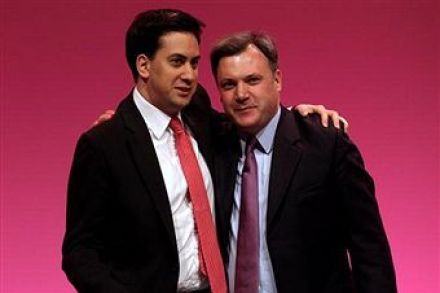
After one of the many sections in Ed Balls’ speech on the economy, there was a telling moment as Ed Miliband clapped half-heartedly with a thoughtful look on his face. One could almost see him trying to work out with whether he agreed enough with what Balls was saying to make him shadow Chancellor. There are dangers in both him making Balls’ shadow Chancellor and not. If he does make Balls shadow Chancellor, then it be a Neil Kinnock and John Smith situation all over again: the leader will have ceded control over economic policy. But if he doesn’t, then he’ll have an aggrieved Balls on his hands and considering

David Davis offers his counsel in good faith

From his roost high on the backbenches, David Davis commands a luminescent eminence that he would not have had if he were a frontbencher. And as the current guardian of traditional right-wing Toryism, his words are clear against the often muddy context of coalition. Talking to the Mail’s Andrew Pierce and Amanda Platell, he offers George Osborne and David Cameron some sagacious advice. He joins the chorus, now stalked by Ed Miliband, which urges the government to articulate its growth and recovery rhetoric. ‘We cannot be defined by a purely cuts agenda. If the only message the public takes away from the events of the next few months is one

Forcing an apology

Admittedly, this is but an item of marginalia in the notebook of British politics – but I’d appreciate CoffeeHousers’ views on it nonetheless. I’m talking about the Tories’ efforts to squeeze an apology out of Labour for the state of the public finances. This is something that they’ve been trying to do since the election, but the strategy has been reheated in the aftermath of Ed Miliband’s election. As Sayeeda Warsi put it on Saturday, “what I noticed in his acceptance speech was that there was … no apology for the role that he had played in the current economic mess.” Other Tory folk have called for that to be

The speech that David Miliband would have given on Saturday?

Caveats about positioning after the event, of course, but Andrew Pierce’s account of the speech that David Miliband would have given on Saturday is still worth noting down: “You could have heard a pin drop in the conference hall when the new Labour leader delivered his acceptance speech. Far from being triumphalist, he issued a stark and unwelcome warning that shocked the Party: it had to change, or lose the next election. Only minutes after the applause had died down on Gordon Brown’s valedictory address, his successor savaged Brown’s record as Chancellor and Prime Minister. He mocked the claim that Labour had ended the cycle of boom and bust. He

Three quarters of voters side with Cable

Politics Home has published an important poll, showing the staggering level of support for Vince Cable’s conference speech. The government will be pleased that its political attack on the financial services industry’s continued excess at time of austerity is cutting through; on the other hand, this could be seen as support for Cable’s emotive rhetoric. Worse still, the poll suggests that traditional Tory voters are the only group for whom Nick Clegg is more impressive than Cable. The business secretary has to be kept in government – the coalition can’t afford to have a charismatic wreaking havoc from the backbenches. Support for Vince Cable conference speech Who are the impressive

Ed Balls steps up his bid for the shadow chancellorship

With the result but a day away, there’s plenty of radio chatter about the Labour leadership election this morning. The Guardian reports that MiliD will work for MiliE if he loses. The FT observes Harriet Harman shifting towards the Eds’ position on the deficit, even if she is remaining neutral in the contest itself. A Populus poll for the Times (£) suggests that Gordon Brown is currently more popular among Labour supporters than either of the Milibands (which is deeply amusing). And Political Betting is calling it for Ed Miliband. But perhaps the most noteworthy contributions come courtesy of Ed Balls, compiled and skilfully analysed by Sunder Katwala over at

WEB EXCLUSIVE: Risky Business

The Spectator and KPMG hosted a conference recently that explored possible investment opportunities in today’s fragile geo-political climate. Panellists included Sir Malcolm Rifkind, John Ruffer, Lord Guthrie, Frank Gardner and Rory Stewart. CoffeeHousers can read James Forsyth’s magazine review of the debate here.

A salesman for the cuts

One of the biggest problems facing the coaltion has been presentational: how to sell the cuts? In the absence of a coherent, vigourous message, the Balls school of economic thought has been allowed to grease onto the scene – to the extent that some polls have three-quarters of respondents rejecting the government’s deficit reduction plan. But now, at last, signs that the coalition is getting into gear. It’s a process which began last week, when Matthew Hancock – a new Tory MP and former adviser to George Osborne – highlighted falling interest rates in Parliament (column 606, here); a point he has been pushing around Westminster ever since. And today