Economy

A little bit more advice for George Osborne

From our UK edition

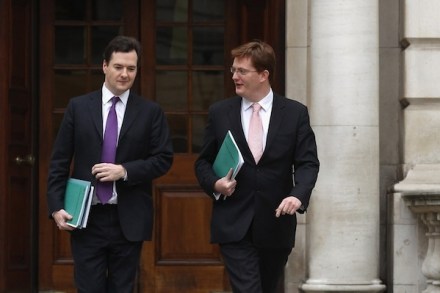
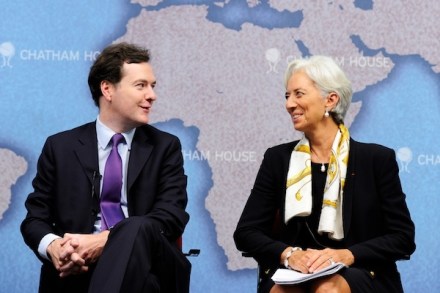
George Osborne returned from his summer holidays this week to find a cacophony of advice for him on how to boost the economy, as well as advice that his boss David Cameron should sack him as Chancellor in his planned reshuffle. He quickly torpedoed one piece of wisdom generously offered by Nick Clegg, saying the Lib Dem leader's plans for a wealth tax could 'drive away the wealth creators and the businesses that are going to lead our economic recovery'. Anyone eagerly expecting Osborne to lose his job in the next few weeks will be disappointed, but the Chancellor will continue to come under pressure, and not just from those riding the Ed Balls bandwagon.

The Olympic effect won’t be so golden for politicians

From our UK edition

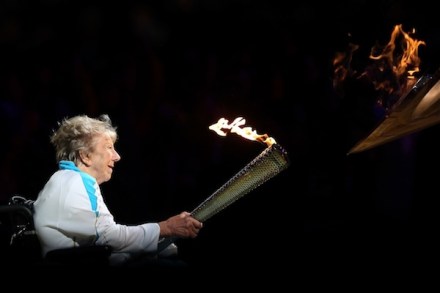
The Olympics and Paralympics have been a superb spectacle this summer, but will they help the economy? No one in the Treasury thinks so – if anything, they fear the games will hurt the figures and pretty soon we’ll be hearing about the ‘Olympic Effect’ damaging Q3 growth figures. George Osborne is already being mocked for his habit of blaming downturns on snow, holidays etc so I suspect the Chancellor will not mention it. But when first class returns from London to New York were half the price they normally are, you have the feeling not much business is being done. Today, the first economic indicator has come suggesting an Olympic effect. Each month, the European Commission takes an Economic Sentiment Index.

With friends like the OBR, George Osborne hardly needs enemies

From our UK edition

The Office of Budget Responsibility was created to be George Osborne's friend. The theory was that under the leadership of Sir Alan Budd, the OBR would urge the Chancellor to cut. Budd would be listened to more than Robert Chote, who was then running the IFS. But when Sir Alan quit unexpectedly, Chote took over. Since then, the OBR has become the in-house prophet of doom. It not only points to a growth-free future for Britain, but keeps getting its forecasts wrong. It is proving laughably unreliable as a means for working out the likely effect of UK government policy. In the Telegraph today, Doug McWilliams who wrote the original brief for the OBR, has attacked the current chairman for causing the Chancellor 'no end of trouble' and branded the organisation a 'disaster'.

The IMF’s ‘too far, too fast’ warning

From our UK edition

There is great excitement in some circles at a paper from the International Monetary Fund which has emerged in the past 24 hours. This piece of research warns that cutting government spending too quickly can weaken economies permanently and lead to even deeper recessions. It says: The analysis in this paper shows that withdrawing fiscal stimuli too quickly in economies where output is already contracting can prolong their recessions without generating the expected fiscal saving. This is particularly true if the consolidation is centred around cuts to public expenditure - likely reflecting the fact that reductions in public spending have powerful effects on the consumption of financially-constrained agents in the economy - and if the size of the consolidation is large.

QE — the ultimate subsidy for the rich

From our UK edition

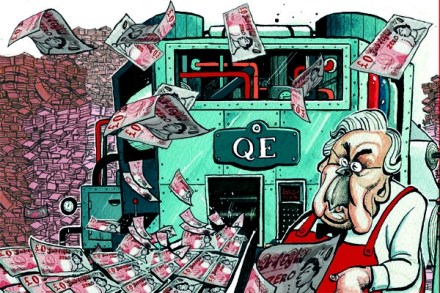
It’s official: Quantitative Easing has marked the biggest transfer of wealth to the rich of any government policy in recent documented history. The Bank of England released an analysis today, which was rejected as being an underestimate by the former government pensions adviser Ros Altman. But it was shocking enough, and the strongest point was made by the brilliant Ed Conway, economics editor of Sky News, who put it into a graph who would benefit from a QE-inspired boom in asset prices described by the Bank of England  today. "10th" means the richest tenth of the population, and so on. This is our new graph system: hover your mouse over each line, and the value should come up.

The world belongs to small businesses. Why are we stifling them?

From our UK edition

From the moment the Queen uttered the words, 'Good evening, Mr. Bond,' Britain was caught in a two-week Olympic bubble of sporting and national pride. I’m sorry to kill the buzz, but while Mo Farah was hurtling at full speed towards the finishing line, Britain’s economy was crawling on its knees. We’ve seen a shock rise in inflation. We’ve seen warnings from the TUC that the job outlook for the young is its toughest since 1994. And, with Britain now being the only major economy apart from Italy to stay in recession, we’ve been dubbed the 'sick man of Europe'. If Britain is going to perform as well as its athletes, this government needs to stop acting as a kind of feudal landlord that takes our money, no questions asked.

The economy needs more than the Olympics to perk it up

From our UK edition

We won't know the economic impact of the Olympics until the GDP figures for the third quarter of this year are released, but today both Boris Johnson and Downing Street tried to strike an upbeat note. In his Telegraph column, the Mayor of London writes: 'As we marvel at what they have done, and the general success of the Games so far, I want to issue a general word of caution to the Olympo-sceptics, who will be itching to return to their gripes. They will say there will be no increase in sporting participation, and no economic benefits, and that we will not succeed in regenerating east London. Well, just remember one thing, everyone. These Olympo-sceptics were proved decisively wrong about the Games. They will be proved wrong about the legacy as well.

Sinophobia, the last acceptable racism

From our UK edition

The Chinese have excelled at London 2012, much to the annoyance of their Western rivals. In this week’s issue of the Spectator, Ross Clark argues that the claims against swimmer Ye Shiwen reflect irrational suspicion of her country. Here is an edited version of Ross’s article (you can read the full version here): The story of London 2012 has been that of a country which was once an underachiever in the Olympics but which, through sheer hard work on the part of its athletes, has hauled itself to the top of the medals tables, producing in the process one of the most dramatic world records in Olympic history. I refer, of course, to the People’s Republic of China. But this is not a story you will have picked up from the BBC or the press.

Mitt Romney and Paul Ryan’s big idea

From our UK edition

Mitt Romney has broken the habit of a lifetime and taken a risk. But it's an intelligent risk. That at least is the view of some commentators on hearing confirmation that Romney has appointed Paul Ryan as his running mate. Niall Ferguson tweeted earlier: ‘Romney gets it right with Ryan. Now this election gets serious. It's a straight fight between radical fiscal reform and Europeanization.’ David Frum makes a similar point (albeit with a clear note of scepticism) in a blog post for the Daily Beast: 'This election—which Romney once intended to make a referendum on Obama's record—will now become a referendum on Paul Ryan's bold budget ideas.' Frum provides 5 hypotheses on the appointment.

Economy ‘close to zero’

From our UK edition

Sir Mervyn King's sporting jokes are almost as bad as the Bank of England's ability to publish accurate economic forecasts. As he unveiled the August Inflation Report this morning, the Governor said: 'Unlike the Olympians who have thrilled us over the past fortnight, our economy has not yet reached full fitness, but it is slowly healing. Many of the conditions necessary for a recovery are in place, and the MPC will continue to do all it can to bring about that recovery. As I have said many times, the recovery and rebalancing of our economy will be a long, slow process. It is to our Olympic team that we should look for inspiration. They have shown us the importance of total commitment when trying to achieve a goal that may lie some years ahead.

Henry Kissinger’s education

From our UK edition

Only America, a friend of mine once insisted, could produce the New Criterion. This friend happened to be American, but his point stands nonetheless. America alone is sufficiently large, wealthy and self-confident to sustain a conservative arts journal of such consistent quality. The New Criterion is 30 years old this year. The anniversary has given its editors cause for consideration as well as celebration. They have commissioned a series of essays on the questions prompted by the unnerving nature of the future.

The house price slide continues

From our UK edition

Hidden behind today’s gushing Olympic headlines lies more disappointing economic news. Nationwide’s latest House Price Index release today shows that house prices are continuing to fall, with a 0.7 per cent decline in July. As the graph below shows, the fall in prices is a continuation of a trend that began when the country re-entered recession earlier this year: The latest figures put prices down 13 per cent on their 2007 peak and 2.6 per cent lower than this time last year. Last year the average house price was £168,731: now it is £164,389. But if you look at these trends in an international context, Britain's prices appear relatively resilient.

Planning reform is an easy way of helping the economy

From our UK edition

'Desperate Treasury to water down planning laws,’ blasts the Telegraph today, making it quite clear that it’ll oppose any effort by the government to return to planning reform. Those Tories who were uncomfortable with the original proposals are also making clear that they haven’t changed their position. The new national planning policy framework was announced this spring. Those who helped craft this compromise are privately stressing that it is simply too early to tell whether further changes are needed. But I still think there is a good chance that the Treasury will push for more planning reform this autumn. First, it is something that it genuinely believes would help the economy, and the particularly hard hit construction sector, in both the short and the long term.

France shows up Labour’s economic plan

From our UK edition

Yesterday’s economic news reminds us of the need for the Government to continue to focus relentlessly on getting our economy moving – dealing with the debt crisis, boosting bank lending to the real economy, and ensuring sustainable long-term prosperity through radical economic reform. One of the key planks of the Government’s reforms is to make Britain’s tax system more competitive, ensuring that Britain is open for business, that we are a dynamic and an attractive place to invest in and to work in. Cutting corporation tax to the lowest rate in the G7 is one element of this plan. Cutting the top rate of income tax to level the playing field with our main competitors like New York is another. These market dynamics are lost on Labour.

Osborne’s grim morning

From our UK edition

‘Unfortunately, it’s not enough.’ That is, broadly, the conclusion of John Longworth, the director of the British Chamber of Commerce, who has penned a visceral critique of the government’s economic policy in the Observer. Nothing, it seems, is sufficient: half-hearted infrastructure investment, non-existent aviation policy, lethargic borrowing to business, and regulatory reform that leaves businesses ‘mired in a thicket of red tape’. Longworth laments economic policy being determined by ‘political short-termism, electoral calculation and presentation’.

Public finance statistics point to a miserable autumn statement

From our UK edition

Today's round of public finance statistics bring mixed news for the government. The headlines have focused on the fact that borrowing last month — at £14.4 billion — was £0.5 billion higher than in June 2011. But considering that the monthly borrowing figures end up being revised by an average of £1.7 billion (usually downwards), we shouldn't get too fixated on a difference of a few hundred million. What is perhaps more worrying is the trend in the financial year so far. Superficially, the numbers look pretty good: a total of £14.9 billion in borrowing since April, compared to £38.4 billion in the same three months of last year.

When should George Osborne switch to Plan B?

From our UK edition

Announcements from the International Monetary Fund are worded in such a way that everyone reading them comes away with something slightly different. So shortly after today's report on the UK economy was released, Ed Balls put out a statement saying the report was a 'very serious warning to the Chancellor that urgent action to boost jobs and growth is needed'. He concluded his press release by asking 'how much worse do things have to get before the Chancellor finally changes course?'. Now, today's report from the IMF is not cheery reading for George Osborne. It passes this bleak judgement on the economy: 'Recovery has stalled. Post-crisis repair and rebalancing of the UK economy is likely to be more prolonged than initially envisaged. Confidence is weak and uncertainty is high.

Osborne’s ‘hideous choice’ if growth downgrades continue

From our UK edition

So the IMF has revised its forecasts for the UK's GDP growth downwards — to 0.2 in 2012 and 1.4 in 2013 from the 0.8 per cent and 2.0 respectively it predicted in April. It's bad news, certainly — not least because we've been downgraded more than most other countries, and we're now forecast to grow more slowly than Germany and (this year) France. But it's worth bearing in mind that the IMF — for all its ability to drive headlines — is just one of many organisations playing the forecasting game, and these downgrades actually just bring them into line with the average.

China’s economy runs out of gas

From our UK edition

Today’s news on the Chinese economy - that growth has slowed for the sixth quarter running - is no big surprise: the question for months now has been whether China’s landing will be hard or soft, not whether there will be a landing. Indeed, some analysts feel that the numbers suggest a recovery in the second half, and both Asian and European markets are buoyed by apparent relief the data isn’t worse.  Official Chinese statistics have to be taken with a large pinch of salt, obviously. Looking at the headline GDP numbers isn't enough, as we pointed out recently - electricity consumption is probably a better gauge.

Of bankers and bartenders

From our UK edition

It suits a great many people to blame the banks. The ministers (like Ed Balls) who oversaw the debt-fuelled credit bubble; the Tories (like George Osborne) who signed up to Labour’s debt-fuelled spending binge; the regulators who failed so appallingly (a global crisis but how many collapsed banks in Australia and Canada?); and Mervyn King, who oversaw this hideous asset bubble and didn’t sound the alarm. When George Osborne told the Commons that banks ‘brought our economy to its knees’ he suggested that, even now, he has not worked out what caused the crisis. The theory that wicked, greedy bonus-seeking bankers caused the crisis has been repeatedly debunked, but it’s easy to blame bankers anyway.