Economy

George Osborne might meet his debt target after all

From our UK edition

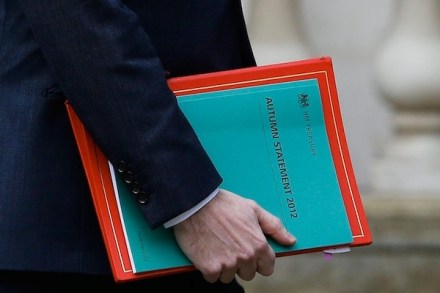
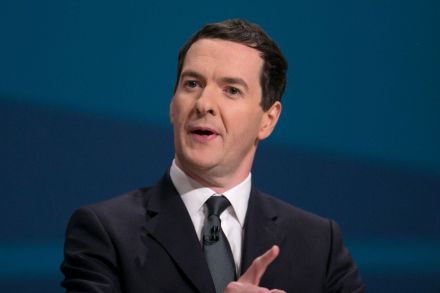
When George Osborne gives his Autumn Statement on 5 December, the OBR will publish its new forecasts for growth, deficit and debt. For the last few weeks, the consensus has been that the OBR would declare that Osborne will miss the debt target he set himself in 2010: to have the debt-to-GDP ratio falling in 2015-16. The logic behind this, as I set out in September, is pretty straightforward: the OBR will have to lower its growth forecasts, which will in turn mean lower tax revenues, higher deficits and more debt. But it now looks like Osborne might narrowly avoid failure, though not because the outlook for the economy or the government finances is any brighter.

Tata Steel’s job cuts, a tale of 2 press releases

From our UK edition

Today brings bad news that Tata Steel is to cut 900 jobs in the UK (at plants in South Wales, North Yorkshire, Teesside and the West Midlands). This is catastrophic news for a government that has announced its intention to rebalance the economy away from financial and professional services in the south-east (and therefore get an hearing electoral hearing in Britain’s former industrial heartlands); but that is only one aspect of the politics at play here. Tata's statement says: ‘Today's proposals are part of a strategy to transform ourselves into an all-weather steel producer, capable of succeeding in difficult economic conditions. These restructuring proposals will help make our business more successful and sustainable.

David Cameron’s speech to the CBI

From our UK edition

Here is the full transcript of the speech David Cameron gave to the CBI earlier today. It is, on the face of it, a speech full of intent and energy; but, two and half years into government, David Cameron will be judged by what he does, not what he says. As John Cridland, DG of the CBI, put it in response to Cameron's words: 'Where's the beef?' I look around this room and see people I’ve been on trade missions with all around the world to Africa, China, India, Russia, Mexico, Brazil. It’s great to see Aggreko here - we were in Africa together and I’m glad you’ve sealed that deal in Cote d’Ivoire and are selling in one hundred countries today.

The gap between what David Cameron says and what he does

From our UK edition

David Cameron (and a host of other politicians, including Ed Miliband, Vince Cable and Boris Johnson) will address the CBI’s annual conference this morning. Cameron’s widely trailed speech is a call to arms; indeed, he wants to put the public sector on a war-footing. The speech will contain the usual spiel about Britain being in a ‘global race to succeed’ and the need for innovation and cutting red tape, faster decision making etc, etc, etc. You’ll know, of course, that these urgent words come from the man who feels that the decision on a third Heathrow runway cannot be made until after the next election. This fact mocks Cameron’s claim that 'the Cabinet I chair is now a Growth Cabinet...

Will Osborne have the luck of the Irish with his 4G auction?

From our UK edition

Could George Osborne be in line for a genuine windfall? The Chancellor is getting quite good at conjuring fake ones (Post Office pensions, raiding £35 billion from the Bank of England) but he has yet to sell the 4G licenses. This could be more significant than next month's mini-Budget. The stunning success of Ireland's 4G auction (here) suggests that the UK auction may yield a lot more than is currently expected. A decade ago, governments world over pocketed massive windfalls auctioning the 3G licenses to mobile operators. This time Ofcom has put a reserve of £1.3 billion. But the Irish government expected to get just €170 million from its licenses. In the end, it raised €482 million in upfront fees with €373 million more to come by the end of the next decade.

Eurozone enters double dip recession

From our UK edition

The Eurozone is now in recession – this, at least, is what is implied by today’s avalanche of dire economic data. Eurostat has not (yet) made this calculation; but Capital Economics has. Take into account the relative size of the Eurozone economies who have declared figures and it suggests a fall of 0.1 per cent for Q3 which, which, coming after the contraction of 0.2 per cent in Q2, would meet the test for recession (two consecutive quarters of negative growth). So, like Britain, a double-dip recession. Greece and Portugal are still in meltdown. The Germans are doing okay, with growth of 0.2 per cent for Q3. This is mainly because of the fact that their currency would be worth about a third more if they had the Deutschmark.

Employment has recovered from the recession, but wages haven’t

From our UK edition

Today's employment figures don't contain much new to shout about. The number of people in work — although it rose by 100,000 on the previous quarter — is actually down very slightly from last month's record high (but still above the pre-recession peak, just). Unemployment fell by 49,000 from Q2 to Q3, although that's well within the Labour Force Survey's margin of error (so we can't be certain that it fell at all). The best news in today's figures — from the government's point of view — is probably that the headline unemployment rate is now 7.8 per cent, very slightly below the 7.9 per cent rate when the coalition took office (though again, it's worth remembering that the margin of error on that figure is +/– 0.3 percentage points).

Tuition fees push inflation back up to 2.7%

From our UK edition

After falling to 2.2 per cent in September, inflation — as measured by the Consumer Prices Index — rose to 2.7 per cent in October. On the Retail Prices Index, inflation rose from 2.6 per cent to 3.2 per cent. The main cause of the rise is the government's changes to university tuition fees, which put the maximum annual fee up to £9,000. Today's figures are the first to include the effects of the policy — with the education index 19.7 per cent higher than last year. But food prices were up too — by 0.5 per cent on last month and 3.3 per cent on last year. The good news — unusually — comes from energy bills. Gas prices in October were unchanged from September, and 1 per cent lower than in October last year. Electricity prices fell by 0.

Briefing: The US fiscal cliff

From our UK edition

With the elections over and Barack Obama returned to the White House for four more years, the attention of US politicians has turned to the so-called ‘fiscal cliff’ — a collection of tax hikes and spending cuts that threaten to send the country back into recession. But what exactly is going on, and why? The Bush tax cuts George W Bush passed two major tax cut packages during the first term of his Presidency: the Economic Growth and Tax Relief Reconciliation Act of 2001 and the Jobs and Growth Tax Relief Reconciliation Act of 2003. Together, they lowered federal tax rates on income (for example, the top rate fell from 39.6 to 35 per cent, and the bottom rate from 15 to 10 per cent), capital gains and dividends.

Can Ed Balls leave his past behind?

From our UK edition

A large part of the Tory message at the next election will be ‘don’t let Labour ruin the economy again’. One of the things that will help the Tories make this a topic of the campaign is Ed Balls’s constant desire to defend the record of the last Labour government. As Jonathan noted earlier, when Andrew Neil pointed out that Labour was — contrary to Balls’s earlier denials — running a structural deficit in 2007, Balls got into a long-winded attempt to justify both that and his denial of this point last year.

Ed Balls tells porkies about the deficit

From our UK edition

Ed Balls has just been given a thorough grilling by Andrew Neil on the Daily Politics — particularly on his past assertions that Labour were not running a structural deficit in the years leading up to the financial crisis.

Economic growth faster than expected as Britain exits recession

From our UK edition

The economy is out of recession. It grew by 1 per cent in the third quarter of this year, which is the fastest quarterly growth rate since 2007. This positive number makes it a lot easier for the coalition to claim that the economy is ‘healing’. Expect to see ministers heading to TV studios to talk about how a million more private sector jobs have been created, how there are record number of new start ups and that inflation is down. Being out of recession makes it a lot easier for the coalition to defend its economic record. Today’s number should also serve to boost consumer confidence, to provide a little bit of a ‘feel-good’ factor. Now, there are obviously unique factors involved in this growth figure. Olympic ticket sales, for instance, added 0.

GDP is up 1% – give or take 0.7%

From our UK edition

So it's official: the UK economy grew by 1 per cent in the third quarter of 2012, according to the ONS's preliminary estimate. That's significantly better than the consensus forecasts. As all the politicking and pontificating begins, there are a few caveats worth keeping in mind:- 1. It's just an estimate. As I showed yesterday, the margin of error in the ONS's preliminary estimates is +/– 0.7 percentage points. That means Q3 growth could really turn out to have been anything from 0.3 per cent to 1.7 per cent. Still, we can be confident that the economy did return to growth in the quarter, ending the double-dip recession — though this may have been thanks to some one-off factors, which brings us to… 2. The Diamond Jubilee.

Despite everything last week, David Cameron is still on the up

From our UK edition

Finally, some good news for the government - the public seems unconcerned by its recent difficulties. In spite of plebgate and George Osborne's train ticket dominating this weekend's papers, polling out today shows the Conservatives have managed to reverse their voting share decline in the wake of their party conference. The Populus/Times poll places the Tories on 35 per cent, up five points from September while Labour are down by the same amount. This brings Labour's lead down to where it was before this year's budget in March 2012: The Guardian/ICM polling shows a smaller increase, with Labour on 41 per cent and 33 per cent for the Conservatives. This is still a two point improvement on their last poll: However, the ICM figures are adjusted in favour of the Tories.

Route to conflict? David Priestland’s Merchant, Soldier, Sage

From our UK edition

David Priestland is worried. Towards the end of his recently published book Merchant, Soldier, Sage, he warns: ‘[The crash of] 2008 has set the world on a course towards potential conflict, and the domestic and international forces that brought us the violence of the 1930s and 1940s are with us today – albeit still in embryonic form.’ It is fashionable, especially in heavily indebted Europe, to compare the uncertainties of the present with those of the 1930s. The Second World War is passing out of living memory and entering popular historical consciousness. Angela Merkel appeals to this when she warns that only the European project can guarantee peace; and Greek protesters who equate her with the Nazis assert the opposite view.

IMF: Anatomy of a downgrade

From our UK edition

Growth forecast downgrades should come as no surprise these days, but when they come from the IMF they naturally command a fair bit of attention. In fact, the IMF's downgrades for annual GDP change — to -0.4 per cent in 2012 (from +0.2) and +1.1 per cent in 2013 (from +1.4) — simply bring them into line with the consensus. The below graph shows how the average of independent forecasts for 2012 growth has changed over the last few  months: Given that the ONS shows the economy having contracted by 0.7 per cent in the first half of this year, the IMF's forecast of a 0.4 per cent contraction for the whole of 2012 implies slight growth of about 0.2 per cent in the second half. And, as always, growth downgrades have a nasty knock-on effect for George Osborne's deficit plans.

The poverty of economics

From our UK edition

The IMF's growth downgrades will make tomorrow’s newspaper headlines but the more striking point is its decision to massively rewrite British economic history. As Citi's Michael Saunders notes (PDF), the IMF now believes that UK economy was massively overheating in the boom. What we had thought was normal growth was, in fact, crazy exuberance.  Britain's economy was more overheated by any in the G7, the IMF now tells us. Things were worse in 2007 than in the ‘Lawson boom’. Had we known about this overheating, of course, it ought to have been remedied by an interest rate rise. The asset bubble might never have been blown and the cheap debt party (in which the bankers were bartenders, not organisers) might never have got so out of hand.

Labour to launch a deficit clock for Tory conference

From our UK edition

Things have come to a pretty pass when the Labour Party is launching a campaign with a deficit clock to expose George Osborne’s shortcomings. But they are about to do today, I understand, highlighting how much extra the government is borrowing over the four days of the Tory conference compared to last year: £277 million, they say. I’ll post the link when it becomes live. Significantly, Labour is shifting from being in a position of deficit denial towards a position where they will (I suspect) sign up to Osborne’s spending plans. As Balls has found out, Osborne’s game is to dress up only-slightly-modified Labour spending plans with Tory language. But Osborne, and David Cameron, have overdone it with the rhetoric.

‘Are you better off?’ won’t be a winning debate line for Mitt Romney

From our UK edition

‘Are you better off than you were four years ago?’ That was the question Ronald Reagan told Americans to ask themselves when choosing their President in 1980, and it's a line Mitt Romney's campaign has been hoping would work for them this time around. ‘The president can say a lot of things, but he can’t tell you you are better off,’ Paul Ryan told a crowd in North Carolina last month. And it might be one of the ‘zingers’ Romney throws out in tonight’s debate. But the attack isn't looking nearly as potent against Obama as it did against Jimmy Carter. For one thing, Ryan's claim might not actually be true. Sure, the unemployment rate in August (8.1 per cent) was still slightly higher than it was when Obama took office in January 2009 (7.

Labour conference: Miliband and Balls talk inheritances

From our UK edition

One of the more sombre passages in Ed Miliband's barnstorming speech this afternoon was when he tackled the thorny issue of what a Labour government would actually do about the cuts. While both the Labour leader and Ed Balls are keen to regain the trust of the British public on the economy, they are also trying to introduce a counter-narrative to the 'are you ready to trust Labour with your money again?' line that Nick Clegg produced last week. Just as George Osborne and colleagues have spent the first two and a half years selling the line that they are 'clearing up the mess' of the last Labour government, Miliband and Balls are now increasingly talking about the economic inheritance that a Labour government might receive in 2015.