Economy

Has Boris made you better off?

From our UK edition

Despite the political misery for Boris Johnson as he ends the year, he has a big hope: that salaries will boom in 2022. At Conservative party conference in October, he told fellow Tories what to expect. Yes, the country has gone through a phase of economic chaos — and as a result some supermarket shelves have been empty and truck drivers have been hard to find — but this was actually good news, he claimed, because it marked the start of a new, high-pay economic model. ‘We are not going back to the same old broken model with low wages, low growth, low skills and low productivity,’ he boasted.

The economic impact of the latest Covid restrictions

From our UK edition

We don’t yet know whether the Omicron variant will drastically accelerate the spread of coronavirus, or whether it will circumvent parts of the immune system. Nor can we be sure that the ‘light’ coronavirus restrictions announced at the weekend will be enough to combat the new strain. We can be certain, however, that these measures will come with an economic cost that politicians are, at least publicly, understating. Face masks are once again compulsory in shops and on public transport in England, and UK arrivals will need to take PCR tests within two days of landing, isolating until they get their result.

A brief history of embarrassing economic forecasts

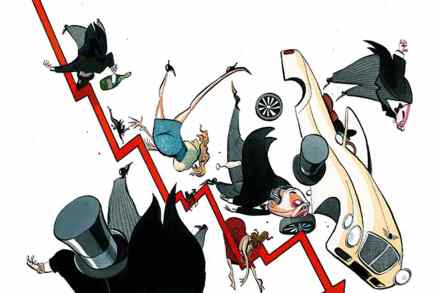
Many are familiar with the old aphorism that in real estate the three most important determinants of value are location, location, location. Things are a bit different in making economic forecasts and predictions, where two variables matter most: accuracy, of course, but also timing. Regarding accuracy: a lengthy list of economists — some quite eminent — have ended up with egg on their faces because of inaccurate predictions and forecasts. In this regard, there’s the observation by the distinguished economist Irving Fisher, 92 years ago today on October 16, 1929, that stock prices had reached 'what looks like a permanently high plateau’. Since the Great Crash occurred two weeks later, Fisher’s timing wasn’t so great either.

forecasts

Is Britain’s economy being starved of talent?

From our UK edition

How is the Prime Minister’s bid to turn Britain into a high-wage economy progressing? It couldn’t be going better just at the moment, to judge by a survey by IHS Markit for KPMG and the Recruitment and Employment Confederation. In September – data was collected between the 13 and 24 September – there was a sharp rise in hiring, while starting salaries were rising at their fastest pace in the 24 years in which the survey has been undertaken. The number of permanent as well as temporary appointments was high, although the latter fell back from a record high in August. The survey suggests that the jobs market turned in February and has been strong ever since then. Is the boon in wages really such good news for the economy?

Running on empty: the government is out of fuel – and ideas

From our UK edition

The Prime Minister is thought to thrive on chaos. If so, then he should be in his element. Wholesale gas prices have risen sixfold, winter heating bills are set to be the highest on record. Millions of people across the country are wondering what they might have to forgo to pay for heat. Supermarkets are warning of food shortages. There are 100,000 missing HGV drivers. The army has been called in to help, but has only 150 tanker drivers available. Queues for petrol jam the roads, and medics can’t get to work. The Prime Minister might thrive on chaos, but Tory members do not. ‘Tory grassroots are furious,’ says one MP. Not just about the prospect of energy bills rising, but about the increase to National Insurance too.

Is the inflation panic over? Probably not

From our UK edition

So, is the post-Covid inflation panic over? That is how it looked last month, when the government’s preferred inflation index, CPIH, fell to 2.1 per cent from 2.4 per cent a month earlier. We will have the latest news on Wednesday morning, but for the moment it appears that consumer prices inflation hasn’t taken off like we feared. It is a similar story in the US, where inflation fell back from 5.6 per cent in July to 5.3 per cent in August. The fact that house prices have risen so strongly throughout the deepest recession in modern times ought to be a warning sign Yet there are good reasons to suspect that the summer slowdown in inflation is a lull and that a rebound is coming. Just look at US producer prices, which ratcheted up to 8.

Covid pingdemic takes its toll on Britain’s economic bounce-back

From our UK edition

The arrival of ‘freedom day’ on 19 July enabled people to return to concerts, festivals, and ditch social distancing, but these rediscovered freedoms did not revive the economy. The ONS said this morning that growth was just 0.1 per cent in July, far lower than the consensus forecast. It was particularly disappointing given the growth seen in the locked-down months of June (one per cent) and May (0.6 per cent). The Pingdemic – and concerns about the Delta variant – cancelled out any animal spirits around reopening. August’s GDP boost is going to need to be much stronger for the more bullish forecasts to pan out Nightclubs reopened and the entertainment sector was up nine per cent, but the end of stamp duty hit real estate.

No. 10 is distorting the economy

From our UK edition

Job vacancies at a record high, a shortage of 90,000 lorry drivers, farmers complaining about a lack of seasonal workers, care homes complaining about difficulties in recruiting staff — and 1.9 million people still on furlough at the end of June. It shouldn’t be difficult to put these figures together and work out what is going on — even if Lord Adonis, with his usual tunnel vision, has been busily tweeting blaming everything on Brexit. When the furlough scheme was introduced it was intended as a short-term measure to tide over businesses that had been forced to close as a result of Covid restrictions. So why is it still in place when the economy has almost entirely reopened?

Britain’s economic bounce back is less impressive than it seems

From our UK edition

The UK economy is rebounding at the fastest rate in Europe, and faster even than the United States: that is the general tone of reporting of today’s GDP figures, which show that the UK economy expanded by 4.8 per cent in the second quarter of 2021. That is compared with 0.9 per cent in France, 1.5 per cent in Germany and 1.6 per cent in the US. But hang on, dig a little deeper and there is something a little odd going on with the figures. Compare nominal and real changes in GDP during the second quarter and it produces the following: UK, nominal growth in second quarter: +3.6 per cent; real growth in second quarter: +4.8 per centFrance, nominal growth in second quarter: +1.0 per cent; real growth in second quarter: +0.

The crisis in Lebanon is a warning for the West

From our UK edition

 Beirut On the highway into Beirut the other day, we drove past a petrol queue that was more than two miles long. On and on it went, the drivers sweating and swearing in brutal heat. Some had run out of fuel while they waited, having to push their cars when the queue inched forwards. There were people on laptops working from their cars during the day-long wait. Petrol queues are an everyday fact of life in Lebanon, but this was something else. Seeing that I was a foreigner, a frustrated driver gestured at the long line ahead of him and shouted: ‘Lebanon!’ He was summing up the fury and disgust felt by the Lebanese at what has happened to their country.

In the post-pandemic economy, the workers are the boss

From our UK edition

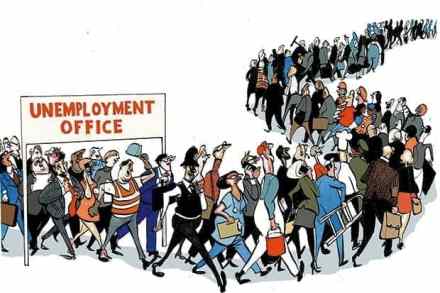
The world of coronomics continues to surprise us. Last summer forecasters warned of a wave of redundancies after the biggest economic crash in 300 years. Peak unemployment — spurred on by lockdowns — was expected to near 12 per cent, ushering in a new era of chronic financial pain and instability for millions of workers. But the Treasury’s furlough scheme has kept the headline figure down. Unemployment has hovered around 5 per cent, less than half the original prediction. The problem this summer isn’t mass unemployment but worker absenteeism. Job vacancies are now more than a third above pre-pandemic levels. There is no shortage of available work, only a shortage of those willing to do it. At the last count, 2.

Will Italy’s Euro win lead to a baby boom?

From our UK edition

Could Italy’s triumph on Sunday result not just in a trophy for the azzuri, but a baby boom for a nation with one of Europe’s lowest fertility rates? The anecdotal evidence would support this theory. Nine months after Iceland beat England in a Euro 2016 match, it experienced an unprecedented increase in births. This was the first time the nation had ever qualified for a major European tournament, and close to 10 per cent of its 300,000 population watched the game in person. Spain’s birth rate also shot up 16 per cent nine months after Barcelona won the 2009 Champions League. Yet a new paper from Luca Fumarco and Francesco Principe pours cold water on the idea that sports success euphoria boosts human conception.

What is the purpose of test and trace?

From our UK edition

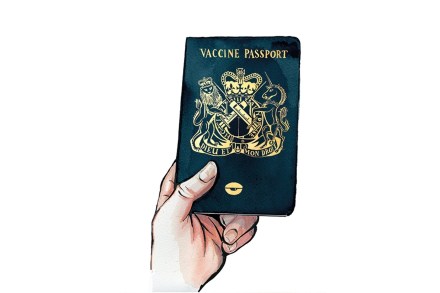
At yesterday’s press conference, Boris Johnson announced that his government was shelving plans for domestic ‘Covid certificates’ (i.e. vaccine passports), at least for the time being, although this won’t stop private businesses or venues from deciding to use them.  We also learned today that it won’t stop the creation of a two-tier system (as Lara Prendergast warned months ago) for the ‘jabs and jab nots’. New policies have been confirmed that will allow for the double-jabbed to skip quarantine if they’ve been in contact with someone who tests positive for Covid-19 (with exemptions granted to under-18s as well).

The economic case for ditching mask mandates

From our UK edition

After many months of hardship and sacrifice, freedom is finally within grasp. Boris Johnson has reclaimed his buccaneering, libertarian spirit and punctured the hopes of zero Covid zealots who wanted more working from home, social distancing and masks. When it comes to face coverings, however, lockdown fans have been working hard to convince the public that they ought to wear them voluntarily — on the off-chance they have the virus and unwittingly hop on to a tube carriage with the unvaccinated. Are they right? Masks are undeniably inconvenient. They’re a pain to wear and a nuisance if forgotten. They reduce the ability to communicate, interpret and mimic the expressions of those with whom we engage.

It’s time for Rishi Sunak to stand up to Boris Johnson

From our UK edition

Finally the pandemic fog is lifting and the outlines of post-Covid politics are starting to take shape. While the Government is perfectly capable of generating many more unfortunate headlines by mishandling the Covid exit wave – or indeed, in the case of Matt Hancock, ignoring the 'hands, face, space' rule – it is clear that one key relationship will largely determine its longer-term fortunes. It is that between off-the-cuff scruff Boris Johnson and his immaculately turned-out Chancellor, Rishi Sunak – the man in the ironed mask.

What happens when your currency collapses?

I’m a millionaire. A million in crisp, new bills is stacked up on the table in front of me. Unfortunately, it’s Lebanese lira and cost me about $75 a week ago. It’s already worth only $65, and by the time you read this, it will be worth even less. The Lebanese currency has lost more than 90 percent of its value over the past 18 months and is continuing its steady decline. It would be foolish to keep more than a few days’ spending money on hand, so everyone has a moneychanger. Mine is Mohammed, who pops round on his moped with ever-fatter stacks of notes with ever more zeros on them. The currency grows physically as it shrinks in value. He passes over a wad of cash and says, smiling: ‘Our leaders are stupid and corrupt.

currency

The true cost of cheap money: an interview with Andy Haldane

From our UK edition

Britain’s economy is growing at the fastest rate in 200 years. Job adverts are 29 per cent above their pre-pandemic levels and employers say they can’t reopen because they can’t find staff. Wages are rising at the fastest rate in ten years. But here’s the question: how much more support does the economy need from the Bank of England’s printing press? Should the BoE stick to its pledge to bring QE up to £895 billion or stop £50 billion short? Its members met to discuss this last month and decided (as they always do) to press ahead — by eight votes to one.

British broadcast news has gone badly wrong

From our UK edition

I’ve worked for some media thoroughbreds — including the Financial Times, ITN and CNN — so I know the sense of assurance that comes from wearing the badge of a long-established journalistic brand. But nothing — nothing — beats the buzz I now feel as a presenter on GB News. It’s the thrill of being part of a start-up, especially one so many want to fail. We GB News types are disruptive and entrepreneurial. We think that British broadcast news has gone badly wrong. It has become smug, stale and monocultural. We want to do something about that. Amid the advertising boycotts, inevitable technical glitches and even more inevitable catty reviews, we know we are on to something — and that’s what scares the incumbents.

Scotland needs English migrants

From our UK edition

Post-pandemic economic recovery was on the agenda at Holyrood this week, with Scotland's finance minister Kate Forbes in full JFK-style 'ask not what your country can do for you' visionary mode. 'Wherever someone works, and in whatever capacity, if they think that they can serve our country as we face the prospect of rebuilding, this is their personal invitation. Our strength is in our united vision to work together — across party lines, sectors and regions — to rebuild,' declaimed Forbes. A cynic might wonder if 'serve our country' will turn out to mean serving the nationalist interest rather than the national one.

Has Covid accelerated the cashless society?

From our UK edition

Time is, I fear, running out. Running out, that is, to avoid handing to a small number of multinational corporations our right to buy and sell things. Running out to prevent governments and central banks helping themselves to our savings, by means of negative interest rates. The payments industry is closing in on its target of driving cash out of circulation and instigating cashless payments as the only way of doing business. That, at least, is the conclusion one might reach from reading a report by Worldpay: the Global Payments Report 2021. It claims that cash payments in UK shops in 2020 made up 13.4 per cent of total payments, down from 27.4 per cent in 2019. By 2024, it predicts, they will be down to just 6.9 per cent. By the same year it will be down to just 0.