Easter

Born again

From our UK edition

Six years ago, on Good Friday, the journalist Melanie Reid was thrown off her horse while on a cross-country ride in Stirlingshire where she lives. The accident broke her neck and back and left her tetraplegic, paralysed from the armpits downwards. On Easter Sunday on Radio 3 she’s Michael Berkeley’s guest on Private Passions, a timely guest, as he says, because she has recently written in her Sunday Times column about being ‘surprised by a small epiphany of happiness’, of experiencing a ‘rebirth’, if ‘rather cruel’. ‘You find joy in little things ...

Nuclear waste

From our UK edition

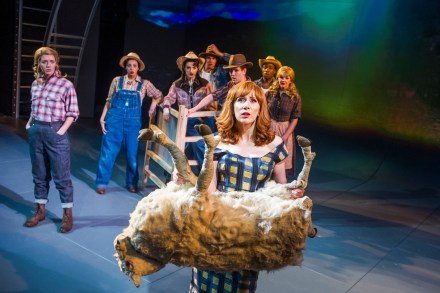
Miss Atomic Bomb celebrates the sub-culture that grew up around nuclear tests in 1950s America. The citizens of Nevada would throw parties and stage barbecues to coincide with the latest nuclear detonation in the desert. This musical has a lot going for it. The melodies are strong, and well sung. The high-kicking chorus lines are easy on the eye and the show has a zippy, innocent spirit. But the storyline gets sidetracked in a mass of contradictory directions. The main theme follows a homesick farm girl who becomes involved with a runaway soldier whose brother runs a Vegas nightclub where a beauty contest is being held that the farm girl hopes to win.

Rebel angels

From our UK edition

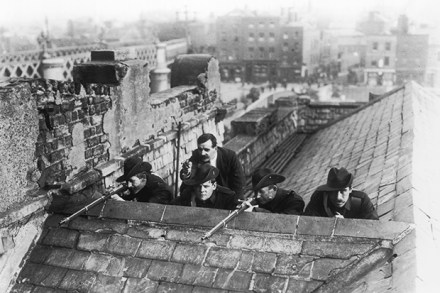
This is the first exhibition I’ve been to where the Prime Minister joined the hacks at the press view. A week after the Irish general election, the Taoiseach, Enda Kenny, came to the biggest show in Ireland devoted to the centenary of the Easter Rising. Kenny’s presence at the press launch just goes to show how the Irish rebellion against British rule at Easter 1916 is still the defining story of modern Ireland. In fact, the Easter Rising was a pretty good failure, although I didn’t suggest that to the Prime Minister at the press view. The rebellion lasted only six days before it was put down by the British army. Other attacks on British barracks in Meath, Galway and Wexford didn’t get very far either. Planned attacks in Cork, Tyrone and Donegal never happened.

Letters | 18 February 2016

From our UK edition

Governmental ignorance Sir: Your leading article (13 February) blames junior doctors for playing with lives in their dispute; but what alternative do they have when confronted with the monumental ignorance of our present government (and the last, and the one before that, for that matter)? The NHS, when it started, was propped up by the amazing dedication of the post-war generation and then the baby-boomers. Even so, by the 1960s it was dependent on cheap foreign labour. If people want a first-class service they have to pay for it. It is about time somebody made our government aware of the facts of life — and the junior doctors seem to have stepped up to the plate.

Letters | 4 February 2016

From our UK edition

Leave those kids alone Sir: Melanie Phillips was right to raise serious concerns about the emerging practice of challenging children to define their gender identity (‘In defence of gender’, 30 January). She quoted justice minister Caroline Dinenage as saying that the government was ‘very much on a journey’ on this issue. The government should therefore give children space and time to follow their own ‘journey’ of self-discovery and discovery of the world without pressure from above to choose labels to define their own sexuality. They have enough pressure of this kind from their peers.

Letters | 28 January 2016

From our UK edition

Levelling the cricket pitch Sir: As a cricket addict and believer in state education, it pains me to agree with Michael Henderson’s assertion that the future of England’s Test side rests in the hands of private schools (‘Elite sport’, 23 January). The high-performing, 1,700-strong school where I am the head teacher has a grass area for sport that is not large enough for a rugby pitch, let alone a cricket square. As far as the coaching, equipment and pitch maintenance required to play our summer game properly, money talks. While we receive £4,000 a year from the government for each sixth-former we educate, at a local independent school parents are charged over £5,600 per term even before ‘extras’ such as exam entry fees are added in.

Diary – 21 January 2016

From our UK edition

Quarrelling about the date of Easter has been a Christian pastime for centuries. The chief bone of contention is whether Easter should be held on 14th Nisan in the Jewish calendar — that is, at a fixed point of the lunar month — or whether it should be held on the nearest Sunday to this date. The Celtic church(es) evidently had their own ideas on the question. In the year 651, Queen Eanfleda of Northumbria was fasting on what she regarded as Palm Sunday on the very day that her husband, Oswy, King of Northumbria, was celebrating Easter. Behind the seemingly batty arguments lay the world-changing conviction that Christ’s death and resurrection had been a new Passover.

Letters | 9 April 2015

From our UK edition

In defence of Catholicism Sir: Michael Gove gives an excellent defence of Christianity (4 April), but his embarrassment about the Roman Catholic part of the story is unnecessary. He writes of his discomfort as, declaring oneself to be a Christian, ‘You stand in the tradition of the Inquisition, the Counter-Reformation, the Jesuits who made South America safe for colonisation … the Christian Brothers who presided over forced adoptions’. The Inquisitions (Papal, Spanish and Portuguese) were indeed shameful, but were often as ineffective as the governments that supported them. The Counter-Reformation was a great movement of spiritual and cultural renewal that altered and improved western civilisation.

Keeping the faith | 9 April 2015

From our UK edition

There was no shortage of Easter music and talks across the BBC networks with a sunrise service on Radio 4 followed by much fuss and fanfare for the ‘live’ relay of Libby Lane’s first Easter sermon as Bishop. A significant milestone for the C of E as women are at last allowed to don mitres and wield a bishop’s crozier. Three, not to be outdone, invited the Revd Lucy Winkett (who had to outride the brouhaha caused by her appointment as the first woman priest at St Paul’s Cathedral) on to Private Passions, where she proved herself an insightful musician and theologian.

Podcast: In defence of Christianity, and the Conservatives’ lack of passion

From our UK edition

Being a Christian in Britain today is to invite pity or condescension, writes Michael Gove in this week’s cover piece. Why is that, and what is the future of Christianity in Britain? Michael Gove joined Isabel Hardman and Ken Costa, the Chairman of Alpha International, on this week’s View from 22 podcast, to discuss the issue. Has there always been this much suspicion of Christians, or is this a more recent phenomenon? James Forsyth and Fraser Nelson also joined Isabel Hardman to talk about this week’s leading article. In it, The Spectator argues that the Tory campaign so far has lacked passion. The Conservatives ought by all accounts to be winning in the polls; but Cameron is seriously struggling. So what has gone wrong?

Is this the greatest sculpted version of the Easter story? It’s certainly the strangest

From our UK edition

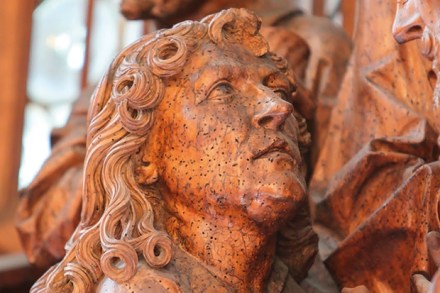
In April 1501, about the time Michelangelo was returning from Rome to Florence to compete for the commission to carve a giant marble David, a very different sculptor named Tilman Riemenschneider agreed to make an altarpiece in the small German town of Rothenburg ob der Tauber. Since then, things have not changed much in Rothenburg. Though battered during the war, it has been restored to postcard perfection (or rather turned into a perfect place for tourists to take selfies of themselves against a Disneyesque medieval background). And the Altar of the Holy Blood is still there, in the place for which it was made, at the west end of the church of St James or Jakobskirche. This is a sculpted version of the Easter story both great and strange.

David Cameron’s curiously sanitised Christianity

From our UK edition

David Cameron has written a rather interesting piece for Premier Christianity magazine on his faith and the meaning of Easter. I use the word ‘interesting’ advisedly and in the sense that an aged relative might deploy it when regarding some new fangled Christmas present that has a touch screen. The final two paragraphs are particularly interesting: ‘So I end my argument with this: I hope everyone can share in the belief of trying to lift people up rather than count people out. Those values and principles are not the exclusive preserve of one faith or religion. They are something I hope everyone in our country believes. ‘That after all is the heart of the Christian message. It’s the principle around which the Easter celebration is built.

Want to understand the conflict in Ukraine? Compare it to Ireland

From our UK edition

What seemed this time last year to be a little local difficulty in Ukraine has metastasised to the point where a peace plan drafted in Paris and Berlin may be all that stands in the way of war between the West and Russia. Over the months, many of those watching, appalled, from the safety of the side-lines, have combed history for precedents and parallels that might aid understanding or offer clues as to what might be done. Last spring, after Russia snatched Crimea and appeared ready to grab a chunk of eastern Ukraine too, the favoured comparisons were with Nazi Germany’s 1938 annexation of Sudetenland. It was a parallel that seemed all too plausible, given the Kremlin’s statements about the need to protect Russian 'compatriots' wherever they might live.

Dave’s brush with the bed bugs

From our UK edition

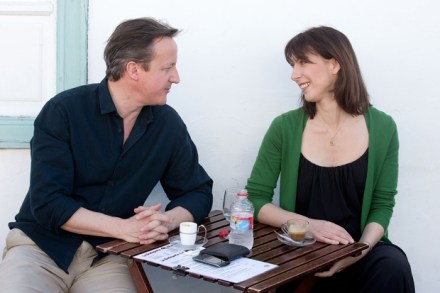
First it was a jellyfish that blighted the Prime Minister's Easter break in Lanzarote. Now, according to Trip Advisor, fellow guests at the discreet Casa Tomaren might have had more than the PM's  swarming security detail and travelling aides to worry about. One happy punter writes: 'We just spent a holiday at Casa Tomaren and I wish I had not. After our first night we complained of ants in our beds and in hindsight we should have left straight away but did not want to spoil our holiday. As the holiday progressed our girls got bitten to death by bed bugs and I have picked up some other bug related rash which I have yet to diagnose. I thought they were mosquitos at the time but took the girls to the doctor on my return and was told they were bed bugs.

The UK is a Christian country, whether the Left like it or not

From our UK edition

As the crucifixion of Damian McBride over Easter in 2009 proves, the four-day news void can be gruesome for Downing Street, yet it seems congratulations are in order this year. No.10 managed to throw the chattering classes such a juicy bone of distraction that they all spent Easter trying to convince themselves that the UK is not a Christian country. The row was stoked by an assorted group of lefties with impeccable Labour, Liberal and Green credentials writing to the Telegraph, questioning why a PM may possibly wish to talk about religion. The irony that it was Easter, top and tailed by two bank holidays where their entire ‘non-Christian country’ shuts down for 96 hours in celebration of the resurrection of Christ was lost on these modern day Doubting Thomases.

Why church leaders are wrong to attack welfare cuts

From our UK edition

Another day, another welfare row. The practical outworking of the Government's most controversial idea - that people on welfare should actually be better off in work, continues to spark outrage. Today it is church leaders who line up to try to land punches on Iain Duncan Smith, making an attack on his decision that welfare payments (like the average salary) should not keep pace with inflation. In leading the biggest package of welfare reform since the first foundation stone of social security was laid by William Beveridge, IDS  is familiar with the poverty lobby's ongoing shock-and-awe strategy. Yet like so many who have gone before, today's critics miss the bigger picture.

Happy Easter | 31 March 2013

From our UK edition

It is a glorious morning, suitable weather to mark this joyous day in the Christian calendar. The leading column in this week’s issue of the magazine considers the Easter story in humanity’s past, present and future, from perspective of non-believers as well as believers. Here’s a short excerpt: ‘Unlike Christmas, it’s a story that doesn’t lend itself to much commercial fuss: no kings or presents. Easter is a story of sacrifice, torture, abandonment and death — and, through it all, triumph over that death. Even in the 21st century; despite all the chocolate eggs, Easter gives us pause. And it’s Easter, not Christmas, that makes Christianity such a radical religion.

Brace yourself for the real experience of going to a rural parish service on Easter Sunday

From our UK edition

‘And we extend a special welcome to all our visitors here today.’ That’s the vicar speaking; and this Sunday is one of the two days in the year when you are likely to be one of those visitors. You’re spending Easter with in-laws or friends who live in the country. Easter wouldn’t feel like Easter without Eucharist at the local C of E church after the first mini-egg of the day, so here you are, in tweed and wool, breathing in the timeless smell of damp and candle-wax as you try to prop up the paperback hymn book called Praise! on the pew shelf but it is too big and keeps flopping forward.

Crime fiction at Easter? Look no further than our Scandinavian neighbours

From our UK edition

If you thought that winter in Britain had gone on long enough this year, then spare a thought for the Norwegians. Winters in Norway are famously long, dark and bitter, and – for those who experience them year upon year – can be incredibly boring. During one such winter, in February 1923, two Norwegians called Nordahl Grieg and Nils Lie decided to alleviate their boredom by writing a book. The theme? A train robbery; or more specifically, a looting of the train to Bergen. The title of the book? The Bergen train was robbed in the night (or, in its original Norwegian: Bergenstoget plyndret i natt). Having written the book, the next step was to convince people to buy it, and here the authors came up with a very cunning plan indeed.

Holy Week is a time for contemplation and renewal

From our UK edition

Good Friday is a day for contemplation. If you have time, do read Roger Scruton’s piece in the latest issue of the Spectator. It is, among other things, a deep consideration of the damage caused by our society’s veneration of the trivial and transient. Here is a short excerpt: Wherever we find the cult of celebrity, therefore, we find deep unhappiness. ‘Fun’ has become the highest good, but fun is always out of reach, available only in that other and unattainable world where the stars are dancing. Meanwhile envy and resentment colour the world below, and there is no relief save the pleasures of consumption.