Drugs

Newsweek and the misunderstanding of ‘white death’

If you were concerned about ‘white death’ you can rest easy. Newsweekis here to tell us that the rise in white mortality is due to white people not knowing how fortunate they are. You think I’m kidding? The article proclaims that new research has found the ‘anxiety of whites’ is based on ‘a misperception that their dominant status in society is being threatened, which is manifesting in multiple forms of psychological and physiological stress.’ What a relief! And what poor tools. If only we could emphasize to them that their perceived loss of status is based on misperception, they could stop taking fentanyl. The research has been conducted by Arjumand Siddiqi and her colleagues from the University of Toronto.

white death

Rave revolution

From our UK edition

Jeremy Deller’s Everybody in the Place: an Incomplete History of Britain 1984-1992 (BBC4) began with some footage of kids queuing up outside a warehouse rave in Stoke-on-Trent in 1991. It was at once banal and extraordinary: everyone was white; nobody was overweight; none of the clothes were designer, expensive or branded; nobody wore facial hair. This was the England of my late youth and I remember it vividly. But it feels so remote from the present that it might just as well have been a lithograph of extravagantly side-burned men in stiff woollens captioned: ‘The Camp before Balaklava’. Deller is probably a bit more left-wing than me — how could he not be?

Letters | 25 July 2019

From our UK edition

Rose is the right choice Sir: Every Wednesday for the past nine years, it has been my privilege to attend the lunchtime Eucharist services in the Parliamentary Chapel, conducted by the Speaker’s Chaplain Rose Hudson-Wilkin. These routine acts of worship are not public, but are attended by parliamentary staff, MPs and peers. Central to them are Rose’s homilies and prayers, which are spiritual life-support to those of us who serve and navigate our increasingly fraught politics.

Barometer | 18 July 2019

From our UK edition

Mars missions When will there be a manned Mars mission? — As early as 1962, Nasa studied the practicalities of a mission to Mars, as part of its Project EMPIRE (Early Manned Planetary-Interplanetary Roundtrip Expeditions). The initial plan was to put a man on Mars by the early 1970s. However, budgetary restraints meant that the programme was limited to a flyby of Venus before being axed. — The prospect of a manned mission to Mars has been revived several times since. However, two years ago Nasa announced that it is unlikely to happen before the 2030s. Counting cups England won the cricket world cup. Which country holds the greatest number of world cups? (‘Championships’ not included.

Wasted lives

From our UK edition

Twenty years ago, the Scottish parliament was reconvened after a lapse of almost three centuries. The logic for devolution was clear enough: that Scotland has discrete issues, and ones that were not always solved by London government. Devolution would allow ‘Scottish solutions for Scottish problems’. There was, in Westminster, a feeling that MPs could worry less about these problems. Public health in Glasgow, previously one of the biggest problems in the UK, would be someone else’s problem. Let the MSPs see if they could do any better. The news this week should shock people on both sides of the border. Scotland has the worst rate of deaths from drugs in Europe, with numbers up by a shocking 27 per cent since 2017.

Barometer | 13 June 2019

From our UK edition

What’s in a name? If Jeremy Hunt wins the Conservative leadership election both prime minister and leader of the opposition will have the same forename. Has this happened before? — Between 18 July 1992 and 12 May 1994, John Major was PM and John Smith leader of the opposition. — Between 14 February 1963 and 18 October 1963, Harold Macmillan was PM and Harold Wilson leader of the opposition. — Jeremy would become one of only three forenames which have been held by leaders of the Conservative, Labour and Liberal parties. The other two are William (Hague/Adamson/Gladstone) and John (Major/Smith/Russell, 1st Earl of Russell). Life choices Jeremy Hunt said he personally believed that the abortion limit should be reduced to 12 weeks. How many people agree with him?

Portrait of the week | 13 June 2019

From our UK edition

Home Michael Gove, the Environment Secretary, a candidate for the Conservative leadership, admitted he had used cocaine several times 20 years ago. ‘I deeply regret the mistake that I made,’ he said. ‘It was a crime.’ He also said: ‘Certainly when I was working as a journalist I didn’t imagine I would go into politics.’ His admission came as the Daily Mail published extracts from a biography on Gove by Owen Bennett, due to be released next month, that relates an earlier admission of cocaine use to party colleagues. Ten candidates for the leadership started the race after Sam Gyimah withdrew: Michael Gove, Matt Hancock, Mark Harper, Jeremy Hunt, Sajid Javid, Boris Johnson, Andrea Leadsom, Esther McVey, Dominic Raab and Rory Stewart.

It would be weird if Gove hadn’t taken drugs

From our UK edition

Cocaine is an abominable drug, by far the most hateful of all the various uppers and downers and psychoactives because it turns you into such a complete moron. The problem with coke, as my friend, the drug historian Mike Jay, once explained to me, is that nature never intended us to use it the way we do. In its raw, coca leaf form, it’s a handy and pleasant stimulant, just what you need to keep you going on a long trek over the Andes. But in its refined form it’s just nasty, not least because it plays a cruel, built-in trick on you. You take cocaine to get high — and sure it helps, up to a point. What it really stimulates, though, aren’t the pleasure receptors but the impulsive part of your brain that makes you want more and more of something.

The thoughts of Chairman Gonzalo

From our UK edition

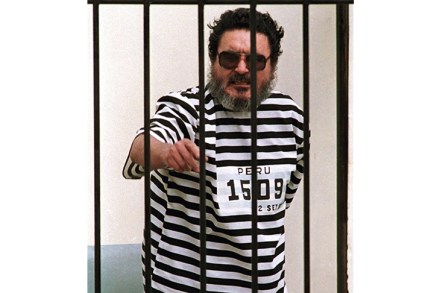
Few Peruvians today are interested in ‘the Shining Path years’, which left no traces besides 70,000 mutilated bodies and a wrecked country. Modern Lima, by and large, is a thriving city of five-star restaurants, shopping malls and newish Toyotas. Yet between 1980 and 1992 it was a vile and violent place, under siege from a revolutionary movement that modelled itself on Mao, Pol Pot and Enver Hoxha, and which venerated its leader as these men’s planetary heir. If anything, Sendero Luminoso was a precursor of Isis, with its child-suicide bombs, its rigid code of secrecy and its cultish devotion to a short, bearded, chubby figurehead who believed that ‘violence is a universal law’.

Weed thriller

From our UK edition

You don’t come across too many films from Colombia, but every few years one wriggles its way through the festival circuit and on to an arthouse screen, fingers crossed near you. Any film that survives that Darwinian journey will be robustly fit for purpose. Such is Birds of Passage (original title: Pajaros de verano), which with startling freshness tells a tale of gruelling familiarity. There tend to be two Colombian subjects that work for distributors: the international drugs trade or, for more rarefied tastes, indigenous tribes. What are the chances of encountering a film that fuses both? Slim, you’d suppose. And yet this narco-ethnographic thriller is inspired, we are advised, by events that took place between 1960 and 1980 in the Guajira region of northern Colombia.

Stop with the propaganda – marijuana use is not trivial

From our UK edition

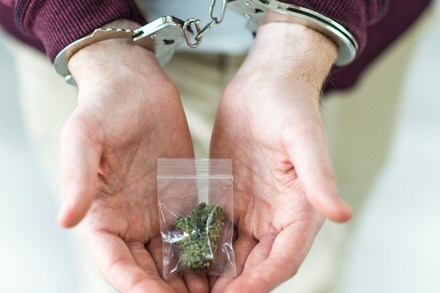
It is difficult to decide whether to condemn Chris Daw QC for his defeatism, or for his wilful ignorance of the true state of law enforcement in this country. There is no ‘prohibition’ of drug possession, as he claims. Hardly a week passes without some police force declaring that it is not interested in applying laws it is legally obliged to enforce. On 20 April, marijuana’s holy day, 5,000 people gathered in Hyde Park and broke the law, while police stood about. Not one person was arrested for an offence which officially carries a maximum sentence of five years in prison and an unlimited fine. This is the culmination of a de facto surrender which goes back almost 50 years. It is the users who sustain the entire drugs trade.

Letters | 9 May 2019

From our UK edition

Scrutinising charities Sir: Toby Young was right to raise questions about War on Want’s links to the Stop Trump campaign (4 May). The public rightly hold charities to high standards of behaviour, and charities are required to follow clear rules around political activity. We will be scrutinising the charity’s activities, and the issues raised by Toby Young, closely as part of an ongoing case into the charity. Similarly, we have examined concerns about the activities of a range of charitable thinktanks, and last year issued a regulatory alert to all charitable thinktanks on the register, including to warn them about unacceptable political activity.

The Spectator Podcast: the Brexit party, drugs, and fake lesbians

From our UK edition

As the two main parties reel from their local election performances today, are we at the beginning of a golden age for smaller parties? James Forsyth evaluates the chances of the Brexit party - Nigel Farage's new electoral outfit - in this week's cover piece. The conclusion isn't pretty for the Conservative party: the Brexit party is slicker than Ukip ever was, and two out of five Tory councillors are considering voting for them in the upcoming European elections. The party has also managed to perform better than Change UK, who seemed to have peaked at their launch a few months ago, demonstrating - James argues - the sheer anger that is out there in the constituencies with the way Brexit is going. On the podcast, Katy Balls talks to James and Matthew Goodwin, an expert on polling and Ukip.

A bitter pill

From our UK edition

I have been a defence lawyer for more than 25 years. I have defended clients charged with almost every crime there is. I have argued against convictions for robbery, rape, sexual assault, murder, manslaughter, copyright theft, perverting the course of justice, perjury, serious fraud, international illegal fishing, money laundering, causing death by dangerous driving, grievous bodily harm, blackmail… and the list goes on. Of all the crimes and misdemeanours I have seen, all the improbable tales and shocking lies in the witness box, what sticks with me most about the criminal justice system is the utter simplicity of the one thing that lies behind almost all of it. People want to take drugs and nothing will stop them.

High life | 4 April 2019

From our UK edition

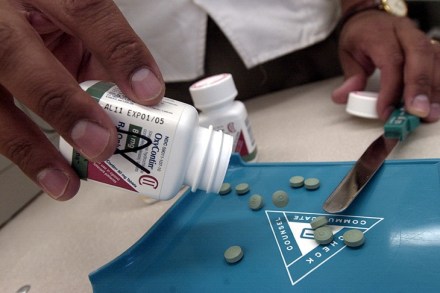
New York   It was 51 years ago, in the Hôtel du Cap d’Antibes, that I first met the man whose opioid product has, along with other prescription opioids, killed more than 200,000 Americans. Mortimer Sackler looked old even back then. He had a Noo Yawk accent and, even though we’d never been introduced, approached me after a tennis match I had just lost with some unsolicited advice: ‘You need to calm down. Take a tranquilizer’ — or words to that effect. (I had been feuding throughout the match over atrocious line calls with a French ref who was being intimidated by the pro-French crowd.) Although I do not gladly take advice from strangers, I thanked him nevertheless and told him that pills were not the answer but good refereeing was.

The new freedom

From our UK edition

For me this book evokes a Gigi duet moment: ‘You wore a gown of gold.’ ‘I was all in blue.’ ‘Am I getting old?’ ‘Oh, no, not you.’ Memory plays us false, and it takes the skill of a sympathetic historian such as Virginia Nicholson to sift the evidence, written and oral, and unfold a story that is both plausible and sound. I look back to my 1960s life and think how many of us were metaphorically clothed in gold… how we strode through the years enjoying new freedoms, new loves, music, clothes, drugs, opportunities. I have in my time contributed to the myth of unalloyed pleasure, extolling the 1960s for the quickening pace of change, the broadening mood of happiness and hope.

Diary – 24 January 2019

From our UK edition

Will I be allowed to take my dog to Europe after 29 March? A trivial question, you might think, in these feverish times, but one that might be an indicator of what the EU thinks of us and how/if they’re going to make us pay for leaving. I took Boss, my Battersea rescue, across France this Christmas and it couldn’t have been easier. The dog was barely noticed on the way out and given a fast, friendly check on the way back. Why should anything change? A pet on the road doesn’t get extra germs just because of the colour of its passport and yet nobody has any idea what’s going to happen. Are UK pet owners about to be punished for no good reason? And if so, what punishments might be extended to the rest of us pour encourager les autres...?

Is cannabis driving us crazy?

From our UK edition

Fewer people are smoking cannabis these days, down to 1.4 million from two million, they say. I say, if you believe that, you’re high. Arrests, prosecutions and the issuing of ‘cannabis warnings’ might be down — but then, I’ve seen the police quite deliberately look away from dope smokers on the street. Weed is everywhere. I’m sure of this, because the smell of the city has changed. A decade ago, as I cycled across town, the dominant scent was diesel. There were also wafts of tobacco from the fag-break gang and the odd drift of ground coffee. Ten years later both the cigarettes and the diesel have faded. There’s the cartoonish smell of vaping, but as far as I’m concerned, the smell of London is now cannabis.

Cypress Hill: Elephants on Acid

From our UK edition

Grade: A+ Easily album title of the year, maybe album of the year. A true bravura offering from these supposedly tired old men. Cypress Hill are now in comfortable middle age, almost as old as me, ffs. But they were ever ludicrously inventive and idiosyncratic, right back to that first album in 1991, which wrote the template for many lesser and even more profane hip hop gods. This one is mired in psychedelia, as even Charles Moore might have guessed from the title. There are very knowing nods to, especially, early Jefferson Airplane — although the guitar sounds more like Barry Melton than Jorma Kaukonen — and Sly and the Dead and Moby Grape.

Barometer | 23 August 2018

From our UK edition

Cultured tastes Dawn Butler accused Jamie Oliver of ‘cultural appropriation’ for coming up with his own recipe for jerk rice. Some other culturally appropriated dishes she might find hard to swallow: Chop suey is said to have been invented in 1896 — during a visit to New York by China’s US ambassador Li Hung Chang — to appeal to American and Chinese tastes. Balti was invented in Birmingham in the 1970s by restaurants to appeal to a clientele beyond the local Pakistani population. Fish and chips were first recorded in the East End in the 1860s, derived from the Jewish method of frying fish.