Drugs

It was drug addiction that killed Elvis, not his greedy manager

From our UK edition

Colonel Tom Parker (1909-97) was the man who ripped Elvis Presley off and worked him to death. That’s the received wisdom about the person who managed the King from 1955 until his premature death, aged 42, in 1977. Peter Guralnick’s book, written with full access to Parker’s unpublished, witty, clever letters, now owned by the Elvis Archives, gives a more nuanced, sympathetic picture. The author is no biased sensationalist. His Elvis biography, Last Train to Memphis (1995), is one of the most serious and reliable. So, yes, Parker was a serial liar, not least when it came to his identity. Born Andreas Cornelis van Kuijk in humble circumstances in Holland, he fled, aged 16, to America and was then kicked out. He returned three years later, changing his name to Tom Parker.

The man to save the Democratic party: Hunter Biden

“The one thing that binds each and every one of us is not necessarily love... it’s pain,” Hunter Biden said in his interview yesterday with independent journalist Andrew Callaghan. Well, that’s good, because we’re not all sons of a former president, so at least we have something in common. Someone has really been working the 12 steps! Cockburn will admit that he didn’t really see it until now, but after yesterday, he’s ready to admit that Robert Hunter Biden may be the only person who can lead the Democratic party out of the wilderness. It’s a development worthy of the best "scion’s fiction.

Hunter Biden interview with Andrew Callaghan

Irvine Welsh: Men In Love – Trainspotting Sequel

From our UK edition

34 min listen

My guest this week is Irvine Welsh – who, three decades after his era-defining hit Trainspotting, returns with a direct sequel, Men In Love. Irvine tells me what Sick Boy, Renton, Spud and Begbie mean to him, why his new book hopes to encourage a new generation to discover Romantic verse and shagging, and why MDMA deserves more credit for the Good Friday Agreement than Tony Blair.

Adrift in the world: My Sister and Other Lovers, by Esther Freud, reviewed

From our UK edition

Some people spend years squirming on a leather chaise longue before they come to understand, as Philip Larkin so pithily observed: ‘They fuck you up, your mum and dad.’ Few go on to make peace with the sagacity delivered in his next line: ‘They may not mean to, but they do.’ In My Sister and Other Lovers, Esther Freud’s sequel to her autobiographical novel Hideous Kinky, sisters Lucy and Bea – who spent their early childhood trailing after their hippy mother through 1960s Morocco – slowly edge towards such catharsis. Before that, however, comes a lot more turbulence, and Freud – whose great-grandfather pioneered the couch method – is acutely attentive to its psychological effects.

The Maine Governor’s cocaine problem

On a trip to the nation's capital last week, 77-year-old Governor Janet Mills of Maine was confronted with an old skeleton in her closet: accusations of cocaine use. A man approached Mills and, while filming, asked if she believed "sniffing cocaine at work" is a "human right," Fox News reported. Mills gracefully responded, "What the fuck?" That, Cockburn notes, is not a no. The man followed up with a more straightforward question: "How much more does an eight-ball cost with inflation?" Unfortunately, Mills did not give the reporter current street prices and instead chose to walk away. (The answer is around $180 in DC, per Cockburn's law enforcement sources.

Janet Mills in The White House (Getty) maine governor

Should we legalize all drugs?

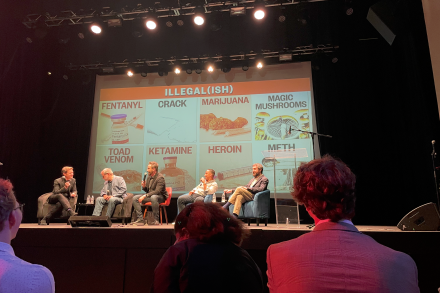
Washington, DC Reason magazine staffers Jacob Sullum and Billy Binion walked away from the Reason Versus debate in Howard Theater, Tuesday night, with victory candy cigarettes in hand. Their feat? Convincing a little over half their audience that the federal government should legalize all drugs. Their opponents from City Journal, Charles Fain Lehman and Rafael A. Mangual, started off in the lead with 43 percent of the debate's attendees opposed to legalization. By the end, they lost 4 percent, while Reason gained 13. So what pushed these young, suit-wearing voters to change their conservative-leaning minds toward libertarianism? Sullum, 59, and Binion, 33, argued that prohibition makes the black market more dangerous for drug users.

Reason Versus debate on drugs

Should cannabis be decriminalised?

From our UK edition

21 min listen

London Mayor Sir Sadiq Khan has called for possession of small amounts of cannabis to be decriminalised following a report by the London Drugs Commission. The report has made 42 recommendations, which include removing natural cannabis from the Misuse of Drugs Act. Former cabinet minister, now Labour peer, Charlie Falconer and Tory MP Dr Neil Shastri-Hurst join Lucy Dunn to discuss whether now is the time to decriminalise cannabis. For Lord Falconer, who chaired the Commission, the present law doesn’t work and he explains the principles behind the review; Neil, however, believes that the proposals send the wrong message that cannabis is harmless.

My son took drugs – and they were mine

From our UK edition

The weekend before last, I came home from walking the dog at about noon to find Caroline asleep in bed. This was surprising for three reasons. She’d been up and about when I left the house. She’s not one for taking naps. And her mother was coming to lunch. ‘Are you all right?’ I asked, prodding her awake. ‘No,’ she said. ‘I felt a headache coming on, took some Nurofen and suddenly started feeling incredibly dizzy. So I decided to lie down for a few minutes and then fell asleep.’ I wasn’t too worried because she does occasionally suffer from dizziness, usually accompanied by a migraine. So I made lunch while her mother went to a chemist and bought Caroline some travel sickness pills that she thought would help.

Doctors are embracing identity politics – and harming babies

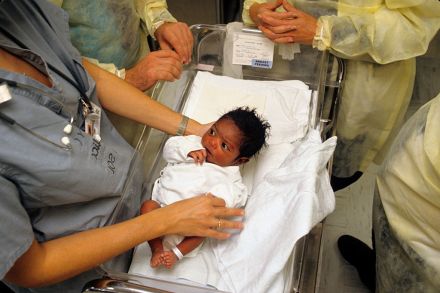
“Why did I ever order those tests?” This is the question that Dr. Sharon Ostfeld-Johns of Yale Medical School now asks herself of every drug test she ever ordered for newborns with mothers who were heavy users.The pediatrician is one of a growing cadre of doctors who think that at risk babies should not be screened for drug exposure because positive tests lead to interactions with child welfare services and exacerbate what they see as racial bias in the system. Like so many new policies in this field, though, the efforts to reduce racial disparities only end up harming the most vulnerable children.   Dr.

Babies

The sickness at the heart of boxing

From our UK edition

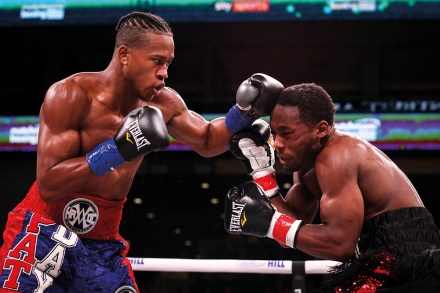
There is a lot of death in the latest, and potentially last, book on boxing by the South African journalist Donald McRae. In less than two years he loses his sister, both his parents and his mother-in-law. To cope with the trauma he returns to the sport that has sustained his life and work for 30 years. But when he reimmerses himself in boxing he does not like what he sees. He finds a sport where bouts are controlled by gangsters; where famous boxers dope and lie about it; where fights still have inadequate safety protocols; and where the centre of power has shifted from Las Vegas to Riyadh, lured by Mohammed bin Salman’s money. Each of these trends, McRae believes, knits boxing and death closer together. ‘I want boxing to sweep me away from real life,’ he confesses.

Nazis, killer dogs and weird sex: Empty Wigs, by Jonathan Meades, reviewed

From our UK edition

Jonathan Meades is, you might say, a baroque artist in a mannerist age. Whereas today’s younger and more widely feted writers think small – a Brooklyn sublet, a Camden Town love nest, the cracked mirror of the self – Meades goes big. And not just in physical terms (Empty Wigs tips the scales at nearly 3lb), but in scope. Where his contemporaries’ prose can be affectless and somehow skinless (a Paris Review interviewer said of Rachel Cusk, with apparent admiration, that her writing ‘feels contemporary, swift and “clean”’), Meades piles on the style, packing in metaphors, coinages and allusions until the crystals can’t take it, swooping between social classes, doing the police in different voices.

The changing smell of Britain’s streets

From our UK edition

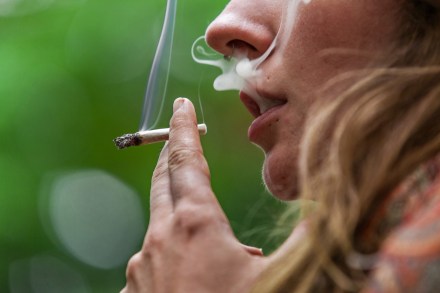
The other day, while on my lunchtime walk, I passed a woman on a mobility scooter holding an impressive-looking doobie. Later, on my bus home, a bloke got on having just extinguished a joint, bringing the overpowering stench with him. Some commuters don’t even bother to put them out. All you can do is sit and tut passive-aggressively, hoping they’re only going a few stops. While cannabis use has slowly declined over the past 25 years, it seems that you can’t escape it in public. Perhaps part of the reason is that so few people now smoke at all, even tobacco. It makes weed far more noticeable. The other reason is that the police don’t bother punishing those caught. Most are either let off with a verbal warning or a fine.

Trump puts the cartels in his sights

Consider it the first tangible example of Donald Trump’s Western Hemisphere policy made real. The president’s day-one Executive Order calling for the “total elimination” of multiple cartels is now getting its teeth in the form of a list drawn up by the Department of State designating eight different groups based across Latin America as foreign terrorist organizations, according to the New York Times.

mexico cartels

Bad vibrations: Lazarus Man, by Richard Price, reviewed

From our UK edition

Richard Price’s tenth novel follows four characters in the wake of a tenement building collapse in Harlem that kills six people and leaves others missing. Detective Mary Roe is on a mission to find a missing resident whose wife was among the dead. Royal Davis is a funeral home director hoping to drum up much-needed business from the tragedy, going so far as to dispatch his young son to hand out business cards at the site. Felix Pearl is a freelance photographer searching for meaning as he documents the aftermath. The titular resurrected man is Anthony Carter, a 42-year-old former schoolteacher, six months clean of a cocaine addiction that has cost him his job and relationship with his wife and stepdaughter.

Trump’s historic opportunity to make Americans healthy again

After years of crushing inflation, "woke" priorities and bureaucratic overregulation, Donald Trump and the Republican Party achieved a resounding victory in November. Part of that victory was built upon his promise to challenge the status quo in our healthcare system and to “make America healthy again.” The first step? Ending patient-last policies in Medicare, Medicaid, drug pricing and health insurance that prioritize the health of the healthcare system over the health of patients, driving up the cost of care at the expense of patients and taxpayers.  Healthcare is the only market where customers discover the price after consuming a good or service, and these surprising costs are contributing to crushing medical debt. It doesn’t have to be this way.

healthy

Bad air days: Savage Theories, by Pola Oloixarac, reviewed

From our UK edition

According to a 2016 report published by the World Health Organisation, Argentina is the ‘therapy capital of the world’, boasting 222 psychologists per 100,000 people. Reading the Argentine writer Pola Oloixarac’s Savage Theories, I can understand why. The novel is quick to mock the posturing of the academic world, especially in Buenos Aires The novel follows three characters, each more bizarre and beguiling than the last. First we have our narrator, Rosa. She is a philosophy student at the University of Buenos Aires who becomes obsessed with, and attempts to seduce, her elderly professor Augusto Garcia Roxler, whose ‘Theory of Egoic Transmissions’ charts man’s evolution from prey to predator.

Avoids the breathless hype of so many podcasts: Finding Mr Fox reviewed

From our UK edition

We are all surely familiar with those stories of naive young Brits who travel abroad and are persuaded by a charming new holiday friend to bring back what they’re told is an innocuous package, only to end up on the sharp end of drugs smuggling charges. The latest series of the BBC’s World of Secrets somewhat inverts those expectations: it tracks the fortunes of three innocent young Brazilian sailors and a French captain who were allegedly duped by a Norwich businessman into sailing a rackety yacht across the Atlantic with £100 million worth of cocaine hidden in the body of the ship.

The dark truth about Hollywood assistants

From our UK edition

Anew stop has been added to the map of Movie Star Homes and Crime Scenes, on sale at LAX airport: 18038 Blue Sail Drive, Pacific Palisades, the sleek single-storey $6 million ocean-view house where the Friends actor Matthew Perry was found floating in his hot tub last October. His death has revealed something of the dark world of LA’s celebrity staff. Perry’s assistant, two doctors and LA’s ‘Ketamine Queen’ have been charged with supplying the drugs Last week it was reported that Perry’s live-in assistant Kenneth Iwamasa injected his boss with ketamine before his death. While watching a movie around noon, the actor asked Iwamasa – part-butler, part-nurse and head of shopping (including meds and drugs) – for his third jab of the day.

Trump talks family, pharma and cocaine with Theo Von

As Democrats met in Chicago for their party convention, Trump made his latest podcast appearance on Theo Von’s This Past Weekend. The Republican nominee showcased his intention to make the election less about vibes and more about policy, while showing a side of himself that’s not often on display at his rallies or press conferences. One great part of the podcast focuses on Trump’s relationship with his family, which even Hillary Clinton once praised. He talked about his brother Fred, who passed away twenty-five years ago, explaining how his experiences — and advice — are the reasons for why he has never had a “drop of alcohol,” drugs or even a cigarette. “What’s something that you miss about him?” Von asked. “He was wise in a sense,” Trump responded.

theo von

How ‘The Rime of the Ancient Mariner’ plays tricks with the mind

From our UK edition

I’ve just returned from five days in the Lake District, attending the biennial ‘Friends of Coleridge’ conference in Grasmere. All the other attendees were seasoned Coleridge scholars, but I was a newbie. The reason for my going was the fact that I’m engaged in a project that has at times felt something of a lonesome road and indeed an albatross: to write a book about Coleridge’s ‘The Rime of the Ancient Mariner’. The poem comes to us with a vast undertow of explicit and implicit cultural and historical baggage, from its self-conscious antiquarian roots in late medieval ballads to its engagement with more currently pressing concerns of environmentalism and how we navigate the story of colonial expansion.