Drink

Fine food in a fine restaurant: Origin City reviewed

From our UK edition

Origin City is a good name for this restaurant, whether it knows it or not. It is at West Smithfield, the only surviving wholesale market in the City of London (I do not count Borough, which is a snack shack impersonating a greengrocers and is only spiritually in the City). Covent Garden sells face cream – Eliza Doolittle didn’t need it – and Billingsgate awoke one morning to find itself on the Isle of Dogs. Somehow the cows hung on in West Smithfield. We owe them a lot but I would say that, I am a restaurant critic. Somehow the cows hung on in West Smithfield. We owe them a lot This is the most interesting part of the City of London: St Bartholomew the Great, of God and Four Weddings and a Funeral – the one where Charles was punched, fairly – and Cloth Fair.

You have to be truly incompetent to eat badly in Paris

From our UK edition

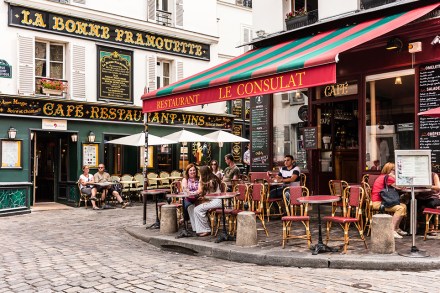
Paris has enough great restaurants to maintain its claim to be the world capital of gastronomy. That said, Parisian residents insist that these days, it is possible to eat badly in their city. Yet I still think that this would require especial incompetence. In Brussels, a strong second in the pecking order, it would be even harder. There is a splendid establishment called Comme Chez Soi. Almost 100 years old, it has established a worldwide reputation without losing contact with its roots. The last time I was there, I observed a couple of ladies-who-lunch, Brussels fashion. There was no question of a watercress salad on a bed of lettuce leaves, washed down with Perrier water.

As gaudy as Versailles: The Duchess of Cornwall in Poundbury reviewed

From our UK edition

Poundbury is the King’s idealised town in Dorchester, built on his land to his specifications: the town that sprung out of his head. (‘My dream,’ says Harry Enfield in The Windsors, ‘was always to build a mixed-used residential suburb on the outskirts of Dorchester.’) It is so fascinating that I dream, briefly, of moving in for the completeness of the vision – who doesn’t want to live inside art? – and the portrait of the British class system in housing. Here it is, at last, laid out like a textbook: journey’s end. We order via app and pay in advance: there is a shortage of what tabloids call flunkeys It is becalmed on a Sunday evening, and sun saturated: there is almost no one about. Perhaps the residents are indoors, enjoying the lushness of their fittings.

The Office Lounge is everything a Texas bar should be

The downtown streets of Georgetown, Texas, are a grid of pastel storefronts and Victorian architecture, centering around the domed and columned Williamson County Courthouse (named after the judge known as “Three-Legged Willie”). America’s fastest-growing city looks like a time capsule from the old Southwest. But thirty miles south, Austin — or “Silicon Hills” — is undergoing a tech boom. Microsoft, Musk’s gigafactory and a host of tech startups have unleashed a flood of yuppie commuters into Austin’s surroundings, rapidly transforming not just Georgetown, but what we think of as quintessentially Texan. Rodeos, the Alamo, cowboys and outlaws — will we one day think instead of smartwatches and Bill Gates? I doubt it.

office lounge
champagne

Champagne and America is a love story without end

From the beginning, Champagne has never been just a drink, or a region: it’s a celebration, an occasion, a trophy, a reward; a symbol of joyful decadence and glamorous debauchery; the overflowing drink of the American Dream. In short, it’s a boozy cheat sheet for the zeitgeist and the anxieties and dreams of the people who sip it. And, for the past seventy-five years or so, that zeitgeist has been driven by the United States. “American culture pervades everything,” says Christian Holthausen, a dual French-American citizen and founder of the Paris-based Champagne consulting firm Westbrook Marketing Partners. “Driving through Paris just now, I saw a Coca-Cola machine on one street, and a billboard for Apple on the next.

Why dry Sauternes are the next big thing

It is my sense that the popularity of sweet wines like Sauternes, Port, Tokaji and all the German Auslese wines is on the upswing. I am here to tell you about the Next Big Thing: dry Sauternes. Yes, that’s right: dry Sauternes. The supersnazzy, superexpensive Château d’Yquem is the only Sauternes to boast the designation “Premier Cru Supérieur” from the 1855 classification of Bordeaux wines. That exclusive label — along with the probably apocryphal but oft-repeated story that Michel de Montaigne, born Michel Eyquem, had something to do with the property — helps account for its astronomical price. But Yquem has been making a blanc sec since 1959.

A perfect slice of Calabria 

From our UK edition

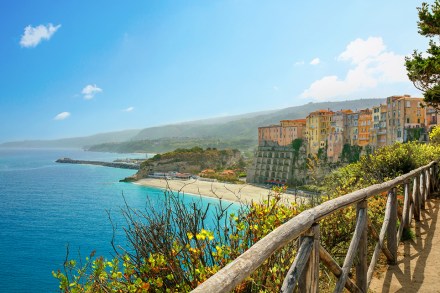
The Romans wrote the history, or at least the myths. But long before Romulus murdered Remus, the Mediterranean – the Great Sea – was the principal conduit of civilisation. The Greeks spread their wings across the wine-dark seas, to the extent that even later Romans accepted that much of southern Italy was actually Magna Graecia. The Greek settlements included the city of Sybaris. Although it was destroyed around 2,500 years ago, it has passed into the language. Sybaritic – the very word is expressive – denotes ease and pleasure, the beauties of nature amid the adornments of art and architecture: champagne and dancing girls. Sybaris is in Calabria, the toe of Italy. In more recent times, history has not been kind to the region.

Bruton is suddenly the place to be – and I have a theory why: At the Chapel reviewed

From our UK edition

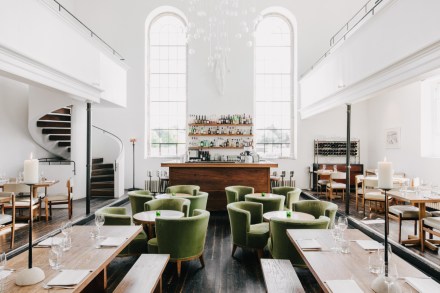
At the Chapel, Bruton, is a restaurant and hotel in a former chapel in Bruton. This was once an ordinary town in Somerset, with a note in the Domesday Book, a ruined priory and a famous dovecote on a hill. Bruton is known for a flood in 1917 – it was the second-largest one-day rainfall measured in the UK – but another calamity was coming. In 2014 the art gallery Hauser & Wirth, with branches in London, Zurich and New York, decided it needed a premises in Bruton, and a restaurant called the Roth Bar and Grill. There is also an Instagram-friendly farmhouse to rent on this site. When I toured it, the price was £666 a night, including the art and, I hope, a food gift basket and, I suspect, an ancient native Briton graveyard.

What wine should you serve to a matador?

From our UK edition

We were talking bulls. A friend of mine, Alexander Fiske-Harrison, is a remarkable character who can claim at least two distinctions. First, he must have been about the worst-behaved boy in the modern history of Eton College. He claims that this is an understatement and that he heads the role of infamy since the days of Henry VI. He was certainly put ‘on the Bill’ – that is, for a disciplinary interview with the headmaster – on 68 occasions. So he was fortunate that corporal punishment had been abolished before he arrived, though his career of rapscallionry was possibly not the strongest argument for its demise. A great wine, drawing on tradition and terroir as well as modern techniques He must have come close to expulsion.

You seriously expect me to pick one favorite bar?

I was born in Wisconsin and I’ve learned a curious thing traversing it. There appears to be a state law requiring at least one bar at every intersection of its rural roads. I’ve noticed this most often driving at night: there’ll be a neon sign advertising Old Style or Leinenkugel’s hung in the front window of what looks like a farmhouse living room, and several cars nestled up against the house like sucking pigs. There is something homey about a rural bar. The knotty pine, the “first dollar” framed above the cash register, neighbors ironing out local prejudices and asserting the superiority of the Packers despite any evidence — if anyone’s brave enough to produce some.

bar
chablis

It’s always Chablis weather

It is very hot here in New England at the end of July. It was hot a week or two ago in old England, too. I arrived in London via the Eurostar after a week clambering over rotting German gun emplacements and gazing out at the D-Day beaches in Normandy. Sobering. In London, I had taken a small house in a quiet mews in Kensington. After a quick shower, my first act was to nip down to the local Oddbins and collar a couple of bottles of the 2022 Maison Dousset Chablis. It is about £20 (you can get it in the States for around $20-$25), and it was the perfect entry wine. Chilled, it was tartish, citrusy, refreshing: a confident but undemanding tipple.

A Margherita in Tolkien’s Middle-earth: Pizza in the Courtyard at Sarehole Mill reviewed

From our UK edition

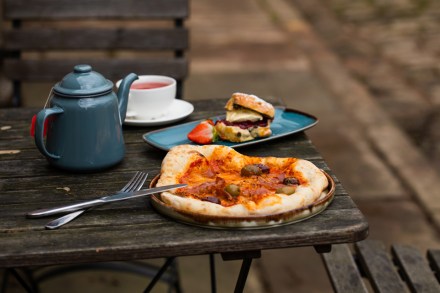
Sarehole Mill is four miles south of the centre of Birmingham. If this were a fairy tale, and it should be, it would follow that Birmingham swallowed Sarehole a century ago, like a dragon and its prey. I like Birmingham: I like its optimism, its violence and its multiplex, which can match any American Midwest mall in competitive dystopia and idiocy. Birmingham has energy, and that swallowed Sarehole, but unfortunately for Birmingham, there was a writer who cared: John Ronald Reuel Tolkien.Sarehole was his childhood palace, and now, more reluctantly I would imagine, his memorial pizzeria.

Port is fashionable once again

From our UK edition

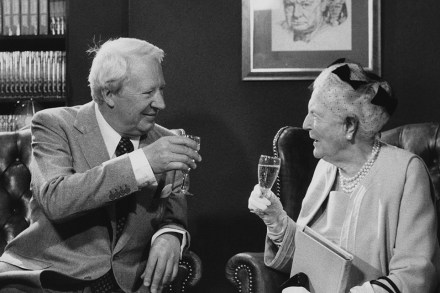
I once drank some excellent port at Ted Heath’s table. The invitation came as a surprise, but it almost certainly had nothing to do with the monstre (un)sacré. The dinner took place during a Bournemouth party conference at the Close in Salisbury. Ted had an unofficial PPS, a then Tory MP called Robert Hughes. Rob had a sense of fun and mischief. There would have been little scope for either while he was enduring the sullen maunderings of the Incredible Sulk. Anyway, he was given a chance to amuse himself when asked to organise a dinner party. He included me. The young are being encouraged to drink port and even mix it – a criminal offence This would not have been Ted’s choice. I had never been polite about him in print, nor to him in person. But he was at one disadvantage.

‘Thinks of the diner, not the chef’: Claridge’s Restaurant, reviewed

From our UK edition

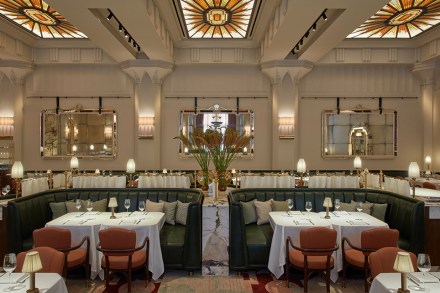
The BBC made a very odd documentary about the renovation of Claridge’s: The Mayfair Hotel Megabuild. They filmed, agog, as the hotel grew eight new storeys – three above, and five below – between 2014 and 2021 while staying open: guests slept and ate, unaware of ‘Narnia doors’ to the building site. (That Narnia is where guests aren’t indicates what Claridge’s employees cannot put into words without spontaneously combusting.) Labourers dug the basement by hand and impersonated the Artful Dodger when management toured. The BBC described the new penthouse at length without mentioning that it is gross, with a grand piano in a glass box on a terrace like a Richard Clayderman-themed nightmare. A roof was assembled off-site and stuck on as for a doll’s house.

The beauty of a serious Burgundy

From our UK edition

It was the English summer at its most perverse. We were drinking Pimm’s while hoping against hope for better news from Old Trafford. As the clock ticked and the rain was unrelenting, one of our number emitted a groan which seemed to start from his boot soles. ‘Why can’t there be a bit of global warming in Manchester?’ The girls were growing restive. ‘I can just about put up with you lot discussing cricket, but not if it’s an excuse to talk about the weather’ was one eloquent complaint. A fair comment, so we changed the subject, while keeping a surreptitious weather eye on Manchester. All unavailing. The caravan of tension now moves on to the Oval. How much more can the human nervous system endure?

Big Little Bavaria on Thames: Bierschenke bierkeller reviewed

From our UK edition

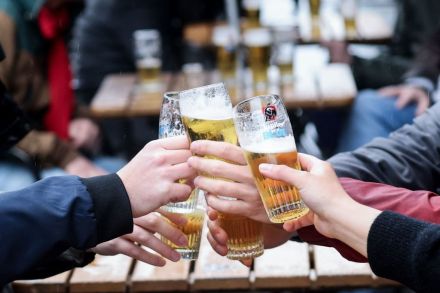
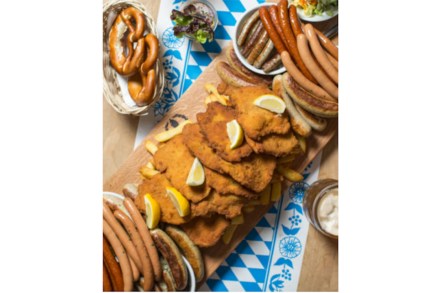
I am not sure the vast Bierschenke bierkeller in Covent Garden is successful, even if it is skilful: I worry it is the wrong place for it. People go to Covent Garden to buy gym clothes, watch musical theatre and pick up men, not to find Wagner and pigs and the drumbeat of the earth: Covent Garden is more Kit Kat Club than Twilight of the Gods with sausage. I am not saying you must be into Götterdämmerung to enjoy this restaurant. It just helps. There is no atmosphere I can find, and I think this is deliberate: a beer hall is an existential void to fill  It used to be in the City of London, and that worked. City men are savages, mining for gold: they would absolutely kill a pig. That is what beer halls are, base: wheat, fat, sweat.

In search of the perfect martini

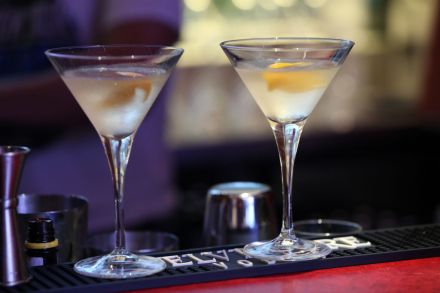
“I like bars just after they open for the evening,” Terry Lennox tells Philip Marlowe in the early pages of The Long Goodbye. “When the air inside is still cool and clean and everything is shiny and the barkeep is giving himself that last look in the mirror to see if his tie is straight and his hair is smooth. I like the neat bottles on the bar back and the lovely shining glasses and the anticipation. I like to watch the man mix the first one of the evening and put it down on a crisp mat and put the little folded napkin beside it. I like to taste it slowly. The first quiet drink of the evening in a quiet bar — that’s wonderful.” They’re drinking gimlets — gin and Rose’s lime juice — which some people, though not me, consider a type of martini.

martini
hound

The comfort of drinking at the Hound

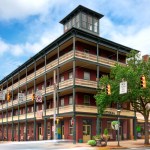
In the historic downtown of York, Pennsylvania, near the courthouse where the Articles of Confederation were drafted and a farmers’ market built in the days of horse-drawn carts, you’ll find a curious building called the National House. Constructed in 1828 as a hotel, its porches and airy galleries recall antebellum New Orleans. In its days as a hotel, it hosted guests like Mark Twain and Martin van Buren. Now it’s the home of my favorite bar. The Hound opened in 2012, in the early days of the craft beer boom. Its thirty rotating taps offer seasonal brews from local favorites like Tröegs and Victory, mixed in with ten-ounce pours of funky sour wheat goses or boozy imperial stouts.

David bruce

David Bruce, a doctor in the vines

Every good vintner deserves a good origin story. David Bruce, the founder of the eponymous winery in the Santa Cruz hills, has one of the best. When he was at medical school at Stanford in the 1950s, he chanced upon Alexis Lichine’s classic book The Wines of France. Lichine said some fancy and evocative things about the great wines of Richebourg in Burgundy. Bruce padded down to a wine shop in San Francisco and collared a bottle of 1954 Domaine de la Romanée-Conti Richebourg. “The minute I opened this bottle of wine,” he recalled, “the whole room was pervaded by this floral, spicy aroma.” Here’s the kicker: “I remember thinking, I guess you get what you pay for.” Oh yeah? He paid $7.50 for the bottle.

Where to drink Tuscany’s finest summer tipples

From our UK edition

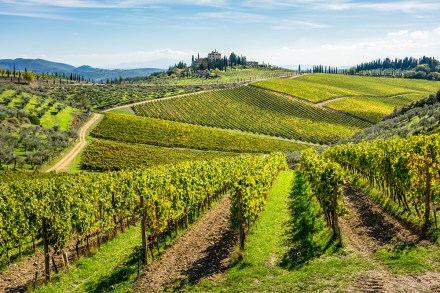
Some subjects invite an eternal recurrence. One such is Tuscany. The other day, I wrote about that glorious region: its mastery of la dolce vita, its almost effortless command of civilisation. Indeed, Tuscan civilisation is a tautology. Since then, I have paid a brief visit. There was only one shadow. How can one find the words to equal the subject matter? Wine was produced here long before we Brits had even discovered woad My host was Grahame McGirr, a successful banker who has always been fascinated by wine, which led him to buy a vineyard near Monte-pulciano. I commented on some of his wines after a tasting in London. They were impressive: promise, stimulated by ambition. He pressed me to report on the promise in situ – the things one does for friends.