Donald trump

The Breitbart conspiracy

From our UK edition

Donald J. Trump always keeps everyone guessing. Is the president-elect ditching his crazy act in order to bring in a conventional Republican government? Or ditching conventional Republican government in order to bring in his crazy act? Is he bringing together the anti--politics outsiders and the Washington insiders? Or is he playing them against each other? Are we witnessing the usual scramble for power that accompanies every incoming administration? Or is the Trump transition a new kind of shambles? The answer to all these questions is yes, probably. Take the role of Steve Bannon, executive chairman of the right-wing website Breit-bart (aka ‘Trump Pravda’), who served as the Donald’s campaign manager in the run-up to the election.

The new normal

From our UK edition

-What was your favourite response from the liberals to Donald Trump’s victory in the US presidential election? Actress Emma Watson handing out copies of a Maya Angelou book to bewildered commuters in New York? Cher announcing that she wasn’t simply leaving the USA, ‘but Planet Earth too’ — a move some of us assumed she had made at least 40 years ago? The hysterical protestors who set fire to their own shoes because they thought the said shoes were pro-Trump? The hyperbolic hatred spewed out towards those who voted for the Donald, or Matthew Parris suggesting that maybe this democracy caper has gone too far, or the teachers telling tearful children that we’re all going to die?

How the left wastes its energy

From our UK edition

There are only three infallible rules in advertising. Be distinctive. Make a lot of noise. And try to feature a cute animal somewhere. Had Donald Trump followed my advice and bought a springer spaniel he would have won California. For a man with such tiny hands to be elected to the world’s highest office, I think we can all agree, is a tragic loss to proctology. But it is also a remarkable lesson in how to play the media. Hillary had $2 billion to spend; what Trump miraculously found was that with each outburst of political Tourette’s, he got more airtime than her, and for free. So eager were the mainstream and social media to express their horrified disdain for his latest outrage that they were effectively donating to his campaign.

In Trump’s Texas, the oil men awaken to hope of new prosperity

From our UK edition

 Houston, Texas It’s hard to find anyone in polite society here who admits to having voted for Trump, even among the oil men. But 4.7 million Texans did so, giving him 53 per cent of the popular vote. In redneck rural counties the Donald carried four fifths of the ballot, but Hillary Clinton was ahead in urban Houston, whose citizens pride themselves on good relations between white, black and Latino communities and on the welcome they offer to newcomers — including, a decade ago, a quarter of a million refugees from hurricane-hit New Orleans.

The moral arc of the universe bends towards me

From our UK edition

So I made £250 betting on Trump to win the presidency. It would have been more, except that every time I got close to topping up my stake, this boring, mimsy, responsible voice in my head kept saying: ‘Now, now James. Don’t be silly. All your sensible friends who know much, much more than you do about politics have been telling you that President Trump just isn’t going to happen.’ One of them was m’learned colleague Toby Young. Until recently we used to do a podcast together.

Donald Trump’s victory shows why liberals must go back to basics

From our UK edition

It is time to bother thinking about the tricky terms ‘liberal values’ and ‘liberalism’. ‘Liberal values’ is what unites us in Western democracies; it means a broad, vague belief in equality, human rights, the rule of law. Liberalism, on the other hand, is a political and cultural agenda. It claims to express liberal values in terms of a concrete political programme. Or let’s put it this way. There is a 'basic liberalism' that unites us (or almost all of us). It says that all human lives matter, that racism is bad, that people should be free to choose how to live, and so on. And there is a 'sharp liberalism' that divides us. It says that certain particular policies are needed, if liberal values are to prevail.

Can the liberal worldview survive?

From our UK edition

There is a latent consensus among political scientists and highbrow columnists that the liberal era is over and that, following Brexit and Trump, we are entering a period of neo-nationalism. This consensus will develop further if, as I suspect she will, Marine Le Pen wins the French presidential election next May. Two recent editorials in the Economist demonstrate how quickly this is happening. In July, it was argued that ‘the new divide in rich countries is not between left and right but between open and closed’. Last week, we were told that ‘the long, hard job of winning the argument for liberal internationalism begins anew’. The challenge to liberalism is still seen as an argument to be won rather than an irreversible sea-change.

What now for the ‘Never Trump’ Republicans?

From our UK edition

Plenty of Republicans were not in the mood to celebrate on election night. About 200 gathered at the Lincoln Restaurant in Washington DC, where they had hoped they could watch a heavy defeat for Donald Trump and begin the process of returning their party to its centre-Right origins. Instead, people began drifting home before midnight. Since then, Republicans of the Never Trump variety have had to wrestle with what comes next, questioning whether the party of Lincoln can ever recover and what their place in it might be. People like Meghan Milloy, who has been a Republican since her school years but who campaigned against her own party by helping set up 'Republican Women for Hillary'. 'A lot of folks were in shock,' she said.

Donald Trump is going to be a dreadful president. Let’s not suddenly pretend otherwise

From our UK edition

Life, like they say, comes at you fast. Just a week ago the reality-based world worried that the American people might send a con-man to the White House. Now serious people intoning serious thoughts implore us to think it’s a good thing that Donald Trump is a con-man. This is the peg from which hope hangs, at any rate: Trump is a liar and a fraud and a man who doesn’t have any core convictions, so, you know, perhaps everything will be fine. Or not as bad as you thought. We can put away all that stuff we heard on the campaign trail because, like, he doesn’t - or can’t - really mean it. As upsides go, this seems one with a hefty downside.

Trump’s immigration policies aren’t all that different from Obama’s

From our UK edition

Bit by bit, Donald Trump's policies and priorities are emerging into view. We know who his chief of staff is to be and in an interview last night he started to explain his plan of action after his inauguration. It begins, as you might have predicted, with immigration: 'What we are going to do is get the people that are criminal and have criminal records, gang members, drug dealers, where a lot of these people, probably 2 million, it could be even 3 million, we are getting them out of our country or we are going to incarcerate. But we’re getting them out of our country. They’re here illegally.

Will feminists be kind to Melania Trump?

From our UK edition

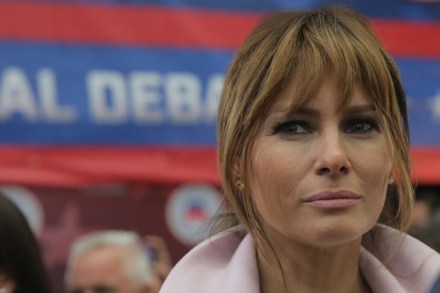
It was a race between the first dude — Bill — and the first nude — Melania. And in the end, the first nude won, appearing next to her husband in the early hours wearing a white jumpsuit straight out of Charlie’s Angels. It may seem unfair to judge Mrs Trump so early on, but judged she will be. She awaits her turn, just as Hillary Clinton once did. How will she fare? Well, liberal American voters will want targets, and she looks like one. People are already making jokes about Michelle Obama writing Melania’s first speech, to save her the trouble of plagiarising again. There is so much for her to live up to. She must be as elegant as Jacqueline Kennedy; as eloquent as Mrs Obama; as astute as Nancy Reagan; as political as Hillary Clinton.

What the papers say: Nigel Farage’s Trump card

From our UK edition

Theresa May was tenth in line in the phone queue to speak to president-elect Donald Trump last week. Yet Nigel Farage managed an hour-long meeting with Trump over the weekend - and even found time to pose for pictures in Trump's gold-plated elevator. Downing Street has so far said it doesn’t want Farage’s help to build bridges with the new US leader. But how sustainable is that approach? The Daily Telegraph says now is not the time to be fussy about the way in which Britain forges links with Trump. The paper says that the government is ‘right to consider making use of Nigel Farage’, who it points out will offer a ‘direct line’ to the White House.

Nietzsche was right – liberal democracy is flawed

From our UK edition

It’s time to consider Nietzsche’s view of liberal democracy. It couldn’t work, it couldn’t bind a nation together, he said. Why not? Because of its excessive moral idealism. The belief in equality and social justice, which he rightly saw as deriving from Judaism and Christianity, would lead to fragmentation. For politics would be dominated by various disadvantaged groups demanding respect. Any sort of unifying ethos would be treated as oppressive, the ideology of the ruling class. If virtue lies in weakness, and victim status, healthy politics is doomed. It is emerging that he was largely right. Progressive politics, which affirms the liberal or humanist vision, seems to be collapsing.

The glaring hypocrisy of the anti-Trump protests

From our UK edition

In the wake of Donald Trump's victory over Hillary Clinton, many embittered Democrats are crying foul. It's a case of sour grapes. For a second day, thousands of protesters chant 'not my president' and repudiate the legitimacy of our centuries-old electoral process. They are vehement in their disapproval of a man who they believe represents ignorance and bigotry. There are calls to banish the Electoral College, insisting we elect a Commander-in-Chief solely on the basis of the popular vote. Protesters marched in Washington D.C., New York, Chicago, Los Angeles and Oakland. During this time of upheaval, Hillary Clinton and many of her supporters are, nevertheless, calling for collaboration in the interests of moving forward.

Donald Trump’s victory has made social media unbearable

From our UK edition

When I woke up on Wednesday morning it was to the news that Donald Trump was the next President of the United States, and, at the top of my Instagram feed, to a photograph of a pair of shiny silver ballet pumps. ‘Wearing sparkly shoes to make today just a teeny bit better,’ was the caption. I scrolled down through other photographs in my usual mindless morning way. A greyhound, already the most doleful looking of dogs, in her basket and the caption: ‘Thank God she neither knows nor understands. I envy her peace’. A toddler, still in his pyjamas, tousled, sleepy, fawn-in-the-headlights eyes: ‘What kind of world will he grow up in?’. A single candle, a mug of tea, a slice of buttered toast: ‘I need the calm in this picture today’.

Where’s the proof that Donald Trump is homophobic?

From our UK edition

Did anybody see Question Time last night? The panel largely seemed to be competing to out-outrage each other about Donald Trump. And in their great Trump-off most of the guests continued to do that sawn-off shotgun ‘phobes’ thing. Trump as a ‘misogynist, homophobic, racist, Islamophobe’ etc. You would have thought after the second election in a year where people weren’t scared off by such name-calling that people would give it a rest for a bit. But one thing was particularly striking. You may not like the recording of Donald Trump from more than a decade ago in which he boasts of the sexual opportunities available to celebrities. I thought it was gross, and so does Donald Trump’s wife.

It’s absurd to call Trump a fascist

From our UK edition

Many thousands of words have been written and many more will now be written by the liberal intelligentsia on trying to prove that the 45th President of the United States of America is a fascist. Among the first to leap out of the starting blocks after the triumph of Trump was the hyper-trendy historian Simon Schama who tweeted at dawn on Wednesday to say: 'This calamity for democracy will of course hearten fascists all over the world'. The trouble is: Trump is not a fascist, let alone a nazi. Even calling him Donald Duck would be more accurate than calling him Donald Duce. The main reason that Trump is, in fact, not a fascist is the most embarrassing of all (at least for the left that is): Trump is not left-wing.

Death by television

From our UK edition

Forty years ago this month a film appeared, so prescient I wonder if its author, Paddy Chayefsky, saw the 2016 American presidential election campaign in a crystal ball. It was called Network and it foretold the rise of Donald Trump. The plot is King Lear appears on Newsnight: a newsman run mad. The protagonist is Howard Beale (Peter Finch), an anchorman at a failing network. The year is 1976, and America is embattled with inflation, depression and the end of the Vietnam war. It is not a time for American heroes, to paraphrase Chayefsky’s acolyte Aaron Sorkin writing in The West Wing. Beale’s ratings are low. He is fired. He announces that he will kill himself, live on air. ‘I just run out of bullshit,’ he says.

America’s retreat

From our UK edition

Donald Trump predicted that his election would be ‘Brexit times ten’ — which, as far as the stockmarket reaction was concerned, had some merit. The dollar plunged, and the Dow Jones along with it. Once again, the pollsters have been confounded. Once again, political analysts have been left asking whether they know their country at all. And once again we can see the same group of voters at the forefront: the older, poorer ones who are concerned about demographic change and angry about being ignored for too long. In Britain, and now in America, they are the new revolutionary class. This is where the analogies with Brexit end. Vote Leave, the campaign for Britain to leave the European Union, was led by people who were liberal, globally minded and optimistic.