Documentary

Taylor Swift is fascinating – but you really wouldn’t want to be her

From our UK edition

There had been some question about whether Taylor Swift’s Netflix special would actually appear. Last year it seemed that the ownership of her old songs by her previous record label would scupper it. But no, Ms Swift is not to be resisted, and lo, Miss Americana is available right now on Netflix, one of its two big music documentaries for the spring. Many older men seem to have a visceral distaste for Ms Swift. If you share that distaste, then I’m sorry, it’s your loss, because she’s a fascinating figure (who has also made three truly terrific albums in Fearless, Red and 1989), and Miss Americana is well worth watching.

Is the patriarchy as all-powerful as it’s cracked up to be? The Baby Has Landed reviewed

From our UK edition

Anybody who watched the opening episode of The Baby Has Landed (BBC2, Wednesday) might have found themselves wondering if the patriarchy is quite as all-powerful as it’s cracked up to be. The programme follows ‘six families over six life-changing weeks’ as they welcome a new member — and on the whole features women who radiate authority and men who do what they’re told. The most experienced parents are Nigel and Helen Pierce, first seen embarking on a lengthy quest for shoes as they tried to get their four children under five out of the house so that Helen could go to hospital and have a fifth. As old hands, they passed the time during labour doing crosswords. (‘Breed of hunting dog? You have your contraction and get back to me.

BBC wildlife documentaries are just a chance to tell us all off

From our UK edition

Older readers may remember a time when landmark BBC wildlife documentary series were joyous celebrations of the miraculous fecundity of the planet we’re lucky enough to find ourselves living on. Well, not any longer. In our more censorious age, they’ve become another chance to essentially tell us all off. So it was that Seven Worlds, One Planet (BBC1, Sunday) began with Sir David Attenborough presenting the usual highlights package of the wonders to come, with each episode focusing on a different continent. But then he put on his special serious voice to add the dark warning that ‘This may be the most critical moment for life on Earth since the continents formed.’ (Quite a long time, I think you’ll agree.

With these documentaries, the BBC has lost any claim to impartiality

From our UK edition

Because the rise of the Nazis is a topic so rarely mentioned these days, least of all in schools, the BBC has produced a helpful three-part explainer of that title (BBC2, Mondays) showing why the story of Hitler is even more relevant today than it was in the 1930s. Back in the day, the BBC might have been content to strive for an objective take on the subject, perhaps with a voiceover by Samuel West and lots of period footage. But the danger of that approach, the BBC has since realised, is that it runs the risk of viewers making up their own minds what to think. Some of them might not be aware, for example, of the obvious parallels between Hitler, Nigel Farage, Donald Trump, Brexit and, to a lesser extent, Michael Gove.

Rave revolution

From our UK edition

Jeremy Deller’s Everybody in the Place: an Incomplete History of Britain 1984-1992 (BBC4) began with some footage of kids queuing up outside a warehouse rave in Stoke-on-Trent in 1991. It was at once banal and extraordinary: everyone was white; nobody was overweight; none of the clothes were designer, expensive or branded; nobody wore facial hair. This was the England of my late youth and I remember it vividly. But it feels so remote from the present that it might just as well have been a lithograph of extravagantly side-burned men in stiff woollens captioned: ‘The Camp before Balaklava’. Deller is probably a bit more left-wing than me — how could he not be?

Unequal in love

From our UK edition

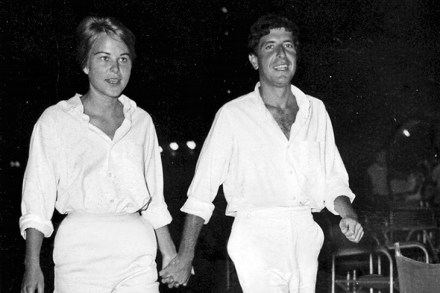
Marianne & Leonard: Words of Love is Nick Broomfield’s documentary chronicling the muse-artist relationship between Marianne Ihlen and Leonard Cohen. Her name comes first because Broomfield wished to tell her story but, even so, this could be titled Marianne & Leonard: And A Lot More On Him. Hard to fathom what the point is, really. As Broomfield was also her lover, I even thought: is he not just using her all over again? Still, it will appeal to Cohen fans — and who isn’t one? — plus you do get to see him shaving while off his head on acid, which is fascinating. How did he not ever cut himself? This is a conventional documentary combining talking heads with archive footage. We begin with Hydra, the Greek island that was an outpost for artists in the 1960s.

The invisible man | 11 July 2019

From our UK edition

The Brink is Alison Klayman’s documentary portrait of Steve Bannon, Donald Trump’s former chief strategist (he shaped the ‘America First’ campaign, proposed the Muslim travel ban, etc.) and former boss of Breitbart News, the place where unsuccessful white men go to whine. The film follows him for 15 months from the autumn of 2017 as he attempts to organise far-right European parties into a ‘populist nationalist’ movement, and you may wish to look away when Nigel Farage smarms all over him as it’s not a pretty sight. (I’m a delicate flower, so could only watch from behind my hands.) But it is not insightful and, alas, utterly fails to capture the man behind the persona, if there is one. (He seems to have no personal life but did once try golf.

Rocket men | 11 July 2019

From our UK edition

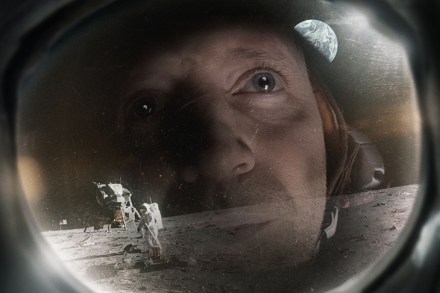
As the title suggests, 8 Days: To the Moon and Back (BBC2, Wednesday) comprehensively disproved the always questionable idea put forward by Elton John’s ‘Rocket Man’: that being an astronaut is ‘just [a] job five days a week’. More importantly perhaps, by concentrating purely on how Apollo 11’s lunar voyage unfolded over the eight days in question, without any pesky hindsight or analysis, it stirringly reminded us how uncomplicatedly thrilling the first moon landing was at the time. And also, you couldn’t help noticing, how madly risky. A key piece of equipment throughout the mission appears to have been the seat of the pants.

Go, West

From our UK edition

My plan to cut the BBC out of my life entirely is working well. Apart from the occasional forgivable lapse — that excellent Margaret Thatcher documentary; Pointless and Only Connect because they’re the only programmes we can all watch together as a family — I find that not watching or listening to anything the BBC does is making me calmer, happier and better informed. I’m also learning stuff about myself that I never imagined possible. Like the fact that I have a massive man crush on the rap star Kanye West.

Mummy porn

From our UK edition

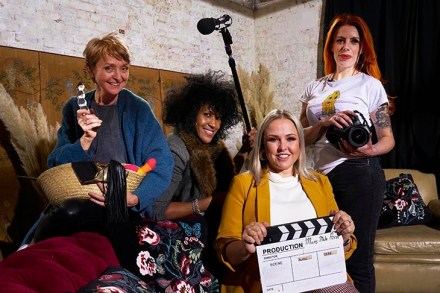
What can parents do about the avalanche of pornography available to their children on tablet, phone and laptop? This question was the starting point for a documentary series that began on Wednesday — and the answer proved unexpected. Having gathered five mothers together and shown them a hair-raising selection of online filth, the programme blithely declared that the best way for these women to ‘make a change’ was ‘by making their own mum-approved porn film’, which they’d then screen for their families and friends. If this premise struck anyone involved in Mums Make Porn (Channel 4, obviously) as at all questionable, they didn’t mention it.

Secrets and lies | 14 March 2019

From our UK edition

Halfway through the first part of Channel 4’s extraordinary documentary Leaving Neverland (Thursdays), I flicked through the comments on social media in order to gauge the global reaction. Surely, I thought, Michael Jackson’s reputation will never recover from these bombshell revelations. If you sat, squirming, though Dan Reed’s excruciatingly prurient documentary you’ll know what I mean. Lots of those who didn’t have been justifying their decision to ignore it with excuses like ‘Yeah, but we knew this already. Michael Jackson was a paedo. It’s hardly news, is it?’ But this strikes me as glib and dishonest.

Failed state

From our UK edition

I wonder if Wisconsin has any idea what an international embarrassment it has become? By rights it ought to be an unexceptionable place, little more than the quirky answer to the occasional trivia question: ‘Where is the Badger State?’; ‘Whose state governor shares a name with the singer of “The Sun Ain’t Gonna Shine (Anymore)?”’; ‘Which US state makes more Swiss cheese than Switzerland?’ Sadly for this unassuming Great Lakes state — pop.

Between a rock and a hard place

From our UK edition

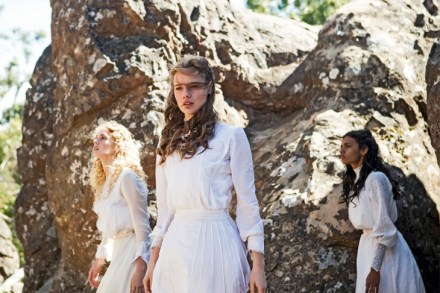
According to the opening captions in Picnic at Hanging Rock (BBC2, Wednesday), ‘the infamous events’ it depicts ‘began whena mysterious widow purchased a mansion out in the Australian bush’. The first few scenes, set in the late 19th century, were then dedicated to proving quite how mysterious she was: Hester Appleyard (Natalie Dormer) wasn’t merely veiled, but also filmed largely from behind and — just to be on the safe side — in the dark. What she might not be, though, is a widow. As she explored her new house, her voice-over dropped a series of dark hints that her mourning dress was a cunning disguise — and that she was in hiding from someone or other after doing somethingor other.

Grim and glorious

From our UK edition

Tick, tock. Tick, tock. Stay too long in the Lee Miller exhibition at the Hepworth Wakefield and the metronome might drive you mad. Considerate curators will only set it swinging in stints to spare the gallery guards. Man Ray, who made the metronome ‘Object of Destruction’ (1923), meant it to infuriate. His assembled sculpture came with instructions. ‘Cut the eye from a photograph of one who has been loved but is seen no more. Attach the eye to the pendulum of a metronome and regulate the weight to suit the tempo desired. Keep going to the limit of endurance. With a hammer well-aimed, try to destroy the whole at a single blow.’ Tick, tock. Tick, tock. Smash. The eye on Man Ray’s metronome was Lee Miller’s, beautiful, blue, bewitching.

Too much information | 12 July 2018

From our UK edition

When Kasper Holten’s production of Don Giovanni was first staged at the Royal Opera in 2014, I disliked it intensely, even more than I have disliked most of his other productions, or for that matter most productions of Don Giovanni. I missed the first revival, but when I saw it this time round my reactions were more complex, though I still think there is a lot wrong with it. In the meantime, I have watched the 2014 production on Blu-ray. Holten and Es Devlin the set designer give a commentary throughout, which at least helped me to understand what was intended, even if it didn’t convince me that most of the producer’s ideas are helpful or even realisable.

Animal attraction | 30 November 2017

From our UK edition

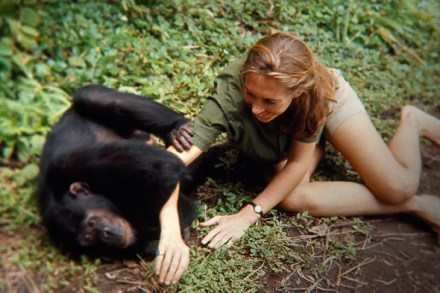
There are times when our national passion for cutting people down to size is a little tiring. I left Brett Morgen’s new documentary about Jane Goodall, the chimpanzee expert, in a rare flush of excited enthusiasm. ‘You’ve got to see it!’ I said to everyone. Most replied along these lines: ‘Goodall, didn’t she turn out to be a fraud?’ Or: ‘Wasn’t it all Leakey’s work she took credit for?’ ‘Yeah, what’s with that?’ says Brett Morgen hunched over his toast in a very hipster Soho hotel. ‘In the Times of London today, in the review, it says Jane can’t hold a candle to David Attenborough. I’m like, he’s a fucking TV presenter!

Life after death | 2 November 2017

From our UK edition

According to the accountants’ ledgers, DVDs are dying. Sales of those shiny discs, along with their shinier sibling the Blu-ray, amounted to £894 million last year, which is almost a fifth lower than in 2015 and less than half of what was achieved a decade ago. And last week we finally said goodbye to the postal DVD service Lovefilm, too. The explanation for this decline is the explanation for many modern declines: digital is taking over. Nowadays, downloads and streaming services make more money than the old physical formats. But accountants don’t know everything. From a different perspective, through the bloodshot eyes of a cinephile, DVDs are thriving — and they’re doing better in Britain than in most other countries.

BBC4’s The Vietnam War was unique, informative and shattering

From our UK edition

The Vietnam War BBC4 The BBC should be praised for showing all ten episodes of this unique, informative and shattering American series on the Vietnamese war, despite screening eight fewer hours than in the original. Before each episode the BBC warned that 'some viewers may find some scenes upsetting'. Which ones? A frog jumping in a pool of blood from the head of a dead Vietcong (NLF) fighter? The Saigon police chief shooting a prisoner in the head? The American colonel offering a case of whiskey to the first man to bring him the severed head of an enemy soldier? Which he gets. The eager US soldier on his first day in Vietnam noticing strings of what he thought were leaves, which he realised were the ears of dead enemies?

Amazing Grace

From our UK edition

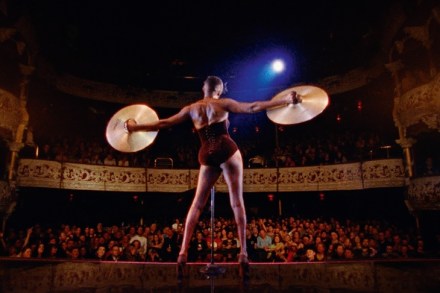
In the first scene of this distinctly odd documentary, Grace Jones meets a group of fans, who squeal with delight at the sight of her and nearly pass out with excitement when they hear her speak. And that, I suspect, is the effect which the film confidently expects to have on the rest of us. OK, it seems to be saying, so you’re not going to learn how Jones got from the Jamaican childhood we see her revisiting to the globetrotting life we see her living now. OK, so there’s no structure, sometimes no clue as to where scenes are taking place or who the other people in them might be — and for quite a lot of the time she’s just pottering around not doing very much. But look! It’s Grace Jones!

High life | 14 September 2017

From our UK edition

I’m in Venice for the film festival that just ended and, as an American humorist once wired his paper: ‘Streets full of water, stop. Send funds, stop.’ What is there to say about Venice that hasn’t already been said or written by better men or women — Thomas Mann and Jan Morris to mention just two? Yes, Venice evokes higher thoughts, but not this time. I was thinking of Byron as I chugged past the Palazzo Mocenigo where he lived, when I spotted a gondola with five Chinese women on board, all fiercely concentrating on their mobiles. ‘Stop that and look at the buildings, girls,’ I yelled at them. They completely ignored me and continued texting, or whatever they do nowadays, even on a gondola in the midst of Venetian splendour.