Dining

Treasure Britain’s last railway dining car while you still can

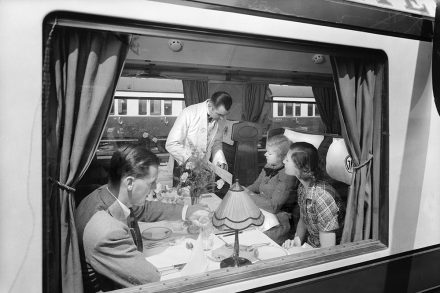
The 17:48 from Paddington does not, on first sight, seem exceptional. Overhard seats, overbright lights and a scramble for the ticket barriers: none of these are special. The modern Hitachi trains are solid but dull. Only Isambard Kingdom Brunel’s great arching iron roof adds splendor to the scene. But pause by coach L on the daily London to Carmarthen express and you might notice a small miracle. This train is one of the very last in Britain to carry a proper dining car. To its immense credit, GWR, the route’s operator, cooks and serves decent meals on six services a day: three at lunchtime and three in the evening, on its lines from London to Wales and the West Country.

railway car

Zohran Mamdani’s policies will make restaurants bland and expensive

There’s no shortage of catastrophic predictions for New York City under Zohran Mamdani’s leadership. While we probably won’t see breadlines, the wildly expensive, exhaustingly derivative restaurants that dominate the New York food scene are likely to become more dominant. Mamdani’s big pledge on food is to “make halal eight bucks again.” But it’s a “false promise” of street-food affordability according to Heritage Foundation economist Nicole Huyer. She says Mamdani’s economic program, which includes higher taxes, steeper leasing regulations and a pledge to raise the minimum wage to $30 an hour by 2030, will effectively make restaurants even more expensive.

zohran mamdani

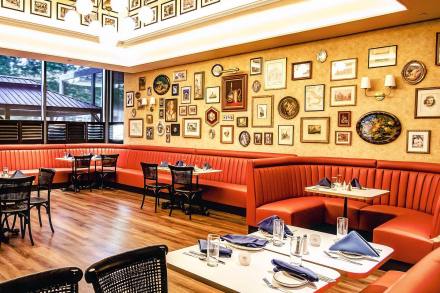
When did restaurants get so boring?

The New York Times recently released its annual list of America’s Top 50 restaurants – and the perfectly predictable honorees highlight just how beholden the restaurant industry is to the tastes of a would-be cosmopolitan class. The casually refined, vaguely ethnic-fusion cuisine that you stumble upon even in America’s most provincial places is rife. From New York to Los Angeles and everywhere in between, America’s restaurant industry has never been more diverse. Yet somewhat counterintuitively, it’s also never offered more of the same. Often, these restaurants propose some mix of French staples (think mother sauces, patisserie) or Italian comfort food (pasta, pizza) fused with Latin, Asian and/or Middle Eastern flavors.

restaurants

Newlywed dining around the world

Nick and I were married on February 4, 2023, and spent our first Valentine’s Day at Le Grand Colbert in Paris. There, we had oysters and Champagne, lobster, scallops with a side of mashed potatoes (naturally) and profiteroles for dessert. This year, we’ll be at a wedding on our anniversary, and Valentine’s Day coincides with Ash Wednesday, a day of fasting and abstinence from meat for us Catholics. So I’ll be attempting a romantic homemade meal to celebrate both occasions on the unremarkable second Saturday of the month. Looking through my phone, confronting my strange habit of taking pictures of memorable meals, I was reminded that our first year of marriage has involved a lot of hosting, dining out and dining in. In March, my in-laws visited us in New York City over the St.

dining

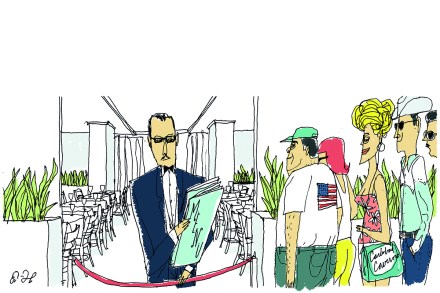
The quest for child-free dining

The people who follow my social media know that I’m not kidding when I say that restaurants should ban children. You can’t avoid kids in certain fast-food or large outdoor-patio situations, but on the whole, children in restaurants are a horrible war crime. So when Nettie’s House of Spaghetti, a red-sauce joint in Tinton Falls, New Jersey, announced in February that it would be banning kids, my inbox flooded with the story. “We love kids,” the restaurant wrote. “We really, truly, do. But lately, it’s been extremely challenging to accommodate children at Nettie’s. Between noise levels, lack of space for high chairs, cleaning up crazy messes and the liability of kids running around the restaurant, we have decided that it’s time to take control of the situation.

restaurants

The decline and fall of eating out

"Upgrade” is a term I associate with flying and getting a seat in the front cabin that you don’t pay for — except perhaps with “miles” and “points,” our version of Green Stamps. Upgrade’s predecessor from the era of rail travel was “step-up,” the term used by the Pullman Company when a passenger wished a better accommodation and space was available. You paid the conductor the step-up charge (in cash), and the porter dutifully toted your bags to your new compartment. Nowadays, it is no longer necessary to travel to upgrade. Just step out for lunch and add some “protein” to your salad. Upgrade! Marketing gibberish in the restaurant world is nothing new, but today it signifies the accelerating downgrade (sorry, no refund) of the whole business.

upgrade

Against the ‘concept restaurant’

My wife and I live in Northern Virginia, in Fairfax County. Whenever we go out to eat, we almost always go somewhere in the suburbs. Fairfax, along with neighboring Montgomery County in Maryland, is home to a wealth of restaurants serving cuisines from all over the world. Just last January, Bon Appétit wrote that “to travel DC’s Beltway is to sample the flavors of the world,” and the New York Times declared that “America’s next great restaurants are in the suburbs.” You could argue that the suburban food scene in the DC metro area surpasses that of the city itself. Nonetheless, DC is widely seen as a “foodie city,” and its restaurants generally get more coverage and hype than their suburban counterparts.

Table talk

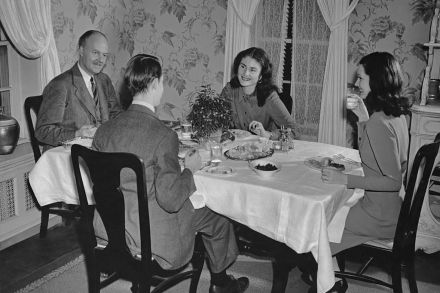
I grew up in rural Connecticut, in a remodeled cow barn where my family sat at an antique hutch table for meals. The table with four comfortable Windsor chairs fit into a niche. My sister Christina and I weren’t allowed to join my parents for dinner at the table until we could hold a conversation. For me, that was at five. The rule came from my father, as that was how he’d been brought up. Once, when we were in our early teens, I whispered to Christina, “It’s King Arthur’s round table” — our father’s middle name was Arthur. I must have learned some British history and was probably showing off. My firm but gracious father wasn’t a king.

table

In search of lost French restaurants

Readers of a certain vintage will recall when any listing of fancy restaurants in a big city had a heavy French accent. Look at the ‘Let’s Eat Out’ section at the back of an old issue of Gourmet magazine from the 1970s for the evidence, at least for New York but, if memory serves, it was true for London as well. (The Italians probably ran second, then the Chinese, then a big falloff to other countries but still mostly European ones.) The way it worked at Gourmet — you got a listing if you bought an ad — only understated things. Lots of good places never advertised at all or simply did not aspire to the tony status that association with the likes of Gourmet conferred. Names like Le Chamberlin, La Caravelle, Le Chantilly, Mon Paris, announced their sole culinary allegiance.

French

Coffee with Coleen

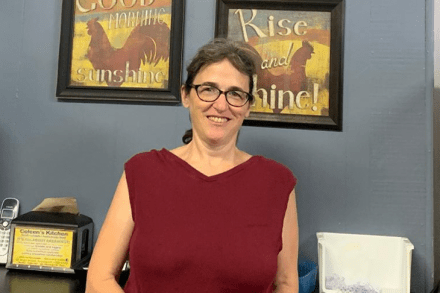
I’ve eaten a lot of breakfasts in my time — hell, it must be approaching 20,000 by now — and few if any have equaled those consumed at Coleen’s Kitchen on Main Street in the lived-in Erie Canal village of Brockport, New York. It takes a few minutes before you sense that there’s something not quite wrong about Coleen’s. Upon entering the restaurant you pour your own coffee at the beverage station. Maître d’ Coleen directs you to your seat. She hands you the extensive four-page menu, which warns that ‘you will be charged 59 cents if you ask what kind of bread I have’. Read it well and don’t waste Coleen’s time, you lazy bum! Waitress Coleen takes your order.

coleen