Devon

What no one tells you about dairy farming

From our UK edition

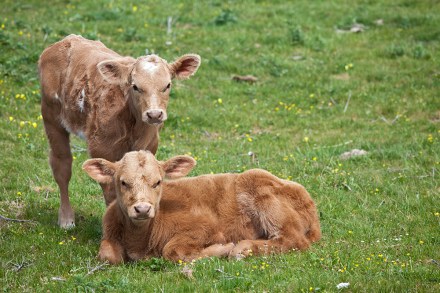
It has been calving time in Devon and I arrive from London ready to work hard. The day starts at 6.30 a.m., when we check the field to see if any cows have calved. We check the ‘springer’ herd every two hours until 10 p.m. and intervene if a cow is in difficulty. Newborn calves are fed colostrum and taken down to the shed with their mothers. The farm I am working on keeps its cows outside all year round – not for this herd that little patch of blue some call the sky. But what the cattle gain in freedom, the farm labourers lose in comfort. The last time I was here for calving, in the spring of 2018, the weather was biblical: it was still snowing in April. Thankfully, the weather has held, but I’m not sure the same can be said of my body.

Chasing happiness: The Daffodil Days, by Helen Bain, reviewed

From our UK edition

Is there anything more to be said about Ted Hughes and Sylvia Plath? I didn’t think so, but Helen Bain’s debut novel The Daffodil Days proved me wrong. I did not expect to be absorbed, on the first page, by a woman cleaning a house (Court Green in Devon), the home Plath had just vacated with her two young children for London, where a couple of months later, in February 1963, she would gas herself.               Working backwards from December 1962, the novel describes the last 18 months of Plath’s life, glimpsed through some friends – writers and poets such as Al Alvarez, Bill Merwin and Marvin and Kathy Kane – but mostly through local people in or near the small Devon town of North Tawton.

Bloodbath at West Chapple farm

From our UK edition

Fifty years ago, the blasted bodies of three unmarried siblings, members of the Luxton family, were discovered at a Devon dairy farm, set in a lush stretch between the ‘lavender haze’ of Exmoor and Dartmoor. The youngest member of the family, Alan, was 55. He lay in his pyjamas and work boots on the cobbles in the farmyard. Robbie, 65, with cuts to his face, and Frances, 68, clad in a nightgown rucked up to her waist, were found together in the garden. All the doors to the primitive thatched family farmhouse were locked from inside. The ‘tragic trio’, as they were described by the tabloid press, were the last of an ancient line who had farmed at West Chapple, Winkleigh. Each of the victims had their heads blown off.

How Damien Hirst ruined Devon

From our UK edition

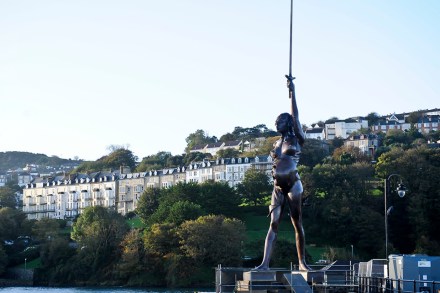
There are few better locations to resist la rentrée than the wilds of Exmoor. The late August heather and gorse. The hidden coves. The bracken and this year’s superb crop of blackberries. Then the rain. So much rain (though of course the reliably incompetent South West Water still has a hosepipe ban in place). The only blot on the landscape remains Damien Hirst’s ill-conceived 65ft statue of ‘Verity’ – a flayed pregnant woman, with her innards on show, standing on a pile of books and holding a sword – which dominates Ilfracombe’s harbour. It exemplifies the worst of public-private art, lacking any meaningful connection to the history or culture of north Devon.

Where to escape the crowds in Cornwall and Devon

From our UK edition

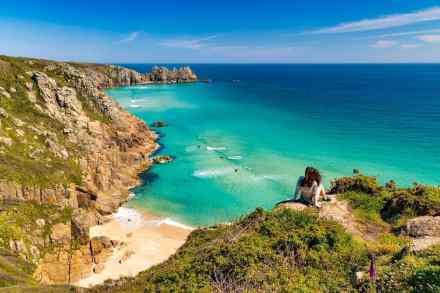
The wild, rugged beauty of the far southwestern tip of the UK needs no introduction. The appeal of life by the sea is at fever pitch. Nowhere in the UK boasts quite the same breadth or quantity of excellent, award winning beaches - picturesque stretches of sand, coves and swimming spots can be found peppered up and down the coastline. Keeping away from the crowds is increasingly difficult, but it can be done. In this list of some of the best beaches in Devon and Cornwall, we’ve focused on a good balance between accessibility and facilities, and those more secluded beaches that require a little more effort to get to.

Disregarded for decades, Jean Rhys stayed true to her vision of life

From our UK edition

Jean Rhys, who died at the age of 88 in 1979, lived to be forgotten and rediscovered. Like many readers, I first came across her through her novel Wide Sargasso Sea, which imagines the pre-history of Jane Eyre’s ‘madwoman in the attic’, the Creole heiress married off to Mr Rochester and then incarcerated by him at Thornfield Hall. When it came out to great acclaim in 1966, it marked the rebirth of a writer who hadn’t published a book for more than a quarter of a century and who had even been presumed dead.

The call of opium-based analgesics and introspection

From our UK edition

On the morning of my last day in England, I drew back a curtain and there in the garden, browsing one of the flower beds, was a brown hare. It hobbled cautiously but not timidly among the spring bulbs, choosing thoughtfully like a discriminating shopper. I leaned on the window sill and watched it for perhaps ten minutes. The hare was in the process of exchanging its tatty winter fur coat for a shorter, smoother, lighter-brown one, visible underneath. Overnight late spring had turned to the softer air of early summer and I was sorry to be leaving the country at the exact point of the season’s changing. In the bedroom I regretfully set about packing my trolley bag for the flight back to Nice.

Elegy in a country churchyard

From our UK edition

‘I love this old watering can,’ said my sister, sprinkling the miniature rose. ‘Though I do worry about soaking Mum. How far down is she? Do you remember?’ I said I thought about five foot. The country churchyard is sheltered by hedges and trees and the graves are decently spaced. On Mothering Sunday mown grass was scattered across the gravel path and graves and a chill sea mist billowed like smoke off the sea. Two months before Covid struck, I’d thrown my handful of soil in after her. This was my first visit since that day. The earth was still broken and heaped but now there was a grey headstone with her name and dates, her maiden name, and the phrase ‘Alive in Christ’.

The windswept Devon island adored by Agatha Christie

From our UK edition

Burgh Island certainly knows how to make an entrance. As you descend the hill at dusk into Bigbury-on-Sea the white hotel drinks up all the light. Like a flashy piece of costume jewellery, it’s the only thing you notice on the skyline. But, then again, it's used to making good first impressions. Despite its diminutive size, the island appears in Agatha Christie's Evil Under the Sun before any of the novel’s characters, upstaging even Hercule Poirot. The reader is never in any doubt that the book's murder will hinge entirely on ‘the little windswept gull-haunted promontory – cut off from land at each high tide’ and the ‘comfortable and most exclusive hotel’ on its most northerly shore.

More than one bad apple: the sorry demise of English cider

From our UK edition

Can you imagine if, in the 20th century, wine producers in France had switched from a product made (almost) entirely from grapes to something that was essentially grape-flavoured alcoholic sugar water? It’s inconceivable. In fact, they did just the opposite. To stamp out the growth of ersatz wines, the appellation contrôlée system was created, which, for all its faults, provides a guarantee that a particular wine will be made from grapes from a certain area. But there was no such regulation in England. After the second world war, large-scale cider-makers in the West Country began lowering the amount of fruit in their products, specifically characterful bittersweet cider apples, and making up the rest with dessert apples and sugar. Quality plummeted.