Design museum

Inside the world of Wes Anderson

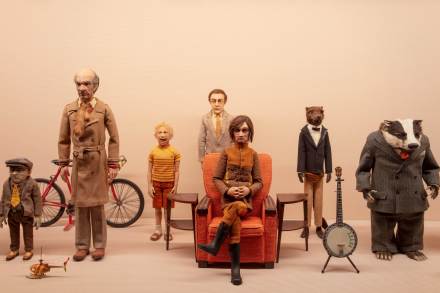
If you make your way to the Design Museum, which occupies the horned modernist structure that was once home to the Commonwealth Institute in Kensington, you are in for a surprise. And not just because it’s one of those buildings that is far more inspiring on the inside than its rather Stalinist exterior would have you imagine. No, the biggest surprise is that our national temple to design has decided to dedicate its ground floor to Wes Anderson, the American filmmaker (‘auteur’ is the word film types like to whisper) behind such idiosyncratic gems as The Royal Tenenbaums (2001) or, probably his biggest hit, The Grand Budapest Hotel (2014), which starred Ralph Fiennes, Adrian Brody, Saoirse Ronan and Willem Dafoe, among many others.
Are kids’ games under threat?

We hear a lot about the rights of the child, but the first I heard of the child’s right to play was at the Barbican’s latest exhibition. Among the games-related facts in Francis Alÿs’s new show is a quote from Article 31 of the United Nations Convention on the Rights of Children, confirming a child’s right ‘to engage in play and recreational activities’. Barbie has stood seven times for the US presidency. (As a young looking 65, she could do well) Are children’s games under threat? Alÿs thinks so. Children in Europe today, he laments, have a tenth of the freedom to roam that he enjoyed growing up in the 1960s in a Belgian countryside virtually unchanged since Bruegel.

The world’s first robot artist discusses beauty, Yoko Ono and the perils of AI

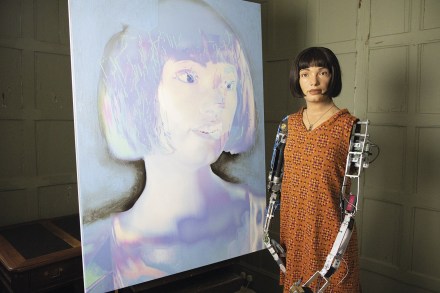
Like a slippery politician on the Today programme, the world’s first robot artist answers the questions she wants rather than the ones she’s been asked. I never had this trouble with Tracey Emin or Maggi Hambling. As we stand before a display of her paintings at London’s Design Museum, I ask Ai-Da whether she thinks her self-portraits are beautiful. What I want to get at, you see, is that, while it’s quite possible for a machine to make something beautiful, it’s hardly comprehensible for a thing made from metal, algorithms and circuitry to appreciate that beauty. ‘I want to see art as a means for us to become more aware of what’s going on in our lives. Art is a way to come together and a way to address problems. Art begins a conversation.

Meet the woman who designed Britain’s revolutionary road signs

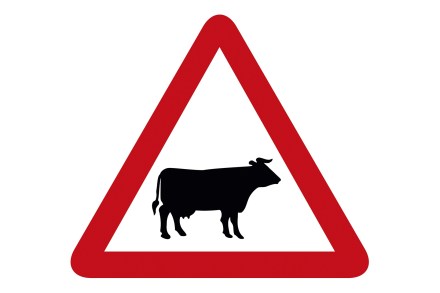
‘Design. Humanity’s best friend,’ proclaims a row of posters outside the Design Museum. ‘It’s the alarm that woke you up… The card you tapped on the bus… And the words you’re reading right now. So embedded in our lives we almost forget it’s there.’ It is one of the ironies of good design that the better it is, the less we notice it. This is especially true when we really need it: when lost in an airport five minutes before the gate closes or battling helplessly down the wrong road. In these instances, the woman we invariably have to thank for helping us to find our bearings is currently the subject of an overdue tribute at the Design Museum.